Volkswagen CEO Oliver Blume Warns Staff of Critical Crisis as 50,000 Jobs Hang in Balance

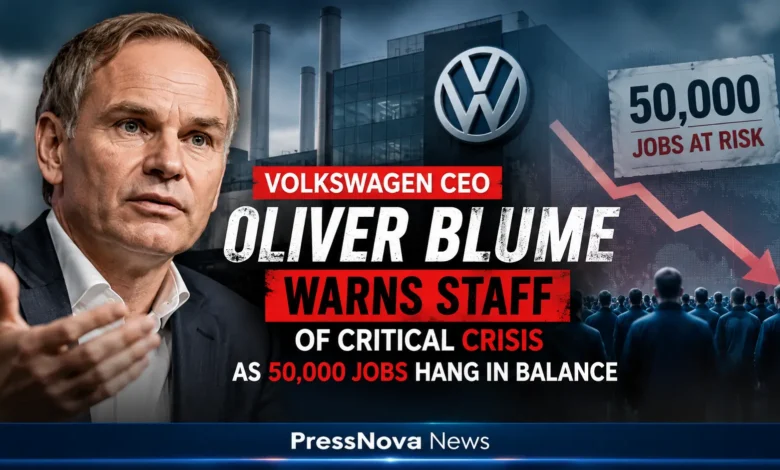
Volkswagen CEO Oliver Blume has warned staff to brace for trouble as the automaker confronts a critical crisis with overhead costs more than 30 percent higher than rivals and 50,000 jobs potentially on the line.
- Critical Warning: CEO Oliver Blume told employees “the situation is more than critical” in an internal memo seen by Reuters
- Cost Disadvantage: VW’s overhead costs exceed comparable rivals by more than 30 percent
- Operating Margin: Currently below 4 percent – insufficient to fund sustainable future growth
- Job Cuts: 50,000 figure is a theoretical calculation, not a fixed target
- Plants at Risk: Four German facilities – Zwickau, Emden, Hanover, and Neckarsulm – face uncertain futures
- Model Reduction: VW plans to cut up to 50 percent of current models and 75 percent of available options
- Competition: Chinese EV brands (BYD, NIO, Xpeng) are rapidly eroding VW’s market position
Volkswagen is staring down another brutal restructuring, and Oliver Blume isn’t exactly sugarcoating the situation. In an internal memo seen by Reuters, the VW Group CEO warned employees that “the situation is more than critical” as the company prepares for yet another round of painful cost-cutting measures.
The problem isn’t simply that the German automotive empire needs to sell more cars. Its cost structure is putting it at a serious disadvantage against rivals at a time when competition is becoming absolutely fierce, especially with the global rise of Chinese brands. According to the ex-Porsche CEO, overhead costs remain more than 30 percent higher than those of comparable companies.
That’s a major problem for an automaker of this scale in these troubled times. VW’s operating margin is currently below four percent. Blume considers that respectable given the market conditions, but says it’s nowhere near enough to fund its future sustainably.
For detailed context on Volkswagen’s official financial position, Volkswagen Group’s investor relations page provides current financial reports and operating margin data. Additionally, Reuters’ coverage of Blume’s internal memo offers further reporting on the executive’s warning to employees.
Volkswagen’s Cost Crisis: The Numbers Behind Blume’s Warning
Reports about doubling layoffs have been making headlines for weeks, but Blume wants employees to understand that it isn’t a final objective. Instead, it’s a theoretical calculation based on how many positions VW would need to axe to close the cost gap with competitors without changing labor costs. In other words, the number is meant to illustrate the scale of the problem rather than serve as a definitive headcount for layoffs.
The 30 percent overhead cost gap represents a staggering disadvantage in an industry where margins are already razor-thin. By comparison, Toyota’s operating margin typically hovers around 8-10 percent, while Hyundai’s sits at approximately 6-8 percent. Tesla, despite recent price cuts, maintains margins above 10 percent. Even more alarming is the comparison to Chinese EV leader BYD, which has achieved operating margins of 5-7 percent while rapidly expanding its global footprint.
VW’s sub-four percent margin puts it in a precarious position. Blume acknowledged that while this performance is respectable given current market conditions, it simply cannot generate the capital needed to fund the company’s ambitious electric vehicle transition and maintain competitiveness against leaner, more agile rivals.
The math is unforgiving. To match industry benchmark margins without addressing labor costs, VW would need to eliminate roughly 50,000 positions globally. That figure has captured headlines, but Blume emphasized that it represents a worst-case scenario rather than a predetermined target. The Volkswagen CEO warning about these workforce calculations reflects the severity of the company’s financial predicament.
Which German Plants Are at Risk?
It’s potentially not all doom and gloom, as Blume told staff that no decision has been made to shutter the four German plants at risk of closure in the 2030s. For now, Zwickau, Emden, Hanover, and Neckarsulm still have a future. However, if underutilization becomes a serious problem, that could change over the next decade.
These facilities represent a cross-section of Volkswagen’s German manufacturing footprint. Zwickau has been central to VW’s EV strategy, producing models like the ID.3 and ID.4. Emden handles both conventional and electric models, including the ID.7. Hanover produces commercial vehicles including the Multivan and ID. Buzz. Neckarsulm, home to Audi production, manufactures premium models including the A6, A7, and performance variants.
The uncertainty surrounding these plants has sent shockwaves through Germany’s industrial heartland. Together, these facilities employ tens of thousands of workers and support extensive supplier networks across the country. Any closures would have ripple effects far beyond Volkswagen’s immediate workforce.
The timeline for decisions remains unclear, but Blume’s warning suggests that the company is preparing for a long-term restructuring that could unfold over the next decade rather than immediate closures. This allows for potential mitigation measures, including retooling for EV production, shifting production volumes between plants, and exploring alternative uses for facilities.
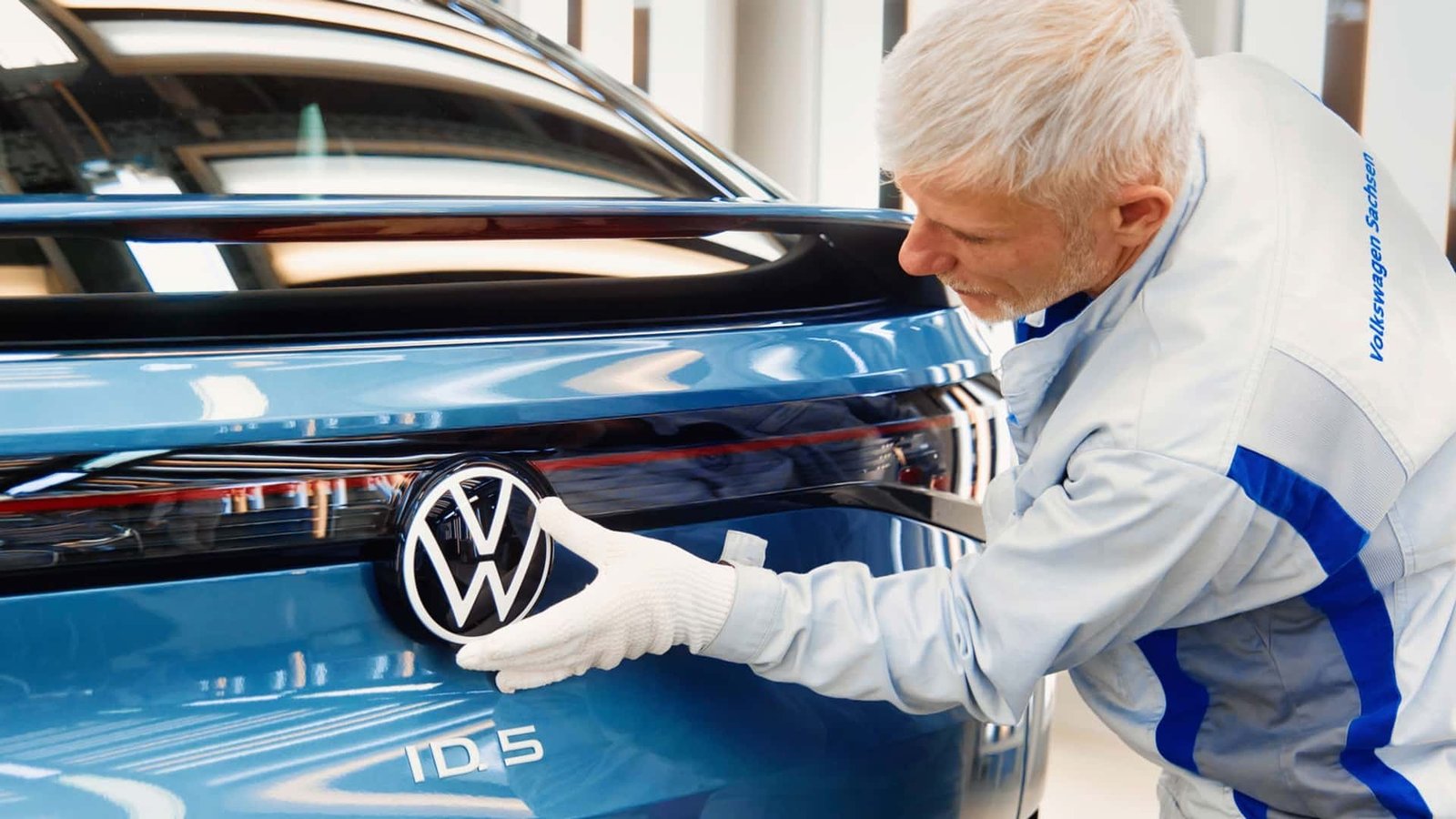
The 50,000 Job Cuts Figure: What Blume Actually Said
“The frequently cited figure of around 50,000 jobs worldwide is not a fixed target.”
Blume’s careful phrasing attempts to walk a fine line. By emphasizing that the figure is theoretical rather than final, he aims to calm workforce anxieties while still conveying the severity of the situation. However, the very existence of such a calculation—and Blume’s willingness to share it publicly—indicates that significant workforce reductions are being seriously considered.
The context matters here. VW’s global workforce exceeds 680,000 employees, making it one of the largest employers in the automotive industry. A reduction of 50,000 positions would represent approximately 7.3 percent of the total workforce—a significant but not unprecedented restructuring for a company of this scale.
Union representatives have already signaled resistance to large-scale layoffs. Germany’s powerful IG Metall union has traditionally played a significant role in shaping VW’s labor policies, and any substantial job cuts would face intense negotiation. Works council leaders have demanded that management explore alternatives before resorting to layoffs, including reduced working hours, early retirement programs, and natural attrition.
The 50,000 figure also doesn’t account for potential new positions created through the EV transition. As VW shifts production toward electric vehicles, some roles will become obsolete while others will emerge in battery production, software development, and new manufacturing processes. The net impact on employment remains uncertain. The Volkswagen cost crisis underscores why such dramatic workforce adjustments are even being discussed at the highest levels.
Why Chinese EV Rivals Are Changing the Game for Volkswagen
The rise of Chinese EV brands has fundamentally altered the competitive landscape for legacy automakers. BYD, which began as a battery manufacturer before expanding into vehicles, now competes directly with VW in key markets. The company’s vertically integrated supply chain gives it cost advantages that traditional automakers struggle to match.
BYD’s operating model differs dramatically from VW’s. The Chinese manufacturer controls its own battery production, software development, and many components that VW sources from suppliers. This integration translates to lower costs, faster development cycles, and greater flexibility in responding to market demands.
Other Chinese rivals, including NIO and Xpeng, have taken a different approach, focusing on premium electric vehicles with advanced technology features. These brands have gained traction in China’s domestic market and are now expanding into Europe, directly targeting VW’s traditional strongholds.
The numbers illustrate the challenge. BYD’s global EV sales have grown exponentially, with the company now selling more than 3 million vehicles annually. VW’s EV sales, while increasing, remain significantly lower, and the company has struggled to achieve the same margins on electric vehicles as it does on internal combustion models. This profitability gap is at the heart of Blume’s warning.
Chinese manufacturers also benefit from government support, including subsidies, infrastructure investment, and favorable trade policies. While VW has deep roots in China through joint ventures, the competitive dynamic has shifted decisively in favor of domestic brands.
For a more detailed comparison of VW and Chinese EV competition, the table below highlights key competitive metrics:
| Metric | Volkswagen Group | BYD | Tesla | Toyota |
|---|---|---|---|---|
| Operating Margin | Below 4% | 5-7% | 10%+ | 8-10% |
| Overhead Cost Position | 30% higher than rivals | Industry benchmark | Lean | Efficient |
| EV Market Share (Global) | Declining | Rapidly growing | Stable | Growing slowly |
| Vertical Integration | Partial | High | High | Moderate |
| R&D Efficiency | Legacy processes | Agile | Highly agile | Traditional |
The Road Ahead: What This Restructuring Means for VW’s Future
Aside from potentially eliminating even more jobs and closing factories, the VW Group is downsizing in other ways. It plans to simplify its lineup by cutting up to 50 percent of its current models while slashing available options by 75 percent. That tells you everything you need to know about how the company grew too large and too complex for its own good.
This model reduction represents a fundamental strategic shift. For years, VW pursued a strategy of offering extensive customization options and multiple body styles to appeal to diverse customer preferences. This approach drove complexity costs through the roof, requiring extensive supply chains, multiple assembly processes, and significant inventory management overhead.
By slashing options by 75 percent, VW aims to simplify manufacturing, reduce costs, and improve quality consistency. This mirrors the approach Tesla has taken with limited options and modular manufacturing. The move could significantly improve factory utilization rates and reduce production costs per vehicle.
The EV transition adds urgency to these changes. VW has committed billions to electric vehicle development, but those investments require consistent revenue streams to pay off. Without improved margins and reduced costs, the company risks not having the financial capacity to complete its transition away from internal combustion engines.
Blume’s strategy appears to be confronting the hard truths that previous leadership may have avoided. By publicly acknowledging the scale of the problem—including the theoretical 50,000 job cuts—he creates pressure for change across the organization. The goal appears to be galvanizing employees, management, and unions into accepting painful but necessary restructuring.
Employee Reactions and Union Response
Unsurprisingly, Blume’s memo has generated significant anxiety among VW’s German workforce. Employees at the affected plants have expressed concern about job security, with some questioning whether the company’s EV strategy is creating enough new roles to offset potential cuts.
IG Metall, Germany’s largest industrial union, has responded cautiously. Union leaders acknowledge the competitive pressures VW faces but have demanded that management prioritize alternatives to mass layoffs. Proposals include reduced working hours with partial wage compensation, expanded early retirement programs, and natural attrition to reduce headcount gradually.
Works council representatives have also raised questions about VW’s investment priorities. Some argue that the company’s substantial R&D spending and executive compensation packages should be reviewed before workers bear the brunt of cost-cutting. These tensions suggest that negotiations over restructuring will be contentious and protracted.
Historically, VW has avoided mass layoffs in Germany through agreements with unions that protect workers in exchange for concessions on working conditions and pay. Whether those agreements will hold during this crisis remains to be seen, but Blume’s warning indicates that the current situation may require measures beyond previous restructurings.
Political and Government Implications
The political implications of VW’s crisis extend beyond the company itself. Volkswagen is a cornerstone of the German economy, directly employing over 300,000 people in Germany and supporting hundreds of thousands more through its supply chain. The potential closure of four German plants would represent a major blow to the country’s industrial base.
German federal and state governments have already signaled their concern. Officials from Lower Saxony, where Volkswagen is headquartered and where the state government holds a significant stake in the company, have called for dialogue between management and workers to find solutions that preserve German jobs.
The crisis also raises broader questions about Germany’s competitiveness in the global automotive industry. As Chinese EV manufacturers gain ground, German automakers face pressure to adapt more quickly to changing market dynamics. The outcome of VW’s restructuring could serve as a bellwether for the entire German automotive sector.
Some political leaders have called for increased government support for the EV transition, including subsidies for domestic battery production and charging infrastructure investment. However, fiscal constraints and competing priorities make large-scale government intervention uncertain.
The European Union’s approach to Chinese EV imports also factors into the equation. While the EU has investigated potential tariffs on Chinese EVs, any such measures would take time to implement and may not fully address VW’s structural cost challenges.
Frequently Asked Questions About Volkswagen’s Crisis
[faq]What did Volkswagen CEO Oliver Blume say to employees?
Blume warned employees in an internal memo that “the situation is more than critical” as VW prepares for cost-cutting measures. He revealed that overhead costs are more than 30 percent higher than rivals and that the company’s operating margin is below four percent.
How many jobs could Volkswagen cut?
Blume stated that the frequently cited figure of 50,000 job cuts is a theoretical calculation, not a fixed target. The number represents how many positions VW would need to eliminate to close the cost gap with competitors without changing labor costs.
Which Volkswagen plants are at risk of closure?
Four German plants face uncertain futures: Zwickau, Emden, Hanover, and Neckarsulm. Blume said no final decision has been made, but underutilization could lead to closures in the 2030s.
Why is Volkswagen struggling financially?
VW’s cost structure is significantly higher than rivals—overhead costs exceed competitors by more than 30 percent. The company also faces intense competition from Chinese EV manufacturers like BYD, which have lower costs and faster development cycles.
What is Volkswagen’s current operating margin?
VW’s operating margin is currently below four percent. Blume considers this respectable given market conditions but says it’s insufficient to fund the company’s sustainable future.
How are Chinese EV brands affecting Volkswagen?
Chinese brands like BYD, NIO, and Xpeng are rapidly gaining market share with lower-cost EVs, vertically integrated supply chains, and government support. They now compete directly with VW in key markets, eroding the German automaker’s traditional advantages.
What is Volkswagen doing to reduce costs?
VW plans to cut up to 50 percent of current models and reduce available options by 75 percent to simplify manufacturing. The company is also considering job cuts and potential plant closures to address its cost disadvantage.
Motor1’s Take: VW’s Crossroads
VW is finally confronting a cost structure that has made it increasingly difficult to compete, particularly against leaner Chinese automakers. A theoretical calculation of 50,000 additional jobs being eliminated is still staggering, even if the final figure ends up being substantially lower.
The company isn’t simply trying to survive a bad year. It’s trying to reinvent itself while facing some of the toughest competition in its history. Blume’s warning suggests the company knows that doing nothing isn’t an option.
The scale of the challenge cannot be overstated. VW must simultaneously transition to electric vehicles, reduce costs, simplify its product lineup, and maintain competitiveness against both established rivals and emerging Chinese manufacturers. Failure in any of these areas could have cascading consequences for the company’s long-term viability.
For employees, the coming months will bring uncertainty and difficult conversations about the future of their jobs. For management, the challenge is to implement restructuring without destroying morale or losing the talent needed for the EV transition. For unions and government, the task is to balance worker protection with the need for industrial competitiveness.
One thing is clear: Volkswagen’s crisis is a symptom of broader challenges facing the global automotive industry. The transition to electric vehicles, the rise of Chinese competition, and the need for leaner cost structures are not unique to VW. How the company navigates this crisis will offer lessons for the entire sector.
As Blume’s memo makes clear, the situation is indeed critical. The decisions made in the coming months will determine whether Volkswagen emerges as a leaner, more competitive player or continues to struggle against more agile rivals.