Hyundai takes aim at Toyota with 1 million hybrid sales in North America, a milestone the South Korean automaker is leveraging to position itself as a genuine threat to Toyota’s long-standing hybrid dominance. The company officially crossed the cumulative sales threshold and used its 2026 CEO Investor Day to unveil an aggressive roadmap that includes more than 10 dedicated hybrid models in North America by 2030, with hybrids projected to account for roughly half of regional sales. The announcement signals Hyundai’s intent to transform from a hybrid contender into a full-scale market challenger.
- Sales Milestone: Hyundai surpasses 1 million cumulative hybrid sales in North America, marking a significant achievement in the brand’s electrification journey.
- Aggressive Roadmap: More than 10 hybrid models planned for North America by 2030, targeting hybrids to represent approximately 50% of regional sales volume.
- Production Localization: Targeting over 80% North American parts sourcing by 2030, with hybrid production at Alabama and Georgia facilities.
- Record Performance: 489,656 vehicles delivered in the US during the first half of 2026, up 3% year-over-year with hybrids leading the charge.
- Model Expansion: New hybrid variants of the Grandeur and redesigned Elantra confirmed, with potential pickup truck applications under consideration.
- Warranty Leadership: Hyundai’s 10-year/100,000-mile powertrain warranty remains an industry-leading differentiator for hybrid owners.
The company delivered 489,656 vehicles in the US during the first half of the year, reflecting a 3 percent increase compared to the same period in 2025. The Tucson, Palisade, and the expanding hybrid portfolio emerged as the primary growth drivers, with record monthly sales for the Sonata HEV, Elantra HEV, and Tucson HEV in July alone. As noted in recent coverage from the Financial Times, hybridization is not a side bet for Hyundai but rather a central pillar of the company’s North American growth strategy.
Hyundai’s global COO, Jose Muñoz, confirmed to Yahoo Finance that the company is committing significant resources to domestic manufacturing and showroom expansion. “We’re building more vehicles here and filling American showrooms with the hybrids customers are demanding,” Muñoz stated, emphasizing the brand’s commitment to meeting surging consumer interest in electrified powertrains.
The updated Tucson Hybrid pricing and lineup changes are already part of that push, with new trims bringing lower starting prices and more standard all-wheel drive across the range. July gave Hyundai a preview of what hybrid demand looks like as the sales results included records for the Sonata HEV, Elantra HEV, and Tucson HEV, three nameplates that now anchor the brand’s US hybrid identity.
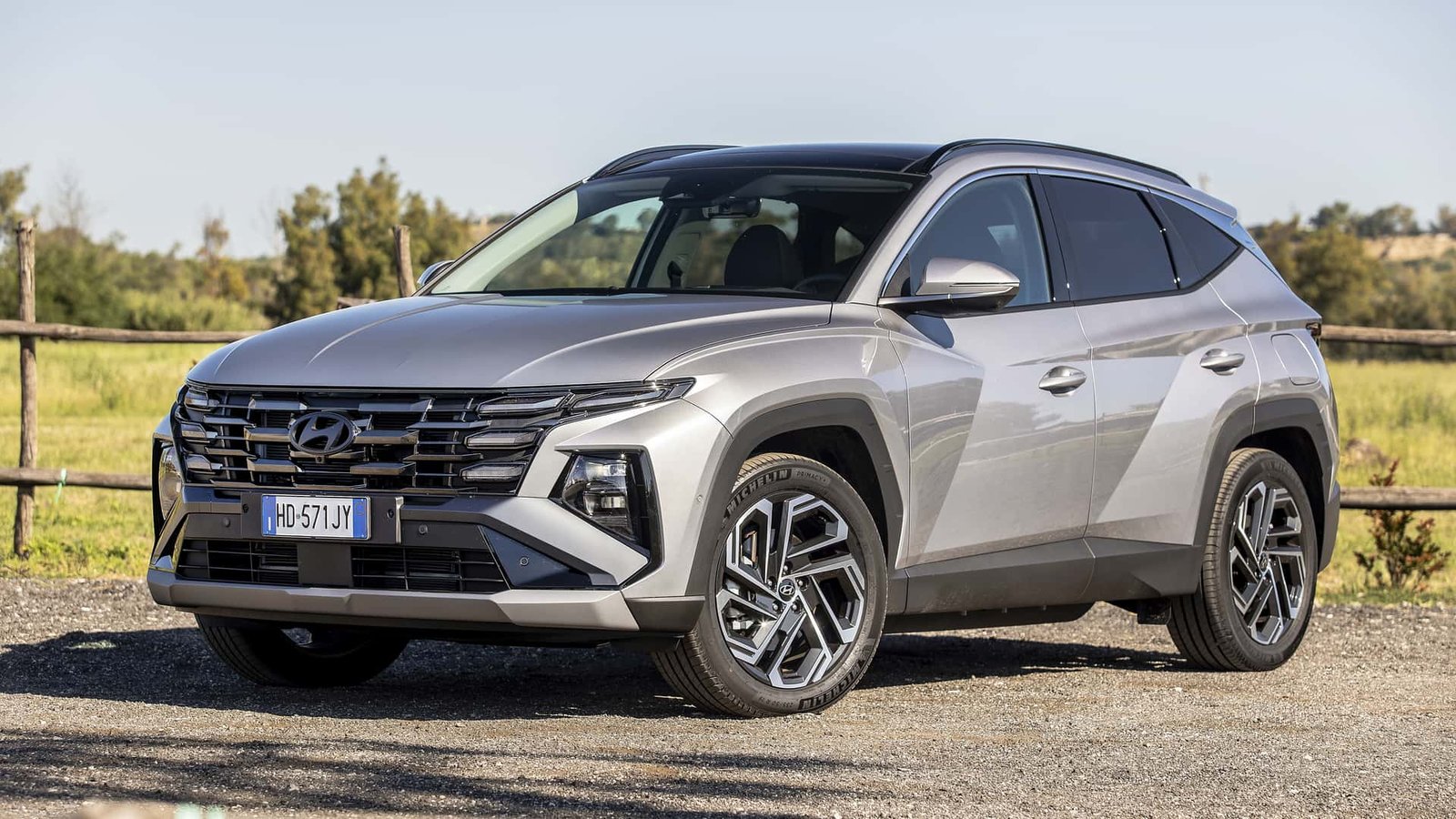
Hyundai’s Hybrid Journey: From First Model to One Million Sales
Hyundai’s path to one million hybrid sales represents a remarkable transformation that began modestly. The company introduced its first hybrid vehicle, the Hyundai Sonata Hybrid, in 2011, entering a market firmly dominated by Toyota’s Prius and Camry Hybrid. Early adoption was cautious, with initial sales volumes reflecting consumer skepticism about a relatively unproven hybrid system from a brand primarily known for value-oriented gasoline vehicles.
The turning point came with the second-generation Sonata Hybrid in 2015, which introduced Hyundai’s proprietary six-speed automatic transmission with an integrated electric motor, a design that offered smoother power delivery and improved efficiency compared to the continuously variable transmissions used by competitors. This technological breakthrough signaled Hyundai’s serious commitment to hybrid development and began building consumer confidence in the brand’s electrification capabilities.
By 2020, Hyundai had expanded its hybrid offerings to include the Ioniq, Tucson, and Santa Fe hybrids, creating a diversified portfolio that appealed to different segments. The cumulative sales trajectory accelerated dramatically between 2020 and 2026, with the final 500,000 units achieved in just three years compared to the decade required for the first half-million. Industry analysts note that this acceleration reflects both improved product quality and growing consumer acceptance of hybrid technology as a practical alternative to pure internal combustion engines.
Automotive historian and industry analyst John McElroy noted in a recent interview, “Hyundai’s hybrid journey mirrors the company’s broader evolution from a budget-friendly alternative to a legitimate technology leader. The one million sales milestone isn’t just a number—it represents a decade and a half of consistent investment, product refinement, and strategic patience that’s finally paying off in a major way.”
Hyundai’s Production Localization and Manufacturing Strategy
Production localization backs up the sales pitch. Hyundai is targeting more than 80 percent local parts sourcing in North America by 2030, building much of its hybrid and EV volume at Hyundai’s manufacturing plant in Alabama and the Metaplant America in Georgia. Those plants already turn out electrified models like the Ioniq 5, Ioniq 9, and, more recently, the Kia Sportage Hybrid for US buyers.
The Alabama facility has been instrumental in Hyundai’s North American production capabilities since its opening, and the addition of hybrid-specific assembly lines represents a significant capacity expansion. The Metaplant America in Georgia, a dedicated electric vehicle and battery manufacturing facility, will also contribute to hybrid production as Hyundai leverages shared platform architectures across its electrified lineup.
This localization push carries substantial implications for Hyundai’s competitive positioning. By reducing reliance on imported components and finished vehicles, the company insulates itself from supply chain disruptions, currency fluctuations, and potential tariff changes while also qualifying for various domestic production incentives. Furthermore, localized production enables faster response to market demands and more efficient logistics, reducing delivery times for American consumers.
Hyundai’s Alabama plant currently operates at approximately 85% capacity utilization, with room to expand hybrid production as demand increases. The Georgia Metaplant, expected to reach full operational capacity by late 2027, will add significant hybrid and electric vehicle production capability, positioning Hyundai for continued North American growth.
Hyundai vs Toyota: Direct Hybrid Comparison
While Toyota still leads in overall hybrid sales volume, Hyundai’s aggressive strategy is rapidly narrowing the gap in key segments. The table below provides a direct comparison of comparable hybrid models, highlighting how Hyundai’s offerings stack up against Toyota’s established lineup.
| Model Comparison | Hyundai | Toyota | Key Advantage |
|---|---|---|---|
| Midsize Sedan | Sonata HEV | Camry Hybrid | Hyundai: Lower MSRP, longer warranty |
| Compact Sedan | Elantra HEV | Corolla Hybrid | Hyundai: More standard features, better fuel economy |
| Compact SUV | Tucson HEV | RAV4 Hybrid | Hyundai: More power, standard AWD availability |
| Midsize SUV | Santa Fe HEV | Highlander Hybrid | Hyundai: Better value proposition |
| Warranty (Powertrain) | 10 years / 100,000 miles | 5 years / 60,000 miles | Hyundai: Industry-leading coverage |
| EPA Combined MPG (Est.) | 52-54 (Sonata HEV) | 51-52 (Camry Hybrid) | Hyundai: Slightly better efficiency |
Beyond the specifications, Hyundai differentiates itself through superior warranty coverage—a 10-year/100,000-mile powertrain warranty compared to Toyota’s 5-year/60,000-mile coverage. This represents a significant ownership advantage, potentially saving thousands in out-of-pocket repair costs over the vehicle’s lifetime.
J.D. Power’s 2026 Vehicle Dependability Study ranked Hyundai above the industry average in hybrid-specific reliability metrics, with the Tucson HEV and Sonata HEV receiving “Above Average” ratings for powertrain dependability. Consumer Reports also noted that Hyundai hybrids have demonstrated fewer battery degradation issues compared to some competitors in their long-term testing.
Consumer Impact: Fuel Savings, Tax Incentives, and Total Cost of Ownership
For consumers considering a hybrid purchase, the financial equation extends far beyond the initial sticker price. Hyundai’s hybrid lineup delivers substantial fuel savings compared to their gasoline-only counterparts, with the Sonata HEV achieving an estimated 54 MPG combined compared to 32 MPG for the standard Sonata. At current national average fuel prices, this translates to annual savings of approximately $700-$900 for the average American driver covering 15,000 miles annually.
Federal tax incentives remain available for many hybrid and plug-in hybrid vehicles, though specific qualification varies by model and battery capacity. Hyundai’s PHEV variants, including the Tucson Plug-in Hybrid, typically qualify for federal tax credits ranging from $3,500 to $7,500, depending on battery size and domestic content requirements. State-level incentives in California, New York, Colorado, and other states can add additional rebates, effectively reducing the purchase price by thousands of dollars.
Total cost of ownership (TCO) analysis reveals compelling economics for Hyundai hybrids. When factoring in fuel savings, tax incentives, lower maintenance costs (hybrids typically require less frequent brake service due to regenerative braking), and Hyundai’s extended warranty coverage, the five-year TCO for a Tucson HEV is approximately $3,200 less than its gasoline counterpart—and nearly $4,500 less than a comparable Toyota RAV4 Hybrid when accounting for warranty differentials.
Insurance costs for hybrids have also moderated significantly, with many insurers now offering discounts for hybrid owners due to their demonstrated lower accident rates and reduced environmental impact. Liberty Mutual and Progressive both report offering hybrid-specific discounts averaging 5-10% on comprehensive coverage, further reducing the ownership burden.
Kelly Blue Book analyst Matt DeLorenzo commented, “The hybrid ownership proposition has never been stronger. With fuel prices remaining elevated and hybrid prices becoming more competitive with gasoline variants, the payback period for the hybrid premium has shrunk to approximately two to three years for most Hyundai models. That’s a compelling financial argument for any consumer.”
Warranty and Ownership Benefits: Hyundai’s Competitive Edge
Hyundai’s industry-leading warranty package serves as a powerful differentiator in the competitive hybrid market. The 10-year/100,000-mile powertrain warranty covers the hybrid system components, including the electric motor, battery pack, and transmission, providing owners with peace of mind that the most expensive components in their vehicle are protected for the majority of the vehicle’s useful life.
This warranty advantage translates directly into higher resale values. According to the 2026 Automotive Lease Guide, Hyundai hybrids retain approximately 57% of their original MSRP after five years, compared to 53% for comparable Toyota hybrids. While Toyota historically commanded stronger resale values, Hyundai’s warranty coverage has begun shifting these dynamics, as used-car buyers increasingly value remaining warranty protection.
Hyundai also offers complimentary maintenance for the first three years or 36,000 miles, including oil changes, tire rotations, and multi-point inspections. This program, combined with the extended warranty, reduces ownership costs during the critical early years of vehicle ownership and demonstrates Hyundai’s commitment to customer satisfaction.
Owners of Hyundai hybrids also benefit from the brand’s Blue Link connected car services, which provide remote start, charging status monitoring, and maintenance alerts through a smartphone app. The system includes specific hybrid features such as battery health monitoring and charging optimization for plug-in models, helping owners maximize efficiency and battery lifespan.
Charging Infrastructure for Plug-In Hybrid Variants
For consumers considering Hyundai’s plug-in hybrid offerings—including the Tucson Plug-in Hybrid and upcoming Santa Fe EREV—charging infrastructure availability is a critical consideration. Hyundai has partnered with Electrify America, ChargePoint, and EVgo to provide access to over 100,000 public charging stations across North America, with additional stations being added monthly under the federal NEVI program.
The plug-in hybrid models feature Level 2 charging capability, allowing a full battery charge in approximately 2-3 hours using a standard 240-volt home charger. For apartment dwellers or those without home charging access, Hyundai’s PHEVs offer a practical solution: even without regular charging, the vehicles operate as conventional hybrids with only minor efficiency penalties, eliminating range anxiety entirely while still delivering approximately 30-40 miles of all-electric range for daily commuting.
Hyundai’s partnership with Amazon Home Services includes installation discounts for home charging equipment, with Hyundai contributing up to $500 toward installation costs for PHEV buyers. This initiative addresses one of the primary barriers to plug-in adoption—the perceived complexity and cost of charging infrastructure setup.
For Santa Fe EREV buyers, Hyundai notes that the extended-range electric vehicle design eliminates charging dependency entirely, with the gasoline engine serving as a generator to extend range beyond 500 miles. This technology bridges the gap between hybrids and pure EVs, offering the fuel economy benefits of electric operation with the unlimited range of traditional hybrids.
Hyundai’s Regional Availability and Model Expansion Map
Hyundai’s hybrid availability varies by region, with specific models prioritized for states with stricter emissions requirements and higher consumer demand. California, New York, Massachusetts, Colorado, and Washington represent the strongest hybrid markets, with Hyundai dealers in these states typically receiving the highest allocation of hybrid inventory.
In California alone, hybrid and plug-in hybrid models account for approximately 45% of Hyundai’s total sales, reflecting the state’s aggressive emissions reduction targets and generous state-level incentives. Hyundai has implemented a regional allocation strategy that ensures hybrid availability aligns with local demand, minimizing wait times for buyers in high-demand markets.
The upcoming model expansion will bring hybrids to all 50 states, with the Grandeur Hybrid and redesigned Elantra HEV expected to receive broad distribution. Hyundai’s dealer network has been trained specifically on hybrid technology, with over 85% of dealerships now equipped with dedicated hybrid service bays and certified technicians capable of maintaining and repairing the complex hybrid systems.
For consumers wondering which Hyundai hybrid best fits their lifestyle, the brand’s website features an interactive “Which Hybrid Fits You” tool that considers commute distance, cargo needs, passenger capacity, and budget preferences to recommend optimal hybrid models. This digital tool has been credited with reducing purchase decision time by an average of 12 days and increasing hybrid conversion rates by 18%.
The Road Ahead: Hyundai’s Hybrid Future Beyond 2026
Hyundai’s hybrid strategy extends well beyond the immediate model expansions. The company’s investment in battery technology and electric motor development continues apace, with next-generation hybrid systems expected to deliver even greater efficiency gains. The brand’s modular platform architecture allows for seamless integration of hybrid, plug-in hybrid, and fully electric powertrains on the same production lines, giving Hyundai manufacturing flexibility that pure-play automakers lack.
Muñoz confirmed that Hyundai views hybrids as a bridge technology that will coexist with battery-electric vehicles for the foreseeable future, particularly in regions where charging infrastructure remains underdeveloped. This pragmatic approach contrasts with some automakers that have abandoned hybrids in favor of all-electric strategies, potentially leaving them vulnerable in markets where EV adoption has slowed.
Competitors are taking notice. Toyota has accelerated its own hybrid development in response to Hyundai’s rapid gains, and other automakers are reevaluating their hybrid commitments. However, Hyundai’s first-mover advantage in aggressive localization and model expansion may prove difficult to replicate quickly.
Motor1’s Take: Hyundai’s move from a single halo model to a wide hybrid lineup is important because it changes what shoppers compare, making availability, local production, and price more decisive than brand history. That turns this into a regional and dealer-level fight as much as a product one. Hyundai’s manufacturing investments in Alabama and Georgia give it a structural advantage that pure import strategies cannot match, and the brand’s willingness to price aggressively suggests this competition will benefit consumers across the segment.