
Lindsay Clancy’s chilling last words to her three children before killing them have been revealed in court, with a forensic psychologist testifying that she told each child “Go to God, baby” during the January 2023 Duxbury murders.
- Chilling Last Words: Lindsay Clancy told her children “Go to God, baby” as she killed them one by one in the basement of their Massachusetts home
- Victims Identified: Cora (5), Dawson (3), and Callan (8 months) were strangled after Clancy sent her husband Patrick on errands
- Mental Health Defense: Defense argues severe postpartum psychosis; prosecution claims the killings were planned and premeditated
- Hallucination Claim: Clancy reported hearing a male voice commanding her to kill the children and herself—a pattern experts call “very unusual”
- Bipolar II Diagnosis: Dr. Kirk Heilbrun diagnosed Clancy with Bipolar II disorder while testifying in the ongoing murder trial
- Current Status: Clancy survived a suicide attempt by jumping from a second-story window and is now paralyzed from the waist down
The 36-year-old Massachusetts mother is accused of strangling her three children—five-year-old Cora, three-year-old Dawson, and eight-month-old Callan—in the basement of the family’s Duxbury home in January 2023. The tragedy unfolded after Clancy sent her husband, Patrick Clancy, out to run errands, leaving her alone with the children. Following the murders, she attempted to take her own life by jumping from a second-story window, an act that left her paralyzed from the waist down. She survived the fall and has been in custody since.
The case has become one of the most closely watched maternal mental health trials in recent Massachusetts history, with the central question revolving around whether Lindsay Clancy was suffering from severe postpartum psychosis at the time of the killings or whether she acted with criminal intent. Her legal team argues she was unable to understand or control her actions, while prosecutors contend the killings were planned and that she was fully aware of what she was doing.
During a recent court proceeding, forensic psychologist Dr. Kirk Heilbrun, an expert witness called by the defense, revealed the final words Clancy spoke to her children. His testimony shed new light on the mindset of the accused mother in the moments leading up to the unthinkable acts.
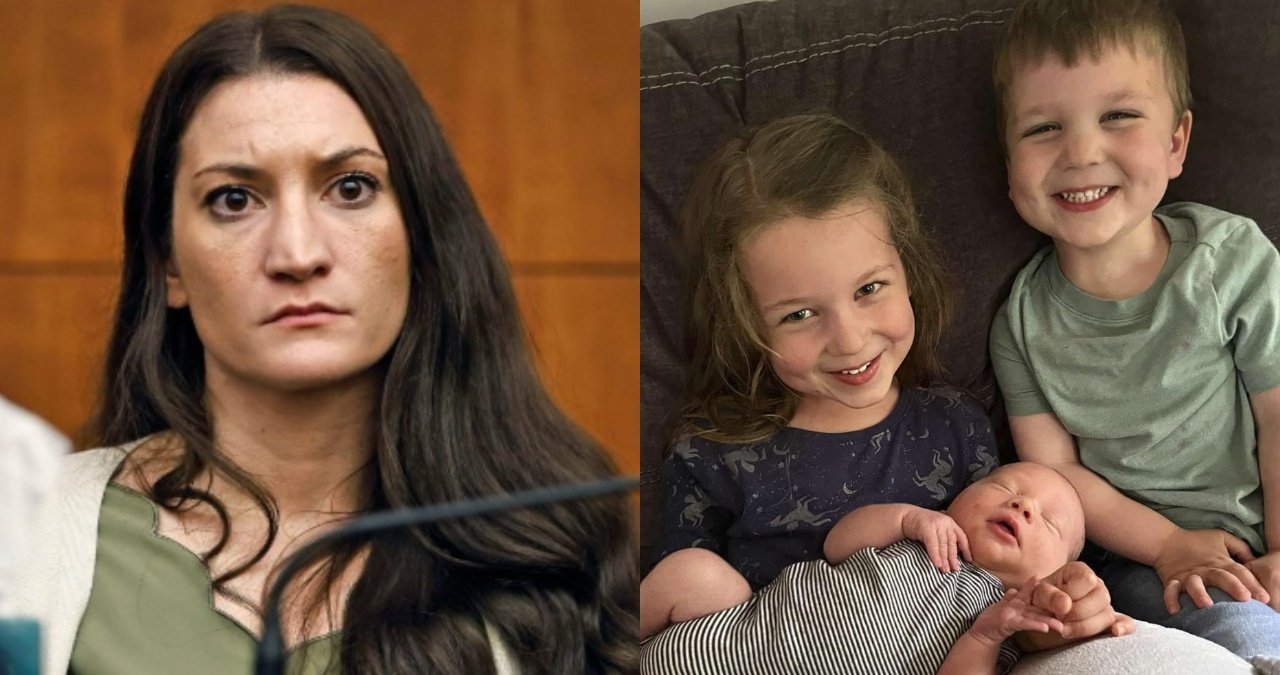
What Lindsay Clancy Said to Her Children Before Killing Them
Dr. Heilbrun testified that Clancy believed she was protecting her children from a life without her and thought they would all be together in heaven. The psychologist described this as “altruistic filicide”—a rare phenomenon in which a parent kills their children believing the act is in the children’s best interest. As she killed her children one by one, she told them, “Go to God, baby. Go to God.” The statement, repeated to each child, reveals the depth of her distorted maternal instinct and the heartbreaking disconnect between her perception and reality.
Heilbrun, a respected expert in forensic psychology with decades of experience evaluating criminal defendants, emphasized that Clancy genuinely believed she was doing the right thing. In her mind, her children would be spared from a future of suffering without her. This belief, he argued, was central to understanding her mental state at the time of the murders and is consistent with patterns observed in some cases of severe postpartum psychosis.
The testimony painted a portrait of a woman completely detached from reality, operating under delusions that shaped her actions. Clancy reportedly thought she was saving her children from a fate worse than death and that they would be reunited in the afterlife—a belief Heilbrun characterized as sincere, however flawed.
Lindsay Clancy’s Statement to Patrick Clancy After Returning Home
The psychologist also revealed what Clancy said to Patrick when he returned home to the family’s Duxbury residence. When her husband asked what she had done, she allegedly told him, “I tried to kill myself.” The response was notable for what it lacked—no immediate confession, no explanation, and no acknowledgment of the children’s fate. It suggested a woman still trapped in the delusional framework that had driven her actions moments earlier.
Patrick Clancy, who has remained publicly silent throughout much of the legal proceedings, discovered the bodies of his children in the basement after returning from his errands. He then found Lindsay injured from the fall and called emergency services. The first responders arrived to find a scene of unfathomable horror—a family home transformed into a crime scene, three young children dead, and a mother clinging to life.
Heilbrun’s testimony provided the first detailed account of Clancy’s statements in the immediate aftermath, painting a picture of confusion and fragmented consciousness that his expert opinion supports as symptomatic of profound mental illness. Prosecutors, however, have pointed to the deliberate sending of Patrick on errands as evidence of premeditation and a calculated plan.
The Hallucination Claim and Expert Skepticism
In a particularly startling revelation, Lindsay later told Heilbrun that she had heard a male voice telling her to kill the children and then herself. The psychologist testified about the unusual nature of this claim, expressing skepticism that the prosecution has seized upon. “The way she described this as happening is that she heard a voice that she’d never heard before, experienced a hallucination, and she’s never experienced it since,” Heilbrun recounted during his testimony.
“But she only experienced it for the eighteen minutes or so that it took to kill the children. To put it mildly, that would be a very, very unusual pattern or manifestation of how this kind of thing comes about. Very unusual,” he added. His statement effectively acknowledged that Clancy’s account does not align with typical patterns of psychotic hallucinations, which generally persist over extended periods rather than appearing for a single, brief window coinciding perfectly with the commission of multiple homicides.
This clinical observation has become a key piece of evidence for the prosecution, which argues that the convenient timing of the alleged hallucination points to fabrication rather than genuine psychosis. The prosecution has suggested that Clancy may be exaggerating or manufacturing symptoms to support her insanity defense, a claim her attorneys vigorously deny. The conflicting interpretations of her mental state are expected to form the crux of the trial, with expert witnesses from both sides presenting competing analyses.
Forensic Diagnosis and Mental Health History
Heilbrun diagnosed Clancy with Bipolar II disorder, while noting that determining her diagnosis was complicated by her extensive mental-health history. The diagnosis represents a significant finding for the defense, as Bipolar II disorder, particularly when untreated or undermanaged, can involve episodes of severe depression, hypomania, and, in some cases, psychotic features. The defense argues that the onset of postpartum psychosis, superimposed on her underlying bipolar condition, created a perfect storm of mental incapacitation.
Court documents and testimony have revealed that Clancy had been struggling with her mental health in the months leading up to the killings. She had reportedly seen multiple mental health professionals, had been prescribed various medications, and had communicated feelings of intense anxiety, depression, and being overwhelmed to family and friends. Her postpartum depression had been documented, and there were concerns about her ability to cope with the demands of caring for three young children, including an infant.
However, the prosecution has pointed to evidence they believe contradicts the insanity defense, including online searches and text messages that, they argue, show a woman who was aware of her actions and planning them. The jury will ultimately be tasked with weighing the psychiatric evidence against the circumstantial evidence of premeditation. Heilbrun’s testimony was particularly notable because, while he is a defense expert, his clinical observations about the unusual nature of Clancy’s hallucination claim may provide ammunition for the prosecution’s cross-examination.
What’s Next for Lindsay Clancy’s Murder Trial
Lindsay Clancy has admitted to killing her children, but the critical question before the jury is whether she was criminally responsible for their deaths or should be found not guilty by reason of insanity. Under Massachusetts law, the insanity defense requires proof that the defendant, due to a mental disease or defect, either did not know the nature or quality of their actions or did not know that what they were doing was wrong. The burden of proof falls on the defense to establish this by a preponderance of the evidence.
Both sides have presented competing expert testimony. The prosecution has called its own forensic psychiatrists who have offered opinions that Clancy was capable of understanding the wrongfulness of her actions at the time of the killings. These experts have pointed to her ability to send her husband out on errands, her choice to attack the children while alone with them, and her survival instinct after the fall as evidence of a functioning mind capable of planning and moral reasoning.
As the trial continues into its next phase, jurors are expected to hear closing arguments from both sides, after which they will deliberate on whether Clancy should be held criminally responsible for the deaths of her children or committed to a psychiatric facility rather than a prison. The outcome of this trial has implications far beyond the courtroom, touching on broader questions about maternal mental health, the criminal justice system’s treatment of mentally ill defendants, and the tragedy of postpartum mental illness. With the nation watching, the jury’s decision will determine whether Lindsay Clancy faces prison time or life in a secure psychiatric facility—a decision that cannot undo the loss of Cora, Dawson, and Callan, but may bring some measure of closure to a community still grappling with the unthinkable.