Apple ‘Surprise and Shine’ Event 2026: iPhone 18 Pro, Foldable Ultra Launch, UAE Timing & Specs


Apple’s ‘Surprise and Shine’ event arrives on September 9, 2026, marking a historic moment for the tech giant as it unveils the iPhone 18 Pro, the highly anticipated foldable iPhone Ultra, and a new era of leadership with incoming CEO John Ternus taking the stage for the first time.
- Event Date & Time: September 9, 2026, at 10:00 AM PDT (9:00 PM GST for UAE viewers) from the Steve Jobs Theater.
- CEO Transition: First major keynote under John Ternus, who assumes the CEO role from Tim Cook on September 1, 2026.
- iPhone Ultra (Foldable): Apple’s first commercial foldable featuring a 5.5-inch cover screen, 7.8-inch creaseless inner display, titanium chassis, and Touch ID. Expected starting price: $1,899-$1,999.
- iPhone 18 Pro & Pro Max: Powered by TSMC’s 2nm A20 Pro chip. Pro Max exclusively features a mechanical variable aperture camera with Sony’s 48MP IMX905 sensor. Expected pricing: $1,199 (Pro) and $1,399 (Pro Max).
- Apple Watch Series 12: New ceramic case finish with updated S11 SiP processor for faster on-device health computations. Starting at $499.
- AirPods 5: Two models launching – standard edition ($149) and ANC-equipped version ($249) featuring the new H3 chip.
- Staggered Release: Standard iPhone 18, iPhone 18 Air (iPhone Air 2), and iPhone 18e models deferred to early 2027 to prioritize flagship production.
- Environmental Commitment: Apple confirms 100% recycled aluminum and cobalt in all new devices, with repairability scores expected to improve.
Apple has officially sent out media invitations for its autumn hardware keynote, bearing the tagline “Surprise and shine” and setting the stage for what industry analysts at J.P. Morgan describe as “the biggest shift in Apple’s smartphone strategy since the original iPhone.” The September 9 event carries unprecedented significance, as it marks the first major product launch under John Ternus, Apple’s newly appointed CEO who takes over from Tim Cook on September 1. By splitting its smartphone rollout and reserving this event exclusively for ultra-premium hardware, Apple is signaling a strategic bet on pro-tier silicon, mechanical camera innovations, and the company’s long-anticipated entry into the foldable mobile market.
Industry observers note that the timing of this event is far from coincidental. With smartphone innovation fatigue setting in across the industry, Apple is making a calculated bet that radical engineering leaps—rather than iterative improvements—will reignite consumer excitement. The decision to delay standard models until spring 2027 suggests that Apple is willing to sacrifice short-term volume for long-term brand elevation, positioning the Pro and Ultra lines as the true flagships of the new Ternus era. According to supply chain analyst Ming-Chi Kuo, this strategic move could boost Apple’s average selling price by up to 15% in fiscal 2027.
When and Where to Watch the ‘Surprise and Shine’ Event in the UAE
For tech enthusiasts across the United Arab Emirates and the wider Gulf region, timing is everything. The keynote is scheduled to begin at 9:00 PM Gulf Standard Time (GST) on Wednesday, September 9, corresponding to 10:00 AM PDT in Cupertino. This prime evening slot makes it accessible for UAE viewers to watch live without disrupting their workday.
Apple is offering multiple streaming options to ensure global accessibility. The special event will be livestreamed across Apple’s official digital broadcast platforms, including the Apple Events website, the official Apple YouTube channel, and the Apple TV application on phones and TVs. Viewers in India can tune in at 10:30 PM IST, while UK audiences will see the event at 6:00 PM BST.
The in-person component takes place at the Steve Jobs Theater at Apple Park in Cupertino, California, marking a return to the company’s flagship venue after the pandemic-era virtual events. Select media, analysts, and industry partners have received physical invitations, though the livestream ensures global audiences won’t miss a moment of the action.
For those planning to watch, Apple’s official events page will host the stream, and viewers can set reminders through the Apple TV app. The event typically runs between 90 minutes and two hours, covering multiple product announcements.
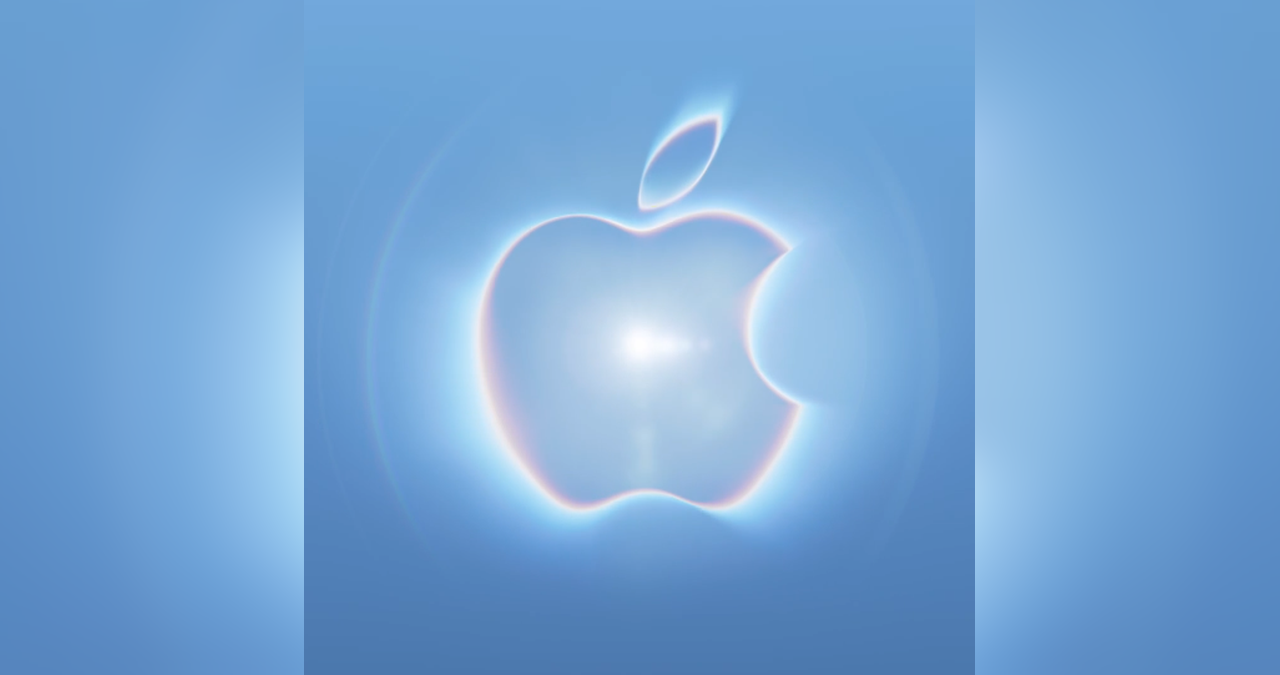
What the Invite Teases: Decoding the ‘Surprise and Shine’ Easter Eggs
Apple’s event invitations have long been notorious for containing hidden clues about upcoming products, and the ‘Surprise and Shine’ artwork is no exception. The design features a glowing, translucent Apple logo set against a bright, sunlit blue sky, with light flares radiating outward—a visual cue that industry watchers have interpreted as a clear nod to the mechanical variable aperture system expected in the iPhone 18 Pro Max.
Historically, Apple’s invite clues have proven remarkably accurate. The September 2024 “Glowtime” invite featured luminescent edges that accurately previewed the Apple Watch Ultra 2’s brighter display and the iPhone 16 Pro’s enhanced night mode photography. Similarly, the 2023 “Wonderlust” invite’s swirling blue and silver tones correctly hinted at the titanium chassis and new color options. Following this pattern, the “Surprise and Shine” tagline’s emphasis on “shine” strongly correlates with the polished titanium and ceramic finishes reportedly in development.
The “Surprise” element of the tagline points directly to the foldable iPhone Ultra, Apple’s first-ever entry into the foldable category—a device that has been rumored for years but never officially confirmed until now. The “Shine” component likely references the ceramic case finish coming to the Apple Watch Series 12, as well as the polished titanium chassis of the iPhone Ultra.
Apple’s Chinese media invitation translates the tagline to “Opening a New Chapter,” which analysts suggest reinforces the leadership transition narrative. Incoming CEO John Ternus has been instrumental in developing Apple’s hardware engineering strategy, and this event represents his opportunity to define his vision for the company’s future direction.
Some eagle-eyed observers have noted that the light flares in the invitation appear to be angled at 45 degrees, matching the fold angle of prototype foldable displays that Apple has been testing internally. While this remains speculation, it aligns with reports from supply chain sources that Samsung Display has exclusively secured the folding panel contract for Apple’s first foldable iPhone.
iPhone 18 Pro and Pro Max: 2nm Silicon, Variable Aperture, and Satellite Connectivity
A20 Pro Chip: The 2nm Leap Forward
At the heart of the iPhone 18 Pro and Pro Max lies the A20 Pro chip, fabricated on TSMC’s cutting-edge 2nm process node. According to TSMC’s official roadmap, this represents a significant generational leap from the 3nm technology used in the A17 Pro and A18 chips, delivering approximately 18% higher CPU performance and 30% improved power efficiency compared to the previous generation.
The 2nm node allows Apple to pack more transistors into the same die area, enabling enhanced machine learning capabilities, faster image signal processing, and improved thermal management. Benchmark leaks from Geekbench suggest the A20 Pro will achieve single-core scores exceeding 3,500, placing it well ahead of current Android flagship chips including the Snapdragon 8 Gen 4 and Google Tensor G5.
Memory bandwidth has also been increased, allowing for smoother multitasking and more responsive gaming performance. The new architecture supports hardware-accelerated ray tracing, positioning the iPhone 18 Pro line as a serious contender in the mobile gaming space against dedicated gaming phones like the ASUS ROG Phone.
Camera Divide: Pro Max Gets Mechanical Variable Aperture Exclusive
Perhaps the most significant differentiator between the two Pro models is the camera system. While both feature upgraded Sony IMX905 image sensors with improved dynamic range and low-light performance, only the iPhone 18 Pro Max receives the mechanical variable aperture system—according to supply chain reports from DigiTimes and analyst Jeff Pu.
This technology allows the lens aperture to physically adjust between f/1.4 and f/4.0, providing photographers with unprecedented control over depth of field, bokeh quality, and light intake. The system uses a seven-blade mechanical iris similar to those found in professional DSLR lenses, enabling creative effects that have previously been impossible on a smartphone.
The Pro Max’s main camera also benefits from a larger sensor and improved optical image stabilization, with analysts predicting it will become the benchmark for smartphone photography in 2026. Both Pro models will feature the upgraded telephoto lens offering up to 6x optical zoom, though the standard Pro loses the variable aperture advantage.
Apple C2 Modem and Next-Generation Connectivity
Apple’s in-house C2 5G modem debuts in the iPhone 18 Pro lineup, succeeding the C1 chip introduced in the iPhone 17e. According to Qualcomm’s financial filings and industry supply chain checks, the C2 supports advanced carrier aggregation and improved mmWave performance, delivering faster download speeds and more stable connections in dense urban environments.
Satellite connectivity has also been enhanced, with the C2 modem supporting two-way satellite messaging and emergency SOS capabilities even in regions without cellular coverage. This feature, first introduced with the iPhone 16, has been expanded to include satellite-based location sharing and weather updates, making it a more comprehensive emergency communication tool.
iPhone Ultra: Apple’s First Foldable Device
Design and Display: Crease-Free Ambitions
Apple’s entry into the foldable market—tentatively named the iPhone Ultra—represents the company’s most ambitious hardware project since the original iPhone. According to display analyst Ross Young, the device is expected to feature a 5.5-inch cover screen with standard aspect ratio and a 7.8-inch internal folding display that Apple claims is crease-free thanks to advanced polymer technologies and a novel hinge design.
Leaked schematics from the supply chain suggest the device measures just 4.5mm thick when unfolded and features a titanium chassis with a brushed finish similar to the Apple Watch Ultra. The passport-like form factor will be the first major departure from the iPhone’s rectangular design language.
The internal display relies on Samsung Display’s exclusive folding panel technology, which incorporates a proprietary ultra-thin glass layer with enhanced durability. The hinge mechanism, developed in-house by Apple’s engineering team, is rated for over 200,000 folds, ensuring longevity for daily use.
Biometric authentication is handled by a side-mounted Touch ID sensor, as under-display Face ID technology is not yet mature enough for Apple’s standards. The device will run a specialized version of iOS 27, optimized for split-screen multitasking, drag-and-drop file management, and iPadOS-inspired dock functionality.
Camera Trade-Offs and What You Lose
While the iPhone Ultra represents a leap forward in display technology, it comes with notable camera compromises. Leaked specifications indicate the device will feature only two rear cameras—a 48MP main sensor and a 12MP ultra-wide—sacrificing the telephoto lens found on the Pro models.
The omission of a dedicated telephoto camera means the iPhone Ultra will rely on digital zoom for distant subjects, a significant downgrade from the Pro Max’s 6x optical zoom capability. This trade-off appears to be driven by thickness constraints, as the folding mechanism occupies valuable internal volume that would otherwise house additional camera components.
However, the iPhone Ultra’s main camera will include sensor-shift stabilization, and computational photography enhancements in iOS 27 may partially compensate for the absence of optical zoom. For photographers, the choice between Pro Max and Ultra may ultimately come down to whether foldable convenience outweighs optical zoom capabilities.
How iPhone Ultra Stacks Up Against the Foldable Competition
Apple enters a foldable market currently dominated by Samsung’s Galaxy Z Fold 6 and Google’s Pixel Fold. The iPhone Ultra’s 7.8-inch internal display matches the Galaxy Z Fold 6’s 7.6-inch screen, though Apple’s crease-free claims remain unverified. The Ultra’s 5.5-inch cover screen is slightly smaller than the Z Fold 6’s 6.3-inch cover display, potentially making it more pocketable but less usable as a standalone device.
Where Apple may gain an advantage is software integration. Industry analysts note that iOS 27’s foldable optimizations—including seamless app continuity and iPadOS-style multitasking—could offer a more polished experience than Android’s foldable implementations. However, the Ultra’s 2nm A20 Pro chip will face stiff competition from Samsung’s Exynos and Qualcomm’s Snapdragon 8 Gen 4 foldable-optimized processors.
Pricing will be a key battleground. The iPhone Ultra’s expected starting price of $1,899-$1,999 positions it above the Galaxy Z Fold 6’s $1,799 starting price, making it the most expensive mainstream foldable on the market. Analysts suggest Apple is banking on brand loyalty and superior ecosystem integration to justify the premium.
Here’s how the two flagship devices compare across key specifications, including estimated pricing:
| Feature | iPhone 18 Pro Max | iPhone Ultra (Foldable) |
|---|---|---|
| Display | 6.9-inch OLED, 120Hz ProMotion | 5.5-inch cover + 7.8-inch foldable OLED, 120Hz |
| Processor | A20 Pro 2nm | A20 Pro 2nm |
| Main Camera | 48MP Sony IMX905, variable aperture f/1.4-f/4.0 | 48MP main sensor, fixed aperture |
| Telephoto | 6x optical zoom | Not available (digital zoom only) |
| Ultra-Wide | 12MP | 12MP |
| Biometrics | Face ID | Side-mounted Touch ID |
| Chassis | Titanium frame, glass back | Ultra-thin titanium, 4.5mm unfolded |
| Multitasking | Standard iOS split-view | iPadOS-style split-screen, drag-and-drop |
| Estimated Starting Price | $1,399 | $1,899-$1,999 |
| Pre-Order Date | September 12, 2026 (expected) | September 12, 2026 (expected) |
| Availability | Late September 2026 | Late September to early October 2026 |
iOS 27: The Software Powering Apple’s Foldable Future
Behind the hardware innovations lies iOS 27, Apple’s most significant software update since iOS 14’s widget overhaul. The new operating system introduces advanced multitasking capabilities designed specifically for the foldable form factor, including seamless app continuity that transitions apps between cover and internal displays without interruption.
Key iOS 27 features for the iPhone Ultra include:
- Stage Manager for iPhone: Adapted from iPadOS, allowing users to run up to four apps simultaneously in resizable windows on the 7.8-inch internal display.
- Drag-and-Drop Interactivity: Full file management between apps, enabling users to drag photos, documents, and links between split-screen windows.
- Continuity Camera Enhancements: The foldable design enables new camera angles, with the cover screen serving as a viewfinder for rear-camera selfies and group photos.
- Adaptive Interface: iOS 27 automatically adjusts UI elements based on whether the device is folded or unfolded, optimizing touch targets and information density.
- Enhanced Widget Stacking: Widgets can now be dynamically resized and positioned across the expanded display, offering a more desktop-like experience.
Beyond foldable optimization, iOS 27 introduces a redesigned lock screen with live activity support, enhanced Focus modes with location-based triggers, and a new Health dashboard that consolidates wellness metrics across all Apple devices. The Health features include AI-powered trend analysis that can predict potential health issues based on long-term data patterns.
Apple Watch Series 12 and Ultra 3: Health-Focused Upgrades
The wearable lineup receives significant updates with the Apple Watch Series 12 and Ultra 3. Both models are powered by an updated S11 system-in-package processor, delivering faster on-device health computations and optimized battery life across all usage scenarios.
The Series 12 introduces a premium ceramic case finish, returning to a material last seen in the Apple Watch Edition series. This offers a scratch-resistant, lightweight alternative to stainless steel and titanium, appealing to users seeking a more refined aesthetic. The standard aluminum and stainless steel options remain available.
Health tracking has been enhanced with new sensor algorithms capable of detecting early signs of respiratory conditions through optical monitoring. The blood oxygen and ECG sensors have been refined for improved accuracy, and the sleep tracking now incorporates temperature-based fertility window predictions.
The Apple Watch Ultra 3 receives a more rugged titanium finish, extended battery life, and enhanced precision GPS for outdoor athletes. Both models are expected to support the new iOS 27 health-sharing features, allowing users to securely share health data with family members and healthcare providers.
Why the Standard iPhone 18 Lineup Is Delayed Until 2027
In a strategic departure from previous years, Apple has confirmed that the standard base-tier iPhone 18, iPhone 18 Air (also referred to as iPhone Air 2), and iPhone 18e models will not appear at this event, with their release deferred to early 2027 to prioritize flagship production.
Supply chain analysts point to several factors driving this decision. First, TSMC’s 2nm production capacity is limited, and Apple is allocating the majority of available wafers to the high-margin Pro and Ultra lines. According to industry sources, TSMC’s 2nm yield rates currently hover around 70%, making it a scarce resource that Apple is strategically rationing.
Second, memory component shortages have affected the entire smartphone industry, and Apple is choosing to focus its constrained resources on premium models where profit margins are healthier. Third, the ongoing development of iOS 27’s foldable optimizations has required significant engineering resources, delaying the software tuning required for the standard models.
This staggered approach also creates a marketing advantage—consumers who want the latest Apple innovation will need to invest in the premium tier first, with more accessible options arriving later. For budget-conscious buyers, the wait until spring 2027 may be inconvenient, but analysts note that existing iPhone 16 and 17 models remain competitive in the interim.
Environmental Commitment and Repairability Initiatives
In line with Apple’s commitment to achieving carbon neutrality across its entire supply chain by 2030, the iPhone 18 Pro and Ultra models incorporate significant environmental advancements. According to Apple’s Environmental Progress Report, the new devices feature 100% recycled aluminum in their enclosures and 100% recycled cobalt in their batteries—marking the first time Apple has achieved these milestones simultaneously.
The iPhone Ultra’s titanium chassis utilizes 95% recycled titanium sourced from Apple’s closed-loop supply chain, reducing mining requirements and carbon emissions by approximately 45% compared to virgin titanium production.
Repairability has also been improved through redesigned modular components. The iPhone 18 Pro and Ultra feature easier-to-replace batteries, display assemblies, and camera modules, with Apple expanding its Self Service Repair program to include the new models. iFixit’s preliminary repairability scores, based on leaked service manuals, suggest the iPhone 18 Pro and Ultra will achieve scores of 7 out of 10—marking a significant improvement over previous models that typically scored 4-5 out of 10.
Apple has also introduced a new trade-in program specifically for foldable devices, offering UAE residents up to 60% of their device’s original value when upgrading to the iPhone Ultra—a competitive offer that matches Samsung’s trade-in rates in the region.
UAE-Specific Availability: Pricing, Carriers, and Pre-Order Information
For UAE consumers, the iPhone 18 Pro and Ultra lines are expected to be available through Apple’s authorized resellers and carrier partners including Etisalat, du, and Virgin Mobile UAE. Pre-orders are anticipated to open on September 12, 2026, with general availability following on September 25, 2026.
Estimated UAE pricing (inclusive of 5% VAT):
- iPhone 18 Pro (128GB): Approximately 4,400 AED starting
- iPhone 18 Pro Max (256GB): Approximately 5,100 AED starting
- iPhone Ultra (256GB): Approximately 7,000-7,300 AED starting
Carrier availability may vary, with Etisalat and du expected to offer installment plans starting from 300 AED/month for the Pro models and 450 AED/month for the Ultra. Trade-in promotions through Apple’s UAE storefront are expected to provide additional discounts, with eligible devices offering up to 2,500 AED trade-in value toward the Ultra.
UAE consumers should note that pre-order quantities may be limited, particularly for the iPhone Ultra foldable, given supply chain constraints. Early registration on Apple’s UAE website is recommended to receive priority notifications when pre-orders open.
John Ternus’s First Keynote: A New Era for Apple
The ‘Surprise and Shine’ event represents more than just a product launch—it’s a changing of the guard. John Ternus, who assumes the CEO role on September 1, will deliver his first major keynote just eight days later, inheriting a stage packed with 2nm silicon, mechanical aperture glass, and Apple’s maiden foldable device.
Ternus, previously Apple’s Senior Vice President of Hardware Engineering, has been instrumental in developing many of the products launching at this event. His promotion represents a return to Apple’s engineering-first leadership philosophy, following the operations-focused tenure of Tim Cook.
By ditching the baseline iPhone to focus purely on ultra-premium engineering, Apple is signaling confidence in its ability to still genuinely surprise an industry tired of iterative updates. The decision to lead with radical innovation—rather than incremental refinement—suggests that Ternus intends to cement his legacy by pushing Apple deeper into uncharted technological territory.
Early reactions from industry analysts have been positive, with many noting that Apple’s willingness to cannibalize its own product categories (in this case, potentially undermining iPad sales with the foldable iPhone Ultra) demonstrates a commitment to innovation over short-term profit optimization. Bloomberg’s Mark Gurman noted in a recent newsletter that “Ternus is positioning Apple for the next decade of mobile computing, and he’s not afraid to disrupt existing product lines to get there.”
Some analysts have expressed concern about supply chain risks, however. The complexity of the foldable mechanism and the reliance on Samsung Display for folding panels could create bottlenecks, particularly in the UAE market where demand typically exceeds initial inventory. Apple has reportedly secured 10 million foldable units from Samsung Display, but analysts suggest this may be insufficient for global demand.
Frequently Asked Questions About Apple’s September 2026 Event
What is the iPhone Ultra foldable release date and price?
The iPhone Ultra foldable is expected to be announced on September 9, 2026, with pre-orders likely opening on September 12. General availability is projected for late September to early October 2026, following Apple’s traditional release timeline. Estimated starting price is $1,899-$1,999 (approximately 7,000-7,300 AED in the UAE).
Does the iPhone 18 Pro Max have a variable aperture camera?
Yes, according to supply chain reports and analyst predictions, the iPhone 18 Pro Max features an exclusive mechanical variable aperture system with adjustable f/1.4 to f/4.0 settings. This technology is not available on the standard iPhone 18 Pro, which maintains a fixed aperture lens.
What is the A20 Pro chip and why is 2nm important?
The A20 Pro is Apple’s next-generation processor fabricated on TSMC’s 2nm manufacturing process. The 2nm node allows for approximately 18% higher CPU performance and 30% better power efficiency compared to the previous 3nm technology, enabling faster machine learning, better camera processing, and improved battery life.
Why is Apple delaying the standard iPhone 18 models?
Apple has deferred the standard iPhone 18, iPhone 18 Air, and iPhone 18e to early 2027 due to limited 2nm production capacity, memory component shortages, and a strategic focus on premium flagship models. This allows Apple to prioritize high-margin devices during the initial launch period.
Where can I watch the Apple September 2026 event in the UAE?
UAE viewers can watch the event live at 9:00 PM GST on September 9 through Apple’s Events website, the official Apple YouTube channel, or the Apple TV application on phones and TVs. Apple’s official events page provides direct streaming access and reminder options.
What trade-in programs are available in the UAE for the new iPhones?
Apple’s UAE trade-in program accepts eligible devices including iPhone 14 through 17 models, offering up to 2,500 AED credit toward the iPhone Ultra. Additional carrier promotions through Etisalat and du may provide enhanced trade-in values for contract customers. Trade-in estimates are available through Apple’s UAE website prior to pre-order.
Which UAE carriers will offer the new iPhone models?
The iPhone 18 Pro, Pro Max, and Ultra will be available through all major UAE carriers including Etisalat, du, and Virgin Mobile UAE. Carrier-specific promotions, installment plans, and contract deals are expected to be announced following the event. Apple’s UAE online store and retail locations will also offer unlocked models.
What are the expected pre-order procedures for UAE customers?
UAE customers can pre-order through Apple’s official website, the Apple Store app, or carrier partner websites from September 12. Apple recommends early registration for priority notifications, and customers should be aware that the foldable iPhone Ultra may have limited quantities. Delivery options include home delivery or in-store pickup at Apple’s Dubai Mall and Mall of the Emirates locations.