Todd Monken has his eye on a late-round Draft quarterback who could impact Shedeur Sanders’ standing in Cleveland, as the Browns’ new head coach evaluates Penn State’s Drew Allar as a potential developmental asset behind an unsettled depth chart.
- Monken’s QB Philosophy: The new Browns head coach prioritizes arm talent, processing speed, and system fit over draft pedigree, historically developing quarterbacks at every stop.
- Drew Allar Interest: Browns insider Mary Kay Cabot confirmed Cleveland is considering the Penn State product as a late-round option to strengthen the quarterback room.
- Sanders’ 2025 Statistics: The young QB posted a 3-4 record as a starter with a 61.4% completion rate, 1,847 passing yards, 7 touchdowns, 5 interceptions, and an 82.3 passer rating.
- Injury Impact: Allar’s serious leg injury in October caused his draft stock to plummet from projected first-rounder to potential Day 3 selection.
- Gabriel Trade Bait: The 2025 third-rounder could be moved if Cleveland finds a quarterback they prefer in the upcoming Draft.
- Watson Uncertainty: The former franchise QB has appeared in only 19 games since 2022 and carries a $73.8 million dead cap hit if released.
Last season, Shedeur Sanders finished as the starter in the final seven games and posted a 3-4 record. However, that record was somewhat misleading, especially since two of those wins came largely thanks to the defense, in the final games of the season against the Pittsburgh Steelers and the Cincinnati Bengals. Sanders completed 61.4% of his passes for 1,847 yards, with 7 touchdowns against 5 interceptions and an 82.3 passer rating—numbers that reflect promise but also inconsistency. He showed flashes of potential but failed to cement himself as the unquestioned franchise quarterback Cleveland desperately needs.
The other case is Deshaun Watson, who has not played since Week 7 of the 2024 season due to injury. His tenure has been a true failure, as he has appeared in only 19 games since 2022. Watson’s contract, which carries a $73.8 million dead cap hit if released and $62.1 million in remaining guaranteed money through 2027, creates a financial albatross that complicates every roster decision. Meanwhile, Dillon Gabriel had six starts last season but struggled significantly with a 58.2% completion rate, 1,223 passing yards, 5 touchdowns, and 4 interceptions, making him a potential trade candidate. The combination of injury, ineffectiveness, financial burden, and uncertainty leaves Cleveland’s quarterback room in a precarious state.
For a franchise that has cycled through 38 starting quarterbacks since 1999, the pressure is mounting on Monken to finally find stability. The Browns’ offensive struggles in the last campaign—ranking near the bottom in yards per game, third-down conversion rate, and red-zone efficiency—underscore the urgency of this decision. Cleveland’s official team statistics confirm the unit’s regression, while NFL.com’s quarterback analysis highlights the league-wide implications of the Browns’ ongoing instability at the position.
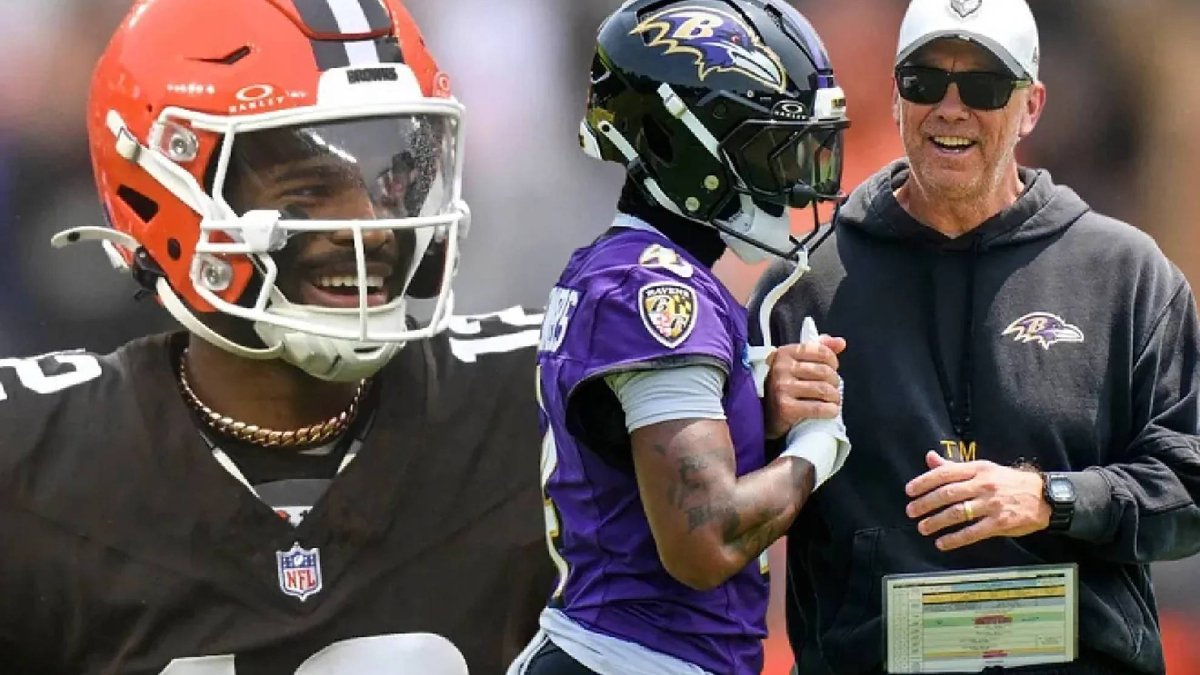
Todd Monken’s Quarterback Philosophy: Why Developmental QBs Matter
Todd Monken has a long history of maximizing quarterback talent through patient development and system fit, making the Browns’ interest in a late-round developmental prospect entirely consistent with his coaching DNA. From his early coordinator days at Eastern Michigan to his offensive masterclasses with the Tampa Bay Buccaneers and Georgia Bulldogs, Monken has consistently demonstrated a preference for quarterbacks who possess specific physical tools rather than polished polish.
The Monken Offensive System: Fit, Timing, and Decision-Making
Monken’s offensive scheme, rooted in the Air Raid principles he absorbed under Mike Leach and refined through decades of coaching, prioritizes three foundational quarterback attributes: arm talent, processing speed, and pre-snap recognition. Unlike systems that rely on static reads or simplified progressions, Monken’s attack demands that quarterbacks diagnose defensive coverages at the line of scrimmage, anticipate windows before receivers break, and deliver the ball with velocity and accuracy to all three levels of the field.
At Tampa Bay, Monken transformed Jameis Winston’s raw arm talent into a 5,000-yard season—despite the interception issues—by designing concepts that played to his quarterback’s aggressiveness while mitigating risk through schematic spacing. At Georgia, he developed Stetson Bennett from a walk-on afterthought into a two-time national champion by tailoring the offense to Bennett’s quick-release, high-processing skill set rather than forcing a system upon him.
This adaptability is Monken’s superpower. He doesn’t recruit or draft quarterbacks to fit a rigid archetype; he designs offenses around the talents available. This explains why the Browns would consider a player like Allar, whose physical traits may not align with conventional offensive systems but could thrive in a scheme built to maximize his specific gifts.
What Monken Looks For: Arm Talent, Processing Speed, and Adaptability
When evaluating quarterback prospects, Monken and his staff prioritize three measurable traits above all else. First is arm strength—not just the ability to throw deep, but the velocity to fit passes into tight NFL windows over the middle and the touch to layer throws over linebackers and under safeties. Second is processing speed: how quickly a quarterback reads the field, works through progressions, and makes decisions under pressure. Third is adaptability—the capacity to absorb coaching, adjust to game-plan changes, and learn from mistakes without losing confidence.
Drew Allar checks all three boxes. The Penn State product possesses a prototype NFL frame and an arm that scouts have consistently rated among the strongest in his draft class. His processing improved significantly throughout his college career, particularly in reading zone coverages and exploiting defensive vulnerabilities. His adaptability, demonstrated by his willingness to return for another season and refine his game despite being draft-eligible, speaks to the kind of coachable demeanor Monken values in developmental quarterbacks.
Monken’s Quarterback Development Track Record
| Quarterback | Team/System | Monken’s Role | Development Outcome |
|---|---|---|---|
| Jameis Winston | Tampa Bay Buccaneers | Offensive Coordinator | 5,000+ yards, 33 TDs in 2019; maximized aggressive arm talent |
| Stetson Bennett | Georgia Bulldogs | Offensive Coordinator | Two-time national champion; developed from walk-on to NFL draftee |
| JT Daniels | Georgia Bulldogs | Offensive Coordinator | Restored confidence, improved mechanics before transfer |
| Nick Mullens | Cleveland Browns | Head Coach | System familiarity and reliable backup development |
Drew Allar and the 2026 Draft Class: Who Fits the Monken Mold?
Drew Allar’s journey from first-round lock to potential late-round steal mirrors the volatility of the NFL Draft evaluation process, creating a value opportunity that Monken and the Browns’ front office cannot ignore.
Allar’s Scouting Report: Traits, Injury Setback, and Draft Slide
A year ago, Drew Allar was projected as a clear first-round candidate, with Pro Football Focus grading him as a top-32 prospect with elite arm talent and NFL-ready size. However, he suffered a serious left leg injury in early October during a game against Northwestern and missed the remainder of the season, which severely impacted his draft stock. Since it was his final year of eligibility, Allar—who bet on himself by returning to college for one more year—was undoubtedly affected by the injury’s timing and severity.
Scouts who evaluated Allar before the injury consistently praised his arm talent, pocket presence, and ability to make throws that few college quarterbacks can attempt. His 6-foot-5, 240-pound frame gives him the prototypical build NFL teams seek, while his arm strength allows him to drive the ball to the boundary and attack deep zones with authority. His decision-making improved year over year, and he demonstrated growing comfort with progressions and pre-snap reads throughout his junior campaign.
The injury, however, revealed the fragility of draft stock in a process that values recent tape above all else. Teams that might have considered Allar in the first or second round now face a question: did the injury expose a flaw in his durability, or did it create a buying opportunity? For Monken and the Browns, the answer appears to be the latter.
Beyond Allar: Other Late-Round QB Prospects on Cleveland’s Radar
While Drew Allar has emerged as the most prominent name linked to Cleveland’s late-round interest, the Browns’ quarterback evaluation extends beyond a single prospect. Monken’s system could accommodate several quarterback profiles, and the front office is likely conducting a comprehensive review of Day 3 options.
Additional late-round targets with traits that align with Monken’s system include:
- Jaxson Dart (Ole Miss): A 6-foot-2, 220-pound signal-caller with a live arm and plus mobility. Dart completed 64.3% of his passes in 2025 with 3,546 yards, 23 touchdowns, and 11 interceptions. His aggressive downfield style and comfort in a spread system make him an intriguing developmental piece.
- Kyle McCord (Syracuse): The 6-foot-3, 220-pound transfer from Ohio State finished 2025 with 4,122 passing yards, 28 touchdowns, and 12 interceptions. McCord’s arm strength and willingness to push the ball vertically align with Monken’s downfield emphasis, while his experience in a pro-style system at Ohio State accelerates his development curve.
- Davis Brin (Georgia Southern): A 6-foot-2, 210-pound prospect with a quick release and underrated athleticism. Brin posted 3,678 yards, 30 touchdowns, and 9 interceptions in 2025, showcasing the kind of processing speed and accuracy that fit Monken’s timing-based offense.
Pro Football Focus analyst Trevor Sikkema noted: “The 2026 quarterback class is deeper than people realize, particularly on Day 3. Allar’s slide is the headline, but Dart and McCord offer similar developmental upside without the injury concerns.” This sentiment reinforces why the Browns are casting a wide net in their evaluation process.
The Browns currently hold nine picks in the upcoming Draft, including selections in rounds 4, 5, and 6, giving them ample ammunition to address multiple needs. A late-round selection on a quarterback would not preclude them from addressing other positions, nor would it signal a lack of faith in Sanders—rather, it would represent a patient, value-oriented approach to roster construction.
The Shedeur Sanders Impact: Competition, Development, and Depth Chart
The addition of a late-round developmental quarterback would fundamentally alter the trajectory of Shedeur Sanders’ future in Cleveland, creating a dynamic that ranges from friendly competition to legitimate long-term challenge for the starting role.
Sanders’ Performance: Statistical Reality Check and Growth Areas
Sanders’ seven-game audition as the Browns’ starter offered glimpses of potential but also exposed areas requiring significant improvement. His 61.4% completion rate ranked 23rd among qualifying quarterbacks, while his 82.3 passer rating placed him 27th. His 7 touchdowns against 5 interceptions yielded a 1.4 touchdown-to-interception ratio that falls below the league average of 1.8. More concerning, Sanders averaged just 6.2 yards per attempt, indicating a conservative approach that often left big plays on the field.
The defense-driven wins against the Steelers and Bengals masked some of these deficiencies, but the coaching staff’s internal evaluation would have noted every missed read and errant throw. Pro Football Focus graded Sanders with a 64.7 overall mark, citing poor decision-making under pressure (36.2 rating when blitzed) and inconsistency on throws beyond 20 yards (4-of-16, 1 touchdown, 2 interceptions) as primary concerns.
Perhaps most concerning for Sanders’ long-term prospects is the gap between his current performance and the elite level required to compete in the AFC North. Quarterbacks in this division—including Lamar Jackson, Joe Burrow, and potentially Russell Wilson or Kenny Pickett—set a high bar. Sanders must demonstrate significant growth in processing speed, accuracy on deep throws, and the ability to elevate the players around him to justify the Browns’ continued investment in his development.
Critical 2026 Development Benchmarks for Sanders
For Sanders to secure his position as Cleveland’s long-term franchise quarterback, he must achieve specific performance benchmarks during the 2026 season:
- Completion percentage: 64% or higher (current: 61.4%)
- Passer rating: 90.0 or higher (current: 82.3)
- Yards per attempt: 7.2 or higher (current: 6.2)
- Touchdown-to-interception ratio: 2.0 or higher (current: 1.4)
- Pressure performance: 75.0+ passer rating when blitzed (current: 36.2)
- Deep passing: 40%+ completion rate on throws beyond 20 yards (current: 25%)
Monken’s history suggests he will give Sanders a genuine opportunity to win the starting job, provided the young quarterback earns it through training camp performance and preseason execution. However, Monken also has no loyalty to draft status or contract value—he will play the quarterback who gives the Browns the best chance to win, regardless of pedigree.
How a Late-Round QB Changes Sanders’ Trajectory
The addition of a quarterback like Drew Allar would place Sanders on notice while simultaneously providing the kind of internal competition that accelerates development. In the NFL, quarterbacks who face genuine competition for their roster spot often respond with improved performance, sharper focus, and greater accountability.
More importantly, Allar’s presence would allow the Browns to manage Sanders’ development with patience rather than desperation. If Sanders struggles or suffers an injury, Monken would have a viable alternative ready to step in. If Sanders excels, Allar would provide quality depth and potential trade value down the line. This approach gives Cleveland flexibility it currently lacks with a depth chart featuring Watson’s uncertain availability and Gabriel’s unproven track record.
For Sanders, the message is clear: the Browns are investing in quarterback depth, not anointing a long-term starter. The job is his to win and his to keep, but the organization will not hesitate to pivot if performance warrants a change.
Roster and Cap Implications: The Dillon Gabriel Factor
The Browns’ interest in a late-round quarterback carries significant roster and salary cap implications, particularly regarding Dillon Gabriel’s future with the organization and the team’s broader roster-building strategy.
Gabriel, selected in the third round of the previous Draft, has struggled in limited action and could be available for trade if Cleveland identifies a quarterback they prefer. Browns insider Mary Kay Cabot articulated this possibility clearly: “As for drafting Allar, I’m all for taking developmental quarterbacks and seeing where it might lead. If the Browns find one they like, perhaps they’d want to see what they could get for the third-rounder Dillon Gabriel.”
Gabriel’s Future: Trade Value and the Third-Round Investment
Gabriel’s trade value is difficult to project. As a recent third-round pick with limited NFL tape, he might command a mid-round pick from a quarterback-needy team willing to take a flyer on Dillon Gabriel’s potential. His rookie contract carries a $1.2 million cap hit, making him an affordable acquisition for interested teams. The return, while modest, could provide additional draft capital to address other roster needs.
Should the Browns select Allar or another developmental quarterback, Gabriel’s role would become redundant, making a trade the most logical outcome. The team would recoup some value from its previous investment while clearing a roster spot for the incoming prospect. This approach also allows Cleveland to reset the quarterback development clock, potentially aligning a rookie’s trajectory with Sanders’ timeline.
The economics of the quarterback position favor this approach. Rookie contracts are the most valuable assets in the salary cap era, and a fourth-round pick (approximately $850,000 cap hit) is significantly cheaper than a third-round pick ($1.2 million). If Allar develops into a reliable backup or future starter, the Browns would have maximized value from a relatively modest investment.
Constructing the 2026 Browns Quarterback Room
With Watson’s contract complicating the cap picture—his $73.8 million dead cap hit and $62.1 million remaining guarantees create an anchor that makes release or trade nearly impossible in the near term—and Sanders on a rookie deal ($2.8 million cap hit), the Browns must be strategic about quarterback expenditures. A late-round selection on a developmental quarterback carries minimal financial risk while offering substantial upside.
The ideal quarterback room would feature Watson (if healthy) as the experienced veteran, Sanders as the developmental starter with a $2.8 million cap hit, and a rookie (as the long-term project) with a sub-$1 million cap hit. Gabriel would be the odd man out, likely traded to the highest bidder. This construction would give Cleveland a total quarterback cap hit of approximately $78 million—high but manageable given Watson’s guaranteed commitments, and far preferable to alternatives requiring additional veteran signings.
This construction gives Monken and the coaching staff maximum flexibility. They can evaluate Sanders with a full season of starting experience, develop the rookie in practice and preseason, and maintain Watson’s potential contributions without relying on his uncertain availability.
What This Means for the Browns’ 2026 Season and Beyond
The Browns’ pursuit of a late-round quarterback signals a patient, value-oriented approach to roster construction under the new regime. Monken is building for sustained success, not immediate gratification, and the quarterback position is the most critical component of that vision.
For the upcoming season, the most likely outcome is a quarterback competition between Watson (if healthy) and Sanders, with the rookie serving as the third option and developmental project. However, the presence of a developmental quarterback creates an incentive for Sanders to accelerate his growth and for Watson to prove his durability and effectiveness.
Looking beyond the current campaign, the Browns are positioning themselves with multiple options. If Sanders develops into a franchise quarterback, the rookie can be developed as a trade asset or long-term backup. If Sanders struggles, the rookie provides a potential replacement without requiring a high-profile free agent signing or high draft pick investment. If Watson returns to form, the Browns could potentially trade Sanders or the rookie for additional assets.
The one certainty is that the Browns will not be held hostage by quarterback uncertainty. Monken and the front office are building depth, creating competition, and ensuring that the quarterback room is never empty of potential. Whether that potential is realized depends on performance, health, and development—but the structure is now in place for sustainable success.
Frequently Asked Questions
What type of quarterback does Todd Monken prefer in his offensive system?
Monken prioritizes quarterbacks with strong arm talent, quick processing speed, and adaptability. His system demands accuracy to all levels of the field, pre-snap recognition, and the ability to make decisions under pressure. He values physical tools over polish, believing he can develop quarterbacks through coaching and scheme tailoring.
Why would the Browns draft a late-round QB when they have Shedeur Sanders?
The Browns are building depth and creating internal competition. Sanders is unproven as a long-term starter with a 61.4% completion rate and 82.3 passer rating in 2025, and the organization wants insurance in case he doesn’t develop as expected. A late-round pick carries minimal financial risk while offering substantial upside if the prospect develops.
How did Drew Allar’s injury affect his NFL Draft stock?
Allar was projected as a first-round pick before suffering a serious leg injury in October. The injury caused him to miss the remainder of the season, eliminating the opportunity to showcase his abilities in the lead-up to the Draft. His stock has dropped significantly, potentially making him available on Day 3.
What does a late-round QB mean for Shedeur Sanders’ future as the Browns’ starter?
Sanders remains the favorite to start, but the addition of a developmental quarterback places him on notice. He must demonstrate significant improvement in training camp and the regular season to secure his role, specifically achieving benchmarks of 64% completion, 90.0 passer rating, 7.2 yards per attempt, and a 2.0 touchdown-to-interception ratio. The Browns are committed to giving him an opportunity but will pivot if performance doesn’t meet expectations.
Who else could the Browns target in the late rounds of the Draft?
In addition to Drew Allar, the Browns could consider quarterbacks like Jaxson Dart (Ole Miss), Kyle McCord (Syracuse), and Davis Brin (Georgia Southern)—all players with prototype size, arm talent, and the coachability that Monken values. Prospects from smaller programs, transfer portal entrants, and players who underperformed due to injury or scheme fit are all potential targets for a team seeking value in the later rounds.
What is Dillon Gabriel’s trade value and how does he fit into this plan?
Gabriel, a former third-round pick, has struggled in limited action with a 58.2% completion rate and 5 touchdowns against 4 interceptions. He could be traded for a mid-round pick if the Browns draft another quarterback. His $1.2 million cap hit makes him affordable, and the Browns would recoup some value from their previous investment while clearing a roster spot.
What are the financial implications of Watson’s contract?
Watson carries a $73.8 million dead cap hit if released and has $62.1 million in remaining guaranteed money through 2027, making a trade or release financially prohibitive in the near term. The Browns must manage this burden while building depth through cost-effective rookie contracts.