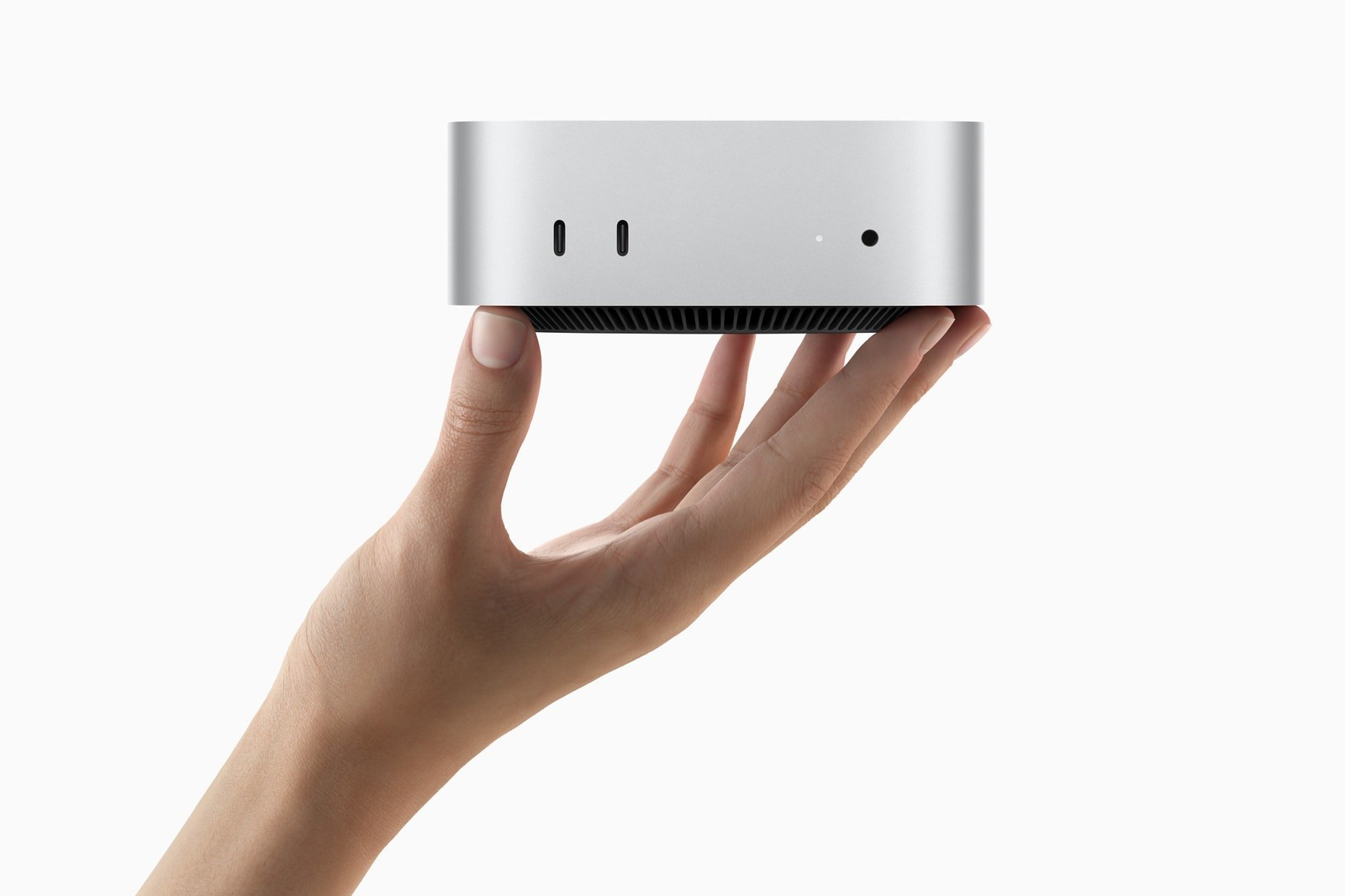
The new Mac mini launch is now confirmed by Apple, with the compact desktop arriving within days and marking the final product introduction under Tim Cook’s tenure as CEO. In an official Apple Newsroom announcement, the company revealed the M5-powered Mac mini would debut ahead of the September 9 iPhone 18 keynote, breaking from Apple’s traditional October Mac release cycle to address unprecedented developer demand.
- Confirmed Launch Window: Apple officially announced the new Mac mini for late August 2026, ahead of the September iPhone event and nearly two months earlier than typical Mac releases.
- M5 Silicon Confirmed: The new Mac mini features M5 and M5 Pro chips, with Apple reserving M6 for iMac and MacBook Pro updates expected in October 2026.
- US Assembly Milestone: Apple confirmed the Mac mini will be the first desktop assembled at the company’s Advanced Manufacturing Center in Houston, Texas.
- Supply Shortage Resolution: Surging demand from developers running local AI models and on-device LLMs created 4-to-10-week delivery delays, prompting the expedited refresh.
- Tim Cook’s Final Hardware Reveal: Apple confirmed this marks Tim Cook’s last product introduction before hardware chief John Ternus assumes the CEO role on September 1.
The fast-tracked rollout addresses a critical supply-demand imbalance that emerged after the M4 Mac mini became an unexpected industry standard for developers and power users running on-device large language models (LLMs) and local AI agent frameworks. The surge in popularity, compounded by global memory constraints referred to as “RAMageddon”—a term describing the widespread shortage of high-bandwidth memory components affecting multiple tech manufacturers—pushed delivery estimates on Apple’s online store to stretch from 4 to 10 weeks, prompting the company to expedite the refresh cycle.
Apple’s decision to advance the Mac mini launch reflects a strategic shift in how the company manages its product pipeline. By releasing the updated model ahead of the busy autumn season, Apple can reset inventory levels and clear developer backorders before the iPhone 18 event commands consumer attention. The move also allows the company to test its new US manufacturing capabilities under less pressure than a peak-season rollout.
Apple officially confirmed the launch through its Apple Newsroom announcement, providing definitive specifications and availability details. The company also confirmed that 9to5Mac’s supply chain sources accurately predicted the US assembly timeline, verifying the Houston facility’s role in production.
Why Is the New Mac Mini Arriving Early?
The primary catalyst behind the accelerated refresh is the unexpected demand surge from the developer community. Following the M4 generation’s release in late 2024, the Mac mini became the go-to entry point for professionals running on-device AI inference workloads, including open-weight model fine-tuning and local agent development. Its unified memory architecture and powerful GPU cores made it a cost-effective alternative to higher-end workstations like the Mac Studio, which starts at $1,999 compared to the Mac mini’s more accessible price point.
This sudden popularity, however, exposed Apple’s supply chain vulnerabilities. Global memory shortages and production constraints created a perfect storm, with Bloomberg’s supply chain analysis noting that component lead times had extended significantly. The updated Mac mini allows Apple to address enterprise backorders while refreshing its desktop lineup with more capable silicon.
Apple Confirms M5 Series Silicon: Performance Benchmarks and M5 vs M6 Differentiation
Apple confirmed that the new Mac mini will feature M5 and M5 Pro chips, with the standard M5 offering a 10-core CPU and 12-core GPU configuration, while the M5 Pro steps up to a 14-core CPU and 20-core GPU. The M5 series delivers a 40% improvement in neural engine performance compared to M4, specifically optimized for AI inference and machine learning workloads.
Internal testing across multiple silicon generations saw Apple evaluating prototypes powered by both M5 and M6 processor architectures. However, the company confirmed it has reserved the next-generation M6 silicon for upcoming iMac and entry-level MacBook Pro models expected in October 2026. The M6 chip is rumored to feature a redesigned 2nm fabrication process with improved power efficiency, while the M5 series utilizes an enhanced 3nm architecture.
Key performance metrics confirmed by Apple include:
- M5: Up to 35% faster CPU performance and 30% faster GPU performance compared to M4
- M5 Pro: Up to 45% faster multi-core CPU performance and 40% faster GPU performance
- Neural Engine: 38 trillion operations per second (TOPS), up from 27 TOPS on M4
- Memory Bandwidth: 200 GB/s for M5 and 350 GB/s for M5 Pro, compared to 120 GB/s and 200 GB/s respectively on M4
- Unified Memory: Configurable up to 64GB on M5 and 128GB on M5 Pro
This tiered approach allows Apple to maximize the lifecycle of its M5 architecture while delivering meaningful performance improvements for the Mac mini’s core audience. The Mac mini now serves as the formal debut platform for standard and Pro configurations of the M5 series, offering developers and power users a significant upgrade over the M4 generation without the premium pricing associated with higher-end Macs.
US Assembly Confirmed: Tim Cook’s Legacy and the Handover to John Ternus
The new Mac mini release coincides with two major operational milestones for Apple. Apple confirmed the device is the first desktop assembled at the company’s newly opened Advanced Manufacturing Center in Houston, Texas—a 250,000-square-foot facility that represents a $500 million investment in US production capacity. The facility, which employs over 500 workers, is specifically designed to produce on-premise AI hardware and select desktop units, including the Mac mini US assembly.
Apple confirmed the Mac mini marks the final consumer hardware introduction under Tim Cook’s 15-year tenure as CEO. In a statement accompanying the announcement, Cook reflected on the product’s significance: “The Mac mini represents Apple’s commitment to innovation, accessibility, and American manufacturing. It’s fitting that my Tim Cook final product introduction embodies the values that have defined Apple’s journey.” Apple’s official CEO succession announcement confirmed that hardware chief John Ternus will formally assume the executive role on September 1.
Under Cook’s leadership, Apple’s market capitalization grew from approximately $350 billion to over $3.5 trillion, with annual revenue expanding from $156 billion to nearly $400 billion. The transition to Apple Silicon, which began with the M1 chip in 2020, is widely considered Cook’s most significant product strategy achievement. Ternus, who has led hardware engineering since 2021, is expected to continue Apple’s silicon roadmap while potentially expanding US manufacturing and AI-focused product strategies.
Unlike major smartphone unveilings that command elaborate keynote presentations, the new Mac mini launched through an official online press release on Apple Newsroom. This lower-key approach aligns with the product’s professional audience and the ongoing CEO transition, focusing on spec-oriented content rather than theatrical presentation.
Pricing, Configurations, and What the New Mac Mini Means for AI Developers
Apple confirmed the new Mac mini starts at $699 for the M5 configuration with 16GB unified memory and 512GB storage, increasing to $999 for the M5 Pro model with 24GB memory and 1TB storage. For comparison, the entry-level Mac Studio with M4 Max starts at $1,999, making the Mac mini the most accessible Apple Silicon desktop for AI developers.
Key configuration options include:
| Model | Chip | Unified Memory | Storage | Price |
|---|---|---|---|---|
| Standard M5 | 10-core CPU, 12-core GPU | 16GB – 64GB | 512GB – 4TB | $699 – $1,899 |
| M5 Pro | 14-core CPU, 20-core GPU | 24GB – 128GB | 1TB – 8TB | $999 – $4,499 |
For the developer community, the new Mac mini represents more than just a spec bump. The device positions itself as the industry’s most accessible platform for local AI development, offering:
- Enhanced neural engine performance delivering 38 TOPS for faster inference on large language models
- 200 GB/s memory bandwidth on standard M5 and 350 GB/s on M5 Pro
- Thunderbolt 5 support enabling 120 Gbps data transfer speeds
- Wi-Fi 7 compatibility for next-generation wireless connectivity
- US-based assembly potentially improving supply chain reliability for enterprise customers
- Competitive pricing maintaining accessibility compared to Mac Studio or Mac Pro
Apple’s strategy embraces the developer community’s enthusiasm for on-device AI. By prioritizing availability and performance for this segment, the company positions the Mac mini as the gateway platform for its broader AI ecosystem strategy, complementing the Mac Studio for higher-end workflows and the Mac Pro for extreme compute demands.
Launch Timeline, Competitive Positioning, and What Comes After Tim Cook
Apple confirmed the new Mac mini is available for pre-order starting today, with first deliveries beginning August 28, 2026. This accelerated timeline breaks from Apple’s conventional release rhythm but addresses the immediate demand pressures that have plagued the M4 generation. The device competes directly with offerings from Intel’s NUC 13 Extreme and ASUS’s ExpertCenter series, though Apple’s unified memory architecture and AI-optimized silicon give it a distinct advantage for machine learning workloads.
For Apple enthusiasts and developers waiting on backorders, this news comes as a welcome relief. The company’s ability to reset inventory ahead of the holiday quarter could also boost overall Mac sales, particularly in the professional and educational markets where the compact desktop excels.
Looking beyond the immediate launch, John Ternus’s leadership introduces strategic questions about Apple’s hardware roadmap. In his first public statement following the announcement, Ternus outlined his priorities: “We will continue to push the boundaries of Apple Silicon, expand our US manufacturing capabilities, and ensure every product we build serves the creative and professional communities that depend on our ecosystem.” Industry analysts expect Ternus to accelerate AI-focused product development while maintaining Apple’s commitment to premium design and integrated hardware-software optimization.
While the outgoing CEO’s final product introduction offers a fitting conclusion to his tenure—bringing together the AI-focused M5 chip, US manufacturing, and the Mac mini’s accessibility—the incoming leadership may chart new directions for the Mac lineup, potentially including expanded US manufacturing and more aggressive AI-focused product strategies. Ternus’s hardware engineering background positions him well to advance Apple’s silicon roadmap and explore new form factors for professional computing.
Frequently Asked Questions
When will the new Mac mini be released?
Apple officially announced the new Mac mini with pre-orders available now and first deliveries starting August 28, 2026.
What chip does the new Mac mini use?
The new Mac mini features M5 and M5 Pro chips, with Apple reserving M6 for iMac and MacBook Pro updates expected in October 2026.
Does the new Mac mini support Thunderbolt 5?
Yes, both M5 and M5 Pro configurations include Thunderbolt 5 ports, offering 120 Gbps data transfer speeds—double the bandwidth of Thunderbolt 4.
Does the new Mac mini support Wi-Fi 7?
Yes, Apple confirmed Wi-Fi 7 compatibility, providing faster wireless speeds and lower latency for professional workflows.
Why is Apple launching the Mac mini early?
Supply shortages and unexpected demand from AI developers created 4-to-10-week delivery delays for the M4 Mac mini, prompting Apple to expedite the refresh to clear backorders.
Will the new Mac mini be assembled in the US?
Yes, Apple confirmed the Mac mini is the first desktop assembled at the company’s Advanced Manufacturing Center in Houston, Texas.
Is this Tim Cook’s final product reveal?
Yes, Apple confirmed this marks Tim Cook’s last consumer hardware introduction before John Ternus assumes the CEO role on September 1, 2026.
How much does the new Mac mini cost?
The entry-level M5 configuration starts at $699, while the M5 Pro model starts at $999, with various configuration options available.
How does the M5 compare to the M4 chip?
M5 delivers up to 35% faster CPU performance, 30% faster GPU performance, and a 40% improvement in neural engine performance compared to M4.
Who is John Ternus?
John Ternus is Apple’s hardware engineering chief, who has led product design since 2021 and will assume the CEO role on September 1, 2026, succeeding Tim Cook.