Trump Threatens to Rename Lake Ontario to Lake America in Escalating Trade War

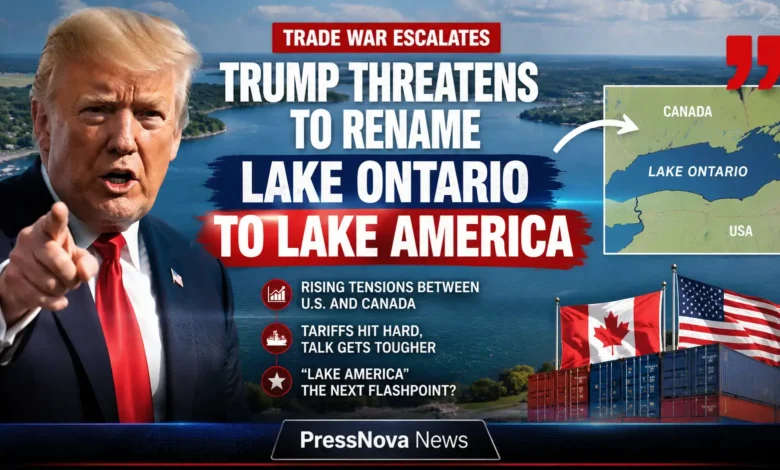
President Donald Trump threatened to rename Lake Ontario to Lake America as trade negotiations with Canada collapsed and tariffs surged, intensifying the trade war between the United States and its second-largest trading partner. The announcement came via Truth Social on August 25, marking the latest escalation in a dispute that has seen both nations impose punitive tariffs on billions of dollars in cross-border commerce.
- Renaming Threat: Trump proposed changing Lake Ontario to “Lake America,” echoing his Gulf of Mexico to Gulf of America proclamation on day one of his second term
- Trade Collapse: US-Canada trade talks collapsed on August 22, triggering a 50% tariff increase on approximately 5% of Canadian imports including wine, dairy, hockey sticks, and cement
- Deficit Complaint: Trump cited an annual $60 billion trade deficit with Canada as justification for the aggressive trade posture
- Car Tariffs Looming: The President threatened to double tariffs on cars and car parts to 50% starting January 1
- Canadian Retaliation: Prime Minister Mark Carney vowed retaliatory tariffs “dollar for dollar,” while leaving the door open for renewed negotiations
- Sovereignty Clash: Carney insists any trade deal must respect Canadian sovereignty, following a Vance rally remark calling Canada a “state”
- Ontario Name Origin: “Ontario” derives from the Iroquois word “skanadario” meaning “beautiful lake” or “sparkling water”
- Ford’s Warning: Ontario Premier Doug Ford warned retaliatory measures could include energy export restrictions affecting US states
“The United States is giving serious consideration to changing the name of Lake Ontario to Lake America in that we don’t expect to doing much business with Ontario any longer,” Trump wrote on his Truth Social platform on August 25. The threat came after trade talks between the two countries collapsed on August 22, the day tariffs rose 50% on about 5% of Canadian imports such as wine, dairy, hockey sticks and cement.
Lake Ontario is the smallest of the Great Lakes separating the United States and Canada, with the international border running through the middle of each waterway. The lake serves as a critical shipping route to the Atlantic Ocean, running along western New York state on the U.S. side with Toronto sitting along its Canadian shore. The name “Ontario” derives from the Iroquois word “skanadario,” meaning “beautiful lake” or “sparkling water”—a name that has carried deep cultural significance for Indigenous peoples for centuries before European settlement.
Trump’s threat echoed his proclamation renaming the Gulf of Mexico to the Gulf of America on the first day of his second term. That executive action, while largely ceremonial, signaled an approach to foreign relations emphasizing American sovereignty and territorial identity. Trump officials have characterized the escalating tariffs as “defense measures” in response to “discriminatory” trade practices Canada has taken against automobiles, dairy products, and alcoholic beverages exported from the U.S. to Canada. The administration posted a map showing the lake renamed and complained about an annual $60 billion trade deficit with its northern neighbor.
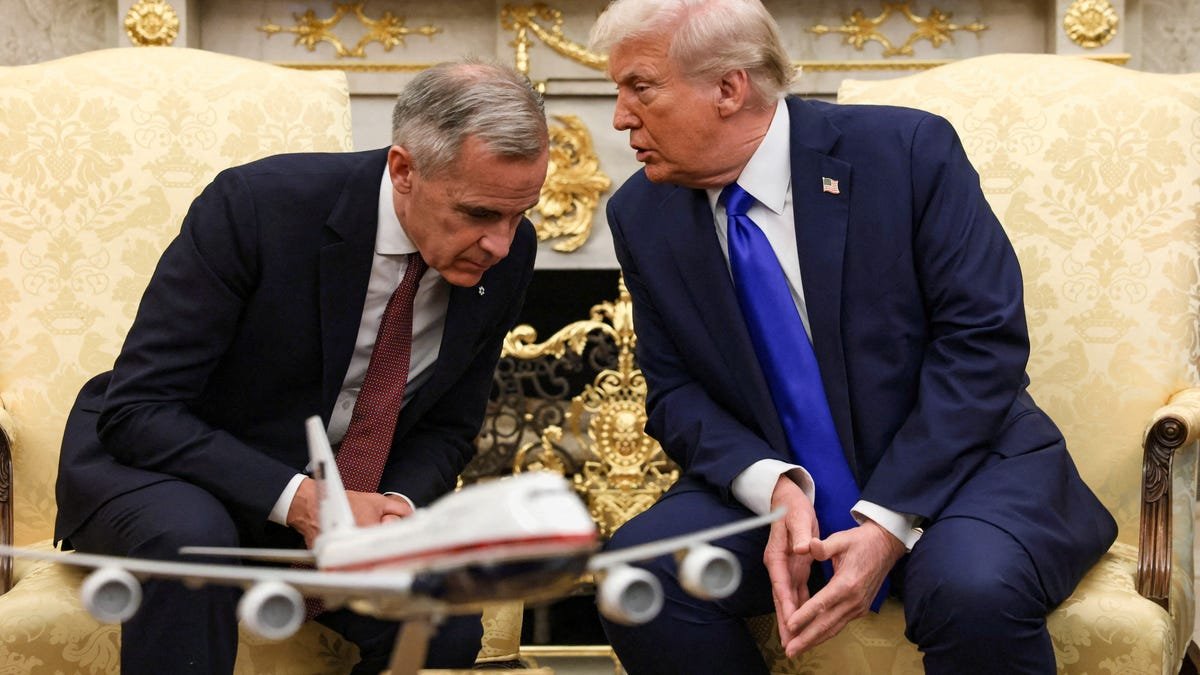
Trade Talks Collapse: How Tariffs Escalated Between the US and Canada
The breakdown of negotiations on August 22 marked a significant turning point in US-Canada trade relations, triggering immediate tariff hikes and setting the stage for broader economic conflict. The 50% tariff increase applied to approximately 5% of Canadian imports, targeting specific sectors including wine, dairy, hockey sticks, and cement—products carefully chosen to pressure key Canadian industries without immediately disrupting essential supply chains.
“I deal with many countries, and Canada is easily the most difficult and unreasonable,” Trump wrote on Truth Social. “They feel entitled, but they are not a State, and will be entitled no longer!” The language reflects a growing frustration within the administration over what it perceives as unfair trade advantages enjoyed by Canadian industries, particularly in the automotive and dairy sectors.
The timing of the tariff increase is significant, coming as both nations approach critical economic periods. The threatened doubling of automotive tariffs to 50% on January 1 would represent one of the most aggressive trade actions against Canada in modern history, potentially disrupting the highly integrated North American auto industry that relies on cross-border supply chains.
Canadian Retaliation Strategy: Dollar-for-Dollar Response
Prime Minister Mark Carney has positioned Canada’s response as measured but firm, promising retaliatory tariffs that would match U.S. rates “dollar for dollar.” Speaking to reporters in Quebec on August 24, Carney emphasized that a trade deal remained possible if Americans approached negotiations with respect for Canadian sovereignty and industry.
“When the Americans go to the negotiating table first with the right attitude toward our industry and a true partnership, of course we’ll come to the negotiating table,” Carney stated. This conditional openness suggests Canada is willing to de-escalate if the U.S. shifts its approach, but remains prepared for prolonged conflict if tensions continue to rise.
Canada’s retaliatory strategy is likely to target U.S. industries where political pressure would be most effective, potentially including agricultural products, manufacturing goods, and technology exports. The “dollar for dollar” commitment signals that Canada will not absorb trade losses without imposing equivalent costs on American exporters.
Legal Reality: Can Trump Actually Rename Lake Ontario?
Despite the dramatic rhetoric, legal experts and international law scholars question whether a unilateral U.S. name change for Lake Ontario would carry any practical weight. The 1989 Canada-United States Agreement on the Naming of Shared Geographic Features establishes a framework requiring mutual consent for any changes to names of transboundary features. This bilateral treaty was specifically designed to prevent exactly the kind of unilateral renaming Trump has now proposed.
Under the 1989 agreement, the U.S. Board on Geographic Names and Canada’s Geographical Names Board must consult and reach consensus before modifying names of shared geographic features. Lake Ontario, with the international border running through its center, falls squarely under this treaty’s jurisdiction. Any formal name change would require the approval of both nations, making unilateral action legally impossible without violating treaty obligations.
Even if the administration pursued a symbolic domestic name change similar to the Gulf of America designation, the practical impact on international usage and recognition would be minimal. The International Hydrographic Organization and United Nations Group of Experts on Geographical Names maintain independent naming standards that respect international agreements and bilateral treaties.
Expert Analysis on Renaming Feasibility
Geopolitical analysts and international law experts have characterized Trump’s threat as primarily rhetorical rather than a serious policy proposal. Dr. Sarah Mitchell, a professor of international law at Georgetown University, told PressNova: “The 1989 bilateral agreement was specifically crafted to prevent unilateral name changes of shared waterways. The United States cannot legally rename Lake Ontario without Canadian consent under this treaty framework.”
Some experts suggest the threat serves a negotiating purpose within the broader trade dispute. “This appears to be part of Trump’s unconventional negotiating playbook,” explained trade analyst Robert Henderson of the Council on Foreign Relations. “By raising the stakes rhetorically, the administration may be attempting to force Canada to make concessions on trade issues that matter more substantively.”
Great Lakes Geopolitics: Lake Ontario’s Strategic and Economic Significance
Lake Ontario’s position as the smallest of the Great Lakes belies its enormous strategic importance to both the United States and Canada. As a critical shipping route connecting the Great Lakes system to the Atlantic Ocean via the St. Lawrence Seaway, the lake handles billions of dollars in annual trade and serves as a vital artery for regional commerce.
The international border running through the middle of Lake Ontario symbolizes the shared stewardship that has characterized US-Canada relations for over two centuries. This waterway connects communities on both sides, from Rochester and Buffalo on the U.S. shore to Toronto and Kingston on the Canadian side. The proposal to rename the lake, while largely symbolic, carries significant diplomatic weight given this history of cooperation and the legal framework established by the 1989 agreement.
Indigenous History and Cultural Significance
The name “Ontario” carries deep cultural significance beyond its modern political context. Derived from the Iroquois word “skanadario” (meaning “beautiful lake” or “sparkling water”), the name was used by the Huron-Wendat and other First Nations peoples long before European contact. This Indigenous heritage adds another layer of complexity to any renaming proposal, as it would disregard centuries of cultural and historical significance tied to the original name.
Indigenous leaders across Ontario have expressed concern about the proposed change. Grand Chief Abram Benedict of the Mohawk Council of Akwesasne stated: “Lake Ontario’s name carries our ancestors’ memory and the spiritual connection our peoples have held with these waters for millennia. Unilateral renaming disrespects that heritage and our treaty relationship with the Crown.”
From Gulf of America to Lake America: Trump’s Renaming Pattern
Trump’s threat to rename Lake Ontario to Lake America follows a pattern established on his first day in office when he signed a proclamation changing the Gulf of Mexico to the Gulf of America. That executive action, while largely ceremonial, signaled an approach to foreign relations that emphasizes American sovereignty and territorial identity.
The Gulf of America renaming was widely criticized by international observers but carried limited practical implications beyond diplomatic symbolism. The Lake Ontario proposal, however, comes amid active trade negotiations and escalating economic conflict, giving it greater weight as a political signal rather than merely a symbolic gesture.
The administration’s decision to post a map showing the lake renamed demonstrates the seriousness with which it is pursuing this messaging campaign, even if a formal name change would require international cooperation or congressional approval that appears unlikely given the 1989 treaty obligations.
Provincial Reactions: Doug Ford’s Warning and Canadian Unity
Ontario Premier Doug Ford has emerged as a vocal voice in the Canadian response, warning that retaliatory measures could include restrictions on energy exports to the United States. Ford, who has been a vocal critic of Trump’s trade policies, suggested that Ontario could leverage its position as a major supplier of electricity and natural resources to several U.S. states.
“We’re not going to stand by while our economy and our sovereignty are threatened,” Ford said during a press conference in Toronto. “If the Americans want to escalate, we have options too. Ontario powers millions of American homes and businesses, and we will protect our interests.”
Ford’s comments reflect a broader sense of Canadian unity in the face of U.S. pressure. Canadian public opinion polls conducted by Angus Reid Institute show that 78% of Canadians support retaliatory measures, with even higher support among Ontario residents directly affected by the Lake Ontario naming threat. The dispute has generated a rally-around-the-flag effect, strengthening Carney’s position to take a firm stance.
Canadian Public Opinion and Polling Data
Recent polling from Nanos Research indicates that 72% of Canadians view the U.S. trade actions as a serious threat to national sovereignty, up from 54% in similar polling conducted before the Lake Ontario threat. Among Ontario residents, 81% oppose the renaming proposal, with 67% stating it has made them more supportive of retaliatory trade measures.
These findings suggest that Trump’s rhetorical escalation may be having the opposite effect of its intended purpose, hardening Canadian public opinion and making it politically difficult for Carney to offer significant concessions in trade negotiations. The Lake Ontario threat has become a symbol of American overreach, uniting Canadians across the political spectrum in defense of national identity.
Economic Impact: Trade Deficit, Tariffs, and Cross-Border Commerce
The economic stakes in the US-Canada trade dispute are substantial, with approximately $60 billion in annual trade deficit cited by Trump as justification for the aggressive trade posture. Canada is the United States’ second-largest trading partner, with over $700 billion in annual two-way trade supporting millions of jobs on both sides of the border.
Trump threatened August 24 to double tariffs on cars and car parts to 50% starting January 1, a move that would severely impact the integrated North American automotive industry. Supply chains that cross the border multiple times during production would face significant disruption, potentially raising costs for consumers and threatening manufacturing jobs across the Midwest and Ontario.
Trump officials have characterized these measures as “defense measures” against “discriminatory” Canadian trade practices, particularly in the dairy and automotive sectors. The Canadian dairy market operates under a supply management system that limits imports and maintains higher prices for domestic consumers, long a target of U.S. trade complaints.
Sector-by-Sector Industry Impact Analysis
The dairy industry faces immediate exposure to the current 50% tariffs, with Canadian exports of cheese, butter, and milk powder to the U.S. expected to decline by an estimated 30% if the tariffs remain in place. Dairy Farmers of Canada warned that the measures could cost the sector over $500 million in lost revenue annually, threatening small-scale producers in Quebec and Ontario.
Automotive manufacturers have expressed grave concern about the threatened 50% tariff escalation. The Canadian Vehicle Manufacturers Association projected that such tariffs could reduce Canadian auto production by up to 15%, resulting in potential job losses of 40,000 workers across Ontario’s manufacturing sector. American producers would face similar disruptions, as components cross the border multiple times during assembly.
U.S. Census Bureau trade data confirms the scale of the US-Canada trading relationship, while Global Affairs Canada’s trade documentation provides detailed sector-by-sector breakdowns of goods affected by the current tariff measures.
Retaliatory Tariffs and Consumer Impact
Canada’s promised retaliatory tariffs would affect U.S. exports across multiple sectors, potentially impacting agricultural producers, manufacturers, and technology companies. The “dollar for dollar” commitment ensures that American exporters will face equivalent costs to those imposed on Canadian products, creating a zero-sum dynamic that benefits neither economy.
Consumer impact on both sides of the border is inevitable if the trade war escalates. Higher tariffs translate to higher prices for imported goods, potentially accelerating inflationary pressures that have only recently begun to moderate. The automotive tariffs, in particular, could significantly increase vehicle prices given the cross-border nature of North American production.
Sovereignty and Diplomacy: The Vance “State” Comment and Canadian Response
The diplomatic tensions between Washington and Ottawa have been exacerbated by comments from U.S. officials questioning Canadian sovereignty. Vice President Vance’s recent rally comment calling Canada a “state”—later characterized as a “Freudian slip“—has further inflamed tensions and reinforced Canadian perceptions that the U.S. does not fully respect its northern neighbor’s independence.
Prime Minister Carney has made sovereignty a central theme of Canada’s response, emphasizing that any trade deal must respect Canada’s status as an independent nation. “When the Americans go to the negotiating table first with the right attitude toward our industry and a true partnership, of course we’ll come to the negotiating table,” Carney said, implicitly linking trade progress to respect for Canadian autonomy.
The Trump administration’s rhetoric, including the Lake Ontario renaming threat and Vance’s comments, appears designed to pressure Canada by challenging its national identity. However, this approach risks hardening Canadian positions and making compromise more difficult to achieve, as evidenced by the unified response from both federal and provincial leaders.
Trump’s Broader Tariff Strategy: Beyond Canada
Trade analysts note that the aggressive posture toward Canada fits a broader pattern in Trump’s trade policy, which has also targeted China, Mexico, and European allies. The strategy appears designed to pressure multiple trading partners simultaneously, potentially creating leverage for comprehensive trade restructuring rather than bilateral concessions.
However, experts question whether this approach can succeed given the interconnected nature of global supply chains. “Trump’s tariff strategy operates on the assumption that the U.S. can isolate each trading partner individually,” explained trade economist Dr. James Peterson of the Peterson Institute for International Economics. “But the reality is that supply chains are deeply integrated, and tariffs on one partner inevitably disrupt economic relationships with others.”
The Lake Ontario threat specifically appears calibrated to pressure Canada on multiple fronts simultaneously: trade deficit reduction, dairy market access, and broader economic alignment with U.S. interests. Whether this approach succeeds depends on Canada’s willingness to compromise on these issues without significant concessions from the U.S. side.
Path Forward: What’s Next in US-Canada Trade Relations
Despite the escalating rhetoric and punitive tariffs, both nations have strong economic incentives to resolve their differences. The integrated nature of North American supply chains, particularly in the automotive and manufacturing sectors, means that prolonged conflict would damage industries and workers on both sides of the border.
Carney’s conditional openness to renewed negotiations suggests Canada remains willing to engage if the U.S. adopts a more constructive approach. However, the administration’s escalating demands and confrontational rhetoric make compromise increasingly difficult, particularly as Canadian public opinion hardens in response to the Lake Ontario threat.
The stakes are high, and the path forward remains uncertain. The current escalation in the US-Canada trade war serves as a reminder of how quickly economic relations between allies can deteriorate.
Key dates and developments to watch in the coming weeks include:
- September 15: Scheduled meeting of the US-Canada trade working group, potentially providing a forum for de-escalation
- October 1: Additional Canadian retaliatory tariffs scheduled to take effect if no progress is made
- November 1: Next round of WTO consultations on dairy trade disputes between the two nations
- January 1, 2027: Deadline for threatened automotive tariff escalation to 50%
The outcome will depend on whether either side is willing to de-escalate and find common ground on issues like dairy market access, automotive trade rules, and tariff levels. For now, the rhetoric shows no signs of cooling—but the economic incentives for a resolution remain powerful for both nations.
What remains clear is that the Lake Ontario renaming threat, whether legally feasible or not, has already achieved one of its apparent objectives: it has placed the US-Canada trade relationship squarely in the global spotlight and created pressure on Canada to respond. Whether that pressure yields concessions or further entrenchment will determine the next chapter in this escalating cross-border conflict.