Trump’s $500M MAGA Inc. Pledge: Will It Win Congress or Fuel Republican Anxiety?

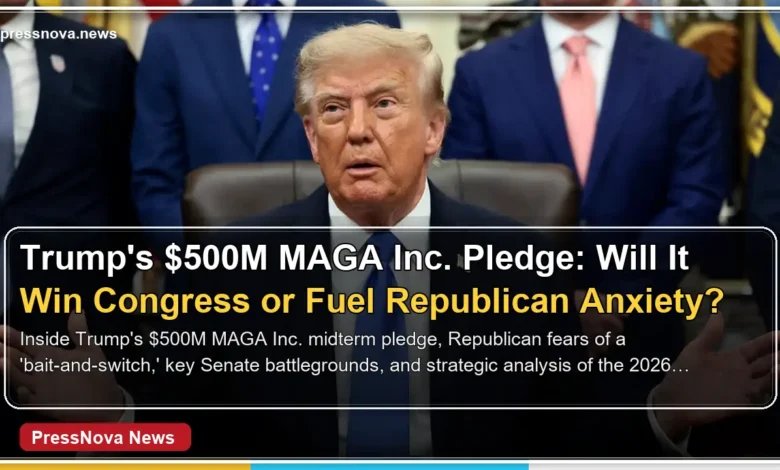
President Donald Trump’s pledge to spend up to $500 million through MAGA Inc. to secure Republican control of the House and Senate has sent shockwaves through the political landscape, yet behind the headlines, GOP insiders are voicing deep anxiety over whether the money will actually materialize where it is needed most.
- Massive War Chest: MAGA Inc. holds $403 million in cash, more than the RNC, NRCC, and NRSC combined.
- Republican Anxiety: Insiders fear a “bait-and-switch” — funds saved for Trump’s legal bills or 2028 campaign, not 2026 races.
- Key Targets: Battleground Senate races include Texas (Paxton vs. Talarico), North Carolina (Whatley vs. Cooper), Alaska, and Ohio, with a reported split with Elon Musk’s efforts.
- Timing Problem: Campaign experts warn a late ad blitz starting in September is less effective than early spending on voter contact.
- Early Disbursement: Trump has reportedly authorized an initial $30M disbursement, but many candidates remain in the dark.
Trump announced the commitment on September 4 from the Oval Office, just 60 days before voters decide which party will control Congress. “We’re going to spend a lot of money because we don’t want to lose our country,” Trump declared, adding that he will make contributions to Republicans he believes are “very good” and “close to winning.” But the promise has ignited a fierce debate among strategists about the true intentions behind the super PAC’s massive stockpile.
The War Chest: How MAGA Inc. Compares to the RNC and Democratic Counterparts
MAGA Inc. reported $403 million in the bank at the end of July, according to Federal Election Commission disclosures. This staggering sum eclipses the cash reserves of the entire Republican Party establishment combined. By comparison, the Republican National Committee holds $130.4 million, the National Republican Congressional Committee has $92.4 million, and the National Republican Senatorial Committee holds just $56.2 million. To put it in perspective, MAGA Inc. sits on more liquidity than all three major GOP campaign arms together.
The Democratic Party does not possess a similar mega-super PAC with that level of cash on hand, giving Trump’s operation a unique financial advantage. However, that advantage comes with a catch—MAGA Inc. has spent sparingly so far. The super PAC disbursed approximately $1.7 million to help Republican Rep. Matt Van Epps win a 2025 special election in Tennessee and another $18,000 to support Rep. Clay Fuller in a Georgia special election for Marjorie Taylor Greene’s former seat. These limited expenditures have raised eyebrows among donors and candidates alike.
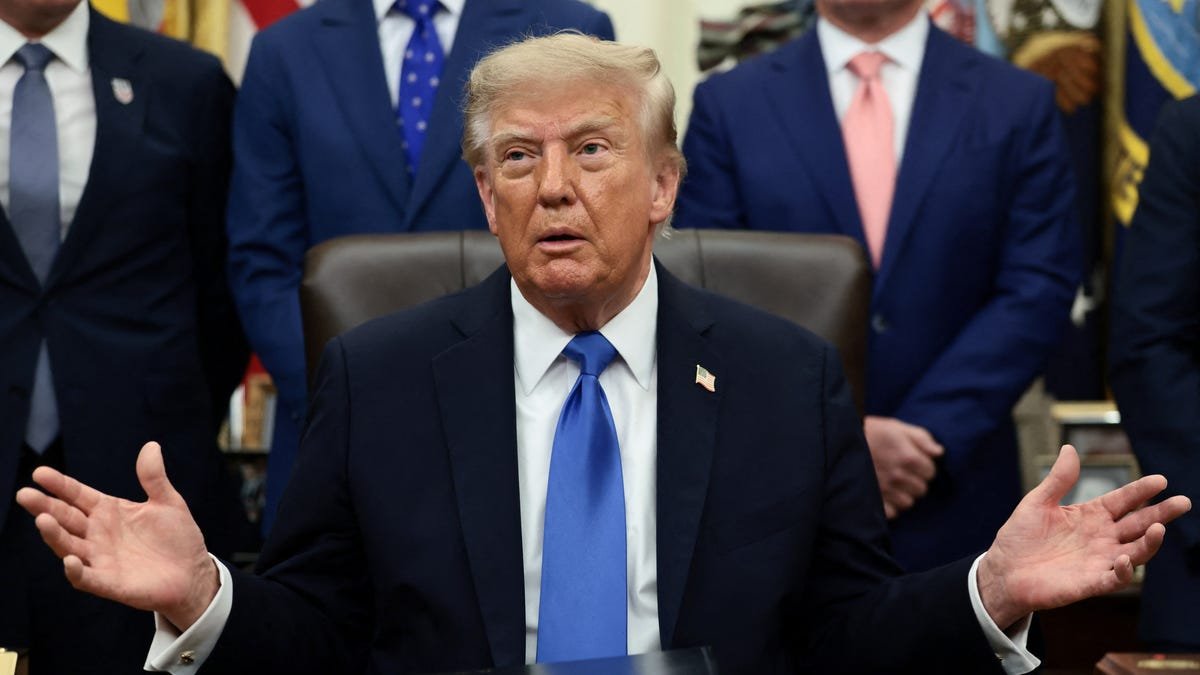
Federal Election Commission records show MAGA Inc.’s cash position remains formidable, yet strategic decisions about its deployment are shrouded in uncertainty.
Inside the GOP’s Anxiety: Why Republicans Are Nervous
Despite Trump’s bold rhetoric, a palpable sense of unease has settled over Republican campaign circles. The core of the concern revolves around what one insider described as a potential “bait-and-switch”—the fear that Trump will reserve the bulk of his resources for his own legal defense or a 2028 presidential run rather than the immediate congressional battles. This suspicion has been fueled by Trump’s own hedging in the Oval Office, where he remarked, “I could use it for ’28 if I want. I expect to have money left over, and we can use that for ’28.”
The ‘Bait-and-Switch’ Allegations and Unmet Commitments
Republican operatives point to a pattern of unfulfilled financial pledges from Trump in past cycles. In 2022, Trump’s Save America PAC made promises to support key Senate candidates that never materialized at the scale expected. Now, with MAGA Inc. spending under scrutiny, party insiders are watching closely to see if history repeats itself. Some consultants have privately expressed frustration that Trump’s team has not provided clear guidance on which specific races will receive substantial backing, leaving campaigns unable to plan their fall advertising strategies.
The ‘Legal Bills’ Theory and Saving for 2028
The “legal bills” theory suggests Trump may need to preserve hundreds of millions of dollars to cover mounting court costs and ongoing investigations, as well as lay the groundwork for another White House bid. This interpretation is supported by Trump’s own comments about leftover money for 2028, which many interpret as a signal that not all of the Trump $500 million pledge will flow to 2026 candidates. Such ambiguity creates a crisis of confidence among Republican donors, who may question whether contributing to joint fundraising efforts is worthwhile if Trump’s super PAC remains the primary financial gatekeeper.
The Battlefield: Where Will the Money Go?
For Republicans to take the Senate majority, they must defend several vulnerable seats while flipping others. Internal discussions have identified four primary battlegrounds where MAGA Inc.’s spending could prove decisive: Texas, North Carolina, Alaska, and Ohio. However, the lack of confirmed allocation details has created a vacuum of uncertainty.
Texas Showdown: Paxton vs. Talarico and the Cornyn Factor
In Texas, Attorney General Ken Paxton faces a fierce challenge from Democrat James Talarico in a race that has drawn national attention. Complicating matters is the presence of Sen. John Cornyn, who is seeking re-election but has had a historically tense relationship with Trump. Reports suggest that MAGA Inc. may prioritize this race to neutralize Democratic gains, but the spending calculus could be affected by internal GOP dynamics, including Trump’s lingering grievances with Cornyn. As one of the key Senate battleground races, a late infusion of cash could boost Paxton’s chances, yet the effectiveness of a last-minute buy remains hotly debated.
North Carolina: The Whatley vs. Cooper Contest
North Carolina presents another critical Senate battleground. With Sen. Ted Budd not seeking re-election, the open seat has attracted Republican Michael Whatley, a Trump ally, against Democratic candidate Cooper. This race is considered a must-win for the GOP to retake the majority, and Whatley’s team has signaled their dependence on external super PAC support. State-level operatives are concerned that the delay in funding could allow Cooper to consolidate his base before Republicans can effectively respond.
Other Key Targets: Alaska, Ohio, and the Musk Connection
Alaska’s Senate race is also in play, with incumbent Lisa Murkowski (who has criticized Trump) facing a primary challenge and a general election against Democrat Mary Peltola. Meanwhile, Ohio’s open seat has attracted heavyweight candidates from both parties, and the state’s electoral math makes it a prime candidate for heavy outside spending. Anecdotal reports indicate a strategic split between Trump’s MAGA Inc. and Elon Musk’s political spending apparatus, further fragmenting the conservative financial landscape and complicating unified messaging. The OpenSecrets PAC tracker shows multiple conservative groups reserving airtime, but coordination remains elusive.
The Problem of Timing: Why a Late Push Matters
Campaign strategists agree that early spending on voter contact—through mail, digital ads, and field organizers—is more effective than a concentrated ad blitz in the final weeks. With only 60 days until November, Trump’s delayed commitment raises questions about whether the money can be efficiently deployed. Typically, successful super PACs begin reserving television ad inventory months in advance to secure favorable rates and dominate the airwaves early. By waiting, MAGA Inc. faces higher costs and potentially saturated airtime.
Moreover, the psychological impact on candidates is significant. Many Republican nominees have been fundraising under the assumption that Trump would provide a safety net. Now, they may be forced to divert precious time and resources toward shoring up their own finances, distracting from their messaging and grassroots engagement. The timing problem is not merely tactical; it’s strategic, as Democratic candidates have already been building their war chests and coalition infrastructure for months.
The Bigger Picture: Strategy, Data, and the MAGA Base
Beyond the dollar figures, the true impact of MAGA Inc.’s spending depends on how the money is used. The operation has signaled a focus on data-driven analytics to target low-propensity Trump voters—a strategy that could tip close races if executed precisely. Republican strategists argue that the party’s path to victory lies in turning out the MAGA base rather than persuading swing voters. However, this requires sophisticated microtargeting and on-the-ground field operations, which are difficult to scale in a short timeframe.
Internal party debates also center on whether the $500 million figure is aspirational or realistic. Trump has claimed he has about $1 billion to spend but indicated he will deploy between $400 million and $500 million. The discrepancy has fueled skepticism about his actual cash on hand and willingness to part with it. Furthermore, the early authorization of a $30 million disbursement suggests some movement, but many observers believe this is a token gesture intended to quell dissent rather than a true commitment. The broader Republican midterm strategy may ultimately depend on whether Trump’s operation can overcome these internal doubts.
Conclusion: What This Means for November
Trump’s $500 million pledge to MAGA Inc. represents an unprecedented financial promise, but the gap between rhetoric and reality could define the 2026 midterm elections. If the super PAC deploys its resources strategically and promptly, it could tip the scales in several key Senate races and secure Republican control of Congress. Conversely, if the money is delayed, hoarded, or misallocated, it will reinforce GOP anxieties and potentially hand Democrats a narrative of chaos and broken promises.
The coming weeks will reveal whether Trump’s operation can overcome its internal doubts, coordinate with candidates, and effectively counter Democratic spending. For now, Republican insiders watch and wait, their hopes pinned to a financial pledge that remains as tantalizing as it is uncertain. As voters prepare to head to the polls, the true test of MAGA Inc.’s power lies not in its bank balance, but in its will to spend it.