Rondale Moore’s final Instagram post, shared just days before the 25-year-old Minnesota Vikings wide receiver was found dead from a suspected self-inflicted gunshot wound, has ignited urgent conversations about mental health and the systemic failures in how the NFL supports players during injury recovery. Moore, a dynamic playmaker who electrified crowds at Purdue and with the Arizona Cardinals, was discovered Saturday in the garage of a residence in the 1600 block of Ekin Avenue in his hometown of New Albany, Indiana, according to New Albany Police Chief Todd Bailey. Authorities are investigating the death as an apparent suicide, though an autopsy has been ordered to confirm the official cause.
- Tragic Discovery: Rondale Moore, 25, was found dead in a garage in New Albany, Indiana, on Saturday from a suspected self-inflicted gunshot wound.
- Final Instagram Post: Moore’s last carousel included a slide with EST Gee’s lyrics “Stitched up the last eight months, but it changed nothin’, I don’t feel no better,” shared just days before his death.
- Mental Health Debate: Former players like Breiden Fehoko and A.J. Green have called out the NFL, demanding mandatory mental health care for injured players and questioning the league’s genuine commitment.
- Injury Setbacks: Moore’s career was derailed by back-to-back season-ending knee injuries in 2024 and 2025, contributing to isolation and a loss of identity.
- Teammate Tributes: Marquise ‘Hollywood’ Brown revealed Moore reached out hours before his death, saying “You wasn’t alone bro.. I told you I know how you feel.”
The news has sent shockwaves through the NFL community, with teammates, coaches, and fans expressing sorrow and disbelief. Moore’s final social media activity—a seemingly ordinary Instagram carousel posted February 18—has drawn intense public scrutiny, particularly the final slide featuring a screenshot of lyrics from EST Gee’s 2024 song “Go.” The lyrics read: “Sewed up the last eight months, but it changes nothing, don’t feel no better…”. Fans and observers have interpreted the post as a potential cry for help, though others caution against drawing definitive conclusions about Moore’s mental state from social media alone. His Instagram comments were disabled, and the post carried no caption.
‘You Wasn’t Alone Bro’: Marquise Brown’s Heartbreaking Revelation
Among the first to react was Kansas City Chiefs wide receiver Marquise ‘Hollywood’ Brown, who revealed that Moore had reached out to him just hours before his death. In a series of posts on X, Brown wrote: “Bro ain’t no way brotha you just messaged me few hours ago” and shared a poignant message: “You wasn’t alone bro.. I told you I know how you feel”. Brown later shared screenshots of their exchange, adding, “I love you bro. I always wanted to speak life into you fam.” The revelation has underscored the pain of losing someone who was actively seeking connection in their final hours. Brown’s public grief highlights the complex reality that even when friends recognize struggles, intervention may not always be enough.
A Heartbreaking Discovery in New Albany
Police in New Albany responded to a call Saturday evening and located Moore’s body in the garage of a residence on Ekin Avenue. Floyd County Coroner confirmed his passing, with investigators believing the 25-year-old died from a self-inflicted gunshot wound. Authorities have stated the investigation remains ongoing, and no additional details will be released at this time. Moore’s sudden death has devastated his hometown community, where he was celebrated as a local hero who rose from Trinity High School in nearby Louisville, Kentucky, to national prominence at Purdue University and the NFL.
Two Seasons Lost: The Injury Battle That Defined Moore’s Final Years
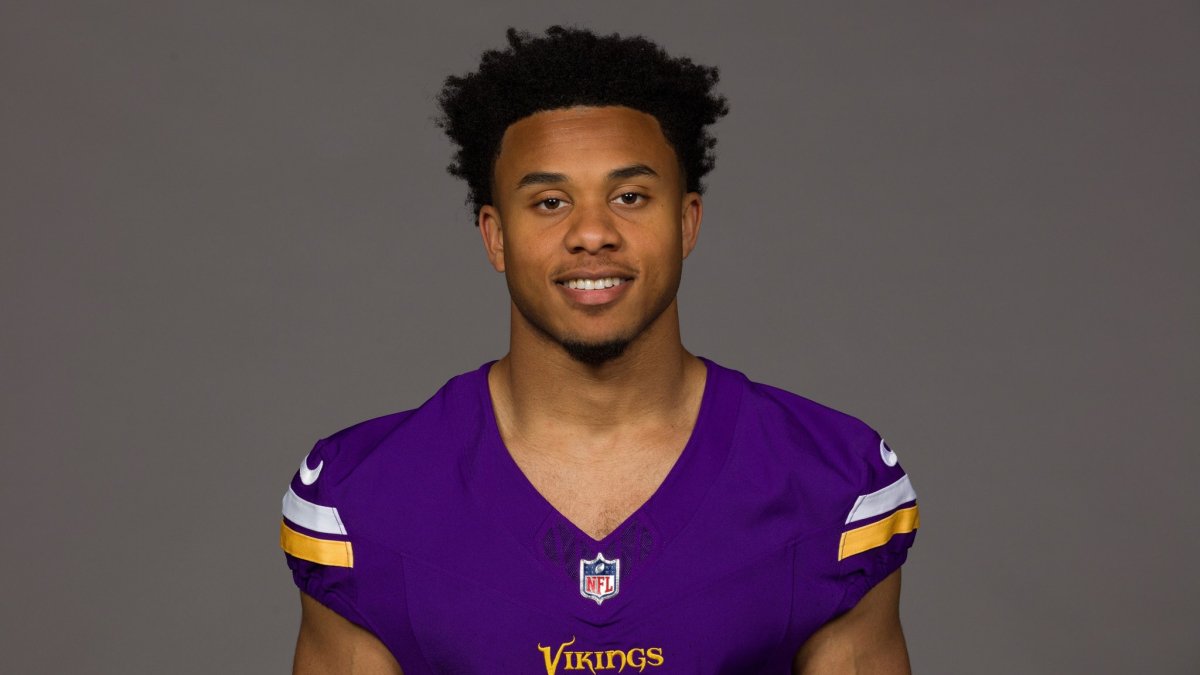
Moore’s journey from college stardom—where he earned first-team All-American honors and the Paul Hornung Award at Purdue—to the NFL was marked by both electrifying performances and devastating setbacks. Selected in the second round of the 2021 NFL Draft by the Arizona Cardinals, Moore compiled over 1,200 receiving yards as a rookie and demonstrated rare versatility as a receiver and return specialist. However, his professional career was repeatedly derailed. In 2024, after being traded to the Atlanta Falcons, Moore suffered a dislocated right knee during training camp that sidelined him for the entire season. The following year, he signed a one-year contract with the Minnesota Vikings but was lost for the season after tearing his left ACL during a preseason game against the Houston Texans.
Two straight seasons without football—a sport that had defined his identity since childhood—took an immense toll. At 5-foot-7, Moore was a pocket rocket who once went viral squatting 600 pounds, more than three times his body weight. But no amount of physical strength could shield him from the psychological isolation of rehabilitation. The irony is profound: Moore’s final Instagram carousel featured a tote bag reading “work in progress” alongside photos of him enjoying everyday moments, but the final slide’s lyrics hinted at a deeper struggle that no amount of physical effort could resolve.
Former Players Call Out the NFL: ‘All They Care About Is Game Day’
Rondale Moore’s death has prompted a fierce reckoning from former players who say the NFL’s public commitment to mental health is hollow. Retired defensive lineman Breiden Fehoko did not mince words in a viral post on X, directly calling out the league’s culture: “I don’t care, I’m retired I’ll say what I want. These NFL teams come out here and post these mental health awareness posts talking about how they care about players ‘don’t be afraid to reach out.’ All they care about is what you bring to the table when it’s game day”. Fehoko added that “Most players don’t wanna get help inside the building… I seen it firsthand,” pointing to the deep-seated stigma around seeking support within team facilities.
The criticism extends beyond Fehoko. In a powerful essay published by The Players’ Tribune, former wide receiver A.J. Green, who developed a father-son relationship with Moore during their time as Arizona Cardinals teammates, called for mandatory mental health care in the NFL. Green wrote that he’d joke Moore was “Rondale Green, my third and oldest kid” and even helped select the tie Moore wore at his funeral. Green’s proposal is specific and urgent: “making it mandatory, if you have a major injury, that you see an independent mental health counselor as part of your rehab. And by also making it mandatory, if you have a second major injury, that you see an independent mental health counselor for an extended period of time, even after your rehab”.
Green also called out the pervasive “red flag” mentality around mental health in NFL front offices: “No one in any front office will ever say it out loud. No scout is ever gonna put it in a scouting report. But that’s how it’s viewed in this league by a lot of people. And as long as that’s the case? Stories like Rondale’s will probably keep happening”. His words reflect a painful irony: the NFL’s performance-driven culture creates an incentive for players to hide their struggles, and when they finally seek help, the system may have already failed them.
What the NFL Says vs. What Players Feel
The NFL and NFLPA have publicly expanded mental health support, mandating since 2019 that every club retain a licensed mental health clinician on-site. Clinicians must be available to players at least twice weekly, totaling 8-12 hours per week during training camp, preseason, and the regular season. The CBA also mandates that injured players have access to these resources. The NFLPA’s Player Association Injured Reserve (PAIR) program, established in 2016, reaches out to injured players and has connected with players on IR 683 times in a recent season.
Yet the gap between these programs and player trust remains vast. As Fehoko noted, the institutional stigma persists. Cleveland Browns GM Andrew Berry acknowledged the issue: “I do think that as a league that we can do a better job resourcing clubs to make sure that we have that touchpoint … and I do think it’s something that we can be a lot more aware of”. Bengals head coach Zac Taylor admitted, “Do I always do enough? I don’t know if I always do enough, I honestly don’t”.
Adding to the crisis is a recent Harvard study cited by The Irish Times, which found NFL players are three times more likely to die by suicide than athletes in America’s other major sports. Moore’s death follows that of Dallas Cowboys’ Marshawn Kneeland, who took his own life in November, creating a pattern that demands urgent attention.
Beyond the Injury: The Hidden Crisis of Athletic Identity
Rondale Moore’s death has cast a spotlight on a less-discussed but equally devastating aspect of athlete mental health: the loss of identity when the game is taken away. As Lauren Muir, a counselor with Martin and Muir Counseling, told WKYT: “When your whole identity is wrapped around one thing, then when those hopes or those dreams don’t work out the way that you thought, it’s more than just the sport, right? It’s your whole identity that you now have to identify and kind of refocus”. For a player like Moore, who had been a football standout since high school, the sudden inability to play—and the uncertain future it represented—could feel like the loss of self itself.
Vikings head coach Kevin O’Connell described Moore as a “humble, softspoken, and respectful young man” who was “proud of his Indiana roots”. The coach’s statement captured the tragedy of a young man who, despite his public success, may have been struggling privately: “I am devastated by the news of Rondale’s death”. Moore’s high school coach, Jay Cobb, remembered him as someone “better off the field than on it”—a great student and teammate who “made people better around him”.
The athlete identity crisis is compounded by the physical reality of injury. As Daniel Fehoko pointed out, players in rehab can feel isolated from their teammates, and the pressure to “man up” and return to the field often overshadows psychological needs. A 2026 study by the NFLPA confirmed that players on IR are at significantly higher risk for depression, yet those who are isolated often don’t access resources readily. The Carolina Panthers’ Dan Morgan, who endured multiple IR stints, acknowledged: “You feel alone at times. You feel like people kind of abandon you a little bit”.
Where to Get Help and the Path Forward
As the NFL community grapples with Moore’s death, the conversation is shifting from grief to action. Muir emphasized that “Mental health cannot be something that is reactive. It’s got to be proactive. It’s got to be built into systems”. For anyone struggling, help is available 24/7 through the Suicide and Crisis Lifeline by calling or texting 988. The NFLPA also offers confidential clinician directories across all 30 NFL team cities, ensuring players can seek help independent of team-employed staff if they distrust in-house resources.
Ultimately, A.J. Green’s call for mandatory counseling and Fehoko’s demand for cultural accountability represent the beginning of what must be a sustained push for real change. The NFL has the resources and infrastructure—the question is whether it will listen to the voices of players who have been sounding the alarm long before tragedy struck. Rondale Moore’s final Instagram post may have gone viral, but his legacy must be more than a haunting lyric. It must be a catalyst for a league that finally treats mental health as seriously as a torn ACL. His mother, Quincy, who Moore famously bought a house after turning pro, and his siblings are now left with a devastating loss—one that could have been prevented with the right support at the right time.