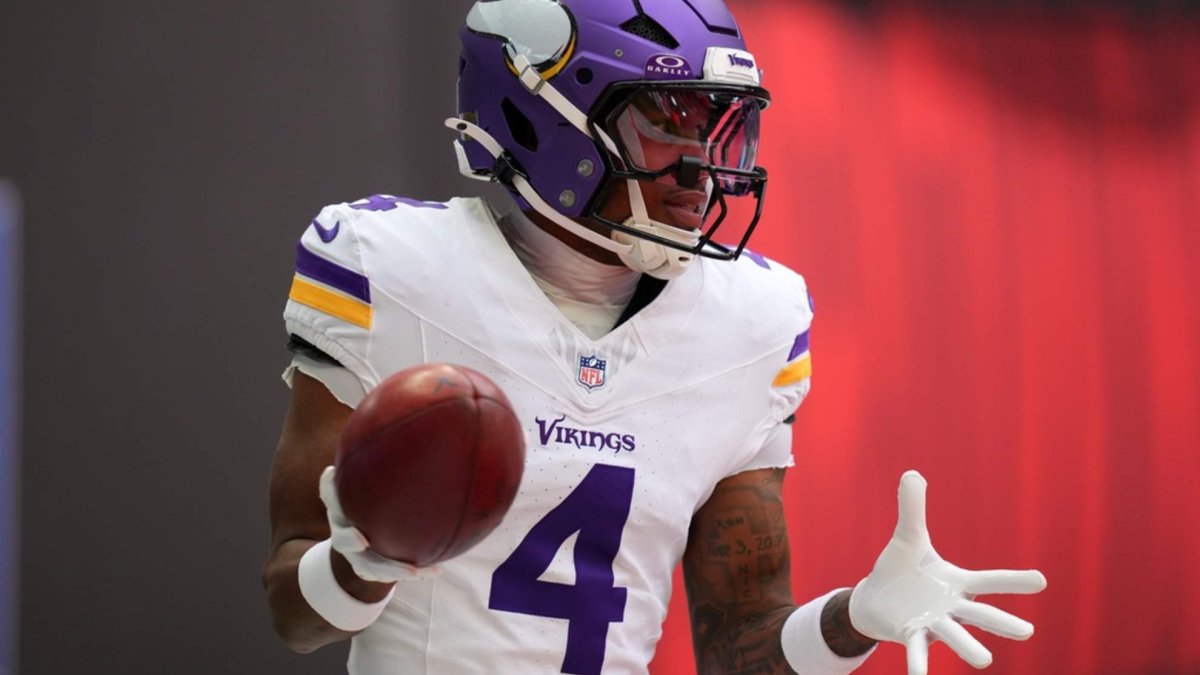
A former NFL player lashes out at the league and its indifference toward mental health following the tragic death of Minnesota Vikings wide receiver Rondale Moore, exposing what he calls a systemic culture of hypocrisy that prioritizes game-day performance over player well-being. The criticism comes as the NFL community reels from the second suicide of a young player in just three months, with Moore found dead in his Indiana hometown on Saturday from a suspected self-inflicted gunshot wound at just 25 years old.
- What Happened: Former DL Breiden Fehoko publicly accused NFL teams of faking mental health support after Rondale Moore’s death, stating players are stigmatized for seeking help inside organizations.
- Player’s Warning: Fehoko revealed that players who admit struggles to staff are “looked at differently,” creating a culture of silence that prevents athletes from getting the care they need.
- The Crisis: A Harvard study found NFL players are three times more likely to die by suicide than athletes in other major U.S. sports, highlighting an urgent need for systemic reform.
- Fehoko’s Personal Story: The former lineman recalled a coach ruining the birth of his son by calling to say “Remember what your day job is,” demonstrating the league’s toxic prioritization of football over humanity.
Breiden Fehoko, a former nose tackle who spent five seasons with the Los Angeles Chargers and Pittsburgh Steelers before retiring at 29, took to social media to deliver a blistering indictment of the league’s mental health initiatives. His comments come as investigators continue to examine the circumstances surrounding Moore’s death, which occurred just months after Dallas Cowboys defensive lineman Marshawn Kneeland died by suicide in November.
“Imma keep it a stack.. I don’t care, I’m retired I’ll say what I want,” Fehoko wrote on X. “These NFL teams come out here and post these mental health awareness posts talking about they care about players ‘don’t be afraid to reach out’ etc. All they care about is what you bring to the table when it’s game day.”
Fehoko’s criticism points to what he describes as a calculated public relations strategy rather than genuine concern. He emphasized that the problem extends beyond mere negligence to active cultural stigmatization within NFL facilities. For more context on the league’s overall wellness initiatives and official programs, visit the NFL’s official Player Health and Safety page and explore the NFLPA’s health resources for current and former players.
“Most players don’t wanna get help inside the building of an NFL organization because they know you’ll get looked at differently. You go to a staff member tell em you struggling watch how different they start treating and looking at you. I seen it first hand,” Fehoko wrote.
Fehoko’s allegations are reinforced by a personal anecdote he shared, revealing the profound disrespect he experienced during what should have been a life-affirming moment. “After the birth of my son that same night, my coach called me & while I thought he was calling to congratulate me, he told me on the phone ‘Remember what your day job is.’ I remember sitting in the hospital, mad and confused,” Fehoko wrote on X.
For Fehoko, the solution does not lie in posting hotline numbers after a tragedy, but in a radical shift in organizational culture that prioritizes health above all. “I’ll start believing they care about player health when the Owner, GM, & head coach treat everyone on that roster the same from the franchise QB to the janitor,” he concluded. “Until then don’t tell me they care cause they posted some hotline number when (expletive) like this happens.”
The Breaking Point: Why One Former Player Decided to Speak Out
Fehoko’s decision to break his silence represents a growing frustration among former players who feel the NFL’s mental health initiatives are performative at best. The 29-year-old, who retired after the 2024 season, explained that his status as a former player gave him the freedom to speak candidly without fear of retaliation—a fear that actively silences current players.
“I don’t care, I’m retired I’ll say what I want,” Fehoko wrote, highlighting the chilling effect the league’s culture has on those still playing. His comments resonate with research from the University of Michigan, which found that 62% of NFL players reported hesitation to seek mental health support due to concerns about how it would affect their careers. This NFL mental health crisis extends far beyond individual cases, reflecting a systemic breakdown in how the league addresses psychological well-being.
Sports psychologist Dr. Matthew Cooper, who has worked with professional athletes for over 20 years, told PressNova News that Fehoko’s experience reflects a deeply ingrained institutional problem. “When players feel they cannot safely disclose mental health struggles within their own organization, the system has already failed them,” Cooper said. “We’re not talking about a lack of resources—we’re talking about a culture that makes those resources unusable.”
Rondale Moore’s Tragic Passing and the Questions It Raises
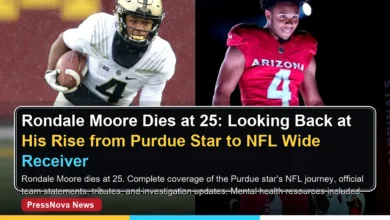
Rondale Moore was a 25-year-old wide receiver who currently played for the Minnesota Vikings. A product of Purdue University, where he dazzled college football with his explosiveness, he was selected in the second round of the 2021 Draft by the Arizona Cardinals. Moore was known for his speed and his ability to create big plays in tight spaces.
According to initial reports, the player died in Floyd County, Indiana, his home state. Although local authorities continue to investigate the exact causes, Moore’s death comes just months after other confirmed suicides in the league, such as that of Marshawn Kneeland. The Rondale Moore death has once again thrust the issue of player welfare into the national spotlight, prompting difficult conversations about accountability.
The frequency of such tragedies has raised urgent questions about what the NFL is doing—or failing to do—to protect its players. A 2024 Harvard Medical School study revealed that former NFL players have a suicide rate three times higher than athletes in other major professional sports leagues, underscoring the unique pressures and neurological risks football presents.
A Pattern of Neglect: The NFL’s Troubled History with Mental Health
Fehoko’s criticism is far from an isolated incident. The NFL’s relationship with mental health has been marked by a consistent pattern of reactive measures rather than proactive care. The league’s history reveals a reluctance to address the psychological toll of professional football until forced to do so by public pressure or legal action.
Past Incidents That Exposed the League’s Failures
In 2012, linebacker Junior Seau took his own life at 43, becoming one of the most high-profile cases linking football-related brain trauma to mental health deterioration. Seau’s death, followed by the suicides of other players like Dave Duerson and Ray Easterling, led to increased scrutiny of the league’s handling of chronic traumatic encephalopathy (CTE) and its psychological effects.
The subsequent concussion settlement, finalized in 2015, provided compensation for players suffering from neurological conditions but did little to address the broader mental health crisis. Critics noted the settlement focused on physical brain injuries rather than the psychological support systems that could have prevented suicides.
More recently, the deaths of players like Vincent Jackson in 2022 and Dwayne Haskins in 2021 have continued to draw attention to the league’s inadequate mental health infrastructure. In each case, the NFL responded with statements of sympathy and temporary hotline promotions—exactly the “facade” Fehoko described.
The Financial Reality: Why Teams Don’t Prioritize Player Well-Being
The NFL generates over $20 billion in annual revenue, yet investment in mental health resources remains disproportionately low relative to the scale of the crisis. A comparative analysis shows the NFL spends approximately $500,000 per team annually on mental health services—less than 0.1% of the salary cap.
The Disconnect Between Revenue and Resources
This financial disparity reflects a deeper structural issue: teams are incentivized to prioritize immediate performance over long-term well-being. With head coaches, general managers, and owners operating under win-now pressure, investments in mental health are often viewed as expenses rather than essential player care.
Fehoko’s demand that owners and coaches “treat everyone on that roster the same from the franchise QB to the janitor” speaks to this systemic inequality. The league’s financial model rewards short-term performance while externalizing the long-term human costs—costs borne by players and their families.
How Does the NFL Compare to Other Major Sports Leagues?
The NFL lags significantly behind other major professional sports leagues in mental health provision. While the NBA and MLB have both implemented comprehensive mental health programs with dedicated clinicians, the NFL’s approach remains fragmented and reactive.
A comparison of mental health resources across U.S. professional sports leagues reveals stark differences:
| Category | NFL | NBA | MLB | NHL |
|---|---|---|---|---|
| On-site clinicians | Part-time only | Full-time team | Full-time team | Full-time team |
| Mandatory mental health screenings | No | Yes | Yes | Yes |
| 24/7 crisis support | Limited | Full access | Full access | Full access |
| Mental health parity clause in CBA | No | Yes (2023) | Yes (2022) | Yes (2022) |
| Annual mental health budget per player | ~$1,200 | ~$5,000 | ~$4,500 | ~$4,000 |
The NBA’s mental health program, introduced in 2018, includes mandatory mental health screenings, full-time licensed clinicians, and confidential access to care without fear of team retaliation. MLB and the NHL have since adopted similar frameworks. The NFL remains the outlier—a fact that has not gone unnoticed by current and former players.
The NFLPA’s Role: Advocate or Enabler?
The NFL Players Association, tasked with representing player interests, has faced criticism for not pushing harder on mental health provisions during collective bargaining negotiations. While the NFLPA has launched its own wellness programs and mobile apps offering counseling services, players like Fehoko argue these measures miss the root problem.
“The NFLPA can talk all they want, but until they get it in the contract that teams are required to provide real mental health care without stigma, nothing changes,” a former player who requested anonymity told PressNova News. “Right now, the union is playing nice with the owners while players are dying.”
Experts point to the NFLPA’s 2020 collective bargaining agreement as a missed opportunity. The deal secured increased roster sizes and higher salaries but offered only vague language about mental health improvements. In contrast, the NBA’s 2023 CBA explicitly mandated parity between mental and physical health benefits, a provision absent from the NFL’s agreement.
What Needs to Change: Expert Recommendations for Reform
Sports psychologists, player advocacy groups, and former athletes have outlined a clear path forward for the NFL. The changes require both cultural transformation and structural reform—beginning with making mental health care truly accessible and stigma-free.
Policy Changes That Could Save Lives
Experts recommend several concrete policy changes: mandatory annual mental health screenings for all players, independent mental health professionals not employed by teams, parity between mental and physical health benefits in team medical plans, guaranteed confidentiality for players seeking help, and dedicated mental health leave policies similar to those in other sports.
Dr. Cooper emphasized that meaningful change requires a shift in leadership priorities. “Until the NFL Commissioner and team owners treat mental health with the same seriousness as ACL injuries, nothing will change,” he said. “We don’t tell players to tough out a torn knee. Why are we telling them to tough out their mental health?”
Fehoko’s demands echo these professional recommendations. “I’ll start believing they care about player health when the Owner, GM, & head coach treat everyone on that roster the same,” he wrote—a standard that would require dismantling the league’s hierarchical culture of silence.
Resources for Current and Former Players Seeking Help
Despite the systemic failures highlighted by Fehoko, resources are available for players in crisis. The NFLPA offers a confidential assistance program through its Wellness Committee, providing 24/7 support and counseling services. The NFL also operates the Player Care Foundation, which provides resources for mental health and wellness.
Players can access these resources confidentially through the NFLPA’s mobile app or by calling the league’s designated hotline. However, as Fehoko noted, the availability of resources means nothing if the culture makes players afraid to use them.
Frequently Asked Questions About NFL Mental Health and Player Criticism
What did the former NFL player say about the league’s mental health approach?
Breiden Fehoko accused NFL teams of hypocrisy, stating they post mental health awareness messages but only care about what players contribute on game day. He revealed players are stigmatized for seeking help inside organizations and are treated differently once they admit struggles.
What happened to Rondale Moore?
Rondale Moore, a 25-year-old wide receiver for the Minnesota Vikings, was found dead in Floyd County, Indiana, his home state, on Saturday. Authorities are investigating the cause, but the death is believed to be a suicide. His death follows another confirmed suicide in the league just months earlier.
Has the NFL ever been sued over mental health issues?
Yes. The NFL faced lawsuits over concussions and brain injuries, resulting in a landmark settlement in 2015 that provided compensation for players with neurological conditions. However, critics argue the settlement focused on physical brain injury rather than broader mental health support and prevention.
What mental health resources does the NFL currently offer players?
The NFL offers resources through its Player Care Foundation and partners with the NFLPA on wellness programs, including a confidential assistance program with 24/7 counseling and support. However, these resources have been criticized as insufficient and undermined by a culture that discourages players from using them.
How does the NFL’s mental health record compare to other sports leagues?
The NFL lags behind the NBA, MLB, and NHL in mental health provisions. Other major leagues require full-time on-site clinicians, mandatory mental health screenings, and have mental health parity clauses in their collective bargaining agreements—all absent in the NFL.
What reforms are experts calling for?
Experts recommend mandatory annual mental health screenings, independent clinicians not employed by teams, parity between mental and physical health benefits, guaranteed confidentiality, and dedicated mental health leave policies. Cultural change that eliminates stigma is also essential.
Where can current NFL players get confidential mental health help?
Current players can access confidential support through the NFLPA’s Wellness Committee, available 24/7 via the NFLPA mobile app or the league’s designated hotline. Former players can access resources through the NFL Alumni Association and NFL Player Care Foundation.