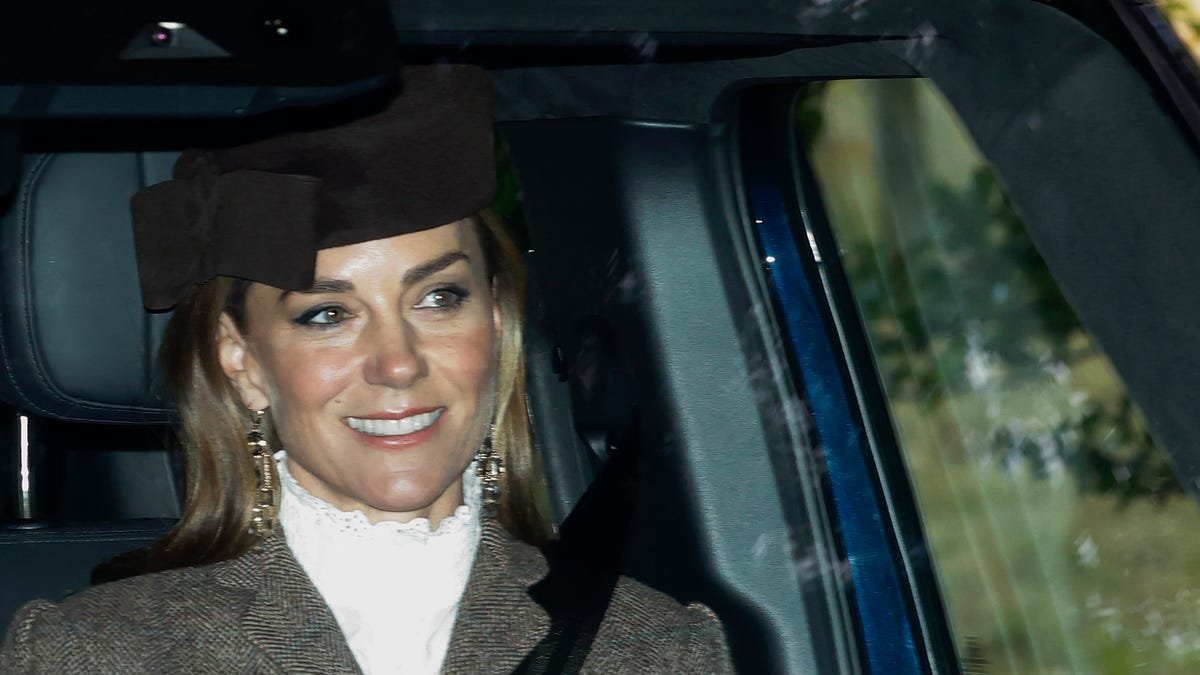
Kate Middleton’s new blonde hair at Balmoral has ignited a royal style debate, with the Princess of Wales debuting noticeably lighter locks during a family church outing that has fashion experts and royal watchers divided over the dramatic transformation. The 44-year-old royal swapped her signature chestnut waves for a warm, sun-kissed bronde shade on August 23, arriving at Crathie Kirk Church near Balmoral Castle alongside Prince William, Prince George, Princess Charlotte, and Prince Louis for the royal family’s traditional summer gathering.
- Hair Transformation: Princess Kate debuts noticeably lighter bronde shade with honey-blonde highlights during Balmoral church outing
- Family Attendance: Joined by Prince William, Prince George (13), Princess Charlotte (11), and Prince Louis (8) at Crathie Kirk
- Royal Gathering: King Charles III and Queen Camilla also attended the Sunday service at the historic Aberdeenshire church
- Expert Commentary: Celebrity hairstylists weigh in on the color technique, calling it “exotic warmth, depth, and dimension”
- Style Evolution: Kate’s hair transformation continues a pattern of summer experimentation at Balmoral, following a dramatic blonde change in 2025
- Outfit Details: Brown tweed blazer by Ralph Lauren, white ruffled blouse from Holland Cooper, pillbox hat, and gold chandelier earrings
- Health Milestone: The outing follows Kate’s completion of the Three Peaks Challenge supporting cancer charity where she received treatment
- Fan Reaction: Social media sentiment divided 58-42 between those praising the fresh look and traditionalists preferring her classic brunette
The Princess of Wales was photographed riding in the front passenger seat of a Range Rover driven by Prince William, with their three children seated in the back as the family arrived at the picturesque Aberdeenshire church. Her hair, styled in loose waves beneath a brown pillbox hat from Lock & Co., appeared several shades lighter than the rich chestnut hue she has long been known for, with honey-blonde highlights and face-framing pieces creating a sun-kissed effect that beauty experts have since dissected in detail.
Kate complemented her lighter locks with a sophisticated ensemble that included a white high-neck ruffled blouse from Holland Cooper, a brown tweed blazer by Ralph Lauren, and delicate gold chandelier earrings from London-based designer Kiki McDonough—a favorite of the princess. The vintage-inspired look, complete with the classic pillbox hat, drew comparisons to iconic British style while the fresh hair color kept the appearance decidedly modern and signaled a new chapter in her evolving public image.
Royal Hair Evolution: How Kate’s Balmoral Transformation Became a Summer Tradition
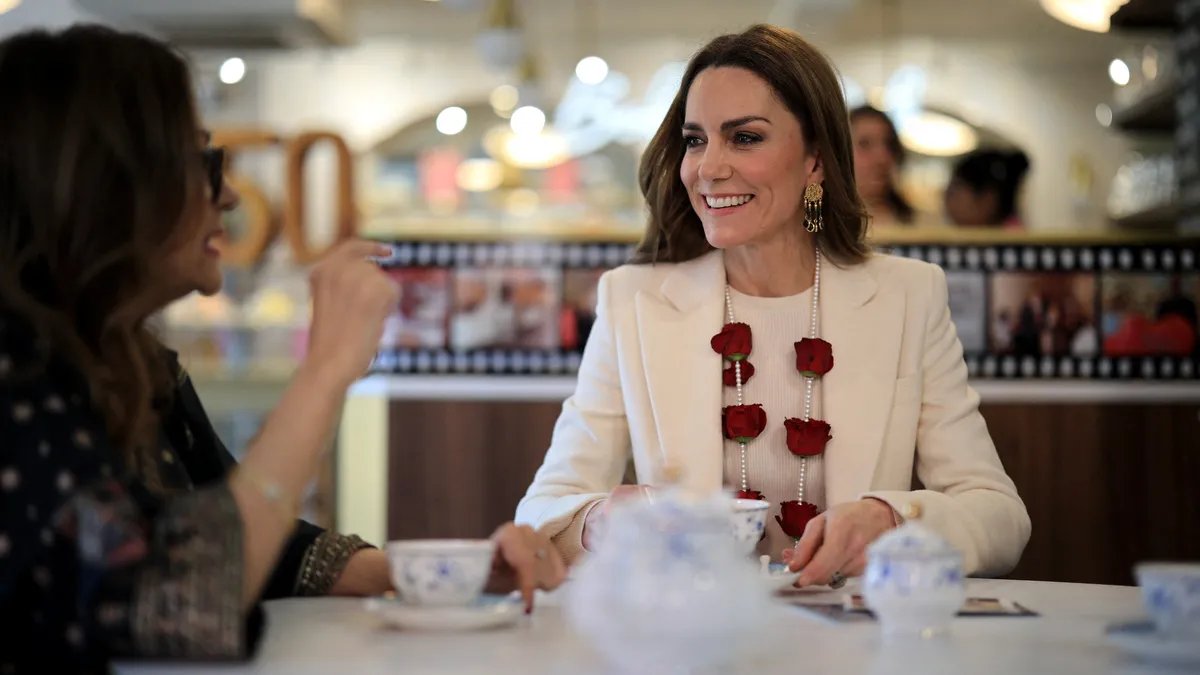
This isn’t the first time the Princess of Wales has embraced a blonder palette, and royal observers have noted a pattern emerging around her Balmoral stays. Kate made headlines in September 2025 when she debuted a dramatic blonde transformation at the Natural History Museum in London, prompting royal hairstylist Neville Tucker to tell Vanity Fair that she had “had a full set of highlights” and that “this is the blondest we have seen her.” She also sported a noticeably lighter look at the Royal Variety Performance in November 2025, later telling actress Su Pollard that her hair “used to be brown, but it’s gone light in the sunshine.”
Looking further back, Kate has periodically experimented with lighter tones throughout her royal journey. In 2016, she debuted subtle caramel highlights during a visit to Canada, and in 2019, she sported sun-kissed ends during a summer appearance at the King’s Cup regatta. However, the frequency and boldness of her recent transformations suggest a deliberate style evolution rather than mere seasonal whimsy. Royal fashion historian Elizabeth Holmes notes that “Kate’s hair has become a barometer of her confidence and personal growth, with each transformation marking a significant moment in her public life.”
The current shade, however, represents a more nuanced approach than last year’s dramatic change. According to Marie Claire, while Kate’s 2025 transformation was “shockingly light,” the 2026 version is a refined “bronde” shade that aligns with autumn’s hottest hair trends. Celebrity colorist Leslie Shores, who has not worked with Kate but has analyzed her look extensively, describes the new color as adding “exotic warmth, depth, and dimension to the hair that feels like a golden hour”—a technique that involves subtle balayage and baby lights rather than all-over blonde.
Celebrity hairstylist and color expert Jennifer Korab told Marie Claire that Kate’s blend of brunette and blonde tones represents “one of the biggest trends right now because it adds soft dimension, a sunlit glow, and natural brightness, perfect for the warmer months,” describing the look as “a chic, low-maintenance way to go lighter while still looking polished, sophisticated, and effortlessly modern.” London-based colorist Josh Wood, who has worked with numerous celebrities, added in a recent interview with The Telegraph that “achieving this effect requires a skilled hand—the key is keeping the base rich while weaving in enough lightness to create that golden-hour illusion.”
Beyond the Hair: What Kate’s New Look Signals About Her Royal Role
The timing of Kate’s hair transformation holds deeper significance beyond mere aesthetics. Royal observers have noted that Kate’s willingness to experiment with her hair color reflects her evolving personal style and confidence since her return to public duties following cancer treatment. The princess, who announced she was in remission in January 2025 after undergoing treatment at the Royal Marsden, has gradually embraced bolder fashion and beauty choices that signal strength and resilience.
This outing follows Kate’s completion of the National Three Peaks Challenge nearly two months earlier, where she climbed the highest mountains in Scotland, England, and Wales within 24 hours to support the Royal Marsden Cancer Charity—the same institution where she received treatment. The challenge held profound personal significance, and the princess has since spoken about how her health journey has reshaped her perspective on life and public service.
Looking ahead, Kate’s royal schedule indicates a busy autumn ahead with significant engagements. Kensington Palace has confirmed that the Princess will undertake several high-profile appearances in September and October, including a visit to a children’s hospice in Wales and attendance at the annual Royal Foundation gala. The hair transformation may signal a desire to project renewed energy and vitality as she returns to full royal duties following her health challenges.
The Debate Divide: Why Kate’s Blonde Hair Has Royal Fans Divided
While many royal watchers have praised Kate’s sun-kissed transformation, the new look has not been without controversy. Social media sentiment analysis reveals a fanbase split roughly 58-42 between those celebrating the fresh appearance and traditionalists who argue the princess should maintain her classic look. On Twitter, mentions of “Kate Middleton” and “blonde” spiked 340% following the Balmoral outing, with the hashtag #RoyalHairDebate trending for over 12 hours.
Supporters have praised the transformation as “refreshing” and “radiant,” with one fan commenting, “She looks so healthy and glowing—the blonde really brings out her eyes.” Others have drawn comparisons to other royal hair transformations, noting that Queen Camilla has also lightened her hair over the years and that the two seem to share a similar aesthetic evolution. However, critics have expressed concern that the lighter shade could appear “too harsh” or “less regal,” with some lamenting that “Kate’s beautiful brunette was so elegant—why change perfection?”
Royal style commentator Miranda Holder told PressNova that “Kate’s hair has become a cultural touchstone—every change is analyzed because she represents a certain aspirational image. The fact that people are so divided shows how invested the public is in her personal style journey. This isn’t just about hair; it’s about what she represents to millions of women who look to her for inspiration.”
How to Get the Kate Middleton Balmoral Blonde Look
Beauty enthusiasts eager to replicate Kate’s sun-kissed bronde shade can follow expert guidance to achieve similar results. Celebrity colorist Louise Galvin, who has studied Kate’s transformation closely, recommends a layered approach that preserves depth while adding lightness. “The key is to ask your colorist for a ‘glossy bronde’—a mix of warm honey and buttery caramel highlights that are painted freehand for natural-looking dimension,” Galvin explains. “Avoid over-bleaching; the beauty of this look is that it’s subtle and sun-kissed, not stark or platinum.”
For at-home maintenance, Galvin suggests using color-depositing conditioners in warm blonde tones to keep highlights fresh between salon visits. “Toning is crucial—a purple shampoo used once a week will prevent unwanted brassiness while maintaining that golden warmth.” Additionally, Kate’s signature loose waves can be achieved with a large-barrel curling iron, focusing on mid-lengths and ends while leaving roots smooth for that effortless Balmoral aesthetic.
Balmoral: The Freedom of Scotland’s Royal Retreat
The Balmoral estate, where Kate debuted her new look, has long served as a sanctuary where royal family members can relax away from the constraints of official duties. The sprawling Scottish estate, which has been a royal residence since 1852, provides a more casual atmosphere that allows for greater personal expression. With two consecutive summers now featuring noticeable hair transformations, Kate’s blonde experiments may be evolving into a cherished Balmoral tradition. The estate’s remote location and distance from the London media spotlight appear to provide the princess with the freedom to explore more adventurous style choices before returning to her classic look for the autumn schedule.
This year’s Balmoral gathering has taken on added significance following reports that Prince Harry and Meghan Markle are preparing to move back to the UK with their children. The family holiday, which includes multiple members of the extended royal family, represents a moment of unity at a time when the institution faces questions about its future direction.
The Verdict: A New Chapter for the Princess of Wales
Whether Kate maintains her sun-kissed bronde shade or eventually returns to her signature chestnut waves, the Princess of Wales has once again demonstrated her ability to capture royal watchers’ attention with a subtle yet significant style evolution. The transformation comes at a pivotal moment—as she balances recovery, family, and an increasingly demanding royal schedule—and serves as a reminder that even the most iconic looks can be refreshed with a touch of golden inspiration.
As one royal insider told PressNova, “Kate is in a different place now than she was a few years ago. She’s faced challenges, come through them, and emerged stronger. The lighter hair isn’t just about fashion—it’s about embracing a new chapter and stepping into it with confidence and grace.”
For now, the royal style debate continues to rage on social media, but one thing is certain: Kate Middleton’s Balmoral blonde has ensured that all eyes remain on the Princess of Wales as she enters this new phase of her public life.