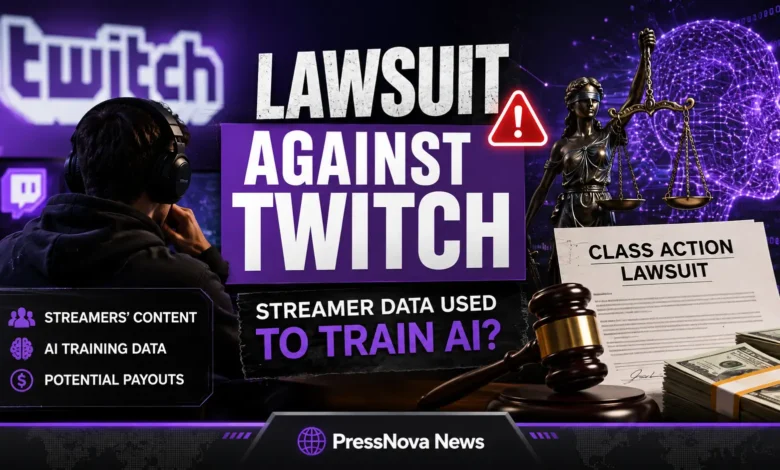
The Twitch class action lawsuit filed by streamers over AI training data has exposed a growing tension between content creators and the platform’s parent company Amazon, with legal experts suggesting the case could redefine digital rights in the streaming era and potentially result in settlements exceeding $100 million. Warren Pandiscia, a Twitch streamer, filed the suit on August 20 in the U.S. District Court for the Northern District of California, alleging that the platform has been using creator content—including broadcasts, clips, chat messages, and images—to train artificial intelligence models without proper consent or compensation since 2024.
- Lawsuit Status: Class action filed August 20 by streamer Warren Pandiscia against Twitch and Amazon in Northern California District Court
- AI Training Data: Clips, past broadcasts, pictures, text, and chat messages used without explicit consent
- Timeline: Data reportedly used since 2024, with streamers only now being informed
- Opt-Out Controversy: Streamers must manually opt out; default setting allows data usage
- Legal Claims: Breach of contract, unlawful use of intellectual property, lack of proper notice
- Key Quote: Twitch CPO Mike Minton stated opt-in would mean “nobody would opt in”
- Potential Damages: Legal experts estimate $50M-$200M based on similar tech class actions
- GDPR Impact: EU and UK streamers may have additional rights under data protection laws
- Industry Impact: First major class action of its kind; could set precedent for creator rights
The lawsuit claims that Twitch violated its own terms of service and user trust by implementing AI training practices without directly notifying streamers or offering meaningful choice. According to court documents, the platform began using streamer content for “prototyping” AI models as early as 2024, with Chief Product Officer Mike Minton stating at the time that the use was “within the bounds of user trust” and privacy regulations. However, the suit argues that streamers were never properly informed, and the data—spanning potentially two years—has already been absorbed into Amazon’s AI systems, which include large language models, computer vision systems, and recommendation algorithms powering various Amazon services.
What makes this case particularly significant is its class action status, meaning all Twitch streamers who have had their content used for AI training could potentially be represented. The suit alleges that even streamers who opt out of future data usage cannot reclaim content already utilized, creating what legal experts describe as a “one-way door” where creators have no recourse for past intellectual property extraction. The class action mechanism allows for collective representation, potentially amplifying the financial and legal consequences for Twitch and Amazon, with experts estimating the class could include hundreds of thousands of active streamers.
Twitch’s AI training policy came under intense scrutiny earlier in August when the platform introduced a setting allowing streamers to deny Amazon permission to use their content for AI training. However, the opt-out approach—requiring creators to actively disable the feature—sparked immediate backlash across social media platforms including Twitter, Reddit, and Discord. Many streamers argued the setting should have been defaulted to opt-in, requiring explicit permission rather than passive acceptance. Minton addressed the criticism directly during a stream, explaining that if streamers had to opt in, “nobody would opt in,” revealing that Twitch prioritized data acquisition over creator consent.
What AI Training Is Twitch Actually Doing?
According to Twitch’s official FAQ, the platform has been utilizing streamer content for AI model development, including clips, past broadcasts, pictures, text, and chat interactions. However, technical details remain vague. Industry sources familiar with Amazon’s AI infrastructure suggest the company is training multiple model types: natural language processing models for chat moderation, computer vision systems for automated content flagging, recommendation algorithms for personalized discovery, and potentially generative AI models for future features like automated clip generation or AI-assisted streaming tools.
The data collection is part of Amazon’s broader AI ambitions, which represent one of the company’s largest strategic investments. Amazon has committed over $150 billion to AI infrastructure through 2030, according to company filings, with Twitch serving as a valuable data source for training models on natural conversation, real-time interaction, and community dynamics. Legal experts have highlighted that this commercial context could strengthen plaintiffs’ unjust enrichment claims, as Amazon benefits financially from streamer content without providing compensation.
Legal experts have highlighted that the lawsuit could hinge on whether Twitch’s terms of service adequately informed streamers about how their content would be used. Intellectual property attorney Sarah Chen told PressNova, “The core question is whether Twitch’s language was sufficiently clear to constitute informed consent. If streamers can demonstrate they didn’t understand they were signing away rights to their content for AI training, this becomes a breach of contract case with significant damages exposure.”
Chen also noted that Amazon’s silence on the matter could work against the company. “When a corporation doesn’t respond to allegations like these, it can suggest they’re weighing legal exposure rather than confident in their defense. The fact that Twitch chose an opt-out approach over opt-in suggests they knew many creators would decline if given a genuine choice.”
Twitch’s History of Controversy: Policy Changes and Escalating Tensions
This lawsuit represents the culmination of years of mounting tension between Twitch and its creator community, marked by several key policy changes that have eroded trust. In 2021, the “Twitch Purge” mass banning of channels sparked outrage over inconsistent moderation. In 2022, changes to the ad revenue split—reducing the 70/30 split for top partners—prompted widespread criticism. The Partner Plus program overhaul in 2023, which raised revenue share thresholds, further alienated mid-tier creators. Throughout 2024 and 2025, disputes over sponsorship rights and exclusive streaming agreements added to growing frustration.
Each incident has progressively damaged platform-creator trust, making the AI training policy a breaking point for many streamers. The timeline is particularly notable: Twitch’s AI training data collection began in 2024, the same year the platform faced significant backlash over its handling of gambling content and the controversial “Splash” feature. The opt-out policy announcement in August 2026 appears to have been the catalyst that finally pushed creators toward legal action.
Notable streamers including Asmongold, Pokimane, HasanAbi, and Valkyrae have publicly criticized Twitch’s approach to creator relations, with some pointing to a pattern of prioritizing corporate interests over community needs. The lawsuit arrives at a time when other platforms are also navigating AI-related legal challenges—including lawsuits against OpenAI, Stability AI, and other generative AI companies over training data usage—placing Twitch within a broader reckoning over intellectual property rights in the digital age. This situation bears some resemblance to how gaming companies navigate complex community and technology decisions, as seen in Twitch AI training challenges that mirror broader industry tensions between creators and platforms.
Understanding the Legal Basis for the Twitch Class Action
The lawsuit against Twitch rests on several legal pillars. First, the complaint alleges breach of contract, arguing that Twitch’s use of streamer content for AI training violates the platform’s own terms of service, which did not explicitly authorize such usage when the data collection began in 2024. Second, the suit claims unlawful appropriation of intellectual property, asserting that streamers retain ownership rights over their content, including the right to control how it’s used commercially. Third, the class action alleges unjust enrichment, suggesting that Amazon benefits financially from streamer content without providing compensation.
These allegations, if proven, could establish a precedent that extends beyond Twitch to other platforms—including YouTube, TikTok, and Meta—that may similarly rely on creator content for AI development. Legal observers note that streaming platforms have largely operated in a regulatory gray area regarding content ownership, and this case could force courts to clarify the boundaries of digital property rights.
Procedurally, the class action status means that any damages awarded would be distributed among eligible streamers, potentially creating a significant financial obligation for Twitch and Amazon. While the exact number of affected streamers has not been determined, Twitch reports over 7 million active streamers monthly, suggesting the class could be substantial—potentially representing hundreds of thousands of creators.
Legal Expert Analysis: The Strength of the Case and Settlement Estimates
Legal analysts are divided on the strength of the Twitch lawsuit, but many agree that the case raises novel questions about digital rights in the AI era. Professor David Yang of Columbia Law School, who specializes in intellectual property and technology law, told PressNova, “This case is groundbreaking because it addresses a fundamental question: can platforms use creator content for AI training without explicit compensation? The outcome could reshape how platforms interact with creators for years to come.”
However, Yang also noted challenges the plaintiffs face. “Twitch will likely argue that its terms of service granted broad rights to use streamer content, and that streamers accepted those terms when they created accounts. The key question is whether AI training falls within the scope of those terms, or whether it requires additional consent. Courts have been inconsistent in similar cases, making this a genuinely unpredictable litigation.”
Attorney James Rodriguez, who specializes in class action litigation, told PressNova that the case could follow a path similar to other high-profile tech lawsuits. “We’ve seen class actions against Facebook, Google, and others over data usage settle for hundreds of millions of dollars. The question isn’t whether Twitch will face financial consequences—it’s how significant those consequences will be and what precedent they set.”
Rodriguez also noted that the opt-out policy may be Twitch’s weakest point. “When a company intentionally structures a choice so that silence equals consent, it can be viewed as an unfair or deceptive practice. The fact that Minton admitted on stream that opt-in would result in low participation effectively confirms that Twitch knew creators would decline if given a true choice.”
Based on similar cases, legal experts estimate potential settlement ranges of $50 million to $200 million, depending on class size and the strength of evidence. Notable comparables include the Facebook “Sponsored Stories” settlement ($20 million), the Google+ API data settlement ($50 million), and the Cambridge Analytica class action ($725 million). The Twitch case could land closer to the higher end given the commercial value of AI training data and Amazon’s significant financial resources.
Potential Outcomes and What Streamers Could Gain
If the Twitch class action lawsuit succeeds, streamers could receive compensation for the unauthorized use of their content. Damages could be calculated based on the commercial value of AI training data, the number of streamers affected, and the duration of data usage. Legal experts suggest that settlements in similar data privacy class actions have ranged from tens of millions to hundreds of millions of dollars, depending on the scale of the violation.
Individual streamer payouts would depend on several factors: length of streaming history, volume of content created, engagement metrics, and whether the streamer had previously opted out. Based on typical class action distribution models, active streamers with extensive content libraries could receive hundreds to thousands of dollars, while top creators with millions of views might see significantly higher compensation.
Beyond financial compensation, streamers could also seek injunctive relief requiring Twitch to change its AI training policies. This could include mandating opt-in consent for future data usage, providing clearer disclosures about how content is used, and offering mechanisms for streamers to remove or have compensation for content already incorporated into AI systems. Such changes would represent a significant shift in platform-creator power dynamics.
For the broader streaming industry, a successful lawsuit could empower creators to demand more transparency and control over how their content is monetized by platforms. It could also spur regulatory action, with lawmakers potentially stepping in to establish clear rules for AI training data usage across digital platforms.
International Implications: GDPR, UK Streamers, and Global Rights
The Twitch class action lawsuit raises significant international legal questions, particularly for streamers based in the European Union and United Kingdom, who may have additional rights under data protection laws. Under the General Data Protection Regulation (GDPR), platforms must obtain explicit consent for data processing activities, including AI training. Streamers in the EU and UK could potentially file separate claims or join the existing class action with additional legal grounds.
Data protection authorities in Germany, France, and the UK have shown increasing interest in AI training data practices, with regulators in multiple jurisdictions opening investigations into how tech companies use user content for AI development. The Irish Data Protection Commission, which oversees many major tech companies’ EU operations, has issued guidance suggesting that AI training may require specific consent mechanisms beyond standard terms of service.
International streamer rights advocacy groups have begun organizing, with organizations like the European Gaming Content Creators Association (EGCCA) calling for standardized protections across platforms. A successful outcome in the U.S. case could provide momentum for regulatory action in other jurisdictions, potentially creating a patchwork of international standards that platforms must navigate.
Streamer Community Reaction: Diverse Perspectives Emerge
The Twitch community has responded with a spectrum of reactions, from outrage to cautious optimism. Popular streamer and creator advocate Andrew “Day9” Gray told PressNova, “This is bigger than Twitch. It’s about whether platforms can treat our work as raw material for their AI products without paying us a cent. If Twitch can do this, every platform will follow.”
Imane “Pokimane” Anys, one of Twitch’s most prominent creators, expressed support for the lawsuit on her stream, stating, “We’ve been asking for transparency for years. This isn’t just about AI—it’s about respect and fair treatment across the board.” Similarly, prominent variety streamer Sykkuno commented, “The opt-out approach was a slap in the face. They knew we wouldn’t agree, so they made us do the work. That’s not consent—that’s evasion.”
However, not all streamers support the lawsuit. Some creators expressed concern that legal action could damage their relationship with the platform. A partnered streamer who wished to remain anonymous told PressNova, “I understand the outrage, but I also need Twitch to survive. If they have to pay out millions, they’ll cut costs somewhere else—and that probably means lower revenue shares for all of us.”
Another streamer, who has been on the platform for over a decade, shared, “I’ve been streaming for eight years. I’ve built a career on this platform. To find out that my work is being used to train AI without my knowledge—let alone compensation—feels like a betrayal. This lawsuit is about respect as much as money.”
Smaller creators have expressed mixed feelings. Some see the lawsuit as a long-overdue protection for all creators, while others worry that legal fees could consume any potential settlement. “If the lawyers take 30% and we split the rest among millions of streamers, what’s left?” questioned a variety streamer with 2,000 followers. “I want accountability, but I’m not sure this is the solution.”
For now, Twitch and Amazon have not issued a public response to the lawsuit beyond their existing FAQ statements. However, legal experts suggest that the companies are likely preparing a robust defense, potentially arguing that the current terms of service grant them sufficient rights to use streamer content. The coming months will reveal whether the case proceeds to discovery, settlement negotiations, or potentially a trial that could reshape digital property rights.
What Streamers Can Do Now: Practical Action Steps
For streamers concerned about their content being used for AI training, several immediate steps can be taken. First, creators should locate the opt-out setting in their Twitch account dashboard under “Privacy & Safety” preferences. While this won’t prevent past data usage, it can protect future content from being incorporated into Amazon’s AI systems.
Second, streamers should document their content history, including dates of streams, average viewership, and any previous communication with Twitch regarding content rights. This documentation could be valuable if the class action moves forward or if individual claims are needed.
Third, creators should familiarize themselves with their rights under applicable data protection laws. EU and UK streamers may have additional protections under GDPR, including the right to request data deletion or the right to object to data processing for certain purposes.
Fourth, streamers should consider joining the class action if they qualify. Information about class membership will be made available through the court and legal representatives as the case progresses. Potential class members should be cautious about signing any settlement agreements without legal review.
Finally, content creators should stay informed about platform policy changes and legal developments. Engaging with creator advocacy organizations can provide valuable support and collective bargaining power in future disputes.
Platform Comparison: How Other Services Handle AI Training Data
| Platform | AI Training Policy | Consent Model | Opt-Out Available | Compensation Offered |
|---|---|---|---|---|
| Twitch | Uses all streamer content for AI training | Opt-out (default enabled) | Yes (manual opt-out) | None (under lawsuit) |
| YouTube | Uses content for AI training with clear disclosure | Opt-in for certain features | Limited | No |
| Meta (Facebook/Instagram) | Uses content for AI training under broad terms | Opt-out (default enabled) | Yes | No |
| TikTok | Uses content for AI training with explicit consent | Opt-in | N/A (opt-in required) | No |
| OpenAI | Uses public data for training; opt-out for creators | Opt-out | Yes | No |
This comparison illustrates the varied approaches platforms take regarding AI training data. Twitch’s opt-out model is similar to Meta’s approach but differs from TikTok’s opt-in requirement, which may become a standard as regulatory pressure increases.
Frequently Asked Questions About the Twitch Class Action Lawsuit
What exactly is the lawsuit against Twitch about?
The class action lawsuit alleges that Twitch and Amazon have been using streamer content—including broadcasts, clips, chat messages, and images—to train AI models without proper consent or compensation since 2024. The suit claims breach of contract, unlawful intellectual property use, and unjust enrichment, with potential damages estimated between $50 million and $200 million based on similar tech class actions.
Who can join the Twitch class action lawsuit?
All Twitch streamers whose content may have been used for AI training are potential class members. The lawsuit was filed as a class action in the U.S. District Court for the Northern District of California, meaning any affected streamer could be represented by the plaintiffs’ legal team. The exact definition of the class will be determined through the litigation process. EU and UK streamers may also have additional claims under GDPR.
What AI training is Twitch doing with streamer content?
Twitch has been using streamer content—including clips, broadcasts, pictures, text, and chat messages—to train multiple AI models. According to the platform’s FAQ and industry sources, this data is used for content moderation systems, recommendation algorithms, computer vision features, and potentially future generative AI capabilities. The specific models include natural language processing systems and computer vision applications.
What damages could streamers receive?
While specific damages have not been determined, legal experts estimate potential settlements of $50 million to $200 million based on similar tech class actions. Individual streamer payouts would depend on factors like streaming history length, content volume, engagement metrics, and class size. Active streamers with extensive content libraries could receive hundreds to thousands of dollars, while top creators with significant viewership might see higher compensation. Streamers could also seek injunctive relief requiring policy changes.
Has Twitch responded to the lawsuit?
Twitch and Amazon have not issued a formal public response to the lawsuit beyond existing FAQ statements. The platform has maintained that its AI training practices are within legal bounds, though the lawsuit challenges this position. Legal experts anticipate the companies will argue that current terms of service grant sufficient rights to use streamer content for AI training.
How long will this legal process take?
Class action lawsuits typically take months to years to resolve. The case will proceed through initial hearings, potential motions to dismiss, discovery, and either settlement negotiations or trial. Legal experts suggest this litigation could take 12-24 months to reach a significant resolution, with discovery alone potentially extending 6-12 months given the complexity of AI training data and Amazon’s extensive technical infrastructure.
What should streamers do now?
Streamers should: 1) Locate the opt-out setting in their Twitch account dashboard under “Privacy & Safety” to protect future content, 2) Document their content history including dates and viewership data, 3) Understand their rights under applicable data protection laws (especially GDPR for EU/UK streamers), 4) Consider joining the class action if they qualify, and 5) Stay informed about platform policy changes and legal developments through official court channels and creator advocacy organizations.