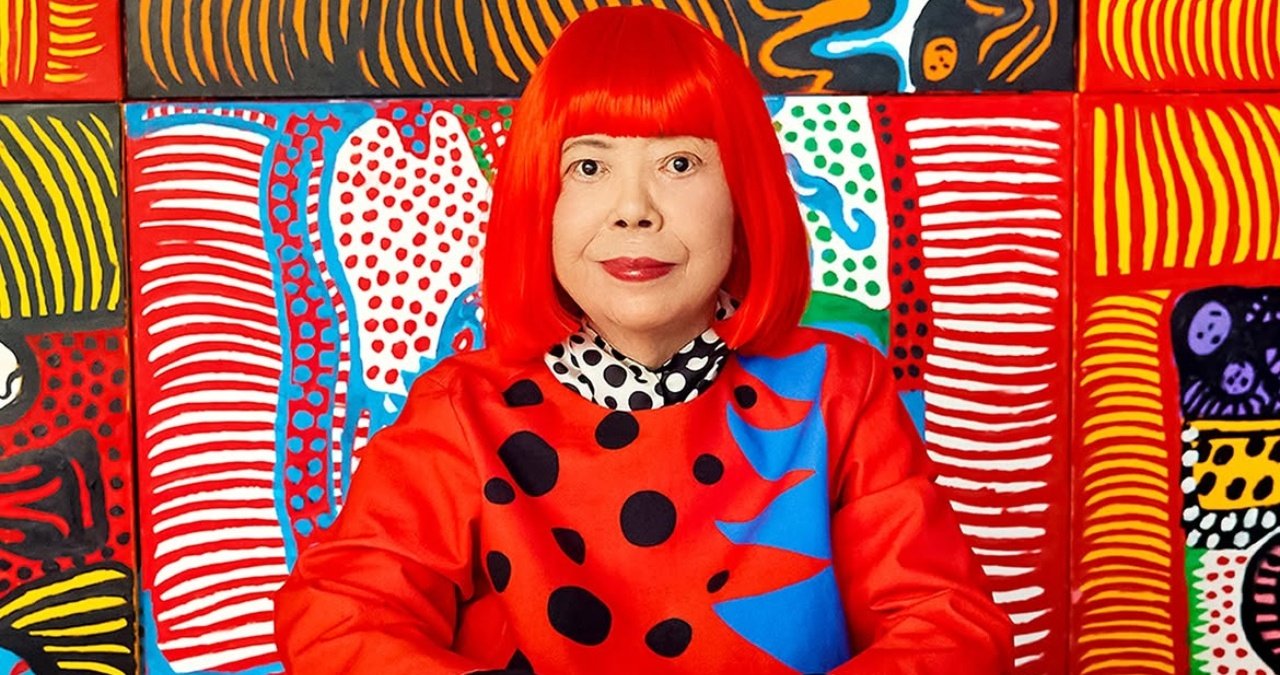
Yayoi Kusama cause of death has been confirmed as multiple organ failure, with the legendary Japanese polka dot artist passing away at age 97 in a Tokyo hospital on August 14, 2026. The announcement came from her studio on August 27, 2026, sending shockwaves through the global art community as fans and fellow artists mourned the loss of one of contemporary art’s most influential figures.
- Official Cause of Death: Multiple organ failure confirmed by David Zwirner Gallery and her studio
- Date of Passing: August 14, 2026, at a hospital in Tokyo, Japan
- Final Artistic Statement: Kusama continued painting until her final days, “never setting aside her brush”
- Career Milestones: Represented Japan at Venice Biennale (1993), won Order of Culture (2016), auction record $10.5M for Untitled (Nets)
- Personal Struggles: Lived voluntarily in a psychiatric hospital for decades, using art as therapy for hallucinations and anxiety
- Global Recognition: Infinity Mirror Rooms drew millions of visitors at Tate Modern, MoMA, and museums worldwide
Born in 1929 in Matsumoto, Japan, Kusama’s journey from a young girl experiencing vivid hallucinations to becoming one of the world’s best-selling female artists is a testament to her extraordinary resilience and creative spirit. She famously described her art as a survival mechanism, telling interviewers, “I fight pain, anxiety, and fear every day, and the only method I have found that relieved my illness is to keep creating art.”
Yayoi Kusama Cause of Death Confirmed by Studio and Gallery
The official announcement from Yayoi Kusama Inc. confirmed that the artist’s passing was due to multiple organ failure, with David Zwirner Gallery, which represented her, releasing a separate statement verifying the cause. The official statement read: “Throughout an extraordinary lifetime devoted entirely to artistic creation, Kusama pursued an internationally acclaimed career as a pioneering avant-garde artist whose creative practice encompassed visual art, performance, fiction, and poetry. She continued to paint until her final days, never setting aside her brush, and continued exploration of forever love and eternal soul.”
According to reports from Kyodo News, Kusama had been hospitalized prior to her death, though her team did not disclose whether family members were by her side during her final moments. The Yayoi Kusama Studio added: “We will carry forward Kusama’s wishes and, through art, continue to bring hope and strength for the future to people around the world.”
The National Art Center, Tokyo, was among the first institutions to offer condolences, describing Kusama as a “pioneering artist” who had “a profound impact” on the art world.
Who Was Yayoi Kusama? The Polka Dot Queen’s Remarkable Journey
Yayoi Kusama was one of contemporary art’s most commercially successful and globally recognized figures, known for her obsessive polka dots, pumpkin sculptures, and immersive Infinity Mirror Rooms. Her distinctive style emerged from childhood hallucinations—visions of dots and flashing lights that covered everything around her. “One day, after seeing a tablecloth with a red flower pattern on a desk, I saw the same red flower pattern all over the ceiling, windows and pillars. It filled the room, and covered my body,” she wrote in her autobiography.
Despite her family’s disapproval—her conservative parents wanted her to marry rather than pursue art—Kusama taught herself to draw and paint, using the medium to “ease the shock and fear” of her hallucinations. After discovering a book of Georgia O’Keeffe’s paintings, she wrote to the famous artist, who encouraged her to move to America. Kusama arrived in Seattle in 1957 before relocating to New York City in 1958, where she enrolled at the Art Students League to secure a student visa.
In New York, she created her groundbreaking “Infinity Net” paintings and staged provocative “happenings” that challenged the male-dominated art establishment. Her 1968 open letter to President Richard Nixon—offering to have sex with him if he ended the Vietnam War—demonstrated her fearless commitment to activism and peace. Despite befriending Andy Warhol, Donald Judd, and Joseph Cornell, Kusama remained an outsider, often seeing her ideas appropriated by male contemporaries who received more prestigious gallery shows.
Kusama’s Artistic Legacy: Infinity Mirror Rooms and Iconic Pumpkins
Kusama is best known for her Infinity Mirror Rooms—enclosed spaces with mirrored walls and twinkling lights that create the illusion of infinite space. One of the most famous, Fireflies on the Water, featured 150 small lights suspended over a reflective pool, creating a mesmerizing, meditative experience. These installations have drawn millions of visitors at major institutions including the Tate Modern, Museum of Modern Art, and the Whitney Museum.
Her signature polka dot pumpkins have become cultural icons, particularly her Red Pumpkin sculpture on Naoshima Island, which greets visitors arriving by ferry. Kusama explained: “Pumpkins speak to me. They embody a sense of stability and gives me peace of mind.” In 2012 and 2023, she collaborated with Louis Vuitton, bringing her dotty aesthetic to fashion.
In 2017, the Yayoi Kusama Museum opened in Tokyo, cementing her legacy as Japan’s most celebrated contemporary artist. Her works consistently fetch record auction prices, with her 1959 painting Untitled (Nets) selling for $10.5 million in 2022, one of the highest prices ever achieved by a female artist.
Kusama’s Personal Struggles and Triumphs
Kusama’s life was marked by significant personal challenges. After returning to Japan in the early 1970s, she voluntarily checked herself into a psychiatric hospital where she lived for decades, continuing to produce art from her studio across the street. This environment, she found, allowed her to focus entirely on her creative work while receiving treatment for mental illness.
Despite spending years in relative obscurity, Kusama experienced a dramatic resurgence starting in the late 1980s. A career retrospective at the Center for International Contemporary Arts in New York (1989) and representing Japan at the 1993 Venice Biennale re-established her as a major artistic force. She received Japan’s prestigious Order of Culture in 2016, telling reporters: “I feel there is little left in my life, but I am now still fighting to the death for my art. I am giving all I have so that many people will continue to be interested in my art, even after I am dead.”
In later years, Kusama embraced social media and mass marketing, though she remained focused on her artistic mission. “Polka dots are fabulous,” she told the Associated Press in 2012. “I want to create a thousand paintings, maybe two thousand paintings, as many as I can draw. I will keep painting until I die.”
Global Tributes Pour In for Yayoi Kusama
Following the announcement of Yayoi Kusama cause of death, fans and institutions worldwide have paid tribute. The BBC described her as “the high priestess of polka dots,” while NPR highlighted how her immersive installations made her “a global cultural icon in her 80s and 90s”.
Fans took to social media to express their grief. One wrote on X: “She made repetition feel infinite and personal at the same time, that’s a rare kind of genius. Rest well. Love to her family.” Another commented: “An absolute visionary who changed the art world forever. Her iconic polka dots and Infinity Mirror Rooms inspired millions. Rest in peace, legend.”
Museums that hosted Kusama exhibitions—including the Tate Modern, which extended her 2021 Infinity Mirror Rooms installation multiple times due to overwhelming demand—shared their condolences. The Yayoi Kusama Museum in Tokyo announced that it would honor her legacy through continued exhibitions of her work, carrying forward “Kusama’s wishes and, through art, continue to bring hope and strength for the future to people around the world.”
An upcoming posthumous exhibition in Turin, Italy, at OGR Torino from October 31, 2026, will feature her Infinity Mirror Room, The eternally infinite light of the universe illuminating the quest for truth, ensuring her work continues to reach new audiences. While the art world mourns this tremendous loss, it’s worth noting that controversies continue to emerge in the Japanese entertainment scene, including recent Japanese influencer Gamix apologizing for a racist gesture mocking ATEEZ’s San, highlighting the complex cultural conversations taking place in Japan.
Kusama is no more, but her unique vision—expressed through polka dots, mirrored infinity, and countless pumpkins—will remain an essential part of modern art history for generations to come.