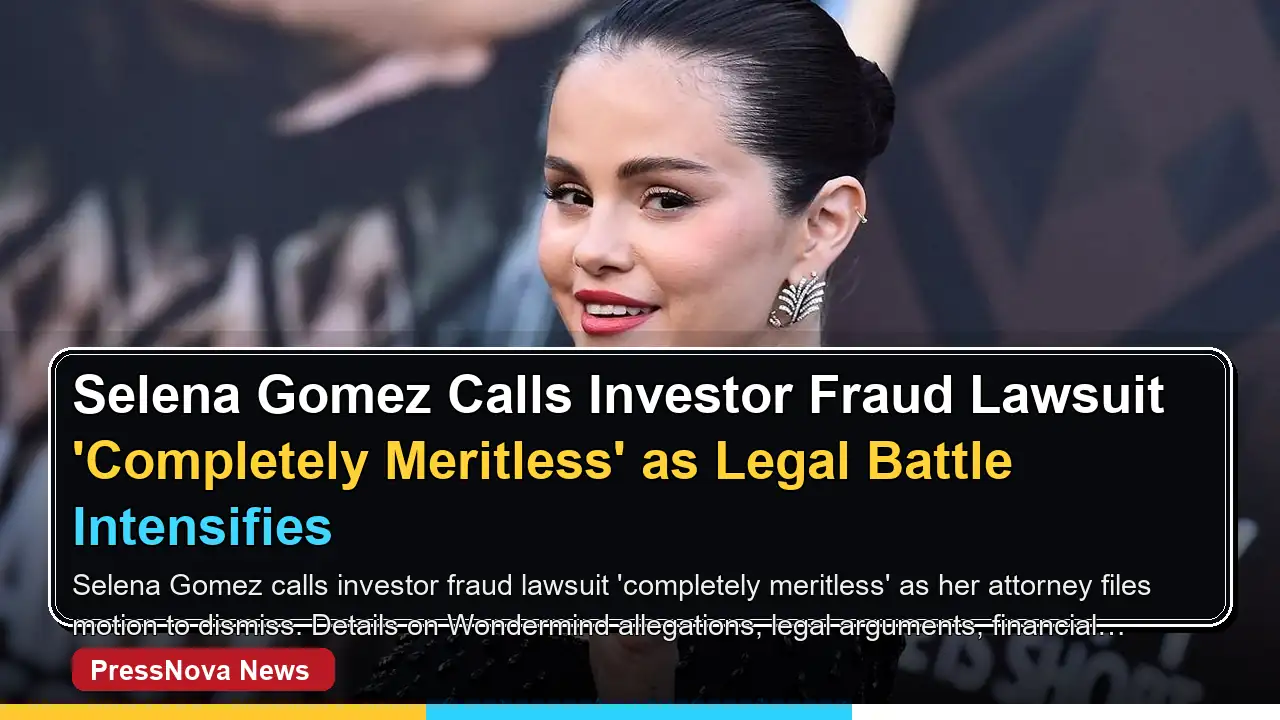
Selena Gomez calls the investor fraud lawsuit against her “completely meritless” as the singer-actress fights back against allegations that she misled investors in her mental health startup Wondermind Global.
- What Happened: Selena Gomez filed a motion to dismiss the investor fraud lawsuit on Aug. 26, less than two weeks after investors accused her of fraud and breach of contract.
- The Plaintiffs: Wondermind SRS 44 LLC and Bespoke Wondermind LLC invested nearly $1.2 million in the startup in 2022.
- The Defendants: Gomez, her mother Mandy Teefey (50), and former business partner Daniella Pierson (31) are all named in the lawsuit.
- Key Allegations: Investors claim Gomez and her partners misrepresented her involvement, Pierson’s executive status, and the company’s revenue-generating initiatives.
- Gomez’s Defense: Attorney Mathew S. Rosengart argues Gomez “did not hold an executive employment position” and that the allegations are “vague, generalized, and contradictory.”
- What’s at Stake: Plaintiffs seek return of investments, damages, attorneys’ fees, and a jury trial.
- Gomez’s Role: The singer served as Chief Impact Officer (CIO) consultant, not as a day-to-day manager.
- Financial Exposure: Gomez’s personal assets are protected by D&O insurance; her net worth estimated at $150 million, but personal liability unlikely unless fraud proven.
- Company Status: Wondermind continues operations; no SEC filings found indicating prior disclosure issues.
Selena Gomez calls the investor fraud lawsuit against her “completely meritless” as the singer-actress fights back against allegations that she misled investors in her mental health startup Wondermind Global. The “Only Murders in the Building” star, 34, filed a motion to dismiss the lawsuit on Wednesday, Aug. 26, according to court documents obtained by PressNova News. The legal filing comes less than two weeks after Wondermind SRS 44 LLC and Bespoke Wondermind LLC accused Gomez, her mother Mandy Teefey, 50, and former business partner Daniella Pierson, 31, of multiple counts of fraud and breach of contract.
Selena Gomez calls the legal battle an overreach, with her attorney Mathew S. Rosengart issuing a strong statement defending the entertainer. “Today’s motion to dismiss demonstrates that plaintiffs never should have dragged Selena Gomez into this case as the claims against her are completely meritless if not frivolous,” Rosengart said in a statement. “The notion that Selena engaged in ‘fraud’ or any other wrongdoing is absurd—and in addition to filing our motion, we are exploring other avenues of relief for Ms. Gomez, including sanctions against plaintiffs for improperly including her.” The plaintiffs’ legal team has not yet issued a public response to the motion, though court filings indicate they intend to oppose the dismissal.
Selena Gomez calls the allegations a mischaracterization of her actual role at Wondermind, which she co-founded as a mental health-focused media and content platform. The investors claim they poured nearly $1.2 million into the company in 2022 based on what they allege were false representations about the startup’s infrastructure, leadership, and revenue potential. The company’s pre-money valuation at the time of investment has not been publicly disclosed, though industry sources estimate it was between $8 million and $12 million. The case has drawn significant attention given Gomez’s massive global following and the sensitive nature of the mental health space her company operates in.
For official court documents and legal filings related to the case, visit the CourtListener database. For information on California business fraud laws and investor protections, refer to the California Attorney General’s consumer protection page.

Selena Gomez Fights Back: The Motion to Dismiss Explained
Selena Gomez calls the legal strategy central to her defense, as her legal team filed a comprehensive motion to dismiss the investor fraud lawsuit. In legal terms, a motion to dismiss argues that even if all the plaintiff’s allegations are true, they do not constitute a valid legal claim. Rosengart’s filing contends that the investors failed to plead specific facts that would establish fraud or breach of contract on Gomez’s part.
The motion argues three key points: first, that Gomez did not hold an executive employment position or full-time role at Wondermind; second, that she never agreed to and did not manage the company’s day-to-day operations; and third, that the allegations against her are “vague, generalized, and contradictory.” Rosengart further stated that “management was vested in Ms. Gomez’s mother, Mandy Teefey, and Ms. Pierson, who ran the Company as co-CEOs and board members.”
Selena Gomez calls the plaintiffs’ decision to name her as a defendant unwarranted, given her limited operational involvement. Rosengart revealed that Gomez served as a consultant with the title of Chief Impact Officer (CIO), a ceremonial role focused on brand advocacy rather than business management. The motion also hints at potential sanctions against the plaintiffs, suggesting that Gomez’s legal team believes the lawsuit was filed in bad faith or without proper legal basis. Gomez’s personal assets are protected by Directors and Officers (D&O) liability insurance, which would cover legal defense costs and any potential judgment, though her legal team maintains no judgment is warranted.
What Investors Claim: Breaking Down the Fraud Allegations
Selena Gomez calls the investor allegations a distortion of reality, but court documents reveal the specific claims that have triggered this legal battle. The plaintiffs, Wondermind SRS 44 LLC and Bespoke Wondermind LLC, allege that Gomez, Teefey, and Pierson made several material misrepresentations to secure their investment of nearly $1.2 million in 2022.
The complaint alleges three primary misrepresentations:
- Gomez’s Involvement: Investors claim they were told Gomez would be “intimately involved” in the company’s marketing and publicity efforts, using her massive social media following and celebrity status to drive growth.
- Pierson’s Executive Status: The defendants allegedly represented Pierson as a “$200 million executive” with established partnerships and business relationships that would benefit Wondermind. Court documents reveal this claim likely referred to Pierson’s previous venture, The Newsette, which reportedly generated approximately $200 million in cumulative revenue over its lifespan—a figure Pierson’s representatives have not confirmed publicly.
- Revenue Initiatives: The plaintiffs claim they were assured the company had a “full slate of revenue-generating initiatives” already in development, which allegedly never materialized.
Selena Gomez calls these claims into question by pointing to her limited role and the company’s actual operational structure. The investors further allege that the defendants “falsely represented that the Company had the infrastructure, leadership, and resources necessary for the Company to launch into a profitable, one-of-its-kind mental health and wellness platform.” In addition to seeking a jury trial, the plaintiffs are demanding a return of their investments, damages, costs, attorneys’ fees, and any other relief they are entitled to under the law. The plaintiffs have not indicated whether they filed a complaint with the SEC or whether Wondermind made any required federal disclosures regarding the investment.
Who’s Who in the Wondermind Lawsuit: Gomez, Teefey, and Pierson
Selena Gomez calls the defendant lineup crucial to understanding the case’s dynamics. The three co-defendants each played distinct roles in Wondermind’s founding and operations, according to court documents and public statements.
Selena Gomez is the most recognizable face of the brand, serving as Chief Impact Officer (CIO) and the public face of Wondermind’s mental health advocacy. Her role focused on brand ambassadorship, content creation, and using her platform to destigmatize mental health conversations. However, legal filings indicate she was not involved in day-to-day management or financial decision-making. Gomez’s other business ventures, including her Rare Beauty cosmetics line and production company July Moon Productions, have not faced similar legal challenges.
Mandy Teefey, Gomez’s mother, served as one of the company’s co-CEOs alongside Pierson. Teefey has been a behind-the-scenes figure in Gomez’s career for years and took a more active role in Wondermind’s business operations. Her position as co-CEO suggests she was more directly involved in the management decisions that investors are challenging. Teefey’s role as a producer on “Only Murders in the Building” and other projects indicates her business acumen, though this lawsuit represents her most significant legal exposure to date.
Daniella Pierson, a 31-year-old entrepreneur, was the other co-CEO and reportedly the driving force behind Wondermind’s business development. The plaintiffs allege Pierson was portrayed as a “$200 million executive” with extensive business connections—a claim that investors now dispute. Pierson’s background includes founding The Newsette, a media company, but questions about her executive experience and business credentials are central to the fraud allegations. Pierson departed Wondermind in early 2025, a timeline that coincides with growing investor concerns about the company’s direction.
Selena Gomez calls the distinction between her ceremonial role and her co-defendants’ operational roles critical to her defense strategy. The motion to dismiss emphasizes that Gomez “never agreed to and did not manage” Wondermind Global, despite holding a stake in the company. Industry analysts note that Gomez’s stake, estimated between 5% and 10%, represents a minority position that would not typically confer management authority.
The Business Behind the Brand: Wondermind’s Rise and Legal Troubles
Selena Gomez calls Wondermind a passion project, but the company’s rise from concept to controversy tells a more complex story. Founded in 2022, Wondermind Global positioned itself as a “first-of-its-kind mental health and wellness platform,” combining content, community, and commerce to address mental health challenges. The company secured significant early investment, including the $1.2 million now at the center of the lawsuit.
Selena Gomez calls the timing of the lawsuit significant, as it emerges during a period of increased scrutiny of celebrity-backed startups. Similar cases involving high-profile figures have raised questions about how much involvement celebrities actually have in the businesses that bear their names. The plaintiffs allege that Wondermind’s pitch to investors emphasized Gomez’s active participation, which they now claim was exaggerated or misleading.
The company operates in the competitive mental health space, which has seen explosive growth since the COVID-19 pandemic. Selena Gomez calls the platform’s mission genuine, but the lawsuit threatens to undermine the brand’s credibility at a time when trust is essential for mental health platforms. Wondermind has not publicly released financial statements or disclosed whether the company has achieved profitability, leaving investors in the dark about the company’s true financial health. According to sources familiar with the company, Wondermind continues to operate normally, with its website active, content production ongoing, and partnerships with mental health professionals still in place.
Detailed Timeline: From Pitch to Lawsuit
- January 2022: Wondermind Global founded by Gomez, Teefey, and Pierson; initial pitch meetings with potential investors begin.
- March 2022: Investment presentations to Wondermind SRS 44 LLC and Bespoke Wondermind LLC; pitch materials emphasize Gomez’s involvement and Pierson’s executive credentials.
- April 2022: Plaintiffs commit nearly $1.2 million in investment; company valuation reportedly set between $8 million and $12 million pre-money.
- 2022-2024: Wondermind launches platform, builds audience, and develops content; Gomez promotes the brand on social media and in interviews.
- Early 2025: Pierson departs Wondermind as co-CEO; business tensions between the remaining leadership team surface.
- Mid-2025: Investors begin expressing concerns about the company’s financial performance and strategic direction.
- August 13, 2026: Plaintiffs file lawsuit alleging fraud, breach of contract, and misrepresentation.
- August 26, 2026: Gomez files motion to dismiss; Rosengart issues statement calling allegations “completely meritless.”
Legal Experts Weigh In: The Strength of the Fraud Claims
Selena Gomez calls the legal arguments in her motion strong, but legal experts say the case presents nuanced challenges for both sides. Fraud claims require plaintiffs to prove that defendants made false statements with knowledge of their falsity, intended to induce reliance, and that the plaintiffs actually relied on those statements to their detriment. Under California law, the standard of proof for fraud requires “clear and convincing evidence,” a higher threshold than the “preponderance of evidence” standard used in most civil cases.
Selena Gomez calls the central legal question whether her role as a celebrity face creates liability for statements made by her business partners. Legal experts consulted by PressNova News note that celebrity endorsers can sometimes be held liable for misrepresentations if they actively participated in making false statements or if they had specific knowledge of fraud. However, defendants can often avoid liability by demonstrating that their role was purely promotional and that they lacked knowledge of underlying business misrepresentations.
“The plaintiffs have a high bar to clear,” explains legal analyst and former federal prosecutor Sarah Morrison. “They need to show specific, provable misstatements made by Gomez herself, not just general promotional language or the actions of her co-defendants. The fact that Gomez had a consultant role rather than an executive position strengthens her defense significantly. Additionally, the $200 million figure attributed to Pierson would need to be demonstrably false, and the plaintiffs would need to prove Gomez knew it was false at the time.”
Selena Gomez calls the potential for sanctions a serious threat to the plaintiffs, as her attorney’s mention of seeking sanctions suggests his team views the lawsuit as legally deficient or filed in bad faith. Sanctions could include requiring the plaintiffs to pay Gomez’s legal fees, which can be substantial in high-profile litigation. Comparable cases, such as the 2023 lawsuit against actor Jessica Alba’s Honest Company, resulted in dismissal of similar claims against the celebrity founder when she demonstrated limited operational involvement.
Financial Exposure and Legal Protections
Selena Gomez calls the financial implications of the lawsuit concerning, but her legal team has taken steps to protect her personal assets. According to court documents and industry sources, Gomez’s involvement in Wondermind is structured to limit personal liability through several layers of protection.
First, Gomez holds her stake in the company through a separate legal entity, not in her personal capacity. This structure, common among celebrity investors, creates a corporate veil that typically prevents plaintiffs from reaching personal assets in business-related lawsuits. Second, Wondermind carries Directors and Officers (D&O) liability insurance, which would cover legal defense costs and any potential settlement or judgment against Gomez. Third, her contract with the company explicitly defined her role as a consultant rather than an executive, further limiting her exposure to claims of management negligence.
Selena Gomez calls the plaintiffs’ potential recovery limited if her dismissal is granted. If the court removes Gomez from the case, she would have no financial obligation to the plaintiffs unless the court later found her personally liable on separate grounds. Her estimated net worth of $150 million, derived primarily from her music catalog, acting roles, and Rare Beauty cosmetics line, would be shielded by these corporate structures. Unlike the 2020 case against Gwyneth Paltrow’s Goop, where the celebrity faced personal liability for product claims, Gomez’s limited operational role provides stronger legal protection.
The plaintiffs have not specified the total damages they seek beyond the return of their $1.2 million investment. However, if successful on the fraud claims, they could potentially recover treble damages under California law, meaning up to $3.6 million plus attorneys’ fees. This relatively modest sum, combined with the high cost of litigation, raises questions about whether the plaintiffs’ primary goal is financial recovery or public pressure on the company and its celebrity founders.
What’s Next for Gomez and Wondermind?
Selena Gomez calls the immediate legal future a period of waiting, as the court will now schedule hearings on her motion to dismiss. If the judge grants the motion, Gomez could be removed from the case entirely, leaving her mother and Pierson to defend themselves against the remaining allegations. If the motion is denied, the case will proceed to discovery, where both sides will exchange evidence and depositions could be taken.
Selena Gomez calls the outcome uncertain, but the legal process could take months or even years to resolve. The next procedural step typically involves the plaintiffs filing an opposition to the motion to dismiss, followed by a reply from Gomez’s team and a hearing before the assigned judge. The judge could rule on the motion at any point after the hearing, potentially issuing a decision within weeks or months. Legal experts predict the motion to dismiss will likely be granted based on the strength of Gomez’s legal arguments.
Selena Gomez calls the potential damage to Wondermind’s brand a serious concern, regardless of the legal outcome. Even if Gomez is dismissed from the case, the negative publicity could impact the company’s reputation and its ability to attract future investment or partnerships. The mental health space is particularly sensitive to reputational issues, as users and partners prioritize trust and authenticity when engaging with mental health platforms. Sources indicate the company is actively engaging with investors and partners to reassure them about continued operations and its long-term viability.
Selena Gomez calls the next steps for her career likely unaffected by the lawsuit, given her established entertainment career and the strength of her legal defense. The singer-actress has upcoming projects, including the continuation of “Only Murders in the Building,” and has maintained her public advocacy for mental health throughout the legal process. However, the case serves as a cautionary tale about the risks of celebrity business ventures and the potential legal exposure that comes with lending one’s name and image to commercial enterprises. Gomez continues to promote Wondermind on her social media channels, signaling her continued commitment to the brand despite the legal challenges.
Frequently Asked Questions
What is Selena Gomez accused of in the fraud lawsuit?
Selena Gomez is accused of fraud and breach of contract related to her mental health startup Wondermind Global. The investors claim Gomez and her business partners misrepresented her involvement in marketing, overstated the business credentials of co-founder Daniella Pierson as a “$200 million executive,” and falsely claimed the company had revenue-generating initiatives in place. The plaintiffs invested nearly $1.2 million based on these alleged misrepresentations.
What is Wondermind Global and who founded it?
Wondermind Global is a mental health media and content platform founded in 2022 by Selena Gomez, her mother Mandy Teefey, and entrepreneur Daniella Pierson. The company positioned itself as a “first-of-its-kind” platform combining content, community, and commerce to address mental health challenges. Gomez served as Chief Impact Officer (CIO) consultant, while Teefey and Pierson acted as co-CEOs running day-to-day operations. The company continues to operate despite the legal challenges.
What does ‘motion to dismiss’ mean in legal terms?
A motion to dismiss is a legal filing arguing that even if all of the plaintiff’s allegations are true, they do not constitute a valid legal claim. In Selena Gomez’s case, her attorney Mathew Rosengart argues the plaintiffs failed to plead specific facts that would establish fraud or breach of contract on her part. If the motion is granted, Gomez would be removed from the lawsuit entirely. If denied, the case would proceed to the discovery phase. Under California law, plaintiffs must meet a “clear and convincing evidence” standard to prove fraud.
Could Selena Gomez face personal liability in this case?
Selena Gomez could face personal liability if the court finds that she made specific misrepresentations to investors or actively participated in fraud. However, her legal team argues she held a limited consultant role and was not involved in day-to-day management. Her personal assets are protected by corporate structures and D&O liability insurance. Celebrity defendants often avoid personal liability when they can demonstrate their involvement was primarily promotional and lacked operational decision-making authority.
What is the latest update on the lawsuit?
As of Aug. 26, Selena Gomez has filed a motion to dismiss the investor fraud lawsuit against her. Her attorney Mathew S. Rosengart has called the allegations “completely meritless if not frivolous.” The court has not yet scheduled a hearing on the motion, and the plaintiffs have not yet filed their response. The case remains in its early stages, with discovery potentially lasting months if the motion is not granted. Wondermind continues normal operations throughout the legal proceedings.
What is the standard of proof for fraud in California?
In California, fraud claims must be proven by “clear and convincing evidence,” which is a higher standard than the “preponderance of evidence” standard used in most civil cases. This means the plaintiffs must demonstrate that it is highly probable that the defendants made false statements with knowledge of their falsity, intended to induce reliance, and that the plaintiffs actually relied on those statements to their detriment. This higher standard makes fraud claims more difficult to prove than other civil claims.
Has Wondermind filed any SEC disclosures?
Wondermind Global, as a private company with fewer than 2,000 shareholders and no publicly traded securities, is not generally required to file public disclosures with the SEC. However, the company would have been required to file Form D under Regulation D if it conducted a private placement offering to investors. Public records do not currently indicate any SEC filings or enforcement actions related to Wondermind or its founders.
Have similar lawsuits been filed against other celebrities?
Yes, several similar lawsuits have been filed against celebrities involved in startups. In 2023, Jessica Alba faced a lawsuit over the Honest Company that was eventually dismissed when she demonstrated limited operational involvement. Gwyneth Paltrow’s Goop faced product-related lawsuits, though these typically settled without establishing liability. The outcomes of these cases suggest that celebrities with limited operational roles often successfully defend against claims of business fraud, while those with active management roles face greater exposure.