Dolly Parton 9 to 5: How a Movie and Song Ignited a Feminist Revolution in the Workplace

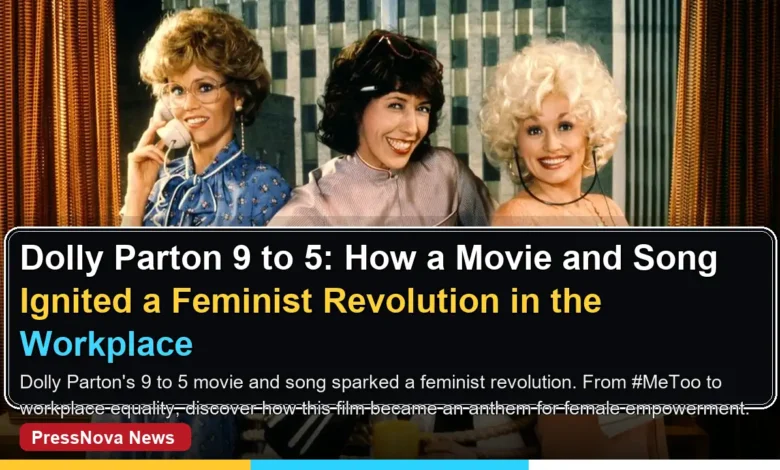
Dolly Parton 9 to 5 proved far more than a catchy title—it became an electrifying call to arms for working women across America and beyond. When Dolly Parton got her legendary hands on it, “9 to 5” wasn’t just a movie title, a song, or even a work shift. For women, it was a bombastic, electrifying call to arms that would echo through generations and reshape the conversation about female empowerment in the workplace.
- Cultural Impact: The first film to gross over $100 million with three female leads, becoming the second-highest-grossing movie of 1980 behind “The Empire Strikes Back”
- Workplace Reform: Inspired the formation of District 925, a union for clerical workers, and brought sexual harassment into mainstream conversation
- Musical Legacy: Dolly’s theme song reached No. 1 on three Billboard charts and earned two Grammy Awards, famously composed using her acrylic nails as percussion
- Feminist Blueprint: Pioneered the “revenge fantasy” genre for women, depicting a workplace utopia with equal pay, daycare, and flexible hours
- Enduring Relevance: Continues to inspire modern movements like #MeToo, with the documentary “Still Working 9 to 5” examining how much—and how little—has changed
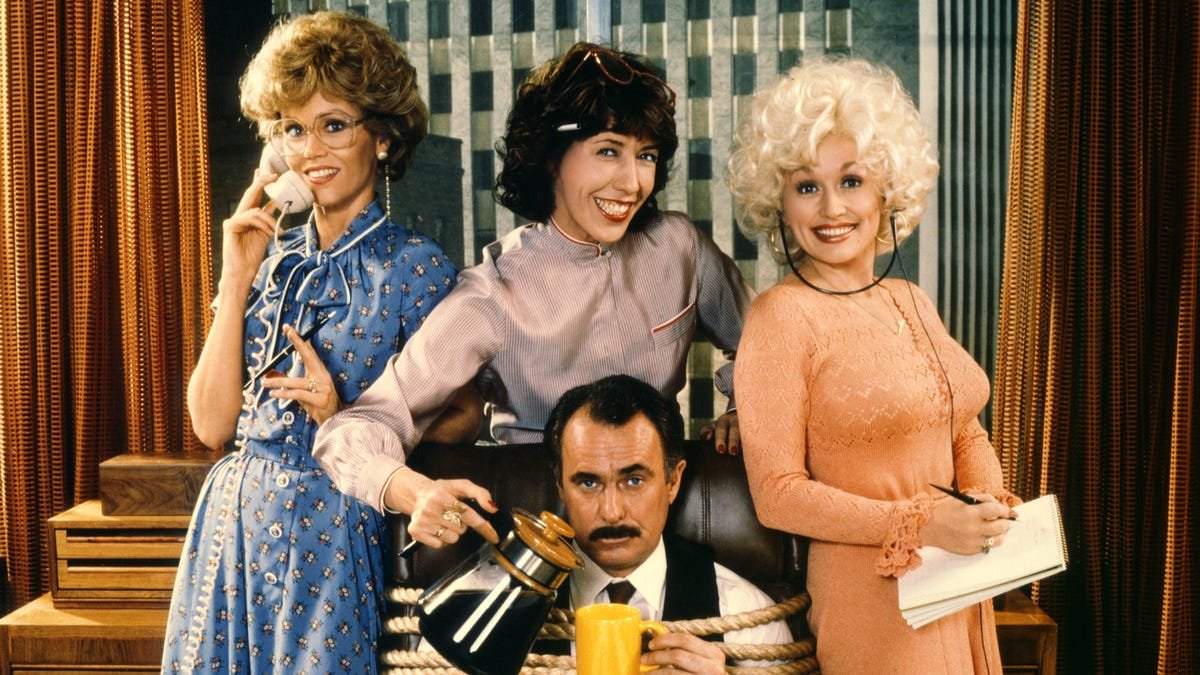
Parton, who died August 25, 2026 at age 80 after privately battling cancer, starred in the comedy “9 to 5” alongside Jane Fonda and Lily Tomlin as employees who battled back against gender inequality and sexism in the workplace. Taking the fight to their imperious, extremely handsy boss played by Dabney Coleman, the film became an unexpected cultural touchstone. What made the film revolutionary wasn’t just its commercial success—it was the way it transformed a grassroots labor movement into a mainstream cultural phenomenon that continues to resonate decades later.
The film marked Parton’s Hollywood debut, though the premise was actually Fonda’s idea after learning about the 9to5 organization for working women. Fonda, who by that time had achieved widespread success for films like “Barbarella” and “They Shoot Horses, Don’t They?” specifically cast herself alongside Tomlin and Parton as the three leads. The choice of Parton—then primarily known as a country music star—proved inspired, bringing both authenticity and star power to the production.
For those interested in the historical context of women’s workplace advocacy, the 9to5 National Association of Working Women’s official website provides comprehensive documentation of the movement that inspired the film. Additionally, the Library of Congress National Recording Registry’s analysis offers valuable perspective on the song’s cultural significance and preservation status. For deeper scholarly context, the documentary “Still Working 9 to 5” provides comprehensive interviews with the cast and labor historians examining the film’s legacy.
The Feminist Blueprint Hidden in Plain Sight
While some critics dismissed “9 to 5” as a fluffy comedy, the film delivered a surprisingly radical feminist message wrapped in laughter. The movie centered on three women—new employee Judy (Fonda), veteran staffer Violet (Tomlin) who has long been ready for a promotion, and secretary Doralee (Parton)—each battling different but equally frustrating workplace inequities.
Judy represents the housewife re-entering the workforce after divorce, Violet embodies the “glass ceiling” as a competent woman repeatedly passed over for promotions, and Doralee faces the daily indignity of sexual harassment from their boss Franklin Hart Jr. The film demonstrated how women from different backgrounds could unite against a common oppressor—a concept that resonated deeply with audiences and anticipated intersectional feminism by acknowledging that women experience workplace discrimination differently based on their circumstances.
As Ileen DeVault, Cornell University professor of labor history, explained: “Parton’s role in ‘9 to 5’ and the success of the iconic theme song of the same name helped turn a grassroots campaign against workplace sexism into a national conversation.” The film’s power lay in making systemic issues visible through accessible storytelling—a feat rarely accomplished so effectively.
Upon its release, “9 to 5” received mixed critical reception, with some reviewers praising its social commentary while others dismissed it as lightweight entertainment. The film currently holds a 70% approval rating on Rotten Tomatoes, with the critical consensus noting it “tackles serious issues with a light touch, but sometimes sacrifices depth for laughs.” This balanced reception reflects the film’s dual nature as both crowd-pleasing comedy and pointed social satire.
A Critical Perspective on the Film’s Limitations
While “9 to 5” broke significant ground, feminist scholars have also identified important limitations in its approach. Some critics have noted the film’s predominantly white, middle-class focus, with little representation of women of color or working-class perspectives beyond the office setting. The film’s utopian resolution—where the three heroines transform their workplace into an idyllic environment—has been described by some academics as a “rescue fantasy” that oversimplifies the complex realities of systemic workplace discrimination.
Additionally, the film’s treatment of its female antagonists and its reliance on certain stereotypes about women in the workplace have drawn scholarly scrutiny. Some feminist film critics have argued that while the film critiques sexism, it occasionally reinforces other problematic tropes about female competition and emotionality. These critiques, however, do not diminish the film’s historic importance but rather contextualize it within the evolving landscape of feminist media studies.
As media scholar Dr. Sarah C. Johnson notes in her analysis of workplace comedies, “9 to 5” remains “a crucial cultural artifact that reflects both the aspirations and the blind spots of its era—a film that was revolutionary for its time while also revealing how much further the conversation would need to go.” This balanced perspective acknowledges the film’s achievements while recognizing its limitations—an approach that strengthens any analysis of its legacy.
Dolly Parton’s Unexpected Feminist Icon Status
Parton’s performance as Doralee Rhodes shattered stereotypes about both her and the characters she portrayed. As the Los Angeles Times noted, Parton “leaned into the persona society was least likely to take seriously—the peroxide bombshell, the perky little blond—for the purposes of proving them dead wrong.” This strategic subversion of expectations became central to both her character’s appeal and her broader cultural impact.
What could have been considered stunt casting—Fonda and Tomlin in a feminist fantasy with the woman who wrote “Jolene”—made Parton a star and took the film to a different level because Parton thoroughly understood the assignment. The woman audiences might assume is trying to steal your man or sleep with the boss may well be simply trying to live her life or do her job. Like any stereotype, the social programming that forces people to see a lovely, curvy woman and think “siren” is actually designed to diminish and isolate her.
Parton’s character confronts this directly in the film’s most iconic moment. When Doralee finally has enough of her boss’s advances and the rumors he spreads, she delivers one of cinema’s most memorable lines: “If you say another word about me or make another indecent proposal, I’m going to get that gun of mine and I’m going to change you from a rooster to a hen in one shot.” This moment of confrontation wasn’t just satisfying—it was transformative, showing a woman reclaiming her power and dignity.
Reflecting on her career and the film’s message, Parton told The Guardian in 2022: “I’ve always believed that you can be a lady and still be strong. You don’t have to act like a man to get what you want. You just have to be smart about it and know your worth.” This philosophy, which she embodied both on and off screen, became a guiding principle for generations of women navigating male-dominated workplaces. Her remarkable journey from Tennessee to Hollywood is part of Dolly Parton’s family legacy, which shaped the values she brought to every role she played.
The Story Behind the Anthem
Parton’s theme song for “9 to 5” deserves as much attention as the film itself. While working on set, Parton had an idea for the tune that would become the movie’s theme song. Her guitar was banned from the set, so she made the beat by strumming her acrylic nails together. The sound, she realized, was just like the typewriter used by her character—the ultimate symbol of clerical work.
When Parton sang the song to her co-stars, Fonda recalled: “Lily and I looked at each other and we had goosebumps. And we knew, this is not just a movie song, this is an anthem.” Released in November 1980, “9 to 5” became Parton’s only US number one as a solo artist and earned her an Oscar nomination for best song. The recording credits list Parton’s nails as an instrumental, immortalizing the unique composition method.
The lyrics tapped into real frustrations and gave working women a voice: “They just use your mind and they never give you credit / It’s enough to drive you crazy if you let it.” As Ellen Cassedy, co-founder of the 9to5 organization, stated: “The song perfectly encapsulates the grievances of women workers—and our dreams. It starts with an awakening and with pride. It directs some angry energy at the boss. Then it summons a sense of common purpose and finally, it ends in triumph.”
Unpacking the Lyrics: A Worker’s Anthem for the Ages
The song “9 to 5” endures not just because it’s a great tune but because for most workers, the struggle for economic security continues decades later. The lyrics capture a universal experience: “Tumble out of bed and I stumble to the kitchen / Pour myself a cup of ambition / And yawn and stretch and try to come to life.”
The phrase “cup of ambition” has become particularly iconic, symbolizing the daily ritual of preparing for work while dreaming of something more. Parton has explained that the line came to her as she observed her character’s morning routine, recognizing that for many women, each workday represented both a challenge and an opportunity to prove themselves.
But beneath the cheerful melody lies genuine fury. “It’s a rich man’s game, no matter what they call it / And you spend your life putting money in his wallet.” The song goes on to describe workplace injustice with cutting precision: “They let you dream just to watch ’em shatter / You’re just a step on the bossman’s ladder / But you’ve got dreams he’ll never take away.”
What makes “9 to 5” revolutionary is how it articulates class consciousness alongside gender awareness. As NPR noted, the song “contains complaints about so many frustrations and inequities and injustices within a workplace—some of them gendered, some of them capitalist, some of them about how power is so unequally distributed. It is a song that is simultaneously a song of angry complaint and immense good cheer.”
Parton herself emphasized that “9 to 5” is ultimately for everyone. In an interview with Reese Witherspoon, Parton stated: “You need to be paid for what you do, you need to be respected for what you do. You need to be appreciated for what you do, whether you’re a woman or a man.” The song’s broad appeal—and the film’s ability to reach beyond female audiences—speaks to the universality of workplace frustration and the desire for dignity and respect.
The Real-World Impact and Enduring Legacy
The film and song didn’t just entertain—they catalyzed real change. The movie was based on the lives and experiences of women in the 9to5 organization, founded in 1973 to combat workplace sexism. After the film’s release, that organization became a union called “District 925,” which successfully organized clerical workers across the country.
Ultimately, “9 to 5” proved inspirational to women in the workforce who wanted something better for themselves and their families, passing that ethos on to younger generations who’ve strived for equal pay and rights. The #MeToo movement and modern women embracing “9 to 5” as a war cry against sexism and harassment demonstrate the film’s lasting power.
However, the film’s vision of workplace utopia—with equal pay, on-site daycare, and flexible hours—remains largely unrealized decades later. Women still earn approximately 82 cents for every dollar earned by men, with even wider gaps for women of color. Paid family leave remains unevenly available, and affordable childcare continues to be a significant barrier to women’s full workforce participation. The gap between the film’s fantasy and today’s reality underscores both how much the conversation has advanced and how far we still have to go.
As Ellen Cassedy reflected: “For the first time, working office workers like us were the main characters on the big screen. After that, the American office was never the same.” The documentary “Still Working 9 to 5,” featuring interviews with Fonda, Tomlin, Parton, and Coleman, examines the film’s extraordinary success over 40 years later, the issues it raised, and where we stand today—revealing that while progress has been made, many of the original complaints remain frustratingly relevant.
Beyond the film, “9 to 5” also spawned a 1982 television sitcom that ran for five seasons and a 2009 Broadway musical adaptation. The sitcom, starring Rita Moreno, continued the story of the original characters, while the musical, with music and lyrics by Parton, brought the story to a new generation of theatergoers. These adaptations, while less culturally influential than the original film, demonstrate the enduring appeal of the story and its themes.
Modern Relevance in the #MeToo Era
At the 2017 Emmy Awards, Fonda, Tomlin, and Parton reunited to present an award. Fonda declared: “In that movie, we refused to be controlled by a sexist, egotistical, lying, hypocritical bigot.” Tomlin added: “And in 2017, we still refused to be controlled by a sexist, egotistical, lying, hypocritical bigot,” drawing a rousing cheer for what seemed a pointed jab at then-President Donald Trump.
This moment underscored how little had changed in four decades—and how the film’s message remained urgently relevant. In a 2022 interview, Parton reiterated: “Even in the early days, a lot of people told me I should change my look or nobody’s going to ever take me serious. I thought, ‘Yeah, they will, when they see the talent I’ve got.'”
The film’s workplace reforms—equal pay, daycare, flexible hours—remain goals many workers still pursue today. As Lily Tomlin observed: “We’re still having this same conversation about equal pay. There’ve been incremental improvements, but it’s hard for a whole stratum of society to give up its power and its expectations.”
The #MeToo movement, which brought workplace sexual harassment into unprecedented public focus, owes an indirect debt to “9 to 5.” The film’s unflinching portrayal of harassment—including the rumors spread to discredit victims and the institutional protection of abusers—provided a cultural template that made these issues easier to discuss decades later. While the 9 to 5 movie addressed workplace misogyny through comedy, modern cinema continues to grapple with similar themes, though often with vastly different approaches.
Conclusion: A Legacy of Ambition and Empowerment
“9 to 5” transformed American culture by exposing workplace sexism to millions while providing a template for resistance—all through comedy and song. Parton’s film debut, combined with her unforgettable theme song, created a powerful one-two punch that continues to inspire.
As Fonda said when Parton first sang them the song: “This is not just a movie song, this is an anthem.” Nearly fifty years later, that anthemic quality remains undiminished. The next time you “pour yourself a cup of ambition,” remember the woman who used acrylic nails as instruments and fierce intelligence as armor to give working women everywhere a voice—and a battle cry.
Generations to come will continue to have both the movie and Parton’s song as a forever female empowerment anthem, which oozed “grrrl power” way before that was a thing. In the words of the woman herself: “Whether you’re a man or a woman, if the boss is a prick, you wish you could do something to him.”
Dolly Parton’s legacy extends far beyond music or film—it encompasses a vision of workplace dignity and respect that remains as urgent today as it was in 1980. As we continue to fight for equal pay, safe workplaces, and recognition of our contributions, we carry forward the spirit of “9 to 5” and the woman who helped make it all possible.
Frequently Asked Questions About “9 to 5”
What is the origin of the “cup of ambition” lyric in Dolly Parton’s song?
The “cup of ambition” lyric represents the morning ritual of preparing for work while dreaming of advancement and success. Parton explained that it came from watching her character’s routine and recognizing how many women used their morning coffee to steel themselves for another day of workplace challenges. The phrase has become an iconic expression of working women’s aspirations.
What is the movie “9 to 5” about?
“9 to 5” follows three female office workers—Judy (Jane Fonda), Violet (Lily Tomlin), and Doralee (Dolly Parton)—who unite against their sexist, egotistical boss Franklin Hart Jr. (Dabney Coleman). After fantasizing about revenge and accidentally poisoning him, they kidnap him and transform their workplace into a progressive utopia with equal pay, childcare, and flexible hours.
Why is “9 to 5” considered a feminist film?
Beyond its comedy, “9 to 5” addressed serious workplace issues including sexual harassment, the glass ceiling, unequal pay, and gender discrimination—issues largely ignored by mainstream cinema at the time. The film showed women from different backgrounds uniting against systemic oppression and demonstrated the power of collective action, inspiring real-world workplace reforms.
How did Dolly Parton write the “9 to 5” song?
Parton composed the song on the film set using her acrylic nails as percussion instruments. She tapped them together to create a sound that mimicked a typewriter, which became the song’s distinctive rhythmic foundation. In the credits, Parton’s nails are listed as an instrumental component.
Did “9 to 5” win any awards?
The song “9 to 5” won two Grammy Awards—Best Country Song and Best Country Vocal Performance—and was nominated for an Academy Award for Best Original Song. The film itself was the second-highest-grossing movie of 1980, beaten only by “The Empire Strikes Back,” and grossed over $100 million domestically.
Is the 9to5 organization real?
Yes. The 9to5 National Association of Working Women was founded in 1973 in Boston to address workplace gender inequality. The organization’s activism inspired Jane Fonda to produce the film, and after its release, the group gained significant visibility and eventually formed District 925, a clerical workers’ union.
What is the documentary “Still Working 9 to 5” about?
Released in 2022, this documentary reunites the original cast—Fonda, Tomlin, Parton, and Coleman—to examine the film’s impact over 40 years later. It explores what has and hasn’t changed for working women and features interviews with Allison Janney, Rita Moreno, and labor historians.
How does “9 to 5” connect to #MeToo?
The film’s portrayal of sexual harassment, the rumors spread to discredit victims, and women’s solidarity against abusers directly anticipated #MeToo movement themes by nearly 40 years. Many activists cite “9 to 5” as culturally foundational in making workplace sexual harassment visible and unacceptable.
What made Parton’s performance in “9 to 5” so significant?
Parton’s performance was groundbreaking because she used her stereotyped image as a “dumb blonde” or “sex symbol” to subvert audience expectations. Her character Doralee turned out to be the most competent, sensible, and empowered of the three leads. The role demonstrated that women could be both feminine and formidable.
What are the film’s Rotten Tomatoes score and critical reception?
“9 to 5” holds a 70% approval rating on Rotten Tomatoes, with the critical consensus noting it “tackles serious issues with a light touch, but sometimes sacrifices depth for laughs.” The film received mixed reviews upon release but has been reassessed over time as a significant cultural work.
Were there other adaptations of “9 to 5”?
Yes. A television sitcom adaptation ran from 1982 to 1988, featuring Rita Moreno in the role of Violet. A Broadway musical with music and lyrics by Dolly Parton premiered in 2009, receiving multiple Tony Award nominations and introducing the story to new audiences.
What has Dolly Parton said about the film’s meaning?
Parton has consistently emphasized that “9 to 5” is about basic human dignity—being paid fairly, treated with respect, and appreciated for your work, regardless of gender. She viewed the film as a way to give voice to working women’s frustrations while offering hope for change.
Looking for more feminist film analysis and entertainment news? PressNova covers the entertainment stories that matter, from Hollywood classics to today’s cultural conversations.