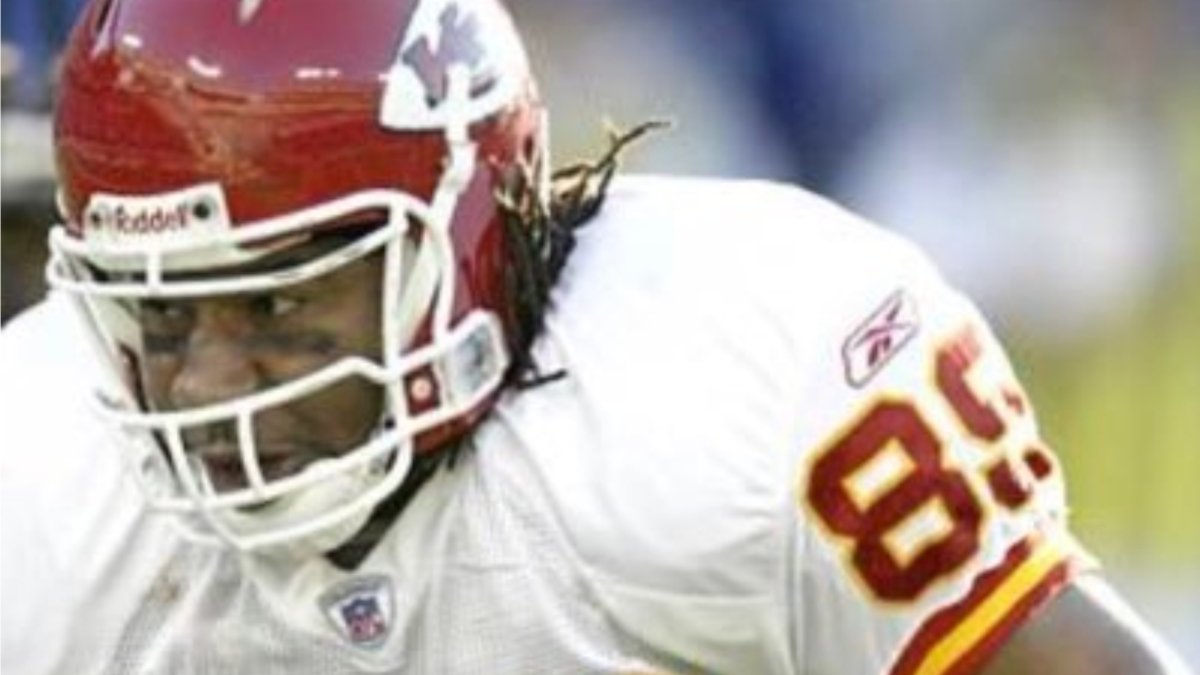
Former Kansas City Chiefs tight end Jason Dunn has ignited a passionate debate by publicly calling for the NFL to compensate players who suffered serious injuries during the physically brutal era of 1970s and 1980s football. The Chiefs legend’s demand comes after a resurfaced 1977 CBS NFL intro video highlighted just how dramatically the game has changed, with nearly every play in the vintage footage now constituting a penalty under modern safety regulations.
- Jason Dunn’s Demand: The former Kansas City Chiefs tight end is calling for financial compensation for NFL players who endured serious injuries in the 1970s and 1980s, describing them as “gladiators” who deserve restitution
- Vintage Footage Catalyst: A resurfaced 1977 CBS NFL intro video showing plays that would be penalties today prompted Dunn’s public statement on X (formerly Twitter) on August 22, 2026
- Massive Salary Gap: The average NFL salary in the 1970s was approximately $55,000, compared to $2.8 million today, while the league now generates over $20 billion in annual revenue
- $1 Billion Concussion Settlement: The NFL agreed to pay over $1 billion to former players with neurological conditions, but many pre-2000s players still struggle to access benefits
- Active Legal Challenges: Ten retired players are currently suing the NFL over the disability plan, alleging systematic denial of valid medical claims
- Personal Experience: Dunn missed the entire 1999 season due to injury and understands firsthand the physical toll professional football exacts on players
On August 22, 2026, Dunn responded to Football’s Greatest Moments, which shared the classic CBS intro video with the caption: “Almost every clip is a penalty in 2026.” The Chiefs legend didn’t mince words, expressing deep respect for the players of that era while demanding meaningful action from the league. “@JasonDunn84 wrote at 3:47 PM ET: ‘Yes indeed!!! I remember seeing some of those gladiators coming in the locker room or practice from having hip surgery or mangled fingers,'” reflecting on the physical devastation he witnessed during his career.
Dunn praised those players as “real dudes” and expressed gratitude that the game has evolved for player safety, stating, “Glad they changed the game for the safety of the players.” However, he quickly pivoted to a more urgent call to action, demanding: “Every single one of those men needs to be compensated appropriately!” In a follow-up post at 4:12 PM ET, he doubled down, insisting, “The NFL needs to do right by those guys.” The X posts have since garnered thousands of engagements, with fans and former players voicing strong support.
Jason Dunn’s Demands and the 1970s NFL Safety Crisis
The contrast between NFL football in the 1970s and today could hardly be more stark. During that era, players took the field with minimal protective equipment, played on unforgiving artificial turf, and faced hits that would now result in automatic ejections and substantial fines. Plays involving helmet-to-helmet contact, tackling defenseless receivers, and roughing the quarterback were not just accepted—they were celebrated as the essence of “tough football.”
Dunn’s call for compensation addresses a significant gap in the NFL’s treatment of its former players. While the NFL and the NFL Players Association (NFLPA) have established various programs to support retired players—including the 88 Plan for dementia care, the Player Care Foundation, and disability benefits—many players from the 1970s and 1980s have struggled to access adequate support. The threshold for qualifying for disability benefits has historically been exceptionally high, leaving many former players with limited financial resources to address chronic pain, cognitive decline, and other long-term health issues stemming from their playing days.
The league has faced multiple lawsuits over the years regarding its handling of player health and safety. The most notable is the landmark $1 billion+ concussion settlement, where the NFL agreed to pay billions to former players suffering from neurological conditions. However, critics argue that the settlement process remains cumbersome and that many players from the pre-2000s era have been left behind. As of August 2026, a separate lawsuit involving 10 retired players has been filed against the NFL’s disability plan, alleging that the league and its administrators have systematically denied valid claims for disability benefits, leaving aging players without critical financial and medical support.
The financial disparity between eras is staggering. Players in the 1970s earned an average salary of approximately $55,000—roughly $350,000 in today’s dollars when adjusted for inflation. By contrast, the average NFL player compensation in 2026 exceeds $2.8 million. Meanwhile, the NFL’s annual revenue has soared past $20 billion, driven by massive television contracts, merchandise sales, and sponsorship deals. Advocates like Dunn argue that the league’s immense wealth should be partially directed toward the men whose sacrifices helped build the sport’s popularity and profitability.
A key issue is that the NFL’s modern safety protocols—including comprehensive concussion protocols, independent neurologists on sidelines, and mandatory testing of playing surfaces—were implemented after many of these players had already retired. The league’s official player health and safety website outlines the current measures, which include bans on certain types of tackles, annual helmet testing, and strict enforcement of rules against dangerous hits. However, these protections, while significant for today’s players, do nothing to retroactively help those who suffered under much less stringent conditions.
Legal experts have noted that the 1970 Collective Bargaining Agreement marked a pivotal moment in the history of NFL player protections. Before this agreement, players had minimal recourse for NFL 1970s injuries sustained on the field, with limited pension benefits and virtually no health coverage after retirement. The CBA established the foundation for the NFL’s pension plan and disability benefits, but the thresholds for receiving these benefits remained restrictive for decades. Cases like Brinkman v. Buffalo Bills (1989) and Harrington v. New Orleans Saints (1993) set early precedents for players seeking compensation for career-ending injuries, but these cases often resulted in settlements that were modest compared to the long-term medical needs of the players involved.
Dunn’s comments have resonated across social media, with many fans and former players expressing solidarity. The resurfaced 1977 footage serves as a powerful visual reminder of how the game has transformed. In that video, players deliver crushing blows that would now be flagged for leading with the helmet, hitting defenseless receivers, and roughing the passer—penalties that not only cost teams yardage but also carry substantial fines for players involved.
How the NFL Has Evolved to Protect Players
The transformation of NFL safety regulations can be traced to a series of significant policy changes beginning in the early 2000s. Before 2002, the league operated with relatively minimal safety protocols. Players routinely engaged in dangerous plays with limited oversight, and the concept of concussion management was virtually nonexistent. The shift toward greater player protection has been driven by research, public pressure, and legal challenges.
Major safety initiatives introduced by the NFL include:
- Ban on hip-drop tackles that endanger ball carriers
- Revised kickoff rules to reduce high-speed collisions
- Annual helmet and equipment testing to ensure optimal protection
- Strict standards for playing surfaces to minimize injury risks
- Comprehensive concussion protocols requiring independent medical evaluation
- Fines for hits on defenseless players
- Fines and suspensions for leading with the helmet
- Enhanced protection for quarterbacks and kickers
The NFL’s Play Smart. Play Safe. initiative represents the league’s ongoing commitment to player health and safety, investing millions in medical research, equipment innovation, and rule enforcement. The program includes funding for independent concussion research, engineering advancements in helmet technology, and educational campaigns to promote safer play. However, the question of whether the concussion settlement could be expanded to cover non-neurological injuries—such as orthopedic damage, chronic pain conditions, and other physical ailments common among retired players—remains an open debate. Legal analysts have suggested that the settlement’s narrow focus on cognitive impairment leaves a significant portion of injured players without recourse.
Sports legal analyst Michael McCann, director of the Sports Law Program at the University of New Hampshire, has noted that “the NFL’s compensation structure for retired players remains fragmented and inconsistent. While the concussion settlement addressed a specific category of injury, the broader question of comprehensive compensation for all career-related injuries has never been fully resolved.” Similarly, the NFLPA has called for improved disability benefit access, with union representatives pointing to the ongoing lawsuit as evidence that the current system is failing retired players.
The evolution of the league’s approach has not been without criticism. While some fans argue that the game has lost its edge, proponents of stricter safety measures point to the long-term health outcomes of former players as justification for the changes. Chronic traumatic encephalopathy (CTE) research, concussion-related lawsuits, and medical studies have all contributed to a growing recognition that the NFL must prioritize the well-being of its athletes over entertainment value.
Jason Dunn’s Personal Experience with NFL Injuries
Dunn’s advocacy for compensation is rooted in his own experiences on the gridiron. Drafted 54th overall in the 1996 NFL Draft, he began his professional career with the Philadelphia Eagles, where he spent his first three seasons as a promising tight end. However, his trajectory was derailed in 1998 when he suffered an injury that sidelined him for the entire 1999 season—a devastating setback for any player, particularly one in the prime of their career.
The injury forced Dunn to miss all 16 games of the 1999 campaign, a period that tested his resilience and commitment to the sport. He returned to action in 2000 with the Kansas City Chiefs, signing with the franchise where he would spend the remainder of his professional career. From 2000 to 2007, Dunn established himself as a reliable presence on the Chiefs’ roster, playing in 99 games over eight seasons and contributing to the team’s offensive schemes as a blocking tight end and occasional receiving target.
Throughout his career, Dunn accumulated 92 receptions for 1,065 receiving yards and nine touchdowns. While his statistics may not place him among the all-time greats, his durability and work ethic earned him respect from teammates and coaches. He appeared in 99 games for the Chiefs, making 55 starts and serving as a key contributor during a period when the franchise was transitioning between eras.
Following his retirement in 2007, Dunn briefly transitioned into coaching, serving as a special teams coach at Kentucky State University. However, he has not held another notable coaching position since, suggesting that the physical toll of the game may have influenced his post-playing career trajectory. His advocacy for compensation reflects a broader concern that the NFL has not done enough to support players who gave their bodies to the sport before the league implemented modern safety measures.
Dunn’s public statements have been met with widespread approval, particularly among former players and fans who remember the physical brutality of earlier eras. His comments have also sparked renewed debate about the NFL’s obligation to those who helped build the league into the multi-billion-dollar enterprise it is today. While players from the 1970s and 1980s played for relatively modest salaries compared to modern contracts—earning roughly $55,000 annually, which is less than 2% of today’s average salary—they contributed to the sport’s immense popularity, and many now face significant health challenges with limited financial resources to address them.

The Ongoing Debate About NFL Player Compensation
Dunn’s call for compensation is part of a broader, ongoing conversation about how professional sports leagues treat their former athletes. The NFL, in particular, has faced intense scrutiny over its handling of player health, with critics arguing that the league prioritized profits over player safety for decades. While the NFL has made significant strides in recent years, the question of how to compensate those who suffered before those safeguards existed remains unresolved.
One argument in favor of compensation centers on the financial success of the league. The NFL generates over $20 billion in annual revenue from television contracts, merchandise sales, and ticket sales. This wealth is built on the sacrifices of players from all eras, including those who played in the 1970s and 1980s. Advocates argue that it is only fair for the league to share some of that prosperity with the men whose injuries and sacrifices contributed to the game’s current profitability. Proposed legislative measures, such as the bipartisan “Retired NFL Players Health Benefits Act,” have been introduced in Congress but have yet to gain sufficient traction to become law.
Opponents, however, point to the practical challenges of implementing such compensation. Determining who qualifies, how much they should receive, and how to verify injuries decades later would be a logistical nightmare. Additionally, the NFL has already paid out significant sums through various settlement agreements, including the $1 billion+ concussion settlement, which provided compensation to thousands of former players. Some argue that these settlements, combined with existing disability benefits and pension plans, already represent a reasonable acknowledgment of the league’s responsibility.
Comparing the NFL’s approach to other major sports leagues offers useful perspective. Major League Baseball maintains a robust pension plan that provides benefits to players who vested with at least four years of service, with the average annual pension exceeding $100,000 for qualifying players. The National Basketball Association’s pension plan similarly offers substantial benefits, with players who played at least three seasons receiving an average annual pension of over $60,000. The NBA also provides comprehensive healthcare coverage for former players with three or more years of service. Critics argue that the NFL’s benefits lag significantly behind these standards, particularly for players from earlier eras who lack modern medical support.
The NFLPA has been increasingly vocal about the need for reform. In recent statements, union representatives have called for an independent review of the disability claims process and broader eligibility criteria for compensation programs. The ongoing lawsuit involving 10 retired players—who allege systematic denial of valid medical claims—has added urgency to these demands. Legal experts suggest that the outcome of this lawsuit could reshape the NFL’s approach to player compensation and set new precedents for how the league addresses the health needs of its retired athletes.
Dunn’s intervention adds moral weight to the discussion. His firsthand experience with injury, combined with his respect for the “gladiators” of earlier generations, makes his argument difficult to dismiss. His simple yet powerful demand—”The NFL needs to do right by those guys”—has resonated deeply with fans and players alike, reigniting a debate that shows no signs of resolution.
As the NFL continues to evolve and prioritize player safety, the legacy of those who played before the modern era remains a topic of passionate discussion. Jason Dunn has ensured that the conversation will not be forgotten, and his advocacy has already prompted renewed attention to the financial and medical struggles faced by players from football’s most physically punishing decades.