SUVs confirmed dead for 2027 now include more than a dozen popular nameplates, with automakers pulling the plug on everything from longtime staples like the Ford Escape to recent EV arrivals such as the Honda Prologue and Volvo EX30. Through August, production has already ended or been formally scheduled to cease for models spanning Acura, BMW, Ford, Jaguar, Honda, Land Rover, Polestar, Tesla, Volkswagen, and Volvo. Whether driven by factory retooling, shifting consumer demand, or new federal regulations, the 2027 model year marks one of the most significant SUV purges in recent memory. Here’s the definitive list of what’s disappearing, why each model is going away, and what—if anything—will replace it.
- Total Discontinued: 11 SUV models confirmed dead for 2027 across 10 automakers
- Production Ended: Ford Escape and Tesla Model X have already ceased production
- Biggest Surprise: Honda Prologue killed after just 3 years despite 39,000+ 2025 sales
- Regulatory Casualties: Polestar 3 and 4 banned from US sale over Chinese software restrictions
- Comeback Watch: Acura RDX (hybrid) and VW ID.4 (as ID.Tiguan) expected to return
- Last Chance Alert: 2026 models remain on dealer lots—but inventory is dwindling fast
Acura’s RDX ends production after the 2026 model year, but unlike most entries on this list, the nameplate will return. The third-generation RDX, which launched for 2019, had been showing its age against newer luxury compact competitors. Acura confirmed a hybrid successor is in development and expected within “a couple of years”—likely arriving as a 2028 model. In the interim, Acura’s SUV lineup will rely on the smaller ADX entry-level model and the larger MDX flagship. The RDX’s temporary hiatus offers a rare opportunity: shoppers can secure a proven luxury compact SUV now, knowing the nameplate’s heritage will continue with electrified powertrains. Acura is expected to leverage its new electrification architecture for the next-generation RDX, aligning with Honda’s broader hybrid and electric vehicle strategy.
BMW hasn’t globally ended iX production, but US allocations cease after 2026. The iX launched as a flagship showcasing BMW’s fifth-generation EV technology, with sales peaking in 2023 before steadily declining. Its departure from America makes room for Neue Klasse models, including the iX3 on BMW’s next-generation dedicated EV platform. The iX’s polarizing styling and premium pricing made it a niche player, and while it continues in other markets, US buyers seeking a BMW electric SUV will turn to the upcoming iX3 or existing i4 and i5 models. Autos Yahoo noted that “controversial styling failed to connect with buyers in the U.S., even after an update for the 2026 model year,” underscoring the design-driven nature of this US-specific exit.
The Ford Escape’s death marks the end of a quarter-century run for one of America’s most recognizable crossover nameplates. Production on the 2026 Escape officially wrapped in August, with Ford confirming no 2027 model. The decision is driven by factory capacity—not sales—as Ford needs the Louisville Assembly Plant line space for affordable electric vehicles. The Escape remained Ford’s second-best-selling SUV behind the Explorer, even outselling the Bronco Sport in the first half of 2025 (82,589 vs 72,438). Jay Malone Ford confirmed to buyers that “when ours are gone, our Escapes are gone for good”. With the Escape gone, the boxy Bronco Sport becomes Ford’s only compact crossover. Industry speculation suggests Ford may revive the Escape nameplate on a future small electric SUV, though nothing is confirmed. Ford’s official SUV lineup page no longer lists the Escape among current offerings, confirming its phase-out.
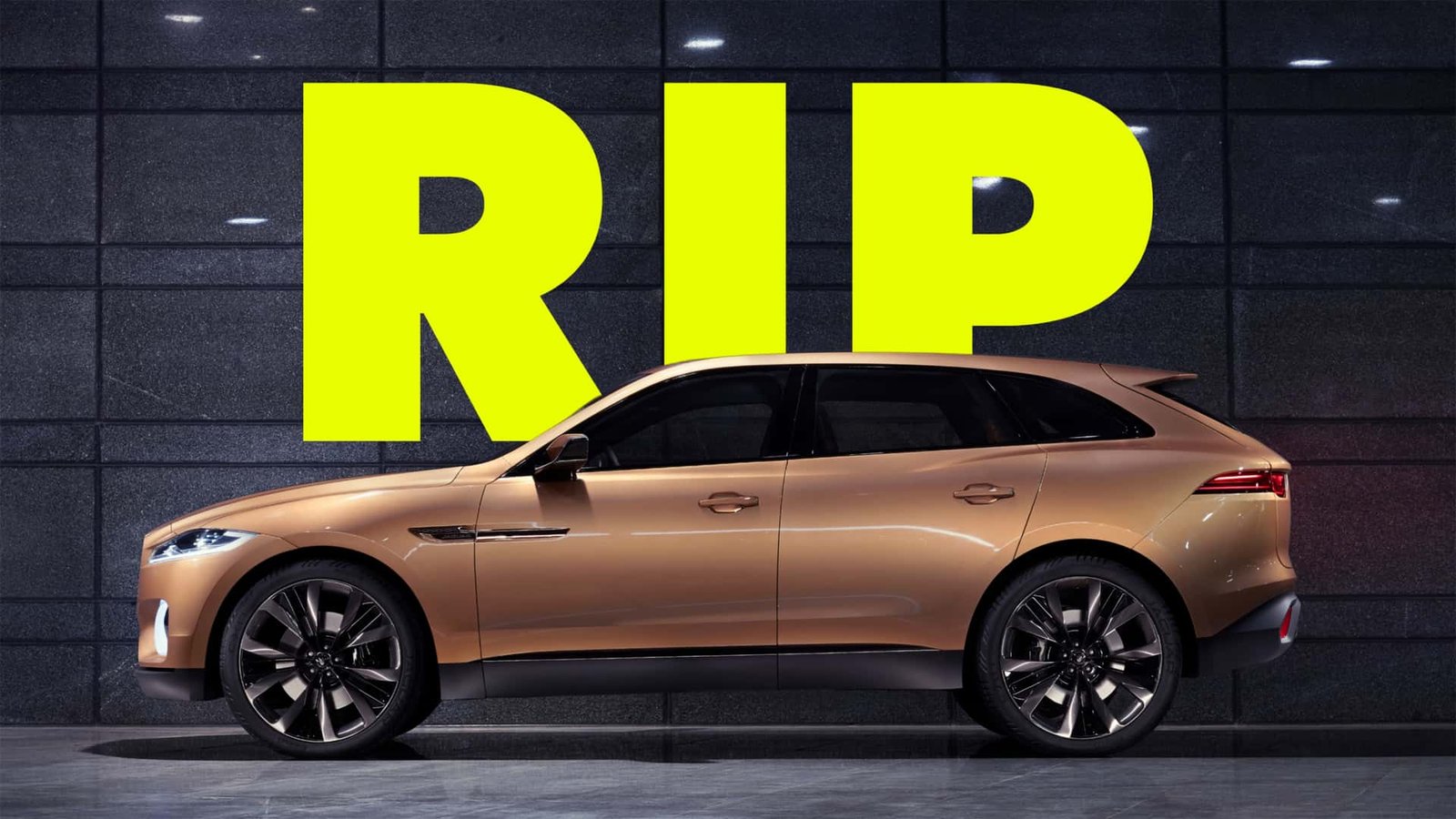
Jaguar’s F-Pace exits as part of the brand’s dramatic upmarket reinvention. Two years ago, Jaguar killed nearly every model in its lineup to reposition against Bentley rather than BMW. Now the F-Pace—which debuted a decade ago with diesel, hybrid, and a hardcore SVR V8 variant—is being shown the door. Jaguar will have no US models until the Type 01 ultra-luxury EV arrives. The brand’s future SUV plans remain unclear as it prioritizes electric sedans and grand tourers. For buyers, the F-Pace represents the final opportunity to own a Jaguar SUV with internal combustion power before the brand goes all-electric.
Honda’s Prologue EV is killed after just three model years, marking a stunning reversal for the Japanese automaker’s US electrification strategy. Honda confirmed to Kelley Blue Book that “production of the Prologue will end at the completion of the 2026 model year,” with sales continuing through early 2027 based on existing inventory. The decision comes despite the Prologue’s relative sales success—Honda sold 33,017 units in 2024 and 39,194 in 2025, making it one of the stronger US EV entries. However, sales cratered in the first half of 2026, falling 49 percent year-over-year to just 8,407 units, driven largely by the expiration of the federal EV tax credit. The Prologue, built on GM’s Ultium platform, was always intended as a stopgap until Honda’s own 0 Series EVs arrived. But with those models canceled and Honda doubling down on hybrids, the Prologue’s fate was sealed. Honda confirmed Prologue owners “will continue to receive full support through our dealer network, including service, parts, and warranty coverage”. Honda’s official Prologue page confirms the 2026 model year as the final offering.
Land Rover’s Discovery Sport, the automaker’s entry-level model since its 2014 launch, ends production this December. The Discovery Sport quickly became Land Rover’s best-selling model globally, but its factory is being transitioned for JLR’s next-generation vehicles. With its departure, the Range Rover Evoque becomes the brand’s cheapest offering, though the two models occupied different positions—the Discovery Sport was utilitarian and family-focused, while the Evoque prioritized style and urban appeal. Land Rover hasn’t announced a direct replacement, suggesting the brand may consolidate its entry-level SUV offerings as it focuses on higher-margin luxury models.
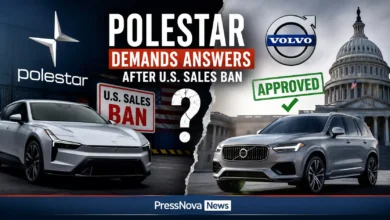
Polestar is effectively dead in the United States, killing both the Polestar 3 and 4 along with its entire US sales operation. The brand, owned by Volvo and Chinese conglomerate Geely Holding Group, was barred under new federal regulations restricting connected vehicle imports with ties to China or Russia. The US Department of Commerce denied authorization, and Polestar confirmed it would not appeal. This is a regulatory death—not market-driven—as the Polestar 3 was intended as the brand’s volume model, with production even slated for South Carolina. However, Chinese software and hardware connections proved insurmountable. Polestar will continue exporting vehicles from its US plant to other markets, but American buyers are locked out entirely. Existing inventory represents the final opportunity to own a Polestar on US soil.
The Tesla Model X, with its iconic falcon-wing doors, is officially dead after the 2026 model year. CEO Elon Musk confirmed the discontinuation, and Tesla’s website now displays only available inventory rather than accepting new orders. The Model X’s demise is linked to the Model S sedan’s end (they share a platform), but the move also reflects Tesla’s shifting priorities toward humanoid robot production and new vehicle lines. Reports suggest Tesla plans to fill the three-row SUV gap with a stretched Model Y L for the US market, offering less cramped third-row seating than the current seven-seat Model Y. The complex falcon-wing doors—which caused significant production delays early on—made the Model X expensive to build, and sales never matched Tesla’s more affordable models. Remaining 2026 Model X inventory represents the last chance to own Tesla’s most distinctive and polarizing vehicle. For buyers considering this model, it’s worth noting that the Tesla Model X dead narrative follows a similar pattern to other EV shakeouts in the industry.
Volkswagen’s ID.4, the automaker’s first dedicated EV in the United States, is taking a “temporary production hiatus” rather than permanent discontinuation. Production is paused to make room for more profitable Atlas SUV production at the shared Chattanooga factory. Volkswagen says it will offer a “future version” in North America, rumored to be renamed the ID.Tiguan, though no timeline is provided. The ID.4’s hiatus reflects Volkswagen’s broader US EV challenge: the ID Buzz has also faced production issues and oversupply, leaving the ID.4 struggling to maintain momentum. For shoppers, ID.4 availability will become increasingly scarce as production winds down, though dealerships may have inventory through early 2027.
Volvo’s EX30 is killed in the United States after just two model years, making it one of the shortest-lived SUVs in recent memory. The compact electric crossover was initially announced at $35,000, positioning it as a mass-market entry-level EV. However, tariffs and shifting business realities meant only the loaded $48,000 trim ultimately reached US shores. The inflated price on a very small car dampened customer interest, and Volvo officially pulled the plug on US sales. The EX30 continues in other markets—including Canada—where tariffs and pricing are more favorable, making this a uniquely American casualty of trade policy. Volvo blames “shifting market conditions,” but tariff-driven price inflation is the real culprit.
Full List: SUVs Confirmed Dead for 2027
| Model | Years Produced (US) | Status | Replacement / Successor | Last Chance to Buy |
|---|---|---|---|---|
| Acura RDX* | 2007-2026 | ● Confirmed Dead | Hybrid successor (2028+) | Inventory remaining |
| BMW iX | 2022-2026 | ● US Only | iX3 (Neue Klasse) | Allocations ending |
| Ford Escape | 2001-2026 | ● Production Ended | Possible EV revival (rumor) | Dealer inventory only |
| Honda Prologue | 2024-2026 | ● Confirmed Dead | None (hybrid pivot) | Through early 2027 |
| Jaguar F-Pace | 2015-2026 | ● Confirmed Dead | Type 01 (luxury EV) | Limited inventory |
| Land Rover Discovery Sport | 2014-2026 | ● Ending Dec 2026 | None announced | Limited remaining |
| Polestar 3 | 2024-2026 | ● Banned in US | None for US market | Existing stock only |
| Polestar 4 | 2024-2026 | ● Banned in US | None for US market | Existing stock only |
| Tesla Model X | 2015-2026 | ● Production Ended | Model Y L (rumored 3-row) | Inventory remaining |
| Volkswagen ID.4* | 2021-2026 | ● Hiatus | ID.Tiguan (rumored) | Until production ends |
| Volvo EX30 | 2025-2026 | ● US Only | None | Limited inventory |
The ‘Maybe Dead’ Category: Models Without Confirmation
While the 11 models above have confirmed discontinuation status for 2027, several other SUVs are rumored to be on the chopping block without official confirmation. Lexus has reportedly ended production of the UX, with Japanese outlet Creative Trend reporting production will cease in February 2027. However, Lexus has not officially confirmed the discontinuation, and the brand may simply be preparing a next-generation model. Similarly, the Lexus LBX—Lexus’s smallest SUV—is another model to watch, though its future remains unclear. With the luxury SUV segment becoming increasingly crowded, more discontinuations may be announced before the end of 2026. For now, these models remain in the “pending confirmation” category, and buyers should monitor official automaker announcements for definitive status updates.
Why These SUVs Are Being Discontinued
The reasons for this year’s SUV purge fall into several distinct categories:
- Factory Retooling: Ford Escape sacrificed for affordable EV production at Louisville Assembly Plant. Land Rover Discovery Sport displaced as JLR prepares for next-generation vehicles.
- Regulatory Pressures: Polestar’s US exit over Chinese-connected software and hardware restrictions.
- Tariff-Driven Price Inflation: Volvo EX30 arrived at $48,000 instead of promised $35,000, killing demand.
- Market Shifts: Honda Prologue sales plummeted 49 percent after federal EV tax credit expiration.
- Natural Lifecycle Exhaustion: Acura RDX and Tesla Model X reached end of product cycles without refresh investments.
What’s Replacing Them: Upcoming 2027-2028 Alternatives
For buyers looking to replace these discontinued SUVs, several alternatives are on the horizon:
- Acura RDX Hybrid: Returning within “a couple of years” as a 2028 model with electrified powertrain.
- BMW iX3: Neue Klasse platform replacement for the iX in BMW’s US SUV lineup.
- Tesla Model Y L: Rumored stretched three-row variant to fill the Model X gap.
- Volkswagen ID.Tiguan: Renamed ID.4 expected after the hiatus, though timeline uncertain.
For models without direct replacements—Ford Escape, Honda Prologue, Jaguar F-Pace, Land Rover Discovery Sport, Polestar 3/4, and Volvo EX30—buyers should consider alternative brands. Natural replacements for the outgoing Escape include the Ford Bronco Sport, Honda CR-V Hybrid, Toyota RAV4, and Mazda CX-50. Meanwhile, those watching the wider SUV landscape may find parallels in other model shakeups, such as the discontinued SUVs 2027 list that includes the Volkswagen Touareg’s farewell.
Should You Buy One Before They’re Gone? Lease vs. Buy Analysis
For shoppers considering a discontinued SUV, timing and financing strategy are critical. The Ford Escape has already ended production—remaining new units are on dealer lots, and once sold, that’s it. Jay Malone Ford confirmed “when ours are gone, our Escapes are gone for good”. Tesla has stopped custom orders for the Model X, with only existing inventory available. The Honda Prologue continues selling through early 2027 based on inventory, but production has ended.
Lease Considerations: Leasing a discontinued model carries specific risks. Residual values are calculated based on projected depreciation, and discontinuation can make residuals unpredictable. Some lenders may increase money factors or reduce residual percentages for outgoing models, potentially raising monthly payments. However, automakers often offer aggressive lease incentives to clear inventory—dealers may be willing to negotiate favorable terms on remaining 2026 units.
Buy Considerations: Purchasing offers more control but requires careful depreciation analysis. Well-established nameplates like the Escape and RDX tend to hold value relatively well due to strong parts availability and enthusiast followings. Honda has confirmed Prologue owners “will continue to receive full support through our dealer network, including service, parts, and warranty coverage”. Ford similarly assures Escape owners of continued warranty coverage and service support. For Tesla Model X buyers, parts availability through Tesla’s service network is expected, though falcon-wing door complexity may increase repair costs over time.
Recommendation: Buyers needing immediate transportation and prioritizing budget should negotiate hard on remaining 2026 inventory—dealers are motivated to clear lots. However, buyers who can wait 1-2 years may prefer upcoming replacements like the Acura RDX hybrid or Tesla Model Y L, which offer updated technology and likely stronger long-term value. For buyers considering niche models like the Polestar 3 or Volvo EX30, depreciation risk is significantly higher—leasing may be the smarter play to avoid being underwater on a vehicle with no US future.
Impact on Resale Value and Parts Availability
One of the most common concerns for buyers considering a discontinued SUV is the impact on resale value. Historically, discontinuation can have a mixed effect on used prices. Models that were popular and have strong enthusiast followings—like the Ford Escape, with its quarter-century history—tend to hold value relatively well. Parts availability also tends to remain strong, as automakers are legally required to continue manufacturing replacement parts for several years after production ends. Honda has already confirmed that Prologue owners “will continue to receive full support through our dealer network, including service, parts, and warranty coverage”. Ford similarly assures Escape owners that warranty coverage and service support will continue for the full life of the vehicle. For models like the Tesla Model X, parts are likely to remain available through Tesla’s service network, though the complexity of the falcon-wing doors could make repairs more expensive over time. However, niche models with limited sales—such as the Polestar 3 and Volvo EX30—may face more significant resale value challenges as their US presence disappears entirely. Buyers considering these discontinued models should factor in potential depreciation and compare the total cost of ownership against newer, in-production alternatives.
International Markets: Which Models Survive Abroad?
Many of these discontinuations are US-specific rather than global, creating an interesting dynamic for international buyers. The BMW iX will continue to be sold in other markets, where it remains a viable luxury EV option. Similarly, the Volvo EX30 will continue its full lineup globally, with only the US market losing access. The Polestar 3 will still be produced at the South Carolina plant for export, ensuring availability in markets without restrictive regulations on Chinese software. However, models like the Ford Escape and Honda Prologue are true global discontinuations—the Escape nameplate is being retired entirely, and the Prologue’s GM-based platform will no longer be produced in any market. The Volkswagen ID.4’s hiatus is US-specific, with the model potentially continuing in other markets. For buyers outside the US who are considering these models, it’s important to verify local availability directly with regional automaker distributors. For US buyers, the international survival of some models offers little consolation—the cars simply won’t be available for purchase on American soil.
Methodology: How We Verified These Discontinuations
This list of discontinued SUVs for 2027 is based on official automaker announcements, confirmed dealer communications, and verified automotive industry reporting. Sources include direct confirmation from Honda to Kelley Blue Book on the Prologue’s discontinuation, Ford’s official confirmation to dealers that the Escape is ending production, and Tesla’s order page changes indicating the Model X is no longer available for custom orders. Motor1’s original reporting identified the initial list of dead SUVs, while additional verification came from MotorTrend, Car and Driver, and Autos Yahoo. Models with asterisks (*) indicate temporary production pauses or confirmed future returns rather than permanent discontinuations. All information reflects the status as of August 2026 and is subject to change as automakers may adjust production timelines. PressNova News will update this article as new confirmations or reversals are announced.