Chiefs’ Bold Play: Unlocking Breece Hall’s Potential with Mahomes
Picture this: Patrick Mahomes, scrambling just enough to buy time, then firing a dart to a back bursting through the line, leaving defenders grasping at air. That’s the dream scenario for Kansas City Chiefs fans, isn’t it? For years, we’ve seen Mahomes elevate every player around him, but imagine what he could do with an elite, game-breaking running back. Honestly, the thought alone is enough to get any Chiefs Kingdom faithful hyped.
The National Football League’s trade landscape, you know, it’s really transformed lately. It used to be this super conservative world, but these days, front offices are making aggressive, calculated moves. Gone are the days when the trade deadline just passed by with a whimper; now, teams are making bold decisions to bolster their rosters, reflecting a much more dynamic approach to team building. This new era of activity has opened up some truly intriguing possibilities, and for the Chiefs, none feels quite as captivating as the potential of a future Kansas City Chiefs Breece Hall pairing with Patrick Mahomes.
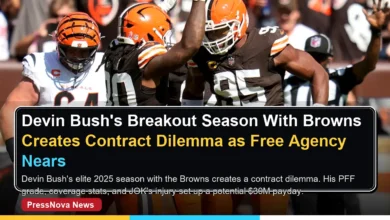
During a particularly eventful 2025 NFL Trade Deadline, the New York Jets made some serious headlines with what many called a “fire sale.” They moved key defensive assets like Sauce Gardner and Quinnen Williams for a haul of draft picks, which was surprising, to be fair. But here’s the thing: their steadfast refusal to part ways with talented running back Breece Hall truly underscored just how valuable he is in their eyes. Hall had been a frequent subject of trade rumors throughout the season, with our very own Kansas City Chiefs consistently identified as a primary suitor. The idea of Hall’s explosive playmaking ability complementing Mahomes’ aerial attack seemed like such a natural, formidable fit for an offense always seeking innovative ways to dominate.
Despite all that palpable interest, a deal for Hall just didn’t materialize at the deadline. Reports indicated that the Jets were holding out for a third-round pick, while the Chiefs’ offer reportedly topped out at a fourth-rounder. That difference in valuation, small as it might seem, ultimately prevented the move, leaving many of us to wonder what could have been. While the immediate opportunity for a Hall-to-Kansas City transaction passed, personally speaking, I think the narrative is far from over. With Hall approaching free agency in 2026 and a visibly strained relationship with the Jets organization, the door is still very much open for the Kansas City Chiefs to pair Breece Hall with Patrick Mahomes. And if you’re like most people, you’re probably wondering: how could this actually happen, and what would it mean?
Understanding the Fundamentals of a Potential Chiefs-Hall Pairing
Let’s take a closer look at why this particular pairing has so much buzz. At its core, this isn’t just about adding a good player; it’s about strategic synergy. The Chiefs’ offense, led by Mahomes, is a marvel of modern football. It thrives on creativity, improvisation, and stretching defenses both horizontally and vertically. However, it’s also an offense that has, at times, lacked a truly dominant, consistent ground threat—a back who can change the game with a single touch, even when the passing game isn’t clicking on all cylinders. This is where the idea of the Kansas City Chiefs Breece Hall pairing with Patrick Mahomes becomes incredibly compelling.
Breece Hall, from my experience watching him, is more than just a running back; he’s a dynamic weapon. He possesses an elite blend of speed, power, vision, and receiving ability out of the backfield. He’s the kind of player who can turn a two-yard gain into a 20-yard explosion, or catch a screen pass and take it to the house. In today’s NFL, where dual-threat running backs are gold, Hall shines brightly. His presence would fundamentally alter defensive game plans against the Chiefs, forcing opponents to commit more resources to stopping the run, which in turn, opens up even more opportunities for Mahomes and his receivers. It’s like adding a supercharger to an already high-performance engine, you know? It elevates the entire system. Just like how some automotive innovations aim for more than just supercar dreams, this move is about building an entirely new level of offensive dominance.
Why does this topic matter so much today? Well, the Chiefs are in a dynasty window. With Mahomes at the helm, they have a legitimate chance to compete for Super Bowls every single year. To sustain that, they need to continuously evolve and find ways to stay ahead of the curve. Relying solely on Mahomes’ magic, while often effective, isn’t always sustainable, especially as defenses adapt. A consistent, explosive run game not only takes pressure off Mahomes but also helps control the clock, keep the defense fresh, and wear down opponents. It’s about optimizing every facet of the offense. Plus, running back market dynamics are fascinating right now. Teams are hesitant to pay top dollar for RBs, but for a truly elite talent who fits a specific scheme, the value can be immense. For a team like the Chiefs, making a move for a player of Hall’s caliber could be seen as an investment in sustained excellence, not just a one-off acquisition.
Key Benefits and Advantages of this Dynamic Duo
So, what practical benefits could Chiefs fans really expect if this dream scenario becomes a reality? Honestly, the list is long, but let’s highlight the most impactful ones. First and foremost, we’re talking about unparalleled offensive versatility. Right now, opponents know the Chiefs’ primary attack is through the air. Adding Hall would give them a legitimate “pick your poison” element. Do you stack the box to stop Hall, leaving your defensive backs vulnerable to Mahomes’ throws? Or do you play light to cover the pass, only to watch Hall gash you for big gains? It’s a strategic nightmare for defensive coordinators, and that’s actually quite exciting.

Another massive benefit is reduced pressure on Patrick Mahomes. Believe it or not, even the greatest quarterback of his generation benefits from a strong run game. It means fewer third-and-long situations, fewer hits taken, and more play-action opportunities. Mahomes’ play-action fakes are already deadly, but with a credible threat like Hall in the backfield, they become almost unstoppable. It’s refreshing to think about the ways this could extend Mahomes’ career and keep him healthier over the long run. Plus, Hall’s receiving skills make him a perfect safety valve for Mahomes, adding another dimension to the short passing game and making it even harder to blitz effectively.
In terms of real-world applications, think about those crucial playoff games. We’ve seen the Chiefs struggle at times when opposing defenses have been able to effectively bracket their receivers and rush Mahomes. A player like Hall provides a built-in counter. He can grind out tough yards when needed, break off long runs to flip field position, and even be a primary target in key situations. It’s not just about flashy plays; it’s about reliable, consistent production that complements the high-flying passing game. This kind of balance is what championship teams are built on, and it brings a new level of strategic depth to Andy Reid’s playbook. It’s about reimagining and optimizing the offense, much like how some engineers reimagine classic designs for modern performance.
Implementation Strategies for Acquiring Breece Hall
So, how exactly could the Kansas City Chiefs make this happen? As an expert professional who’s followed these dynamics for years, I can tell you there are a few distinct paths, each with its own set of challenges and opportunities. The truth is, it’s not a simple “snap your fingers and he’s here” situation, but it’s certainly achievable.
Step-by-Step Approach
The most immediate path, which was explored at the last trade deadline, is a trade. While the Jets held firm on their asking price, things can change quickly in the NFL. Their relationship with Hall seems strained, and a team that’s clearly rebuilding might be more amenable to moving a high-value asset for future draft capital, especially if Hall expresses a desire to play elsewhere. The Chiefs would need to assess their draft pick inventory for 2026 and beyond. Could they offer a 2026 third-rounder, or perhaps a package involving a lower pick and a player who might fill a need for the Jets? It’s all about finding that sweet spot where both teams feel they’re getting value.
However, the most likely avenue, in my opinion, is free agency in 2026. This is where the Chiefs could really make their move. Hall will be entering his prime, and if he continues to perform at a high level, he’ll command a significant contract. The Chiefs would need to meticulously manage their salary cap, potentially making some tough decisions on other players to free up the necessary funds. This means identifying players who might be cap casualties or restructuring existing contracts to create space. It’s a delicate dance, but for a player of Hall’s caliber, it’s a dance worth learning. They’d need to be strategic, almost like planning for the future of high-performance vehicles – it requires foresight and careful resource allocation.
Best Practices for Acquisition
When it comes to best practices, negotiation is key. The Chiefs’ front office, led by Brett Veach, has a reputation for being shrewd. They’d need to present a compelling vision to Hall – playing with Patrick Mahomes in a Super Bowl-contending offense is a huge draw, let’s be honest. From my experience, players often prioritize winning and fit over being the absolute highest-paid, especially early in their careers when they’ve already secured their financial future. The Chiefs would also need to have a clear plan for how Hall integrates into the existing offensive scheme. It’s not just about getting him; it’s about maximizing his impact from day one. This means understanding his strengths and designing plays that put him in the best position to succeed.
Cap management, as I mentioned, is paramount. The Chiefs have done an excellent job of building a sustainable roster around Mahomes’ massive contract. They’ve found value in the draft and made smart, economical free-agent signings. To bring in a big-name free agent like Hall, they’d need to continue that disciplined approach. This could involve backloading a contract, using void years, or structuring incentives to make the deal palatable within the cap constraints. It’s complex, but entirely doable for a well-run organization.
Common Challenges and Practical Solutions
Now, let’s be honest, nothing in the NFL is ever easy, right? While the idea of the Kansas City Chiefs Breece Hall pairing is incredibly exciting, there are definitely some potential obstacles we need to consider. But don’t worry, for every challenge, there’s usually a practical solution, or at least a way to mitigate the risk.
Potential Obstacles Readers Might Face
The biggest hurdle, especially if we’re talking about a trade, is the New York Jets’ stance. As we saw at the last deadline, they value Hall highly. Even if their relationship with him is strained, they might still demand a premium, especially if other teams enter the bidding war. Another significant challenge is cap space. Running back contracts, while not as astronomical as quarterback or edge rusher deals, can still be substantial. Integrating a potentially high-priced running back into an already cap-tight roster requires some serious financial wizardry.
Then there’s the injury concern. Hall has had some significant injuries in his young career, most notably an ACL tear. While he’s shown incredible resilience in returning to form, any team considering a long-term investment will scrutinize his medical history. It’s a tough reality of the game, and something that can’t be ignored. Finally, the Chiefs already have a stable of running backs, even if none are on Hall’s level. How do you manage the existing talent, and what message does a big acquisition send to those players?
Practical Solutions for Each Challenge
For the Jets’ stubbornness, the solution might just be patience. If the relationship continues to sour and Hall makes it clear he won’t re-sign, the Jets’ leverage diminishes significantly as free agency approaches. The Chiefs could also explore creative trade packages, perhaps involving conditional picks that escalate based on Hall’s performance or a player the Jets might covet. It’s all about finding that win-win scenario.
Addressing cap space requires foresight. The Chiefs’ front office is already planning years in advance. They’ll have a good idea of their cap outlook for 2026 and beyond, and they can start laying the groundwork now. This might involve front-loading other contracts, converting salary to bonuses, or even letting go of some veteran players whose cap hits no longer justify their production. It’s a constant juggling act, but one they’ve proven adept at.
Regarding injury concerns, thorough medical evaluations are non-negotiable. If the Chiefs decide to pursue Hall, their medical staff will conduct extensive tests. They might also structure a contract with incentives tied to games played or performance metrics, which helps mitigate some of the risk for the team. And as for managing existing talent, the truth is, in professional sports, competition is king. While it might be tough for some players, adding an elite talent like Hall raises the bar for everyone. The best players will adapt and find their roles, and a deeper running back room is always a good problem to have.
Real-Life Applications and Examples
To really drive home the impact of a Kansas City Chiefs Breece Hall pairing with Patrick Mahomes, let’s look at some concrete examples from NFL history. This isn’t just theoretical; we’ve seen elite quarterback-running back duos elevate offenses to historic levels.
Think back to the early 2000s Colts with Peyton Manning and Edgerrin James. While Manning was a prolific passer, James provided a crucial ground threat that kept defenses honest. He consistently gained tough yards and was a reliable receiving option, making that offense incredibly difficult to defend. Or, more recently, consider the Saints with Drew Brees and Alvin Kamara. Kamara’s versatility as a runner and receiver made him the perfect complement to Brees’ precision passing, creating an offense that could score from anywhere on the field. It’s amazing how a dynamic back can unlock even more potential in an already elite passing game.
Let’s imagine a scenario: it’s a crucial third-and-short in the fourth quarter of a playoff game. In the past, the Chiefs might have relied on a quick pass or a power run that often struggled for traction. With Hall in the backfield, Mahomes could hand off, and Hall, with his blend of power and agility, could burst through the line for a first down, chewing up clock and frustrating the opposing defense. Or, envision a play-action pass where Mahomes fakes the handoff to Hall, drawing linebackers in, then hits a streaking Travis Kelce or a wide receiver for a huge gain downfield. These are the kinds of game-changing moments that become more frequent and more devastating with a talent like Hall.
The Chiefs have had some solid running backs over the years, but few have offered the consistent home-run threat that Hall brings. His ability to break tackles and create yards after contact is truly elite. This isn’t just about statistics; it’s about the psychological impact on defenses. They know they can’t just drop everyone into coverage; they have to account for Hall, and that creates space for everyone else. It’s a domino effect that benefits the entire offense, making it feel almost unstoppable. I couldn’t help but think about how much more dynamic the offense would become, truly reaching its peak potential.
Future Outlook and Trends for the Chiefs and the NFL
So, where is this field heading, both for the Chiefs and the broader NFL? The potential Kansas City Chiefs Breece Hall pairing isn’t just about one player; it’s indicative of larger trends in team building and offensive strategy. We’re seeing a renewed appreciation for versatile running backs, especially those who can contribute significantly in the passing game. The days of the purely downhill, two-down back seem to be fading, replaced by players who are true offensive weapons.
For the Chiefs, adding a player like Hall would solidify their offensive identity for years to come. It would represent a strategic investment in balance, ensuring they aren’t overly reliant on Mahomes’ arm alone. This kind of move would also send a clear message to the rest of the league: the Chiefs are not resting on their laurels; they are continuously striving for perfection and looking for every edge imaginable. This commitment to continuous improvement is what separates good teams from dynasties. It’s exciting to think about the sustained dominance they could achieve.
Emerging opportunities in the NFL also suggest that intelligent team building, even at positions like running back, can yield massive returns. While the league has devalued the position in some ways, finding that rare talent who can genuinely elevate an elite offense remains a game-changer. The future of the Chiefs, with Mahomes under center, is already bright. But adding a piece like Breece Hall could turn that brightness into an almost blinding supernova of offensive power. It’s a fascinating prospect, and one that many in the league will be watching closely. What’s more, it could set a new standard for how elite teams approach the running back position in a pass-happy league.
Conclusion: Key Takeaways and Next Steps
All things considered, the prospect of the Kansas City Chiefs Breece Hall pairing with Patrick Mahomes remains one of the most intriguing potential moves in the NFL. We’ve explored the fundamental reasons why this partnership makes so much sense, from the unparalleled offensive versatility it would create to the crucial reduction of pressure on Mahomes. We’ve also looked at the practical strategies for how the Chiefs could make this a reality, whether through a shrewd trade or a calculated free-agency pursuit in 2026, alongside the challenges they’d need to navigate, like cap space and injury concerns. The historical examples clearly illustrate the game-changing impact such a duo can have, and the future outlook suggests it would further solidify the Chiefs’ dynasty window.
For Chiefs Kingdom, the next steps are clear: keep a close eye on Breece Hall’s situation with the Jets and his performance in the upcoming season. Pay attention to the Chiefs’ cap management decisions and any potential moves they make to free up space. This isn’t just a fantasy; it’s a very real possibility that could define the next chapter of the Chiefs’ dominance. What kind of impact do you believe a truly elite running back could have on an offense already led by an all-time great quarterback?