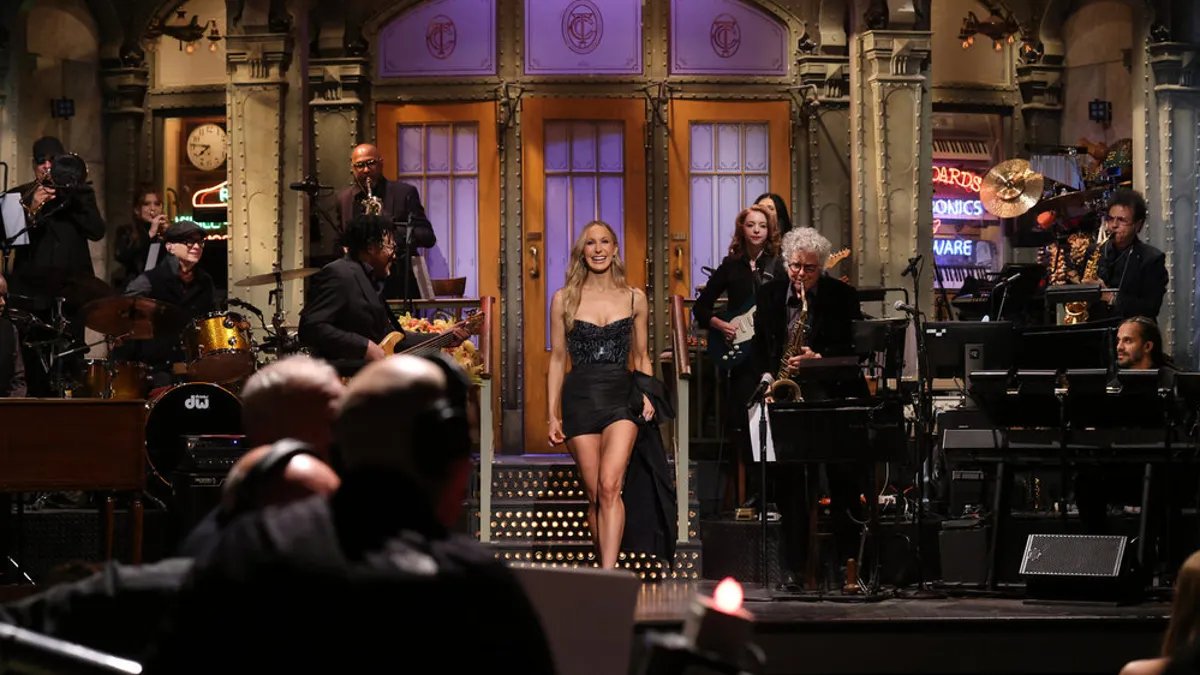
The air in Studio 8H crackled with anticipation. It was Saturday night, and the iconic “Live from New York, it’s Saturday Night!” was about to ring out, introducing Nikki Glaser as the host. The crowd, a mix of tourists, industry insiders, and die-hard fans, buzzed with excitement. Everyone loves a good SNL moment, right? But what followed was anything but a lighthearted sketch. As Nikki took center stage for her monologue, the mood shifted. What started as standard observational humor quickly veered into deeply uncomfortable territory. She delivered a series of jokes referencing pedophilia, and the studio audience reacted with a collective gasp (and a few nervous coughs). The jokes landed with a thud, a jarring contrast to the usual laughter that echoes through the studio. You could practically feel the tension rising. Now, I love a good edgy joke, but this…this felt different. It felt…wrong. Initial reactions were mixed. Some audience members later stated they were “completely blindsided” and “didn’t know how to react”. The controversy quickly spilled onto social media, and within minutes, the internet was ablaze. The question on everyone’s mind: Did Nikki Glaser cross a line?
The speed at which the backlash unfolded was breathtaking. Twitter exploded with condemnations and defenses, trending hashtags, and calls for NBC to issue an apology. The clips of the monologue were dissected frame by frame, and every punchline was scrutinized. Some argued that comedy should be allowed to push boundaries, no matter how uncomfortable. Others insisted that pedophilia is never a laughing matter. Me? I’m still trying to figure out where I stand. On one hand, I believe in freedom of speech and artistic expression, especially in comedy. But on the other hand, the subject matter is so sensitive, so harmful, that it’s difficult to find any humor in it. It feels like a betrayal of the platform’s responsibility to at least try to be somewhat socially conscious. And I can’t help but wonder, what were the writers thinking? Did anyone raise a red flag during rehearsals?
The whole saga raises uncomfortable questions about the limits of comedy and the responsibilities of comedians. The intent may have been to be edgy or provocative, but the execution resulted in widespread offense and genuine hurt. It is a stark reminder of the power of words and the potential consequences of crossing the line, especially on a platform as influential as Saturday Night Live. And the digital age only amplifies everything, doesn’t it? What was once a fleeting moment on live television becomes a permanent record, endlessly shared and debated. So, let’s dive deeper into this whole mess, shall we?
The Monologue: A Breakdown
Let’s break down exactly what was said. The specific jokes centered around observations on physical appearances of children, and quickly spiraled into suggestive commentary that many viewers deemed completely inappropriate and offensive. Witnesses described the initial silence in the studio after the first joke, followed by increasingly uncomfortable laughter.
One audience member, who asked to remain anonymous, stated, “It was like watching a car crash in slow motion. You knew it was going to be bad, but you couldn’t look away.” Another added, “I’m a fan of Nikki, but this just wasn’t funny. It was disturbing.”
The jokes weren’t isolated to one specific bit, either. The theme was woven throughout the monologue, creating a sense of sustained discomfort. This wasn’t a quick misstep; it felt deliberate, leaving many to question the intent behind the material. It’s important to note that there are varying degrees of funny, and in this case, the humor seemed to miss the mark for a vast majority of viewers.
Social Media Erupts: The Backlash Intensifies
The digital world wasted no time in reacting to the monologue. Social media platforms became battlegrounds for heated debates. #SNLisOver, #CancelNikkiGlaser, and #DefendComedy trended for hours.
Tweets ranged from outrage to attempts at rationalizing the jokes. One user wrote, “I’m all for pushing boundaries, but this is beyond the pale. Pedophilia is not a joke.” Another countered, “It’s satire! People are too sensitive these days. Lighten up!”
The intensity of the backlash was undeniable. Petitions calling for Nikki Glaser to be removed from future appearances circulated rapidly. Sponsors of SNL were tagged in numerous posts, urging them to reconsider their association with the show. It’s always fascinating to watch how quickly social media can amplify a situation, isn’t it?
NBC’s Response (or Lack Thereof)
As of now, NBC has not released an official statement regarding the controversy. This silence has further fueled the fire, with many critics accusing the network of condoning the jokes.
Some speculate that NBC is waiting for the storm to pass, hoping the controversy will eventually fade from public memory. Others believe the network is internally debating how to address the situation without further escalating the issue.
An anonymous source within NBC stated, “Everyone is walking on eggshells right now. The higher-ups are scrambling to figure out the best course of action. It’s a mess.” Whether or not NBC will address the matter remains to be seen, but their silence is definitely speaking volumes.
The Debate: Where is the Line?
The Nikki Glaser SNL pedophilia jokes incident has reignited the ongoing debate about the limits of comedy. Where does satire end and harmful speech begin? Who gets to decide what is acceptable and what is not?
Some argue that comedy should be free from censorship, allowing comedians to explore sensitive topics in their own way. Others believe that certain subjects, like pedophilia, are inherently off-limits and should never be used for comedic effect.
There’s also the argument that context matters. A joke that might be acceptable in a comedy club setting could be entirely inappropriate on a mainstream platform like SNL. The demographics of the audience, the overall tone of the show, and the current social climate all play a role in how a joke is received.
Nikki Glaser’s History of Edgy Comedy
Nikki Glaser is known for her provocative and often boundary-pushing humor. Her stand-up routines frequently tackle taboo subjects, including sex, relationships, and mental health. She’s built a career on being brutally honest and unafraid to say what others are thinking.
However, even for Glaser, the SNL monologue seemed to cross a line. While she has a dedicated fanbase that appreciates her edginess, the broader audience of Saturday Night Live was clearly not as receptive to her brand of comedy.
It begs the question: Is there a difference between being edgy and being irresponsible? Can a comedian be too provocative, even for their own good? And is it possible to push boundaries without causing real harm?
The Future of SNL: A Changing Landscape
The controversy surrounding the Nikki Glaser SNL pedophilia jokes highlights the challenges facing SNL in the modern era. The show has struggled to maintain its relevance in a world saturated with comedy and increasingly sensitive to social issues.
With the rise of streaming services and online platforms, viewers have more choices than ever before. SNL needs to adapt to stay competitive, but it also needs to be mindful of its responsibility to its audience.
The show must strike a delicate balance between pushing boundaries and avoiding offensive content. This is a tall order, especially in a world where opinions are so polarized and social media can amplify any misstep. Can SNL navigate this changing landscape and remain a cultural touchstone? Only time will tell.
The Impact on Nikki Glaser’s Career
The fallout from the SNL appearance could have a significant impact on Nikki Glaser’s career. While some fans may rally behind her, others may be turned off by the controversy.
It’s possible that some venues and sponsors will be hesitant to work with her in the future. On the other hand, the incident could also raise her profile and attract a new audience that appreciates her willingness to push boundaries.
Ultimately, the long-term impact on Glaser’s career will depend on how she responds to the criticism and how she chooses to move forward. Will she double down on her edgy style, or will she try to strike a more conciliatory tone? The choice is hers.
Conclusion
The Nikki Glaser SNL monologue is a stark reminder of the power of comedy and the responsibility that comes with it. While humor is subjective, there are lines that should not be crossed, especially when dealing with sensitive and harmful topics. The controversy has sparked a much-needed conversation about the limits of comedy and the importance of being mindful of the impact of our words. It also highlights the challenges facing SNL in a rapidly changing media landscape. Whether the show can adapt and remain relevant remains to be seen. As for Nikki Glaser, her career trajectory is uncertain, but her response to the backlash will likely determine her future in comedy. The incident serves as a cautionary tale for all comedians: push boundaries, but be mindful of the consequences. After all, is a laugh worth causing genuine harm? I’m not so sure.
Frequently Asked Questions
| Why is Nikki Glaser’s SNL monologue causing controversy? | Nikki Glaser’s SNL monologue sparked controversy due to jokes referencing pedophilia, which many viewers found offensive and inappropriate. |
| What are the potential consequences of using controversial humor? | Using controversial humor can lead to backlash, damage to reputation, loss of sponsors, and a reevaluation of the boundaries of comedy. |
| How has SNL responded to the backlash? | As of the latest reports, SNL (NBC) has not released an official statement regarding the controversy. |
| What are the challenges of balancing comedy with social responsibility? | Balancing comedy with social responsibility requires navigating sensitive topics carefully, being mindful of the audience, and understanding the potential impact of jokes. |
| What is the future of comedy after such controversies? | The future of comedy might involve greater self-awareness, more sensitivity to social issues, and a redefinition of what constitutes acceptable humor in a changing world. |
Important Notice
This FAQ section addresses the most common inquiries regarding the topic.