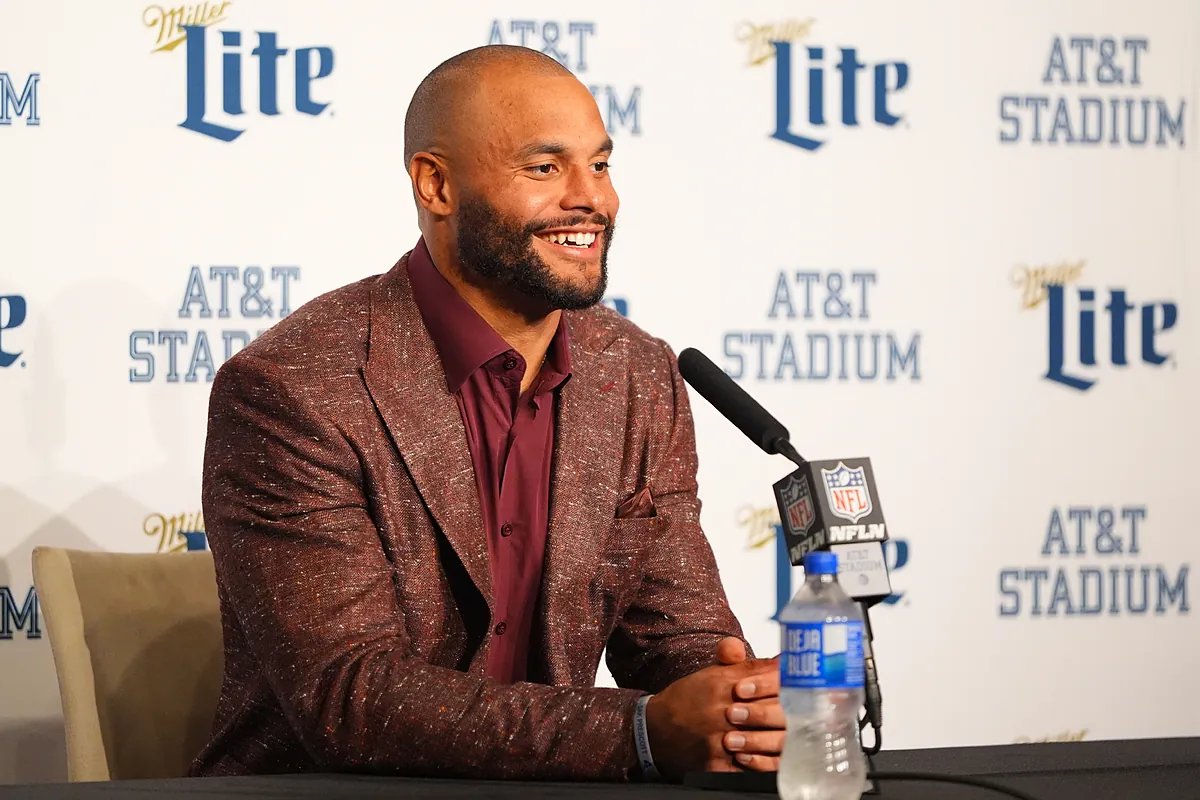
Dak Prescott, the star quarterback for the Dallas Cowboys, stood on the practice field, the Texas sun beating down, not quite as intensely as it does in August, but still enough to make you sweat. The air crackled with anticipation for the upcoming season. Everyone was eager to see if the revamped offense, now under the guidance of Brian Schottenheimer, could finally propel the Cowboys to the Super Bowl. But things weren’t always so optimistic. There were whispers, doubts, and even open skepticism surrounding Schottenheimer’s appointment as the offensive coordinator. Could he really unlock the full potential of Prescott and the Cowboys’ offense?
Initially, Prescott himself admitted to having reservations. You see, Schottenheimer’s previous stints in the NFL hadn’t exactly set the world on fire. Some fans remembered his time with the Jets and the Seahawks, and the prevailing sentiment was…underwhelming. The words “conservative” and “predictable” were often thrown around. So, when the Cowboys announced Schottenheimer’s hiring, the reaction wasn’t exactly met with parades in Dallas. More like cautious curiosity mixed with a healthy dose of “wait and see.” But what a difference a year makes! The narrative has completely shifted. Now, Prescott is singing a very different tune, showering Schottenheimer with praise for his leadership and the positive impact he’s had on the team’s offensive strategy. It’s a story of redemption, of proving doubters wrong, and of the evolving relationship between a quarterback and his coach.
It’s a classic tale of football, really. High expectations, intense scrutiny, and the constant pressure to perform. Every decision is analyzed, every play is dissected, and every coach is under the microscope. And in the high-stakes world of the NFL, perception can change in an instant. Just ask Brian Schottenheimer, who has gone from being a question mark to a respected and valued member of the Cowboys’ coaching staff. What exactly changed? How did Schottenheimer win over Prescott and the rest of the team? And what does this newfound confidence mean for the Cowboys’ Super Bowl aspirations? Let’s dive in.
The Initial Doubts Surrounding Schottenheimer’s Hiring
The skepticism surrounding Brian Schottenheimer‘s arrival in Dallas was understandable. His track record, while not terrible, wasn’t exactly inspiring confidence. He had spent time as an offensive coordinator for several teams, including the New York Jets, St. Louis Rams, and Seattle Seahawks. While he had some success, particularly with the Seahawks, he was often criticized for being too conservative and not maximizing the potential of his quarterbacks.
“I remember thinking, ‘Okay, Schottenheimer…he’s a guy.’ Not exactly the reaction you want when your team hires a new offensive coordinator,” confessed one anonymous Cowboys insider. “There was a feeling that we were settling, that we could have aimed higher.”
Some analysts pointed to his reliance on the running game, even when his quarterbacks were capable of making plays through the air. Others questioned his play-calling in crucial situations, often opting for predictable runs instead of taking calculated risks. All of this contributed to a perception that Schottenheimer was a safe, but ultimately uninspiring, choice.
Adding to the pressure was the fact that the Cowboys had just parted ways with Kellen Moore, who had been the offensive coordinator for the previous four seasons. Moore was a popular figure among the players, and his offensive schemes, while sometimes inconsistent, were generally considered to be innovative and aggressive. Replacing him with someone perceived as more conservative was a risky move.
Prescott’s Transformation and Schottenheimer’s Influence
So, how did Brian Schottenheimer manage to win over Dak Prescott and silence his doubters? The answer lies in a combination of factors, including his communication skills, his willingness to adapt, and his ability to build a strong relationship with his quarterback.

First and foremost, Schottenheimer made a concerted effort to understand Prescott’s strengths and weaknesses. He spent hours watching film with the quarterback, discussing his preferences, and identifying areas where he could improve. He didn’t try to force Prescott into a pre-determined system. Instead, he tailored the offense to fit Prescott’s skill set, emphasizing his ability to make plays both with his arm and his legs.
“Brian really took the time to get to know me, not just as a player, but as a person,” Prescott said in a recent interview. “He understood what I was comfortable with, what I was good at, and what I needed to work on. That made a huge difference.”
Schottenheimer also fostered a collaborative environment, encouraging Prescott to offer his input on play designs and game plans. This sense of ownership helped Prescott feel more invested in the offense and more confident in his ability to execute it.
“He’s not afraid to listen to my ideas,” Prescott explained. “If I see something on the field that I think will work, I can go to him and he’s always willing to consider it. That’s huge for a quarterback.”
Adaptability and Innovation
One of the biggest criticisms leveled against Schottenheimer in the past was his perceived lack of adaptability. He was often accused of sticking to his game plan, even when it wasn’t working. However, in Dallas, he has shown a willingness to evolve and adjust his approach based on the situation.
For example, early in the season, the Cowboys’ running game struggled to find its footing. Instead of stubbornly pounding the ball on the ground, Schottenheimer adjusted the offense to rely more heavily on Prescott’s passing ability. This shift allowed the Cowboys to move the ball effectively and score points, even when the running game wasn’t clicking.
He’s also been praised for his creative play-calling, incorporating more RPOs (run-pass options) and play-action passes into the offense. These concepts have allowed Prescott to make quicker decisions and take advantage of favorable matchups.
Building a Strong Relationship
Perhaps the most important factor in Schottenheimer’s success in Dallas has been his ability to build a strong relationship with Dak Prescott. He’s not just a coach; he’s a mentor, a confidant, and a friend.
They spend time together off the field, discussing football and life in general. Schottenheimer is always available to offer advice and support, both on and off the field. This close bond has fostered a sense of trust and respect between the two men, which has translated into better communication and execution on the field.
“He’s someone I can talk to about anything,” Prescott said. “He’s not just my coach; he’s someone I consider a friend. That makes a big difference.”
The Impact on the Cowboys’ Offense
The results of Brian Schottenheimer‘s influence are undeniable. The Cowboys’ offense has seen a significant improvement in several key areas.
* Increased Efficiency: The Cowboys are scoring more points per game and averaging more yards per play than they did in previous seasons.
* Improved Red Zone Offense: They’ve become much more efficient in the red zone, converting a higher percentage of their opportunities into touchdowns.
* Reduced Turnovers: Prescott has thrown fewer interceptions and fumbled less often, thanks in part to Schottenheimer’s emphasis on ball security.
* More Explosive Plays: The Cowboys are generating more big plays, both in the running game and the passing game, indicating a more aggressive and dynamic offensive approach.
The stats paint a clear picture: the Cowboys’ offense is thriving under Schottenheimer’s guidance. But the impact goes beyond the numbers. There’s a noticeable difference in the team’s confidence and swagger. They believe they can score on any play, and they play with a sense of urgency and purpose. That’s a testament to the leadership Schottenheimer is bringing to the table.

Can Schottenheimer Lead the Cowboys to the Super Bowl?
The ultimate question, of course, is whether Brian Schottenheimer can lead the Dallas Cowboys to the Super Bowl. While there are no guarantees in football, the early signs are certainly encouraging.
The Cowboys have a talented roster, a strong coaching staff, and a renewed sense of confidence. They’ve shown they can beat anyone, and they’re not afraid of any challenge.
However, the road to the Super Bowl is long and difficult. They’ll face tough competition in the NFC, and they’ll need to stay healthy and focused throughout the season.
But with Dak Prescott playing at an MVP level and Brian Schottenheimer calling the plays, the Cowboys have a legitimate shot at achieving their ultimate goal.
“We believe we can win it all,” Prescott said. “We have the talent, the coaching, and the determination. It’s just a matter of putting it all together.”
Only time will tell if the Cowboys can live up to their potential. But one thing is certain: Brian Schottenheimer has played a key role in their resurgence, and he deserves credit for the positive impact he’s had on the team. The journey from doubter to believer is complete, and now, the Cowboys are ready to take on the world. The roar of the crowd, the smell of the turf, the electricity in the air – it’s all building towards something special. The season is young, and the story is still being written. It will be an exciting ride to watch!
In conclusion, Dak Prescott‘s evolving perspective on Brian Schottenheimer‘s leadership underscores the dynamic nature of the NFL. Initial skepticism has transformed into profound respect, driven by Schottenheimer’s adaptability, communication, and ability to build strong relationships. The Cowboys’ improved offensive performance speaks volumes about Schottenheimer’s impact. While the path to the Super Bowl remains challenging, the newfound confidence and efficiency instilled by Schottenheimer provide a solid foundation for the team’s aspirations. Prescott’s praise is a testament to Schottenheimer’s redemption and the potential he has unlocked within the Cowboys’ offense.
Frequently Asked Questions
| Why was there initial skepticism about Brian Schottenheimer’s hiring? | Skepticism stemmed from his past performance as an offensive coordinator, perceived as conservative and uninspiring compared to the previous coordinator, Kellen Moore. |
| What are the benefits of Brian Schottenheimer’s leadership for the Cowboys? | Benefits include increased offensive efficiency, improved red zone performance, reduced turnovers, and the implementation of more explosive plays. |
| How did Schottenheimer implement his offensive changes? | He tailored the offense to Dak Prescott’s strengths, fostered a collaborative environment, and showed adaptability by adjusting the offensive approach based on the situation. |
| What challenges might the Cowboys face despite Schottenheimer’s positive impact? | The Cowboys will still face tough competition in the NFC and need to maintain health and focus throughout the season to achieve their Super Bowl aspirations. |
| What is the future outlook for the Cowboys under Schottenheimer’s offensive leadership? | The Cowboys have a legitimate shot at achieving their ultimate goal of winning the Super Bowl, with Prescott playing at an MVP level and Schottenheimer effectively calling the plays. |
Important Notice
This FAQ section addresses the most common inquiries regarding the topic.