Sterling Stock Picker is an AI-assisted stock research and portfolio-building platform designed to turn financial, technical and risk data into more approachable investment signals. Lifetime access is currently offered for $49.97, down from a stated regular price of $486, with the promotion scheduled to end Aug. 26 at 11:59 p.m. PT.
- Lifetime price: $49.97 during the promotion, compared with a stated regular price of $486.
- Core tools: North Star stock analysis, Finley AI, a risk-tolerance assessment, portfolio building, Stock Rockets and market insights.
- Deadline: The lifetime offer is scheduled to expire Aug. 26 at 11:59 p.m. PT.
- Access: The source deal states that lifetime access covers web, iOS and Android and includes future updates without recurring monthly or annual charges.
- Important limitation: AI-generated ratings and stock signals cannot guarantee returns or remove the risk of losing money.
The attraction is straightforward: researching a stock normally means moving among financial statements, earnings information, charts, analyst expectations and broader market news. Sterling Stock Picker attempts to consolidate some of that work, using its North Star system to assess stocks and produce buy, sell, hold or avoid signals.
Its other major component is Finley AI, a conversational financial assistant intended to explain markets and portfolio questions in plain English. That makes the product potentially useful as a research shortcut, but investors should distinguish an easier interface from a substitute for independent due diligence or professional financial advice.
Readers can review the official Sterling Stock Picker website for the platform’s current feature descriptions. Investors considering any AI-assisted investing tool should also read the SEC Investor.gov guidance on AI and investment decisions, which cautions against relying solely on AI-generated information.
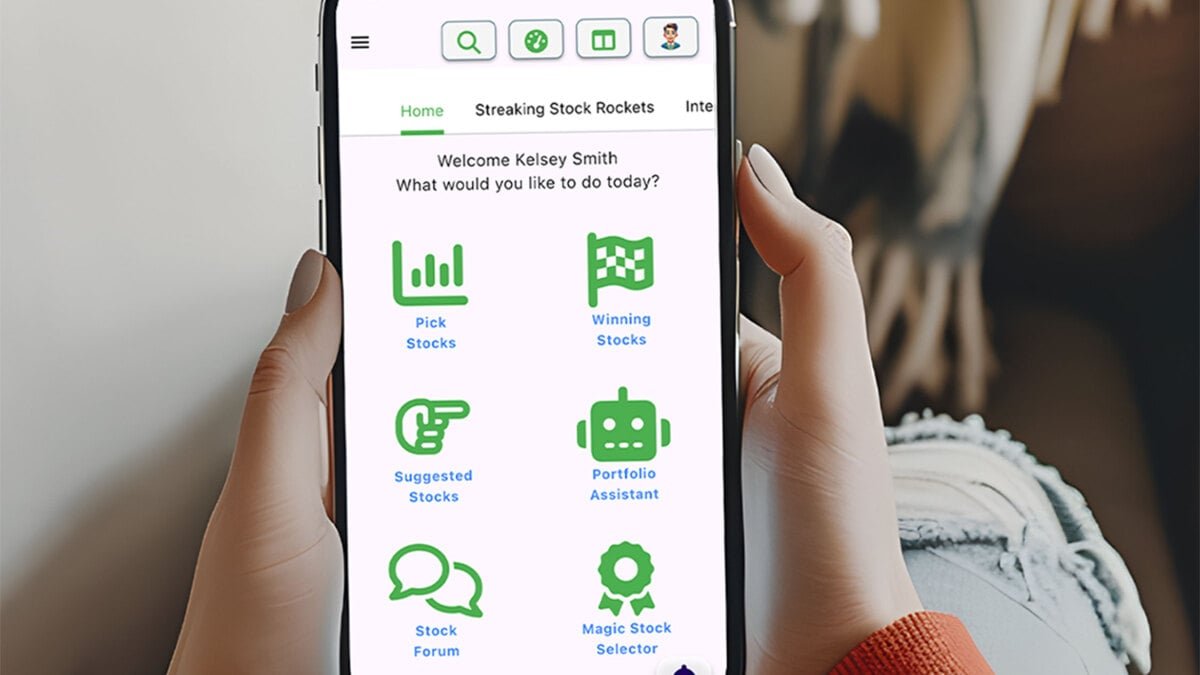
Sterling Stock Picker deal at a glance
| Detail | What is offered |
|---|---|
| Promotional price | $49.97 |
| Stated regular price | $486 |
| Offer deadline | Aug. 26 at 11:59 p.m. PT |
| Access term | Lifetime subscription |
| Platforms | Web, iOS and Android |
| Stock research | North Star ratings and financial, fundamental, technical and risk analysis |
| AI feature | Finley AI financial coach |
| Portfolio feature | Risk assessment and Done-for-You Portfolio Builder |
The headline discount is substantial on paper, but the difference between $49.97 and the stated $486 regular price does not establish whether the product will improve an investor’s decisions. The more useful question is whether its research workflow saves enough time — and provides enough understandable information — to justify the one-time cost.
What is Sterling Stock Picker?
Sterling Stock Picker combines stock screening, portfolio management, market information and educational features. Rather than requiring users to interpret every metric separately, the platform organizes information around ratings, signals and risk categories.
Its feature set extends beyond researching an individual ticker. The platform includes sector and industry information, portfolio tracking, customized recommendations, watchlists and Stock Rockets, a feature that surfaces companies meeting criteria including 50% or greater quarterly revenue growth and high North Star ratings.
That structure may be especially attractive to investors who find conventional stock screeners overwhelming. More experienced users may instead see it as a way to narrow a larger universe of stocks before doing deeper research elsewhere.
Is Sterling Stock Picker actually powered by ChatGPT?
The product should not be confused with ChatGPT itself or treated as an official OpenAI investing product. The source material describes Sterling Stock Picker as taking a ChatGPT-like approach to making complicated information easier to understand, while its conversational assistant is branded Finley AI.
That distinction matters. A conversational interface can make financial research feel similar to asking a chatbot a question, but it does not tell investors which underlying model, data provider or methodology is responsible for every answer. Buyers should evaluate Finley based on the information and analysis it provides rather than assuming that a reference to ChatGPT establishes a particular level of accuracy.
How North Star stock analysis works
North Star is the platform’s stock-analysis framework. It is designed to examine multiple dimensions of a company rather than reducing a decision to a single price chart.
Financial and fundamental factors
The platform says its stock analysis incorporates financial and fundamental metrics. These are intended to help users judge the underlying company rather than focusing exclusively on recent share-price movement.
Technical factors
Technical analysis adds a market-behavior layer to the research. Sterling Stock Picker also offers tools for identifying recent performers and market momentum, including sector and industry views.
Risk analysis and buy, sell, hold or avoid signals
The most immediately understandable output is a recommendation-style signal: buy, sell, hold or avoid. These labels condense a larger set of inputs into a quick indication of how the system currently views a stock.
They should not be interpreted as guarantees. A buy signal can be followed by a falling share price, just as an avoid signal can precede a rally. Company announcements, economic data, geopolitical developments and abrupt shifts in market sentiment can quickly make earlier analysis less useful.
How Finley AI answers investing questions
Finley AI is intended to make the platform conversational. Users can ask questions about stocks, markets and portfolios and receive explanations without having to translate financial terminology on their own.
The platform describes Finley as using real-time market information and offering analysis tied to factors such as portfolio holdings and risk tolerance. For a newer investor, the practical benefit is accessibility: a question can be asked in ordinary language rather than constructed through multiple filters on a traditional financial terminal.
There is still an important distinction between explaining data and knowing what will happen next. Even a well-designed AI assistant can produce an interpretation that proves wrong, while the usefulness of any market answer depends heavily on the accuracy, completeness and timeliness of the underlying information.
How the five-minute questionnaire builds a portfolio
Sterling Stock Picker starts its portfolio personalization with a risk-tolerance questionnaire that the company says takes about five minutes. The assessment is designed to establish how much investment risk a user is prepared to accept.
That result feeds into the Done-for-You Portfolio Builder, which is designed to recommend a portfolio structure based on the user’s goals and risk profile. The platform can then connect users with stocks that fit the corresponding risk level.
This is more useful than presenting every investor with the same stock list, but a questionnaire cannot capture every element of a person’s financial situation. Income needs, debt, taxes, emergency savings, investment horizon and other personal circumstances can materially affect whether an investment is appropriate.
What you get with lifetime access
| Feature | Potential user benefit | What to keep in mind |
|---|---|---|
| North Star analysis | Condenses several categories of stock research | A rating is an analytical signal, not a prediction |
| Finley AI | Explains investing questions conversationally | AI responses still require verification and judgment |
| Risk questionnaire | Personalizes stock and portfolio suggestions | It cannot represent every aspect of a user’s finances |
| Portfolio Builder | Helps organize holdings around a defined risk profile | Suggested allocations can still lose value |
| Stock Rockets | Surfaces companies with strong growth and North Star criteria | Historical growth does not ensure future performance |
| Sector and industry insights | Provides context beyond individual companies | Momentum can reverse quickly |
The source deal says the lifetime subscription includes web, iOS and Android access as well as future updates, with no recurring monthly or annual subscription cost. Buyers should still review the checkout terms applying to the lifetime offer, particularly if continued access to specific data feeds or newly introduced premium features is important to their decision.
Sterling Stock Picker price and August 26 deadline
The promotional lifetime price is $49.97, compared with a stated regular price of $486. The sale is scheduled to end Aug. 26 at 11:59 p.m. PT. The original deal listing notes that StackSocial prices are subject to change.
A limited-time price can make the purchase cheaper, but investors should avoid treating urgency as part of the investment case for the software. The relevant calculation is whether the platform’s research, portfolio and educational features are useful enough to warrant $49.97.
Where the tool may save investors time
Sterling Stock Picker’s strongest proposition is not that software can foresee the market. It is that software can organize a large amount of market information faster than a person manually moving among multiple research screens.
A user can potentially move from establishing a risk profile to screening stocks, reviewing a North Star assessment, asking Finley for an explanation and organizing potential holdings without changing platforms. Stock Rockets and industry views provide additional shortcuts for investors looking for growth or momentum candidates.
For people who already have a disciplined research process and access to preferred financial-data platforms, those conveniences may be less valuable. For someone still learning how different types of analysis fit together, the structured workflow could have more appeal.
Important limitations of AI stock-picking tools
- Can: Organize large amounts of market information and make complex concepts easier to navigate.
- Can: Apply consistent screening criteria and surface stocks matching predefined characteristics.
- Cannot: Guarantee that a buy, sell, hold or avoid signal will be correct.
- Cannot: Eliminate market, company-specific or economic risk.
- Cannot: Replace verification of important information before money is invested.
AI-generated investment analysis is only as useful as the inputs, methodology and interpretation behind it. Data can be incomplete or become outdated, models can reach flawed conclusions, and extraordinary market events can invalidate assumptions rapidly.
Investors should also resist automation bias — the tendency to give a computer-generated recommendation more credibility simply because it appears quantitative or sophisticated. A five-star rating or buy signal may simplify research, but it does not transfer responsibility for an investment decision to the software.
No stock-picking platform can guarantee returns. Diversification, position sizing, time horizon and the ability to withstand losses remain important regardless of how a stock was identified.
Who Sterling Stock Picker is best for
The platform appears best suited to self-directed investors who want a more structured way to research stocks without spending as much time navigating separate financial tools. Beginners may appreciate Finley’s plain-language explanations and the risk questionnaire, while more experienced investors could use North Star ratings and screeners as an initial filtering layer.
It is a weaker fit for anyone expecting automated signals to reliably predict short-term prices, or for investors who need individualized advice that accounts for their complete financial and tax circumstances. It may also be redundant for users who already pay for research platforms and have a screening and portfolio-management process they trust.
Sterling Stock Picker pros and cons
| Pros | Cons |
|---|---|
| One-time $49.97 promotional price rather than a recurring subscription | Stock signals can be wrong |
| Combines research, screening and portfolio tools | AI analysis still needs independent verification |
| Finley AI can simplify financial terminology | A risk questionnaire cannot capture a complete financial situation |
| North Star provides an easy-to-read research framework | The size of the advertised discount does not prove the product’s value |
| Includes growth, sector and industry discovery tools | Market conditions can change faster than a signal remains useful |
Is the $49.97 Sterling Stock Picker lifetime deal worth it?
At $49.97, the case for Sterling Stock Picker depends less on whether its stock picks beat the market and more on whether the software improves the user’s research process. Investors who would use Finley, North Star, portfolio tools and stock screening regularly have several features bundled into a relatively inexpensive lifetime purchase.
The stated $486 regular price makes the promotion look dramatic, but buyers should not use that comparison as evidence of investment performance or product quality. The better benchmark is what comparable research functions are worth to the individual user and whether they would actually use them.
Most importantly, Sterling Stock Picker is better approached as an investment research and educational tool than as an automated route to profitable trades. Its ratings can help prioritize what to investigate; they cannot remove the need to understand why money is being put at risk.
Frequently asked questions
What is Sterling Stock Picker?
Sterling Stock Picker is a stock research and portfolio platform combining North Star analysis, stock screening, AI-assisted explanations, risk assessment and portfolio-building features.
Is Sterling Stock Picker powered by ChatGPT?
It should not be treated as ChatGPT or an official OpenAI investing product. The source material compares its approach with the conversational simplicity associated with ChatGPT, while Sterling’s own AI assistant is called Finley AI.
How does Sterling Stock Picker choose stocks?
Its North Star system evaluates multiple areas of stock research, including financial, fundamental, technical and risk factors. Other discovery tools apply additional criteria to surface particular types of companies.
What do its buy, sell, hold and avoid signals mean?
They summarize the platform’s assessment of a stock into an easier-to-read signal. They are research indicators rather than guarantees about what a stock price will do next.
Does Sterling Stock Picker use real-time market data?
The platform describes its offering as including real-time stock quotes and says Finley can access real-time data. Investors should remember that the usefulness of any analysis still depends on the accuracy, scope and timing of the underlying data.
Can Sterling Stock Picker build a portfolio for me?
Yes. Its Done-for-You Portfolio Builder is designed to create portfolio recommendations around the user’s stated goals and risk profile.
How does the risk-tolerance questionnaire work?
Sterling Stock Picker says the assessment takes about five minutes and uses the resulting risk level to help align portfolio and stock recommendations with the amount of risk a user says they can tolerate.
Is Sterling Stock Picker financial advice?
Investors should treat the platform as a research and educational aid rather than a replacement for individualized professional financial advice. AI output cannot account perfectly for every user’s complete financial circumstances.
How much does Sterling Stock Picker cost?
The promotional lifetime subscription in the source deal costs $49.97, compared with a stated regular price of $486.
When does the $49.97 lifetime deal end?
The promotion is scheduled to end Aug. 26 at 11:59 p.m. PT. The original listing also states that StackSocial prices are subject to change.
Does lifetime access include future updates?
The source deal states that future updates are included with lifetime access. Buyers concerned about particular future features or market-data services should verify the applicable purchase terms before paying.
Can AI stock-picking tools guarantee investment returns?
No. AI tools can process information and generate signals, but they cannot guarantee returns or eliminate the possibility of investment losses.