New iPad mini tipped for late October launch with OLED screen and water resistance, according to Bloomberg’s Mark Gurman, marking the most significant update to Apple’s compact tablet since its last refresh. The upcoming model represents a substantial leap forward, transitioning from conventional LCD panels to high-contrast OLED technology while introducing notable enhancements in chassis durability, internal processing power, and speaker acoustics. With the current iPad mini having last been updated in September 2021 with the A15 Bionic chip, this rumored refresh comes after an unusually long four-year wait for fans of the 8.3-inch form factor.
- Release Date: Late October launch, confirmed by Mark Gurman for fall 2026
- Display: OLED screen technology with infinite contrast ratios and true blacks
- Water Resistance: iPhone-like water resistance with redesigned chassis
- Processor: Expected A19 Pro or A20 chip with enhanced neural processing
- Price: Potential $100 increase from current $599 starting price
- Previous Update: Last refreshed September 2021 with A15 Bionic chip
- Competitors: Samsung Galaxy Tab S series, iPad Air comparison
Bloomberg’s Mark Gurman, renowned for his accurate Apple product predictions, confirmed the timeline in an August 2026 social media post, stating the iPad mini remains “on track for this fall and will launch before the end of October.” According to Gurman, the device will be “revamped, complete with an iPhone-like OLED screen.” This development aligns with Apple’s broader strategy of transitioning its product lineup to OLED technology, following the iPad Pro’s adoption of tandem OLED displays and the iPhone’s long-standing use of the superior panel technology.
The transition to OLED represents a fundamental shift in the iPad mini’s visual experience. OLED panels deliver infinite contrast ratios by individually controlling each pixel’s illumination, resulting in true inky blacks and significantly richer dynamic range. This improvement is particularly noticeable when viewing HDR content, editing photos, or engaging with creative workflows where color accuracy and contrast are paramount. The current iPad mini’s LCD panel, while adequate, suffers from the typical limitations of backlit technology, including elevated black levels and reduced contrast in dark scenes.
Because OLED manufacturing carries a higher cost envelope than traditional LCD assemblies, the upgrade could prompt an adjusted starting price point when it hits retail channels. Industry analysts project a price increase of approximately $100 above the current $599 starting price, positioning the OLED iPad mini closer to the $699-$799 range depending on storage configurations.
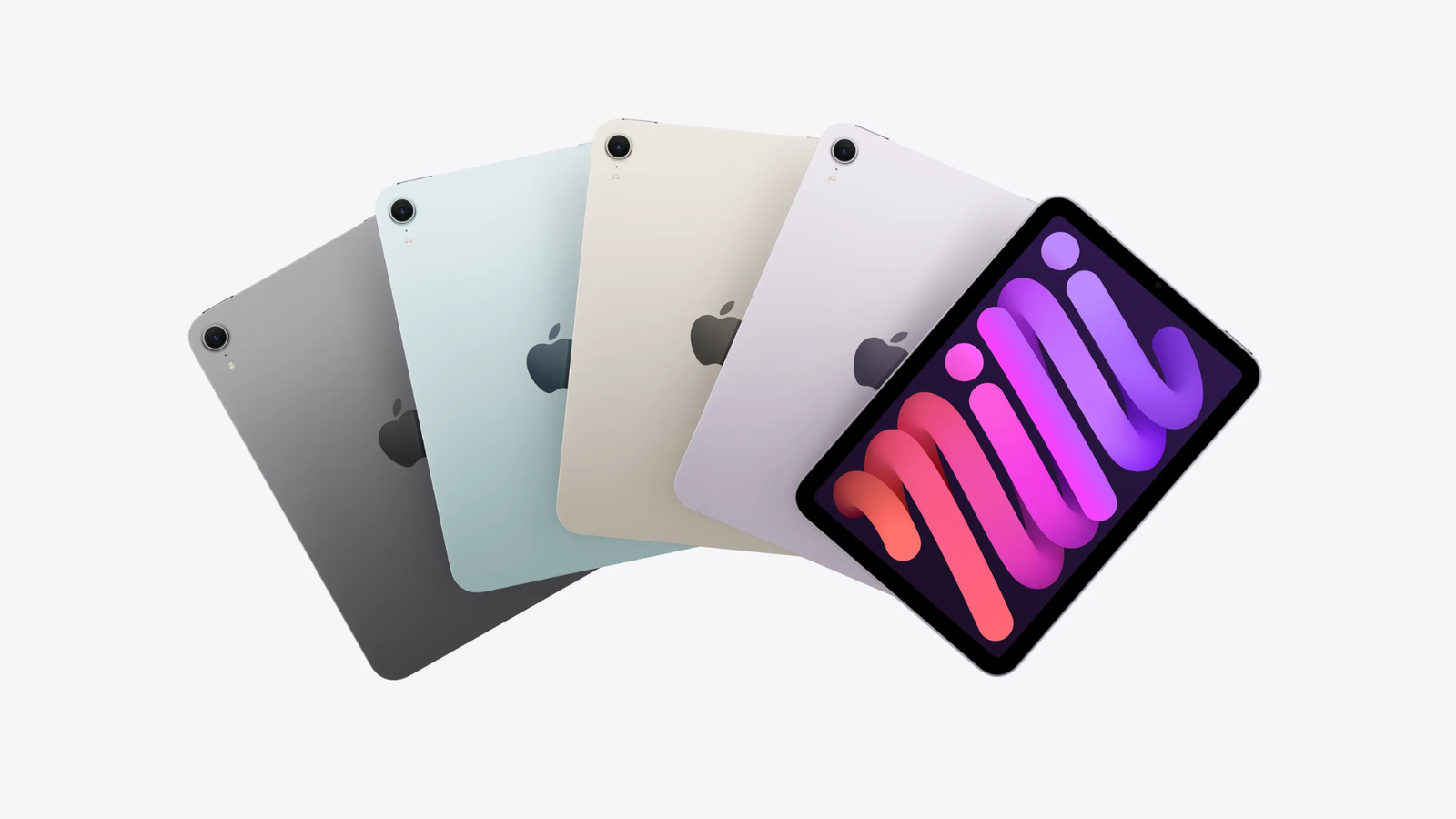
iPad mini OLED Display: What the Upgrade Actually Means
Tandem OLED or Single Stack? A Crucial Distinction
The defining highlight of the upcoming iPad mini is unquestionably the shift in display panel technology. Following Apple’s adoption of tandem OLED on the iPad Pro, the new compact tablet is set to become the next device in the iPad family to leave LCD behind. This upgrade represents the culmination of years of anticipation from Apple fans who have long desired the superior visual quality of OLED in a more portable form factor. Apple’s broader OLED transition across its product lines has generated significant interest, and the new iPad mini stands to benefit from this display technology shift.
A critical question remains whether the iPad mini will utilize the same tandem OLED technology found in the iPad Pro or employ a more cost-effective single-stack implementation. Tandem OLED stacks multiple emissive layers to achieve higher brightness levels and improved longevity, which Apple first introduced with the M4 iPad Pro to deliver 1000 nits of full-screen brightness for SDR content and 1600 nits peak for HDR. If the iPad mini adopts a single-stack OLED configuration, it would likely offer slightly lower peak brightness while still delivering the core benefits of OLED — infinite contrast, true blacks, and superior color reproduction — at a more accessible price point. Some industry observers have drawn comparisons to the iPad mini OLED implementation strategy used in other premium devices.
The OLED panel’s benefits extend beyond media consumption to practical everyday usage. Dark mode interfaces become significantly more effective, saving battery life on OLED displays while providing a more immersive viewing experience. For creative professionals using the iPad mini as a secondary monitor or sketching device, the improved contrast and color accuracy could represent a meaningful upgrade to their workflow capabilities.
New iPad mini Release Date: When Will It Launch?
According to Mark Gurman’s reporting, Apple is actively planning to roll out the updated iPad mini by the end of October. This timeline follows Apple’s established pattern of holding separate events for different product categories. While the company traditionally dedicates its September keynote to new iPhone models and the Apple Watch lineup, iPad and Mac hardware announcements are typically reserved for dedicated October updates or online press releases. The anticipated iPad mini release date aligns with this autumn cadence that Apple has followed for years.
Apple’s late-October debut aligns with the company’s traditional autumn release cadence ahead of the global holiday shopping season. This strategic timing positions the new iPad mini as a compelling gift option for the year-end retail period, potentially driving significant sales volume during Apple’s most lucrative quarter. The company typically holds its fall iPad announcements in late October, with previous models arriving in stores approximately one to two weeks after the formal introduction.
Once officially introduced, the new iPad mini will be available globally through Apple Store locations, authorized retailers, and carrier partners in key markets worldwide. The retail availability is expected to follow shortly after the formal rollout, with most major markets receiving units within the same week of the announcement.
The Price of Upgrade: How Much Will the OLED iPad mini Cost?
The transition to OLED technology inevitably raises questions about pricing. The current iPad mini, released in September 2021, starts at $599 for the 64GB Wi-Fi model, with cellular variants commanding a $150 premium. Industry speculation suggests the OLED upgrade could push the starting price to approximately $699-$799, representing a $100-$200 increase depending on the configuration.
This potential price adjustment reflects the higher manufacturing costs associated with OLED panels compared to traditional LCD assemblies. However, Apple may attempt to mitigate the price increase through component cost reductions in other areas or by maintaining the base storage at 64GB while introducing higher-tier models with larger capacities. The pricing strategy will ultimately determine whether the iPad mini remains positioned as Apple’s most accessible tablet or moves closer to the iPad Air’s price territory.
For consumers evaluating the purchase decision, the price increase must be weighed against the significant display improvement. The OLED upgrade represents a fundamental enhancement that affects every interaction with the device, from watching videos to reading text to editing photos. For many users, the visual quality improvement alone may justify the higher price point.
Water Resistance and Acoustic Redesign
Beyond screen technology, Apple is addressing everyday durability and multimedia performance with the updated iPad mini. Previous reporting indicates that Apple has engineered an updated casing designed to offer water resistance comparable to modern iPhones, making the tablet safer for casual use around water or outdoor environments. This represents a significant improvement over the current model, which lacks any official IP rating for water or dust resistance.
IP Rating Expectations for the New iPad mini
While the exact IP rating remains unconfirmed, the iPad mini could potentially achieve an IP67 or IP68 rating similar to recent iPhone models. This would protect the device against dust ingress and submersion in up to one meter of water for 30 minutes. Such durability improvements would make the iPad mini more suitable for use in kitchens, bathrooms, outdoor settings, and various scenarios where accidental liquid exposure is a concern.
The upgraded chassis integrates a revised speaker architecture engineered to deliver richer sound projection and wider stereo separation in landscape orientation. This acoustic redesign addresses one of the more common criticisms of the current model, whose speakers, while functional, lack the depth and spatial presence of larger iPad models. Improved audio performance would enhance the iPad mini’s viability as a media consumption device, making it more competitive with similarly sized tablets from other manufacturers.
The combination of water resistance and improved audio represents Apple’s commitment to making the iPad mini a more complete and durable device, suitable for a wider range of usage scenarios. These enhancements, combined with the OLED display upgrade, position the new model as a truly substantial refresh rather than a minor spec bump.
Performance and Processor: The A17 Pro or M-Series Question
Under the hood, the next iPad mini is expected to jump directly to Apple’s latest generation of mobile silicon. The current model’s A15 Bionic chip, while still capable, is four years old and lacks the neural processing capabilities required for Apple’s emerging artificial intelligence features. The new processor will likely be either an A19 Pro or A20 chip, depending on Apple’s exact naming conventions and the timing of their silicon roadmap.
This hardware upgrade provides expanded local memory bandwidth and high-throughput neural processing to power on-device Apple Intelligence tasks and console-tier gaming workloads. The increased neural engine capabilities would enable features such as on-device photo editing, real-time language translation, and enhanced voice processing without requiring cloud connectivity. For gamers, the improved GPU performance would make the iPad mini an even more compelling portable gaming device, capable of running demanding titles with higher frame rates and visual fidelity.
Some speculation has suggested the possibility of the iPad mini receiving an M-series chip like its larger siblings. However, given the thermal constraints of the compact form factor and the power efficiency advantages of Apple’s A-series processors for tablet-optimized workloads, an A19 Pro or A20 implementation appears more likely. The A-series chips typically offer the ideal balance of performance and power efficiency for devices with smaller batteries and limited thermal headroom.
iPad mini vs. iPad Air: How the New Model Compares
The OLED-equipped iPad mini will occupy an interesting position in Apple’s tablet lineup, potentially blurring some distinctions with the iPad Air. The current iPad Air (5th generation) features a 10.9-inch Liquid Retina display with Apple’s M1 chip, starting at $599. The new iPad mini’s OLED display offers superior contrast and black levels compared to the iPad Air’s LCD panel, even as the larger device benefits from a more spacious screen real estate.
When compared to competitors like the Samsung Galaxy Tab S series, which has offered OLED displays for years, the iPad mini’s transition to OLED brings Apple’s compact tablet more in line with what Android users have long enjoyed. The Tab S9 FE, for example, features a similar form factor and has received praise for its vibrant display. However, the iPad mini’s advantage lies in its ecosystem integration, optimized apps, and the seamless experience that Apple products provide across devices.
For consumers deciding between the iPad mini and iPad Air, the decision ultimately hinges on priorities. The iPad mini offers ultimate portability with a display that many users find ideal for reading, media consumption, and casual gaming. The iPad Air provides a larger canvas for productivity tasks, note-taking, and multitasking. The OLED display, if included in the iPad mini, would provide a significant visual upgrade that could sway users who prioritize display quality above all else.
| Feature | New iPad mini (Rumored) | Current iPad mini (2021) | iPad Air (Current) |
|---|---|---|---|
| Display | OLED, ~8.3″ | LCD, 8.3″ | Liquid Retina LCD, 10.9″ |
| Contrast Ratio | Infinite | Typical LCD (1,500:1) | Typical LCD (1,500:1) |
| Water Resistance | IP67/IP68 (Rumored) | None | None |
| Processor | A19 Pro or A20 | A15 Bionic | M1 |
| Starting Price | ~$699 (Projected) | $599 | $599 |
| Release Year | Late 2026 | September 2021 | March 2022 |
Is the New iPad mini Worth the Wait?
For current iPad mini owners, particularly those with the 2019 or earlier models, the OLED-equipped update represents a compelling upgrade opportunity. The combination of superior display technology, water resistance, improved audio, and modern processing power addresses virtually every limitation of the existing design. Users who have waited through multiple iPad generations without a mini refresh will find the rumored features well worth the four-year gap.
For potential buyers considering the current model versus waiting for the new release, the decision largely depends on urgency and budget. The current iPad mini remains a capable device, but the OLED display, water resistance, and processor upgrade justify the patience for most users. The potential price increase, however, may be a consideration for budget-conscious shoppers who can find the current model at discounted prices.
Context regarding the iPad mini’s position in Apple’s lineup is essential for understanding this upgrade’s significance. The compact tablet has historically received less frequent updates than its larger siblings, with the current model representing the first major redesign since 2015. The four-year gap between updates makes this OLED-equipped version particularly noteworthy, potentially establishing a new baseline for the product line’s future trajectory. With competitors like the Samsung Galaxy Tab series offering OLED displays and water resistance for years, Apple’s update brings the iPad mini back to competitive parity in these critical areas.
Once officially introduced, the new iPad mini will be available globally in Apple Store locations, authorized retailers, and carrier partners. In key international markets, the retail availability is expected to follow shortly after the formal rollout. The iPad mini, despite its compact size, serves as a powerful media consumption device, a capable workstation for light productivity tasks, and one of the best portable gaming devices available — strengths that will only be enhanced by the rumored OLED display and improved processor.
Frequently Asked Questions About the New iPad mini
When will the new iPad mini be released?
According to Mark Gurman’s reporting, the new iPad mini is scheduled for a late October launch, following Apple’s traditional autumn release cadence ahead of the holiday shopping season.
Will the new iPad mini have an OLED screen?
Yes, the new iPad mini is widely expected to feature an OLED display for the first time, providing infinite contrast ratios, true blacks, and superior color reproduction compared to current LCD panels.
Is the new iPad mini getting water resistance?
Rumors suggest the new model will feature iPhone-like water resistance with an IP67 or IP68 rating, making it more durable and suitable for use in various environments.
How much will the new iPad mini cost?
Industry analysts project a price increase of approximately $100 above the current $599 starting price, potentially positioning the OLED iPad mini in the $699-$799 range depending on storage configuration.
When did Apple last update the iPad mini?
Apple last updated the iPad mini in September 2021 with the A15 Bionic chip, making this upcoming refresh the first significant update in over four years.