The next Audi A3 is set to undergo a significant transformation, focusing on interior quality and premium materials to recapture the essence that once defined the brand. With the A1 and Q2 discontinued earlier this year, the A3 becomes the de facto entry-level Audi among combustion-engine cars. And with the German luxury brand giving up on going fully electric by 2032, there’s still time for another generation with combustion engines. Work is well underway on a new compact car, and it’ll be more than just a reskinned version of the existing model.
- Quality Focus: The next A3 will emphasize premium materials, tactile feedback, and intuitive controls over screens.
- Physical Controls: Audi is reducing screen dependency and bringing back more physical switchgear with mechanical haptic feedback.
- Engine Strategy: Combustion engines will continue, but diesel is likely on the way out due to stricter emissions regulations.
The 2025 Concept C serves as more than a preview of next year’s electric sports car; it’s a blueprint for what lies ahead for the entire Audi lineup. Ingolstadt will overhaul its whole portfolio with a fresh design language we’ve already seen on a production model, the Nuvolari. While the supercar sits at the top of the food chain and is limited to just 499 units, the next A3 will remain a high-volume car, mechanically twinned with the Volkswagen Golf and Skoda Octavia.
British magazine Auto Express caught up with Audi’s Chief Technical Officer, who was willing to share some secrets about the fifth-generation A3. Rouven Mohr stressed how exotic models like the production-ready Concept C and Nuvolari accurately foreshadow improvements across the whole range, including the company’s cheapest car.
For authoritative insights on Audi’s strategic direction, you can read more on Auto Express and Motor1.com.
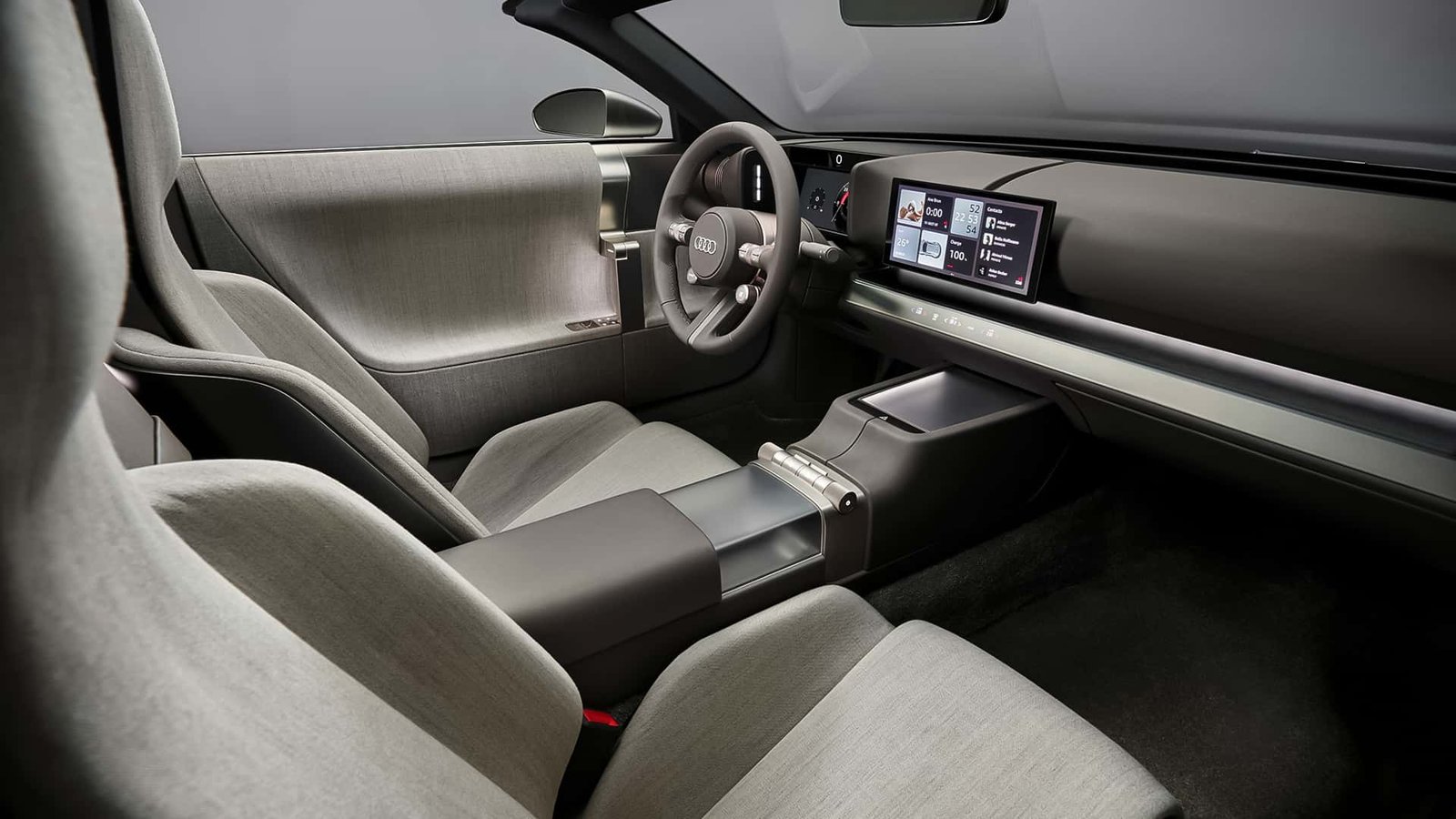
‘You will be surprised by the so-called ‘standard cars’, how many elements you will find in these. The reduced interior, the mechanical haptic feedback, the round steering wheel, the material quality.’
The next A3 is part of Audi’s broader effort to rebuild its reputation for interior quality. The company has openly acknowledged that its cabins haven’t recently lived up to the standards associated with the four-ring badge. This admission comes as a result of sustained criticism of Audi’s drop in quality over the past decade, especially in its cars’ cabins. Among major decisions taken by new CEO Gernard Döllner, Audi appointed a fresh leadership team including Massimo Frascella as the brand’s new chief creative officer, and brought Rouven Mohr back into the role of chief technical officer.
The ‘Radical Next’ Philosophy: A New Direction for Audi
Audi’s new design philosophy, dubbed “Radical Next,” drives the basic aesthetic through fundamental elements first revealed on the Concept C in 2025 and set to be shared across all Audi models. Core to this are details such as the four-part front and rear lights, the single-frame grille’s clean square shape, and fresh wheel designs. But it goes deeper than that—there’s a new focus on cleaner body surfaces and a complete overhaul of the interior experience.
Audi’s technical boss Rouven Mohr describes flagship models like the Nuvolari and Concept C as a “North Star” for the brand. These exotic vehicles establish what Audi should stand for in terms of design and quality, and the company is determined to translate that premium feel down to its entry-level models. “When it was presented, the first A3 [from 1998] had the same perception of quality as the A8 of this time. There was no difference; even the haptics of the switch, everything was the same,” Mohr told Auto Express.
The Problem: Why Audi is Moving Away from ‘Digital Stage’
Audi’s recent “Digital Stage” interior philosophy—characterized by vast screens and the near-total disappearance of physical buttons—has drawn significant criticism. The recently facelifted A3 for 2027 introduced a continuous panoramic display surface merging an 11.9-inch Virtual Cockpit with a 12.8-inch MMI infotainment touchscreen, migrating climate and ventilation controls into the central touchscreen and replacing steering wheel buttons with haptic-feedback touch pads.
This digital-first approach, while visually impressive, has been criticized for sacrificing the tactile quality and intuitive operation that once defined Audi interiors. Chinese media have been particularly vocal about the decline in interior quality, noting that while the A3 retains physical climate controls, there’s more hard plastic than expected, especially in the rear seats—a clear sign of cost-cutting. The brand once had a knack for making even its less expensive cars feel like smaller versions of its high-end vehicles, but that philosophy has been diluted over the years.
Key Quality Upgrades: Materials, Haptics, and the Return of the ‘Click’
Audi’s response is a complete reimagining of what makes an Audi cabin special. The company wants to put material quality, tactile feedback, and intuitive controls back at the heart of its interiors. According to Mohr, the goal is to ensure that even the company’s cheapest car delivers a premium experience that rivals its flagship models.
The Concept C provides a compelling preview of what’s to come. Its interior features a “reduced” design philosophy that prioritizes clean surfaces, high-quality materials, and mechanical haptic feedback. The round steering wheel, precision-machined window switches, and door handles with satisfying heft all point to a return to the tactile quality that Audi enthusiasts have been longing for.
The Nuvolari and Concept C Effect: A ‘North Star’ for the A3
Both the Nuvolari and Concept C serve as “North Star” vehicles for the entire Audi brand. These limited-production models aren’t just halo cars; they’re testbeds for design language, material choices, and ergonomic solutions that will eventually trickle down to volume models like the A3. The next A3 will adopt key elements from these flagship vehicles, including the reduced interior architecture, premium material selections, and the focus on mechanical feedback.
Rebalancing the Cabin: Physical Controls vs. Digital Screens
The next A3 is expected to retain substantial digital displays—it’s simply a reality of modern automotive design. However, Audi is reconsidering how much of the cabin should be dominated by screens. If the Concept C is any indication, the company may have found the ideal ratio between traditional switchgear and digital interfaces.
Mohr has emphasized that the goal isn’t to eliminate screens entirely but to strike a better balance. The new approach will feature a more thoughtful integration of physical controls for frequently used functions like climate control, audio volume, and drive mode selection, while screens handle infotainment and vehicle settings. This hybrid approach aims to deliver the best of both worlds: modern connectivity with intuitive, tactile operation.
Under the Skin: The MQB Platform, Engines, and Diesel’s Fate
The fifth-generation A3 will continue to ride on the Volkswagen Group’s versatile MQB platform, which also underpins the VW Golf and Skoda Octavia. While the platform itself is proven, Audi is expected to implement significant modifications to improve ride quality, handling, and overall refinement. These changes are crucial for maintaining the premium character that sets the A3 apart from its mainstream counterparts.
On the powertrain front, the next A3 will feature a range of gasoline engines with mild-hybrid technology. The first Audi to embrace the new interior approach will be the A4 E-Tron electric sedan coming in 2028, with the next A3 likely to follow by the decade’s end. It’ll stick to combustion engines, though diesel is unlikely to survive past the current generation. With emissions regulations getting stricter and gas-hybrid powertrains becoming more efficient, there’s little reason for diesel to continue in small cars.
The Competitive Landscape: How the A3 Stacks Up
The compact luxury segment has become increasingly competitive, with the BMW 1-Series and Mercedes A-Class offering strong alternatives. Both rivals have invested heavily in interior quality and technology, raising the bar for what buyers expect from a premium compact car.
Audi’s strategy to differentiate the A3 through superior material quality and tactile experience is a direct response to these competitive pressures. While the 1-Series focuses on driving dynamics and the A-Class emphasizes tech-forward interiors with its MBUX system, Audi aims to carve out a niche by delivering flagship-level quality in a compact package. This approach harkens back to the original A3’s formula—a smaller car that felt like a premium vehicle in every way.
The PressNova Take: What This Means for the Compact Luxury Segment
Audi doesn’t need to reinvent the A3. It needs to remember why people wanted an A3 in the first place. The original car wasn’t revolutionary because it had an enormous screen or an app store buried somewhere in the infotainment system. It felt special because Audi managed to bring a convincing slice of its larger, more expensive cars into a compact package.
That philosophy seems to have been diluted over the years. If Audi really does bring back better materials, satisfying switchgear, proper tactile feedback, and a more thoughtful mix of physical and digital controls, the next A3 could be a far more compelling posh hatchback/sedan. And honestly, that’s the kind of quality upgrade we’d take over another screen any day.
The irony is that Audi may have to look backward to move forward. By revisiting the design philosophy that made the original A3 so successful and applying modern technology in a more thoughtful way, Audi could create a compact luxury car that truly stands out in an increasingly homogenized segment.
Frequently Asked Questions
Q: When will the next-generation Audi A3 be released?
The fifth-generation A3 is expected to arrive by the end of the decade, likely in 2028 or 2029, following the debut of the A4 E-Tron in 2028.
Q: Will the new A3 still use the MQB platform?
Yes, the next A3 will continue to use the Volkswagen Group’s MQB platform, shared with the VW Golf and Skoda Octavia, though with modifications for improved refinement.
Q: Is diesel being discontinued for the A3?
While not officially confirmed, diesel engines are unlikely to survive past the current generation due to stricter emissions regulations and the increasing efficiency of gasoline-hybrid powertrains.
Q: Will the new A3 have more physical controls?
Yes, Audi’s CTO has confirmed that the next A3 will feature more physical controls with mechanical haptic feedback, moving away from the current over-reliance on touchscreens.
Q: How does the new A3 compare to the BMW 1-Series and Mercedes A-Class?
The new A3 aims to differentiate itself through superior material quality and tactile experience, offering flagship-level quality in a compact package—a return to the original A3’s formula.