A California man arrested with a guillotine in his truck at the Supreme Court faces criminal charges after US Capitol Police discovered the 6-foot-tall execution device parked illegally near the nation’s highest judicial building.
- Suspect: Philan-Tam-Duy Le, 35, of Julian, California
- Charge: Carrying a dangerous weapon (guillotine) in a restricted area under D.C. Code § 22-4504
- Location: Pickup truck illegally parked outside US Capitol, across from Supreme Court
- Discovery: Spotted around 3 p.m. ET on Aug. 25, 2026
- Travel: Suspect drove from California to Washington, D.C.
- Brother’s Statement: Guillotine was likely a “symbol of disapproval” over politics; suspect disliked President Trump and Gov. Newsom
- Congress Status: US Congress was in recess at the time of the incident
- Court Status: Le appeared in Superior Court on Aug. 26; preliminary hearing set for Sept. 15, 2026; bail set at $50,000
- Vehicle Search: Police found no additional weapons or explosive materials during search of the truck
- Device Construction: Guillotine appeared to be newly constructed, approximately 6 feet tall with a blade; no evidence of prior use
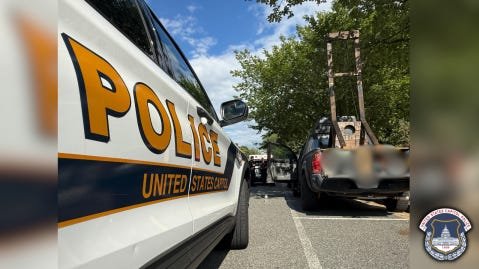
Philan-Tam-Duy Le, 35, of Julian, California, was taken into custody after police spotted the large wooden and metal device in the bed of his pickup truck, which was reportedly parked illegally outside the Capitol building across from the US Supreme Court. The arrest occurred around 3 p.m. ET on Aug. 25, according to a US Capitol Police news release. Police confirmed Le had driven to the nation’s capital from California, though investigators continue examining his background to determine his motives.
The guillotine—a device historically associated with execution by decapitation—immediately raised alarms given its location near two of the most heavily secured government buildings in the United States. Capitol Police officers responded to the scene after observing the suspicious vehicle and its unusual cargo. The suspect was charged with carrying a dangerous weapon under D.C. Code § 22-4504, a statute that prohibits the possession of dangerous weapons in restricted areas and carries penalties of up to five years in prison and fines of up to $25,000 for violations in federal zones.
Law enforcement officials are working to piece together Le’s journey from Southern California to Washington, D.C., and what may have motivated him to transport the execution device across the country. At the time of the arrest, Congress was in recess, meaning fewer legislators were present in the Capitol complex, though security protocols remained fully active around the Supreme Court and surrounding federal buildings. Capitol Police confirmed that a thorough search of Le’s vehicle revealed no additional weapons, explosives, or threatening materials, though investigators continue analyzing his electronic devices.
For official information on US Capitol Police operations and security protocols, visit the US Capitol Police official website. For historical context on the guillotine’s role in capital punishment, refer to the Britannica encyclopedia entry on the guillotine.
Who is Philan-Tam-Duy Le? The California Man Behind the Guillotine
Le, a 35-year-old resident of Julian—a small mountain town in San Diego County—remains something of an enigma as investigators delve into his background. The suspect’s brother, Kelvin Le, spoke with the Los Angeles Times following the arrest, expressing surprise at the situation while offering insight into his brother’s mindset. According to Kelvin Le, the guillotine was likely intended as a “symbol of disapproval” rather than a functional weapon. The brother also revealed that Philan-Tam-Duy Le had been gradually becoming more politically outspoken in recent months, though he had never previously expressed violent intentions.
Kelvin Le revealed that his brother “was unhappy with the state of politics” and held negative views toward both President Donald Trump and California Governor Gavin Newsom. However, the brother also emphasized that he did not believe Philan-Tam-Duy Le would harm anyone, suggesting the act was more about political expression than an actual threat of violence. The brother’s comments paint a picture of a man frustrated with the political system but not necessarily driven by violent intent. Investigators are currently examining Le’s social media history, which reportedly contains posts critical of government policies but no explicit threats toward specific officials.
As of the morning of Aug. 26, Le remained in custody at the D.C. Department of Corrections facility. He appeared before a Superior Court judge on Aug. 26 for an initial hearing, during which bail was set at $50,000. A preliminary hearing has been scheduled for Sept. 15, 2026. Le has not yet retained legal counsel, though public defender services have been offered. Court records indicate this is Le’s first criminal offense, with no prior arrests or convictions on his record. Authorities have not released additional details about his employment history, though public records suggest he worked in construction and as a handyman in the San Diego area.
Julian, California, where Le resides, is a rural community approximately 60 miles northeast of San Diego, known for its apple orchards and Gold Rush-era history. The suspect’s decision to transport a guillotine from this remote town to the heart of Washington, D.C., suggests premeditation and raises questions about whether he acted alone or had any accomplices. Investigators have confirmed that no other individuals have been identified as co-conspirators at this time.
Guillotine Construction: Newly Built Device Shows No Signs of Prior Use
Forensic examination of the guillotine has revealed significant details about its construction and potential purpose. According to sources familiar with the investigation, the device appeared to be newly constructed rather than an antique or historical replica. The guillotine stands approximately 6 feet tall, constructed from pine wood and fitted with a metal blade. Investigators have found no evidence that the device had been used previously, nor any blood residue or biological materials that would suggest prior deployment.
Capitol Police officials, speaking on condition of anonymity, indicated that the device appeared to be a functional but crudely constructed replica, capable of operating as a guillotine but likely not intended for actual use. The blade, while sharp, was not professionally honed, and the release mechanism was described as “rudimentary.” These findings suggest the device was more symbolic than operational, though its presence near the Supreme Court still constituted a serious security breach.
Investigators are attempting to determine where and when Le constructed the device. Sources indicate that materials consistent with the guillotine’s construction—pine lumber, metal brackets, and a pre-fabricated blade—have been traced to hardware stores in Southern California. Le reportedly purchased these materials over a two-week period in early August, suggesting a planned construction timeline rather than an impulsive act.
Guillotine History: The Symbolism Behind the Execution Device
The guillotine carries profound historical and symbolic weight, originating in France during the late 18th century. Invented in 1792, the device became the primary instrument of execution during the French Revolution’s Reign of Terror, a period marked by mass executions of perceived enemies of the revolution. According to Britannica, the guillotine was used to execute thousands of people, including King Louis XVI and Queen Marie Antoinette, making it one of history’s most potent symbols of revolutionary justice and political upheaval.
The device’s design—a tall wooden frame with a heavy, angled blade that drops to sever the victim’s head—was intended to provide a more “humane” method of execution compared to previous practices. However, its association with the brutal excesses of the French Revolution transformed it into a symbol of terror and political violence. The guillotine remained France’s official method of capital punishment until 1981, with its last use occurring in 1977—just four years before the country abolished the death penalty entirely.
In modern times, the guillotine has been adopted by various political movements and protest groups as a symbol of resistance against perceived tyranny or government overreach. Its appearance outside the US Supreme Court—the nation’s highest judicial authority—carries unmistakable connotations of anger toward the legal and political establishment. Whether Le intended this symbolism or simply chose the device for its shocking visual impact remains a central question in the ongoing investigation.
Supreme Court Security and the Rising Tide of Political Threats
The arrest comes amid heightened security concerns surrounding federal buildings in Washington, D.C., particularly the US Supreme Court and Capitol complex. In recent years, threats against members of Congress and federal judges have increased significantly, with the US Capitol Police reporting a steady rise in concerning incidents. According to official data, threats against Congress members increased by 57% between 2023 and 2025, a trend that has prompted enhanced security measures throughout the Capitol Hill area.
Security around the Supreme Court has been particularly tight following several high-profile incidents, including protests that have occasionally turned confrontational. The court’s location, directly across from the Capitol building, creates a security corridor that requires constant monitoring. The fact that Le was able to park his vehicle containing such a conspicuous device near these buildings will likely prompt reviews of security protocols and surveillance measures. Capitol Police have not indicated whether any personnel have been disciplined in connection with the security lapse.
Capitol Police have not disclosed whether Le made any threats or attempted to enter any restricted buildings. The charge of carrying a dangerous weapon in a restricted area suggests that the device itself—regardless of Le’s intentions—constituted a violation of federal law. Legal experts note that the distinction between political expression and criminal conduct often hinges on context, location, and intent, all factors that will be examined as Le’s case proceeds through the court system. Similar prior incidents near the Supreme Court include a 2024 case where an individual was arrested for possessing a machete outside the building, resulting in a conviction for weapons possession.
Legal Analysis: First Amendment Rights vs. Weapons Charges
The intersection of First Amendment protections and weapons charges presents a complex legal question in Le’s case. Legal experts consulted by PressNova News emphasize that while political expression is constitutionally protected, the location and nature of the expression can determine its legality. The Supreme Court and Capitol grounds are designated as restricted zones where federal law imposes strict limits on items that can be brought near sensitive government buildings.
Attorney Michael Stern, a former legal counsel for the US House of Representatives, explained: “The First Amendment protects speech and symbolic expression, but it does not protect the possession of dangerous weapons in restricted federal zones. The question here is whether the guillotine qualifies as a weapon or as protected symbolic speech. The courts will likely consider factors such as intent, functionality, and the potential for harm.”
Legal analysts note that Le’s defense may center on the argument that the guillotine was not intended as a weapon but rather as a political statement protected under the First Amendment. However, the location—directly outside the Capitol and Supreme Court—complicates this defense, as federal law imposes strict limits on items that can be brought near sensitive government buildings. The fact that Le drove from California with the device suggests premeditation, which could weigh against any claim of spontaneous political expression. The U.S. Attorney’s Office for the District of Columbia, which is prosecuting the case, has not commented on whether they will pursue additional charges related to interstate transportation of weapons or threats against federal officials.
Comparable cases, such as the 2023 arrest of an individual carrying a replica firearm near the Capitol, have resulted in convictions for weapons possession even when the defendant claimed political protest. These precedents suggest that Le faces an uphill legal battle, though the unique nature of the guillotine as a weapon may present novel legal questions for the court to consider.
Court Appearance and Next Steps in the Legal Process
Le appeared in Superior Court for the District of Columbia on Aug. 26, where he faced a judge for his initial presentment hearing. During the proceeding, the court officially read the charges against him—carrying a dangerous weapon in a restricted zone under D.C. Code § 22-4504—and informed him of his rights. Prosecutors requested that Le remain in custody pending trial, citing the serious nature of the offense and the fact that he traveled across the country with the device.
The judge set bail at $50,000, which Le was unable to post. He remains in custody at the D.C. Department of Corrections facility. A preliminary hearing has been scheduled for Sept. 15, 2026, at which time prosecutors will present evidence to establish probable cause for the charges. If the court finds sufficient evidence, the case will proceed to a grand jury for potential indictment. Legal experts anticipate that the case could take several months to resolve, particularly if Le’s defense pursues First Amendment arguments that may require extensive briefing and potentially appellate review.
A spokesperson for the U.S. Attorney’s Office declined to comment on the case, citing the ongoing investigation. The U.S. Capitol Police have also declined to release additional details, though officials confirmed that the investigation into Le’s background and potential motives remains active. The public defender’s office has been appointed to represent Le, though attorneys have not yet filed any motions or entered a formal plea.
Family Speaks Out: Brother Says Guillotine Was “Symbol of Disapproval”
Kelvin Le, the suspect’s brother, has emerged as the primary voice offering insight into the arrest and its possible motivations. In comments to the Los Angeles Times, Kelvin Le described his brother as someone frustrated with the political system, expressing particular disdain for President Trump and Governor Newsom. However, he emphasized that he did not believe his brother intended to harm anyone, characterizing the guillotine as a “symbol of disapproval” rather than a weapon of violence. Kelvin Le also expressed shock at his brother’s actions, stating that Philan-Tam-Duy Le had never previously engaged in behavior that would suggest a capacity for violence.
The brother’s comments suggest a level of political frustration that, while not uncommon in contemporary American discourse, manifested in an alarming and highly visible way. The choice of a guillotine—a device historically associated with executing political figures—raises questions about whether Le was sending a specific message about the current political leadership or simply expressing general discontent in a dramatic fashion. Family members have indicated that Le had been increasingly isolated in recent months and had spent considerable time on political websites and forums, though they did not believe he had joined any extremist groups.
Investigators are likely examining Le’s social media history, travel records, and any written manifestos or online communications that might shed light on his intentions. The brother’s characterization of the act as symbolic could factor into Le’s legal defense, though legal experts caution that the location and nature of the act may outweigh any claims of peaceful expression. The family has not indicated whether Le had any history of mental health issues or prior encounters with law enforcement, though they have expressed a desire to support him through the legal process.
Incident Timeline: How Events Unfolded Near the Supreme Court
According to official accounts and witness statements, the incident unfolded rapidly on the afternoon of Aug. 25. At approximately 2:45 p.m. ET, a Capitol Police officer on routine patrol noticed a pickup truck illegally parked near the intersection of First Street and East Capitol Street, directly across from the Supreme Court building. The officer observed what appeared to be a large wooden structure in the truck bed and approached to investigate.
Upon closer inspection, the officer identified the structure as a guillotine and immediately alerted supervisory personnel. Additional units were dispatched to the scene, and the area was secured by 3:15 p.m. The suspect, Philan-Tam-Duy Le, was located near the vehicle and taken into custody without incident. During the initial interview, Le reportedly stated that the device was a “political statement” and did not resist arrest.
By 4 p.m., the scene had been fully secured, and investigators began processing the vehicle. The guillotine was photographed, documented as evidence, and removed from the truck by approximately 6 p.m. The area remained closed to pedestrian traffic for several hours while investigators conducted a thorough search of the vehicle and surrounding area. No other suspicious items were located during the search.
Frequently Asked Questions
What specific charges does Philan-Tam-Duy Le face?
Le has been charged with carrying a dangerous weapon in a restricted zone under D.C. Code § 22-4504. This charge carries penalties of up to five years in prison and fines up to $25,000. The statute prohibits possessing weapons in designated federal areas, including the US Capitol and Supreme Court grounds.
When is Le’s next court appearance?
Le is scheduled for a preliminary hearing on Sept. 15, 2026, in Superior Court for the District of Columbia. At that hearing, prosecutors will present evidence to establish probable cause for the charges. If the court finds sufficient evidence, the case may proceed to a grand jury for potential indictment.
Was the guillotine functional or just a replica?
Forensic examination revealed the guillotine was a newly constructed device, approximately 6 feet tall, made from pine wood with a metal blade. While it appears functional, investigators found no evidence of prior use, and the construction was described as “rudimentary.” The device’s classification as a dangerous weapon by Capitol Police reflects its potential capability rather than its intended use.
Why did the suspect choose the Supreme Court specifically?
The suspect’s exact motivations remain under investigation, though his brother indicated Le was unhappy with the political system and disliked President Trump and Governor Newsom. The Supreme Court represents the highest judicial authority in the nation, making it a symbolic location for political protest. Investigators are continuing to examine Le’s background and potential motives, including his social media activity and travel history.
Is it legal to own a guillotine in the United States?
Owning a guillotine itself is not inherently illegal in the United States. However, transporting such a device near federal buildings or into restricted areas can violate weapons laws. The legality depends on context, location, and intent, with the charge against Le stemming specifically from possession of the device in a restricted federal zone rather than ownership alone. Antique guillotines are occasionally found in museums and private collections without legal issue.
Can Le’s actions be protected under the First Amendment?
Legal experts note that while the First Amendment protects political expression, it does not protect the possession of dangerous weapons in restricted federal zones. The courts will likely consider factors such as intent, functionality, and the potential for harm. The location of the incident—directly outside the Capitol and Supreme Court—complicates any First Amendment defense, as federal law imposes strict limits on items that can be brought near sensitive government buildings.
Were any other weapons found in the vehicle?
According to Capitol Police, a thorough search of Le’s vehicle revealed no additional weapons, explosives, or threatening materials. Investigators did not find firearms, ammunition, knives, or other dangerous items beyond the guillotine itself. Electronic devices found in the vehicle are currently being analyzed for potential evidence related to Le’s intentions and planning.
What is the federal jurisdiction in this case?
The case falls under federal jurisdiction because the offense occurred on federal property—specifically, the grounds of the US Capitol and Supreme Court. The U.S. Attorney’s Office for the District of Columbia is prosecuting the case, and Le is being held in federal custody. The U.S. Capitol Police, which is a federal law enforcement agency, conducted the initial investigation and made the arrest.