The Dolphins QB’s attempt to motivate his team became an internet sensation for all the wrong reasons.
In the high-stakes world of the NFL, every moment is scrutinized, especially those just before kickoff. For Miami Dolphins quarterback Tua Tagovailoa, a pre-game tunnel speech intended to ignite his team instead sparked a firestorm of online mockery. The moment, caught on live television, was meant to be a rallying cry but quickly devolved into a confusing, awkward monologue that left teammates and viewers bewildered. What was meant to project leadership instead became a viral meme, a perfect example of how Tua Tagovailoa’s speech backfires in the most public way imaginable.
As the Dolphins prepared to take the field, cameras zoomed in on Tagovailoa, the designated leader tasked with delivering a final dose of motivation. However, what came out was a jumbled series of words that seemed disconnected from the typical fire-and-brimstone speeches fans are accustomed to. It appeared pre-game nerves or the weight of a difficult season got the best of him. His attempt at leadership came across as forced and uncertain, a far cry from the confident commander a team needs. In a season where every small victory matters, this verbal fumble set a tone of confusion rather than conviction.
The Anatomy of a Viral Meltdown
What exactly went wrong? While the intent was clearly to inspire, the execution was flawed. The words lacked clarity, the delivery was hesitant, and the message was lost in translation. Almost immediately, social media platforms erupted. Clips of the speech were shared, dissected, and remixed into countless memes. Fans and critics alike questioned what he was trying to communicate, with many concluding it was a sign of a leader under immense pressure. This instance where Tua Tagovailoa’s speech backfires serves as a cautionary tale for athletes in the digital age, where every public utterance can be amplified and scrutinized within minutes.
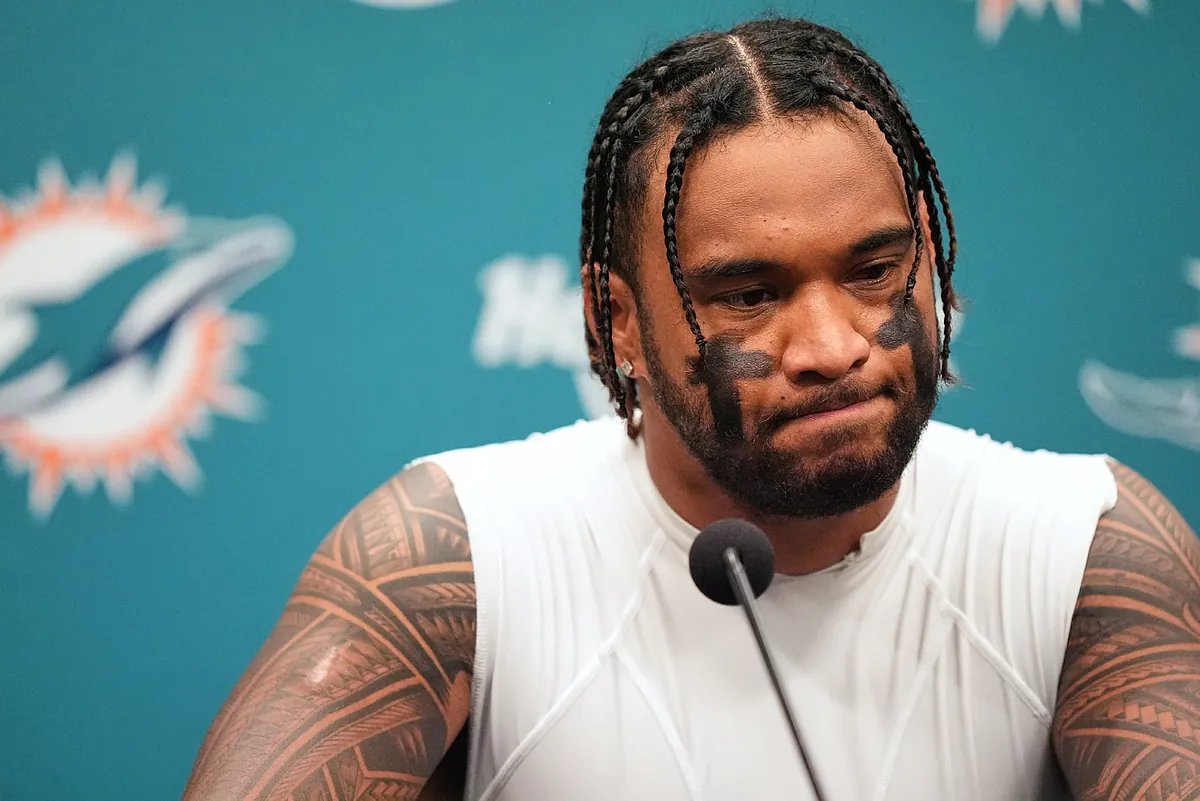
The online reaction was swift and merciless. From comedic voice-overs to side-by-side comparisons with famous motivational speeches from movies, the internet had a field day. While humor was the primary response from the general public, for Dolphins fans, the moment was tinged with concern. It raised questions about the quarterback’s ability to lead the team out of its current slump and whether he possessed the commanding presence needed for the role. The incident highlights a modern reality: a leader’s influence is no longer confined to the locker room but is judged in the court of public opinion.
More Than Just an Awkward Quote
Behind the laughter and memes lies a much deeper issue for the Miami Dolphins. The team is struggling, staring at a 2-7 start to the 2025 season, their worst since 2021. Tagovailoa’s personal statistics paint a picture of inconsistency: while he has completed a respectable 67.9% of his passes for 1,779 yards and 15 touchdowns, he has also thrown 11 interceptions. In this context, the failed speech is not an isolated gaffe but a potential symptom of a larger problem. When a team is losing, every action from its leader is magnified. The fact that Tua Tagovailoa’s speech backfires so publicly only adds fuel to an already burning fire of doubt.
This isn’t the first time questions have been raised about the team’s internal dynamics. Earlier in the season, Tagovailoa made comments about teammates skipping meetings, suggesting a potential fraying of the locker room culture. His clumsy attempt at a motivational speech could be seen as an effort to mend those cracks and unite a team in desperate need of a spark. He is trying, in his own way, to be the catalyst for a turnaround. However, leadership requires more than just effort; it demands effective communication and an ability to inspire confidence, two things that were glaringly absent in that tunnel.
A Fandom Divided
The reaction among the Dolphins’ fanbase has been mixed. For some, it was a harmless, laughable moment—a simple case of a player stumbling over his words under pressure. They argue that on-field performance is all that matters and that a pre-game speech has little bearing on the outcome. For others, however, it was a deeply concerning sign. This group sees the incident as a reflection of a lack of control and poise from their franchise quarterback. For a team striving for sustained excellence, such moments of public failure can erode fan confidence and create a narrative of dysfunction that is hard to shake.
“In times of crisis, true leaders don’t just speak—they communicate with clarity and conviction. When the message is lost, confidence often follows.”
This incident also puts the Dolphins’ front office under scrutiny. As the team struggles, questions arise about whether they have the right leadership in place, both on the field and on the sidelines. A moment like this, while seemingly minor, contributes to an overall perception of a team adrift. The Dolphins need wins, but they also need to project an image of stability and control, something that was shattered by this viral moment.
Pressure Mounts Ahead of Bills Matchup
The timing of this incident could not be worse. The Dolphins are slated to face their division rivals, the Buffalo Bills, who boast a formidable 5-2 record. Going into such a critical game, the last thing a team needs is a distraction or a reason to doubt its leader. The Bills are known for their disciplined play and ability to capitalize on opponents’ weaknesses. Any sign of chaos or disunity within the Dolphins’ ranks will be exploited. The complete NFL Week 9 schedule shows this is a crucial matchup for Miami’s season.
Now, the pressure on Tagovailoa is higher than ever. He must not only perform well on the field but also demonstrate the leadership that was absent in the tunnel. His ability to bounce back from this public embarrassment and lead his team effectively against a top-tier opponent will be a true test of his character and resilience. A strong performance could help erase the memory of the awkward speech, while another loss could solidify the narrative that the team is in turmoil. The reality is that while Tua Tagovailoa’s speech backfires, his performance on the field will be the ultimate verdict.
| Aspect | Intended Outcome | Actual Outcome |
|---|---|---|
| Team Motivation | Ignite passion and focus. | Created confusion and awkwardness. |
| Leadership Image | Project confidence and control. | Appeared nervous and unprepared. |
| Public Perception | Show a united team front. | Sparked widespread mockery and memes. |
| Media Narrative | Focus on game preparation. | Shifted focus to leadership questions. |
Turning the Page or a Sign of Things to Come?
Ultimately, speeches don’t win football games. Actions on the field do. Tagovailoa and the Dolphins have an opportunity to render this entire episode irrelevant with a strong showing against the Bills and in the weeks to come. A string of victories and confident play would quickly replace the narrative of the failed speech with one of resilience. Conversely, continued struggles will only reinforce the idea that the tunnel incident was a sign of a deeper malaise. The fact that Tua Tagovailoa’s speech backfires could become a defining, negative moment of his season if the team doesn’t turn things around.
For now, the quarterback must find a way to lead through his actions. Every flawless pass, every touchdown drive, and every composed moment in the pocket will do more to inspire his team than any pre-game speech ever could. The team might even look to other franchises for inspiration, analyzing potential trade deadline solutions to bolster their roster. The path forward for Miami is on the gridiron, not in the tunnel. The message from this incident is clear: leadership is under the microscope, and in the NFL, results are the only currency that truly matters.
What are your thoughts on this viral moment? Was it an overblown reaction to a simple mistake, or a legitimate cause for concern for the Dolphins? Share your opinions in the comments below and share this article with other fans to get their take.
Frequently Asked Questions (FAQ)