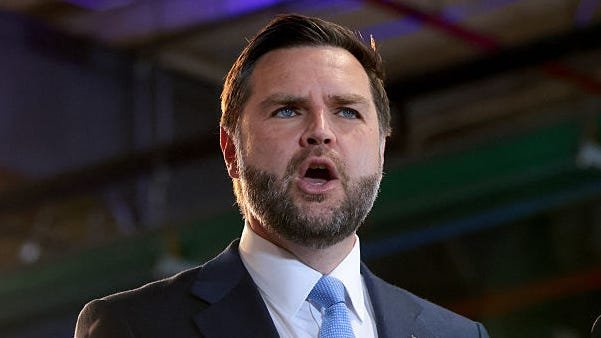
Vice President JD Vance called Canada a “state” during a Maine rally on Aug. 24, quickly dismissing the remark as a “Freudian slip” as trade tensions between the neighboring countries reached a boiling point.
- Freudian Slip: Vance referred to Canada as a “state” during a rally in Maine, calling it an accidental slip of the tongue.
- Trade Context: The remark came hours after President Trump doubled tariffs on Canadian autos to 50%, and days after trade talks collapsed on Aug. 21.
- Military Claim: Vance asserted Canada would be vulnerable to invasion without US protection, which he cited as justification for trade pressure.
- Canadian Response: Prime Minister Mark Carney announced retaliatory tariffs on US goods up to 50%, set to take effect Sept. 8.
- Political Fallout: Trump has repeatedly referred to Canada as the “51st state,” adding fuel to the diplomatic fire.
- Maine Impact: Local businesses fear economic disruption as tariffs target key exports including seafood and agricultural products.
“We have to remember Canada is a state — sorry, Freudian slip,” Vance said to laughter from the crowd. “That was actually an accident.” The vice president’s comments came as the US and Canada found themselves locked in a rapidly escalating trade dispute that threatens one of the world’s largest economic relationships, with bilateral trade in goods and services totaling approximately $1.6 trillion annually.
Vance’s gaffe occurred only hours after President Donald Trump announced he was doubling tariffs on imported automobiles and auto parts from Canada to 50%, further inflaming tensions that had already reached a critical point over the weekend. The remarks also followed Trump’s long-standing pattern of referring to Canada as the “51st state,” a rhetorical tactic he has used repeatedly since taking office. In a March 2026 interview, Trump referred to Canadian Prime Minister Mark Carney as the “future Governor of Canada,” language that Canadian officials have condemned as disrespectful to their nation’s sovereignty.
“Canada is a country that has underinvested in its military that quite literally would get invaded by a foreign country were it not for the umbrella of protection provided by the United States of America,” Vance continued, pivoting from his slip to defend the administration’s hardline stance on trade. The vice president then accused Canada of applying “ridiculous tariffs and other non-tariff duties on Maine products coming into Canada,” vowing that the US would “fight back against unfair trade practices, whether it’s coming from China or Canada.”
Dr. Elena Rodriguez, a political psychologist at Georgetown University who studies political gaffes and their impact on public perception, told PressNova News that Freudian slips in political discourse are rarely accidental. “When a public figure makes what they claim is a slip of the tongue, it often reveals underlying attitudes or subconscious beliefs that they may not have intended to voice publicly,” Rodriguez explained. “Given that this slip aligns perfectly with the administration’s broader rhetoric about Canada’s status and sovereignty, it’s more likely a moment of candor than a genuine error.”
Vance’s “Freudian slip” drew immediate attention given the broader context of Trump’s repeated suggestions that Canada should become the 51st US state. A March 2026 poll by Angus Reid Institute found that 56% of Canadians wanted their government to take a hard line and make no further concessions in talks with the United States, with more than 70% supporting stronger retaliatory trade measures. The same poll showed that 68% of Canadians viewed Trump’s “51st state” comments as a serious threat to Canadian sovereignty.
For official context on the current US tariff regime, visit the Office of the US Trade Representative enforcement page and Canada’s Global Affairs Canada trade disputes portal for the latest policy updates.
Trade Talks Collapse: What Happened?
Vance’s comments came after a tumultuous weekend for the US-Canada relationship that saw trade negotiations crumble at the eleventh hour. The 50% tariffs on certain Canadian goods took effect just after midnight on Aug. 22, following Trump’s three-day pause that had initially raised hopes of a last-minute deal.
Canadian Prime Minister Mark Carney posted to social media on Aug. 21 that he was suspending trade negotiations and ordering Canadian negotiators to return to Ottawa, blaming the US for introducing last-minute changes that were “unfair, uneconomic, and called into question the reliability of any deal.” Carney said US proposals restricted Canada’s ability to pursue trade arrangements with other countries and undermined protections for French language, culture, and national sovereignty — a reference to provisions that would have limited Quebec’s ability to maintain its distinct cultural policies.
US officials, however, blamed the breakdown on late demands from Canada, with US Trade Representative Jamieson Greer telling Fox News that no further trade talks are scheduled with Canada. “They’ve always had the best deal, and they still would have an even better deal, but they didn’t want that,” Greer said. Analysts noted that US tariff rates on heavy-duty trucks emerged as a key sticking point in the negotiations, with the US demanding lower American tariffs in exchange for reduced Canadian trade barriers on dairy and poultry products.
Political analysts in both countries have weighed in on the collapse. Dr. Sarah Chen, a trade policy expert at the University of Toronto’s Munk School of Global Affairs, described the breakdown as “a seismic shift in the bilateral relationship.” Chen noted that “the specific proposals rejected included demands that Canada align its agricultural standards with US norms and accept increased American access to its protected dairy market — concessions that were politically impossible for Carney to accept given domestic opposition.” Meanwhile, former US Trade Representative Robert Lighthizer, who negotiated the original USMCA, expressed frustration with the current administration’s approach, telling The Wall Street Journal that “tariffs on our closest ally make no strategic sense when we’re trying to counterbalance China’s influence.”
US Tariffs and Canadian Retaliation
The tariffs apply to just over 5% of Canadian exports to the United States, covering approximately $20 billion worth of goods. They target items such as wine, dairy, hockey sticks, cement, and auto parts, and do not qualify for preferential treatment under the US-Mexico-Canada free-trade agreement. Carney said the initial tariffs applied to about $28 billion worth of goods, with exempted categories including energy, potash, fish, and critical minerals.
Canada struck back on Tuesday with retaliatory tariffs on US goods ranging between 15% and 50%, set to take effect Sept. 8. The measures impact industries including steel, aluminum, dairy, electronics, and appliances, with about 7.3% of Canada’s imports from the United States affected at 2024 levels. The largest share of the new measures targets steel and aluminum, with duties doubling from 25% to 50%. Canada also announced a CA$7.5 billion (US$5.4 billion) aid package for firms and workers affected by the dispute.
Canadian Finance Minister François-Philippe Champagne said the retaliatory tariffs match US levels, with 15%, 25%, or 50% rates applied to different categories of goods. “This is an unprecedented challenge imposed on Canada. But Canada will meet the moment,” Champagne said, adding that “I think what Canadians can see this morning is that we stand united.”
Ontario’s business community has voiced strong concern. Rocco Rossi, President of the Ontario Chamber of Commerce, told the Financial Post that “this escalating trade war is devastating for manufacturers on both sides of the border.” Rossi cited the auto industry, noting that “some components cross the border six to eight times before a vehicle is assembled, and each crossing now faces new tariffs that will inevitably be passed on to consumers.” Similarly, the Canadian Chamber of Commerce released a statement warning that “retaliatory measures will harm businesses and workers who had nothing to do with the political decisions that triggered this dispute.”
Maine’s Economic Stake in the Dispute
Vance’s choice of Maine as the venue for his remarks was significant, as the state’s economy is deeply intertwined with Canadian trade. Maine exported approximately $2.1 billion worth of goods to Canada in 2025, making Canada its largest export market. Key exports include seafood, particularly lobster and scallops, agricultural products like potatoes and blueberries, and paper products.
Local business owners have expressed alarm at the escalating tensions. John Peters, a fourth-generation lobsterman from Portland, told the Bangor Daily News that “Canada buys about 60% of our catch. If these tariffs stick, we’re looking at losing our biggest customer.” Similarly, Linda Wentworth, who operates a potato farm in Aroostook County, noted that “we ship over 100,000 tons of potatoes to New Brunswick every year. If that stops, we don’t have anywhere else to send that volume.”
The Maine Lobster Dealers’ Association has called on both governments to de-escalate the dispute, warning that the industry supports over 5,000 jobs in the state. Mike McKeon, the association’s president, stated that “we are caught in a political crossfire that has nothing to do with our industry. We need our leaders to find a solution before permanent damage is done to these livelihoods.”
What This Means for Americans
For American consumers, the escalating trade dispute will likely translate into higher prices across multiple sectors. The auto industry, where Canadian-made components are integral to US manufacturing, will see cost increases passed to consumers. According to the Peterson Institute for International Economics, the tariffs could add an average of $1,200 to the cost of a new vehicle manufactured in North America.
Home builders and consumers planning renovations should also expect price increases. The 50% tariffs on Canadian cement and lumber will drive up construction costs, with the National Association of Home Builders estimating that new home prices could rise by 5-7% as a result. Additionally, dairy products from Canada — including specialty cheeses and butter — will face higher import costs, affecting both consumers and restaurant businesses that rely on Canadian dairy imports.
Small business owners who import Canadian goods are already feeling the squeeze. A survey by the US Chamber of Commerce found that 67% of small businesses with Canadian supply chains are considering price increases to offset tariff costs, while 42% are exploring alternative suppliers outside North America.
Political Fallout and USMCA Future
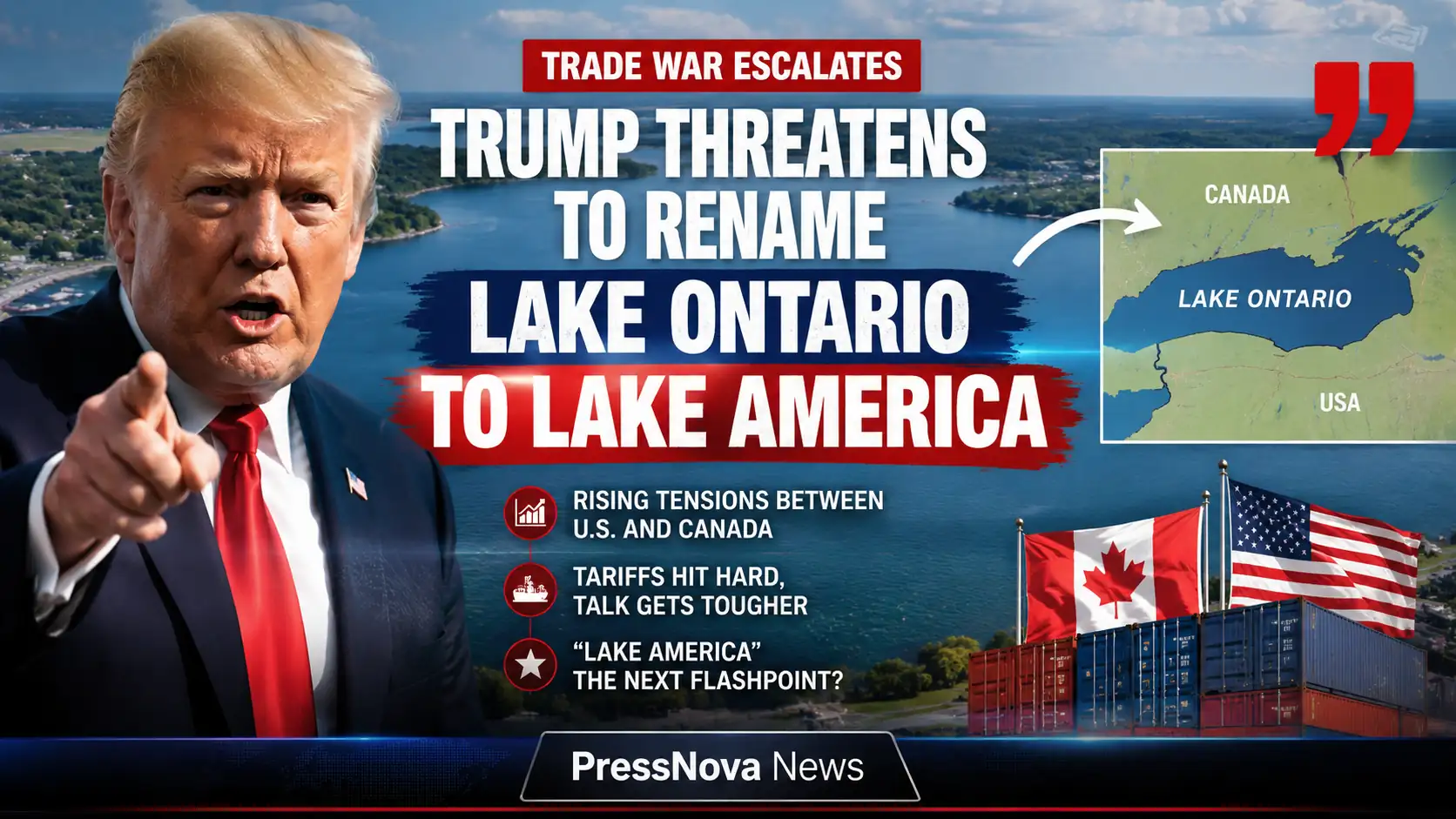
Trump intensified the confrontation Monday, telling Canadian leaders to “fall in line” or face consequences “far WORSE” than existing tariffs, and threatening new 50% tariffs on Canadian vehicles, auto parts, and steel starting in 2027. He also added a provocative twist Tuesday, saying the United States was giving “serious consideration” to renaming Lake Ontario “Lake America” in a feud with Ontario Premier Doug Ford, who had threatened an electricity export surcharge.
Ontario Premier Doug Ford, whose province is home to Canada’s auto manufacturing industry, responded bluntly by telling the US president to “kiss my ass” and suggesting that Canada should charge the US extra for its oil, gas, electricity, and critical minerals. Ford’s comments caught Trump’s attention, with the president posting on Truth Social: “Someone should get these clowns to ‘fall in line’ or, the consequences for Canada will be far WORSE!”
The White House has not officially commented on Vance’s “Freudian slip” beyond the vice president’s own dismissal. Press Secretary Karoline Leavitt did not address the remark during the daily briefing, focusing instead on the administration’s trade policies. However, sources familiar with the matter told Reuters that the administration does not see the slip as a diplomatic incident, viewing it as consistent with Trump’s established rhetoric.
Carney, meanwhile, argued that the decades-long expansion of economic integration between Canada and the United States is effectively over. He accused Washington of using economic integration as a weapon and said “we will not return to our old relationship.” Carney has accelerated efforts to reduce Canada’s economic dependence on the United States and diversify trade relationships, seeking expanded markets in Europe and elsewhere.
Trump’s latest tariff threats have also raised questions about the future of the USMCA trade pact with both Canada and Mexico. Both countries have expressed interest in extending the agreement, but the US has indicated it will not renew the pact in its current form. The agreement is set for review in 2027, and analysts warn that the current dispute could undermine any renewal efforts.
Businesses on both sides of the border are already feeling the strain. Michael Howard II, owner of a furniture business in Warren, Michigan, told the Associated Press that tariffs will hamper the “ability for us to put food on the table for our family” and affect “the ability for us to give back to our community.” Howard said, “To say that we don’t need Canada is just disingenuous. It’s dishonest. And it’s just absolutely not truthful. We need our neighbor, but also they need us.”
Meanwhile, Carney has vowed to fight back “dollar for dollar,” saying, “An attitude at the negotiation table that Canada is a subsidiary of the United States is not something we’re going to accept.” As both sides dig in, the coming weeks will likely bring more clarity—and potentially more escalation—in one of the most significant trade disputes between the longtime allies in decades.