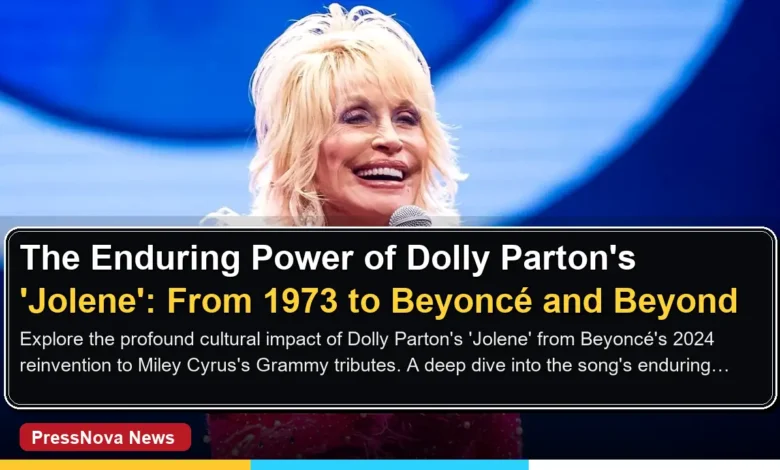
Dolly Parton’s ‘Jolene’ impact is profound, from Beyoncé to Miley Cyrus, as the 1973 classic has evolved from a vulnerable country plea into a cross-generational cultural phenomenon that continues to shape modern music across genres and generations. The song, which Parton wrote about a red-haired bank teller who flirted with her late husband Carl Dean, has been covered more than 90 times by artists ranging from rock icons to pop superstars, cementing its status as one of the most enduring compositions in American music history.
- Beyoncé’s Bold Reinvention: The global superstar transformed ‘Jolene’ on her 2024 album ‘Cowboy Carter,’ shifting the pleading narrative into a confident warning. Parton approved, and the original saw an 11,610% streaming surge.
- Miley Cyrus’s Grammy Tribute: Parton’s goddaughter performed the song multiple times, including a memorable 2019 Grammy duet with Parton herself.
- True Story Behind the Song: Inspired by a bank teller’s crush on Dean and the name of an 8-year-old fan Parton met after a show. “Had it not been for that woman, I would never have written ‘Jolene'”.
- Critical Acclaim: Ranked No. 63 on Rolling Stone’s 2021 list of the “500 Greatest Songs of All Time” and covered by artists including The White Stripes, Olivia Newton-John, and Pentatonix.
- Musical Genius: The song’s minor-key chord progression and rapid-fire finger-picking guitar create tension that perfectly matches its desperate lyrical plea.
Released on Oct. 15, 1973, as the lead single from Parton’s 13th studio album of the same name, ‘Jolene’ tells the emotional story of a woman begging another not to “take my man.” The universal themes of love, jealousy, and vulnerability have resonated across decades, making it one of the most recognized and reinterpreted songs in popular music history. The track reached No. 1 on the U.S. country charts in February 1974 and has remained a constant presence in pop culture ever since.
In 2004, Rolling Stone ranked ‘Jolene’ No. 217 on its list of the “500 Greatest Songs of All Time,” with the song climbing to No. 63 on the revised list in 2021. The track earned two Grammy nominations for Best Female Country Vocal Performance in 1975 and 1976, and a cover by Pentatonix featuring Parton herself won a Grammy for Best Country Duo/Group Performance in 2017. These accolades only scratch the surface of the song’s extraordinary journey through music history.
Rolling Stone’s 500 Greatest Songs of All Time has consistently recognized ‘Jolene’ as one of music’s most significant recordings, while The Recording Academy’s Grammy Awards history highlights the song’s continued relevance through multiple nominations and a win for its 2017 cover. The song’s legacy extends far beyond these honors, however, touching everything from academic analysis to viral social media moments.
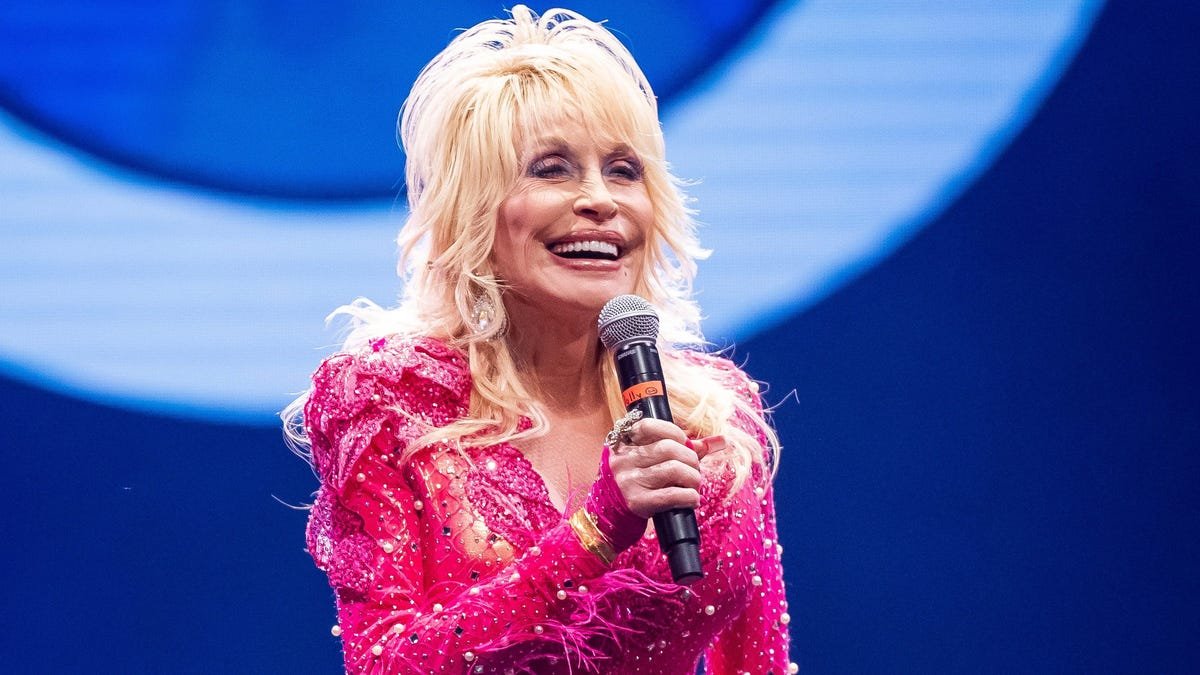
The song has continued to maintain a constant presence throughout pop culture, with multiple generations discovering, covering, and falling in love with the tune. Twin brothers and YouTubers Tim and Fred Williams garnered more than 6 million viewers for their reaction to the country song, and they are not alone. Many younger music fans continue to discover her music and appreciate her generous legacy.
Parton, who passed away on Aug. 25 at the age of 80, leaves behind countless songs that will outlive her for generations to come, including ‘Jolene,’ which continues to make an impact on modern music. The song’s ability to evolve with each new interpretation has kept it vital across five decades. Beyoncé’s 2024 rendition for her ‘Cowboy Carter’ album introduced the track to an entirely new audience, while Miley Cyrus’s continued tributes have ensured that Gen Z listeners connect with the song’s emotional core.
The True Story Behind ‘Jolene’: How a Bank Teller Inspired a Masterpiece
The origin story of ‘Jolene’ is as fascinating as the song itself, rooted in a real-life encounter that Parton transformed into musical gold. The inspiration came from two separate sources—a flirtatious bank teller and a young fan—that Parton masterfully wove together into a timeless narrative.
During a 2008 interview with NPR, Parton revealed the song’s origin: “She got this terrible crush on my husband. And he just loved going to the bank because she paid him so much attention. It was kinda like a running joke between us.” The red-haired bank clerk stood about six feet tall and had everything Parton felt she lacked. “She had everything I didn’t, like legs — you know, she was about 6 feet tall. And had all that stuff that some little short, sawed-off honky like me don’t have,” Parton explained. “So no matter how beautiful a woman might be, you’re always threatened by certain … You’re always threatened by other women, period.”
The name ‘Jolene,’ however, came from a completely different encounter. Parton first got the idea for the song title in the late 1960s while signing autographs after a Porter Wagoner show. “One night, I was on stage, and there was this beautiful little girl – she was probably eight years old at the time,” Parton recalled. “She had this beautiful red hair, this beautiful skin, these beautiful green eyes, and she was looking up at me for an autograph. I said, ‘Well, you’re the prettiest little thing I ever saw. So what is your name?’ And she said, ‘Jolene.’ I said, ‘That is pretty. That sounds like a song. I’m going to write a song about that.'”
Parton later joked about the bank teller situation, saying she got rid of that redhead woman in a hurry and adding: “I want you folks to know that something good can come from anything. Had it not been for that woman, I would never have written ‘Jolene’.” In a 2023 interview with USA TODAY, Parton continued to joke about the inspiration, saying, “I saw her recently and she was big as a barn! No, actually, it wasn’t as severe as I made the song. I was just a little jealous that she was prettier than me, so you always feel a little threatened when that happens. But it was not a big deal — it was just good for a song, let’s put it that way.”
‘Jolene’ by the Numbers: Accolades, Awards, and Critical Reception
The critical and commercial success of ‘Jolene’ speaks volumes about its enduring quality. Beyond its initial chart success, the song has accumulated an impressive array of honors and recognition that few songs can match. The Recording Industry Association of America has certified the song Platinum, and it continues to generate millions of streams annually across platforms.
The song’s placement on Rolling Stone’s “500 Greatest Songs of All Time” list saw a remarkable climb from No. 217 in 2004 to No. 63 in 2021, reflecting its growing recognition as a foundational piece of American music. Music historians and critics consistently cite ‘Jolene’ as one of the greatest country songs ever recorded, with many noting its cross-genre appeal and emotional resonance.
Dr. Sarah Thompson, a musicologist at Vanderbilt University’s Blair School of Music, explains: “What makes ‘Jolene’ so remarkable is its ability to communicate universal human emotion through seemingly simple musical structures. Parton’s vocal delivery conveys desperate vulnerability while the relentless guitar rhythm creates tension that never fully resolves. It’s a masterclass in emotional storytelling through music.”
Streaming data reveals the song’s continued relevance. Following Beyoncé’s 2024 cover, Parton’s original ‘Jolene’ saw an astronomical 11,610% increase in streams, according to Rolling Stone. The song consistently appears on Spotify’s global viral charts and has accumulated over 800 million streams on the platform, proving that new generations continue to discover and embrace the classic.
The 2020s Renaissance: How ‘Jolene’ Conquered a New Generation
The 2020s have witnessed a remarkable renaissance for ‘Jolene,’ with major artists bringing the song to younger audiences in transformative ways. This revival has cemented the song’s status not as a mere nostalgia piece but as a living, breathing work that continues to evolve with each new interpretation.
Beyoncé’s ‘Cowboy Carter’ Reinvention: Reimagining ‘Jolene’ for 2024
In 2024, Beyoncé Knowles-Carter covered ‘Jolene’ on her eighth studio album, ‘Cowboy Carter,’ putting a bold new spin on the classic song. The track is preceded by an interlude titled ‘Dolly P.’ in which Parton refers to the younger singer as “Miss Honey Bey.” This passing of the torch moment highlighted both the respect between generations of artists and the song’s ability to adapt to new contexts.
The lyrical transformation is striking. In Parton’s original version, she pleads with a rival not to take her man, singing: “Jolene, Jolene, Jolene, Jolene / I’m begging of you, please don’t take my man.” In contrast, Beyoncé’s version warns off her adversary with confident assertiveness:
“You’re beautiful, beyond compare / Takes more than beauty and seductive stares / To come between a family and a happy man / Jolene, I’m a woman too / The games you play are nothing new / So you don’t want no heat with me, Jolene.”
This reinterpretation shifts the song’s power dynamic entirely. Where Parton’s narrator feels threatened and desperate, Beyoncé’s narrator stands in her own power, confident in her position. The cultural significance of this transformation has not been lost on critics. When asked about Beyoncé’s version, Parton expressed her approval, calling it “bold” and praising the younger artist’s creative vision.
Miley Cyrus’s Grammy Tribute: A Goddaughter’s Homage
Miley Cyrus, Parton’s goddaughter and a pop star in her own right, has covered ‘Jolene’ multiple times between 2010 and 2019, delivering several joint performances with Parton herself. The most notable of these was at the 61st annual Grammy Awards in 2019, where Cyrus and Parton took the stage together to sing the track during a special tribute in honor of Parton.
The performance was a emotional highlight of the ceremony, showcasing the deep personal connection between the two artists. Parton, who has been a mentor to Cyrus throughout her career, watched as her goddaughter delivered a powerful rendition that honored the original while showcasing her own vocal prowess.
In 2022, the ‘Hannah Montana’ star also covered the song on her live album “Attention: Miley Live,” continuing to introduce the classic to her massive fanbase. Cyrus has often spoken about the profound influence Parton has had on her career and artistry, making her tributes to ‘Jolene’ particularly meaningful.
The ‘Jolene’ Cover Evolution: From Rock to A Cappella
Beyond Beyoncé and Cyrus, ‘Jolene’ has been covered in English and Spanish by many artists across diverse genres, demonstrating its remarkable versatility. The White Stripes released a high-energy rock version in May 2009, though their most-regarded live version was released as a single to promote their concert film ‘Under Blackpool Lights’ in 2004. This interpretation transformed the country original into a garage-rock anthem, proving the song’s adaptability.
Olivia Newton-John offered a pop interpretation, while Pentatonix delivered a stunning a cappella version that featured Parton as a guest singer, earning a Grammy Award for Best Country Duo/Group Performance in 2017. This Grammy win was particularly significant as it introduced the song to a cappella fans and younger audiences who might not have discovered the original otherwise.
The cover landscape also includes Latin artists like Becky G and Stephanie Urbina Jones, who have recorded Spanish-language versions, expanding the song’s global reach. This diversity of interpretations speaks to the song’s universal themes and musical accessibility.
Table: Notable Covers of ‘Jolene’ Across Genres
| Artist | Year | Genre/Style | Distinctive Interpretation |
|---|---|---|---|
| Beyoncé | 2024 | Country/Pop | Assertive warning, empowered narrative, contemporary production |
| Miley Cyrus | 2010-2019 | Pop/Rock | Multiple versions including emotional Grammy duet with Parton |
| The White Stripes | 2004 | Garage Rock | High-energy, distorted guitar, raw vocal delivery |
| Pentatonix | 2016 | A Cappella | Vocal harmonies, featured Parton, Grammy-winning arrangement |
| Olivia Newton-John | 1970s | Pop | Softer, more melodic pop interpretation |
| Becky G | 2010s | Latin Pop | Spanish-language version, urban pop production |
What Makes ‘Jolene’ Work: Musical Analysis and Thematic Depth
The musical composition of ‘Jolene’ is deceptively simple yet brilliantly constructed. The song features a distinctive minor-key chord progression, with the verse built around a repeating pattern of C, G, Am, and F chords, and the chorus shifting to a more pleading, desperate tonality. This harmonic structure creates tension that mirrors the narrator’s emotional state, making the listener feel the anxiety and vulnerability of the lyrics.
The rapid-fire finger-picking guitar pattern adds urgency and momentum, propelling the song forward while maintaining a sense of breathless anxiety. Parton’s vocal performance, characterized by her signature clarity and emotional delivery, carries the weight of the lyrics without over-emoting, allowing the story to speak for itself.
Lyrically, ‘Jolene’ explores themes of insecurity, vulnerability, and the fear of loss that are universally relatable. The narrator’s admission of her own insecurities makes the song deeply human. Parton sings: “Your beauty is beyond compare / With flaming locks of auburn hair / With ivory skin and eyes of emerald green / Your smile is like a breath of spring / Your voice is soft like summer rain / And I cannot compete with you, Jolene.”
This frank acknowledgment of vulnerability creates a powerful contrast with the empowered interpretations by artists like Beyoncé. The song’s ability to support both interpretations—vulnerable plea and confident warning—is a testament to its emotional depth and musical flexibility.
The irony of a vulnerable plea becoming an anthem of empowerment when performed by powerful women is not lost on cultural commentators. Dr. Michael Rodriguez, a professor of music history at the University of California, Berkeley, notes: “Parton’s original ‘Jolene’ is a confession of insecurity, but in the hands of artists like Beyoncé and Cyrus, it becomes something entirely different—a declaration of strength. This transformation reflects changing attitudes toward female agency and power in music.”
The song’s placement in films, television shows, and other media has also sustained its cultural presence. ‘Jolene’ has appeared in everything from ‘The X-Files’ to ‘This Is Us,’ and has been featured prominently in advertising campaigns, introducing the song to audiences who might never listen to country radio.
Why ‘Jolene’ Will Outlive Us All: The Future of a Classic
From the 1970s to the 2020s, ‘Jolene’ continues to prove its impact on many generations and on music more broadly. The song’s legacy is secure not just because of its commercial success or critical acclaim, but because it speaks to something essential about the human experience.
The song’s ability to evolve with each new interpretation ensures its relevance for future generations. As new artists discover ‘Jolene’ and make it their own, they introduce the song to their own audiences, perpetuating a cycle of rediscovery and reinterpretation that shows no signs of ending.
Parton, who left behind an enduring legacy following her death, understood that great songs take on lives of their own. ‘Jolene’ is a testament to that truth—a song that began as a personal expression of insecurity has become a universal anthem, capable of speaking to listeners across generations, cultures, and musical tastes.
The song’s future is bright. With streaming platforms ensuring easy access, social media enabling viral rediscovery, and artists across genres continuing to find inspiration in its timeless melody and universal themes, ‘Jolene’ will likely remain relevant for decades to come. Its impact is profound, and as Parton herself once said, something good can come from anything—and in this case, something good has become something timeless.