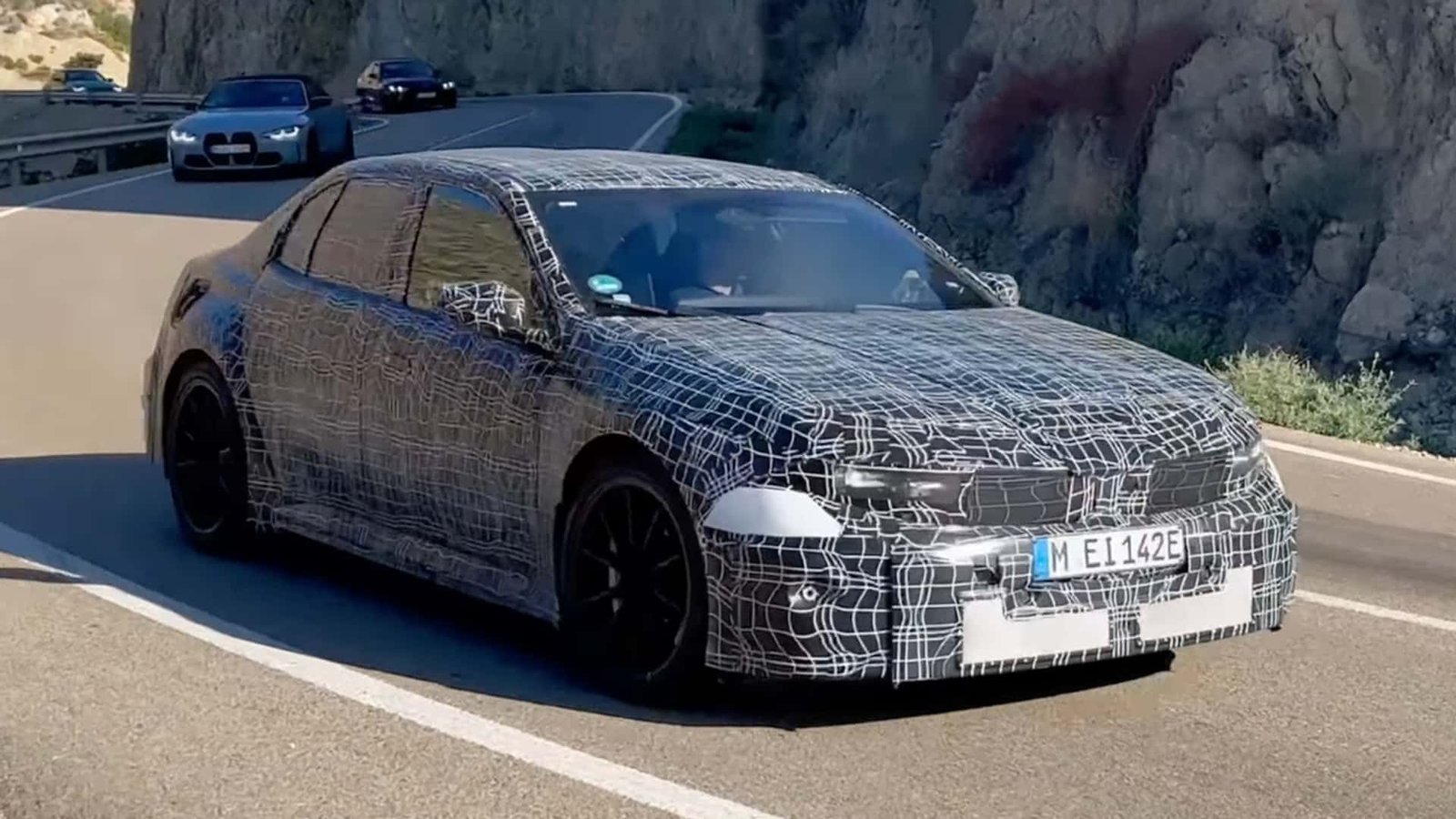
The air crackled with anticipation, not just from the crisp mountain air, but from the low, almost silent hum emanating from the vehicles snaking their way through the Austrian Alps. I was there, camera in hand, along with a handful of other automotive paparazzi, all hoping to catch a glimpse of the future. And what a future it was! We spotted two heavily camouflaged prototypes: an Electric BMW M3 and an Electric BMW X3 M undergoing intense testing. The sun glinted off their disguised body panels, obscuring some details, but there was no hiding the fact that BMW is dead serious about bringing its legendary M performance to the electric vehicle market. I could practically feel the excitement buzzing through the crowd, “Is that really the iM3?” someone whispered beside me, their voice barely audible above the wind. It was a truly surreal moment. Imagine, the roar of the inline-six replaced with the whine of electric motors – a seismic shift in the automotive world, and we were witnessing it firsthand. It wasn’t just about the cars themselves; it was about the signal they sent. BMW, a brand synonymous with gasoline-powered performance, was embracing the electric revolution with open arms. The automotive landscape is changing right before our eyes.
The whispers among the onlookers were a mix of excitement and skepticism. Some hardcore M enthusiasts expressed concern about whether an electric powertrain could truly deliver the raw emotion and visceral experience of a traditional M car. “Will it still have that M soul?” one commenter asked on a forum later that evening. Others were eager to embrace the change, praising BMW for its forward-thinking approach and commitment to sustainability. Regardless of opinion, one thing was clear: the Electric BMW M3 and Electric BMW X3 M are generating a massive amount of buzz. The presence of these prototypes signals a significant shift in BMW’s strategy, and it is a move that is bound to reshape the performance EV landscape. The fact that they were testing these vehicles in such a demanding environment speaks volumes about BMW’s dedication to ensuring that the electric M cars live up to the legendary M badge. My sources inside BMW say that these cars are not just about straight-line speed; they are being engineered to deliver the same level of precision, agility, and driver engagement that has always defined the M experience.
The development of these electric M models is not just about swapping out an engine for an electric motor. It requires a complete rethinking of the vehicle’s architecture, chassis, and electronics. BMW engineers are working tirelessly to optimize the weight distribution, handling, and responsiveness of these cars to ensure that they deliver a truly exceptional driving experience. And judging by the intensity of the testing we witnessed, they are leaving no stone unturned. The prototypes were pushed to their limits on winding mountain roads, subjected to extreme temperatures, and rigorously evaluated in various driving conditions. It was a grueling test of endurance, but it was also a testament to BMW’s commitment to excellence. The camouflage did its job to hide most of the design cues, but the aggressive stance and widened wheel arches hinted at the potent performance that lies beneath. The wheels looked huge! And the brakes… well, let’s just say they looked capable of stopping a small moon.
The Electric BMW M3: A New Era of Performance
The Electric BMW M3, tentatively dubbed the iM3, represents a bold step into the future for one of the most iconic performance sedans in automotive history. Ditching the traditional internal combustion engine for a cutting-edge electric powertrain, the iM3 aims to redefine what it means to be a high-performance sedan in the electric age. Expect blistering acceleration, instant torque, and a refined driving experience unlike anything the M3 has offered before. But the big question is, can it capture the hearts of petrolheads accustomed to the roar and rumble of a traditional engine?
What We Know So Far
Although details remain scarce due to the heavy camouflage, certain aspects of the Electric BMW M3 are starting to emerge. Rumors suggest a dual-motor setup, delivering all-wheel drive and potentially over 700 horsepower. The battery pack is expected to be a high-capacity unit, providing a competitive range to alleviate range anxiety. One BMW insider, who requested anonymity, stated, “We are aiming for a range that will make even the most skeptical drivers forget about gasoline.”
- Powertrain: Dual-motor, all-wheel drive
- Estimated Horsepower: 700+ hp
- Battery Capacity: High-capacity, aiming for competitive range
- Expected Launch: 2026
The Sound of Silence (or Not?)
One of the biggest challenges for electric performance cars is replicating the emotional connection that drivers have with the sound of a traditional engine. BMW is reportedly working on a bespoke sound system for the Electric BMW M3 that will simulate the roar of an engine, albeit in a futuristic and synthesized way. “We want to create a soundscape that is both exciting and informative, giving drivers a sense of the car’s performance and capabilities,” said a BMW engineer involved in the project. Whether this synthesized sound will be enough to satisfy the purists remains to be seen. I remain… skeptical.
The Electric BMW X3 M: Electrifying the SUV Segment
Parallel to the development of the iM3, BMW is also working on an electric version of its high-performance SUV, the Electric BMW X3 M, likely to be called iX3 M. This model aims to bring the M experience to the electric SUV segment, offering a compelling combination of performance, practicality, and sustainability. With its spacious interior, versatile cargo area, and exhilarating acceleration, the Electric BMW X3 M is poised to be a game-changer in the electric SUV market.
Performance and Practicality Combined
Just like the Electric BMW M3, the Electric BMW X3 M is expected to feature a dual-motor setup and all-wheel drive, delivering impressive performance capabilities. While specific power figures are still under wraps, expect acceleration times that rival those of its gasoline-powered counterpart. The battery pack is likely to be similar in capacity to the iM3, providing a respectable range for daily commutes and longer road trips. From what I’ve heard, BMW is targeting a 0-60 mph time of under 4 seconds for the iX3 M. That’s insane!
A Luxurious and Sustainable Interior
The interior of the Electric BMW X3 M is expected to be a blend of luxury and sustainability, with premium materials and advanced technology throughout. Recycled materials and eco-friendly manufacturing processes are likely to be employed, reflecting BMW’s commitment to environmental responsibility. The cabin will also feature a large touchscreen display, a digital instrument cluster, and a host of driver-assistance systems.
Challenges and Opportunities
The transition to electric performance cars presents both challenges and opportunities for BMW. One of the biggest challenges is maintaining the emotional connection that drivers have with traditional M cars while embracing the new technologies and capabilities of electric powertrains. Another challenge is managing the weight of the battery pack, which can negatively impact handling and agility.
Overcoming the Challenges
BMW is addressing these challenges through innovative engineering and design solutions. Lightweight materials, advanced suspension systems, and sophisticated battery management systems are being employed to optimize the performance and handling of the Electric BMW M3 and Electric BMW X3 M. The company is also investing heavily in research and development to improve battery technology, increase energy density, and reduce charging times.
Seizing the Opportunities
The electric revolution also presents a unique opportunity for BMW to redefine the M brand and attract a new generation of customers. Electric powertrains offer instant torque, silent operation, and zero emissions, which are all appealing features for environmentally conscious drivers. The Electric BMW M3 and Electric BMW X3 M have the potential to become iconic vehicles in their own right, setting a new standard for electric performance cars.
The Road Ahead
The Electric BMW M3 and Electric BMW X3 M are still in the early stages of development, and there is much that remains unknown. However, the spy video and the leaked information provide a tantalizing glimpse into the future of the M brand. As BMW continues to push the boundaries of electric performance, we can expect to see even more exciting developments in the years to come.
The future of the M brand is electric, and it’s looking bright. This is a pivotal moment in automotive history, and I, for one, am excited to see what BMW has in store for us. The question isn’t *if* electric cars will be fast, but *how* they will redefine the driving experience. I suspect, that it will surprise us.
Frequently Asked Questions
| When are the Electric BMW M3 and X3 M expected to be released? | While no official release date has been confirmed, current estimations place the launch of both the Electric BMW M3 (iM3) and Electric BMW X3 M (iX3 M) sometime in 2026. This timeline is subject to change based on ongoing development and testing. |
| What are the potential benefits of an electric M car? | An electric M car offers several potential benefits, including instant torque for rapid acceleration, reduced environmental impact with zero tailpipe emissions, and a potentially lower cost of ownership due to reduced maintenance and fuel expenses. It also opens the door to new performance enhancements through sophisticated electric drivetrain management. |
| How will BMW implement electric technology into the M series while maintaining the “M” driving experience? | BMW is focusing on several key areas to maintain the M driving experience in its electric models. These include optimizing weight distribution, developing advanced suspension systems, and creating bespoke sound experiences to replace the traditional engine note. They are also fine-tuning the electric powertrain to deliver the responsiveness and agility that M car enthusiasts expect. |
| What are the main challenges BMW faces in developing electric M cars? | Some of the main challenges include managing the weight of the battery pack, replicating the emotional connection of a traditional engine, and ensuring the battery range is sufficient for both daily driving and track performance. Additionally, maintaining the thermal management of the battery and motors during high-performance driving is crucial. |
| What does the future hold for electric performance vehicles at BMW? | The future looks promising for electric performance vehicles at BMW. The iM3 and iX3 M are just the beginning. BMW is committed to investing heavily in electric technology and expanding its electric M lineup. We can expect to see more electric M models in the coming years, as well as advancements in battery technology, performance, and charging infrastructure. |
Important Notice
This FAQ section addresses the most common inquiries regarding the topic.