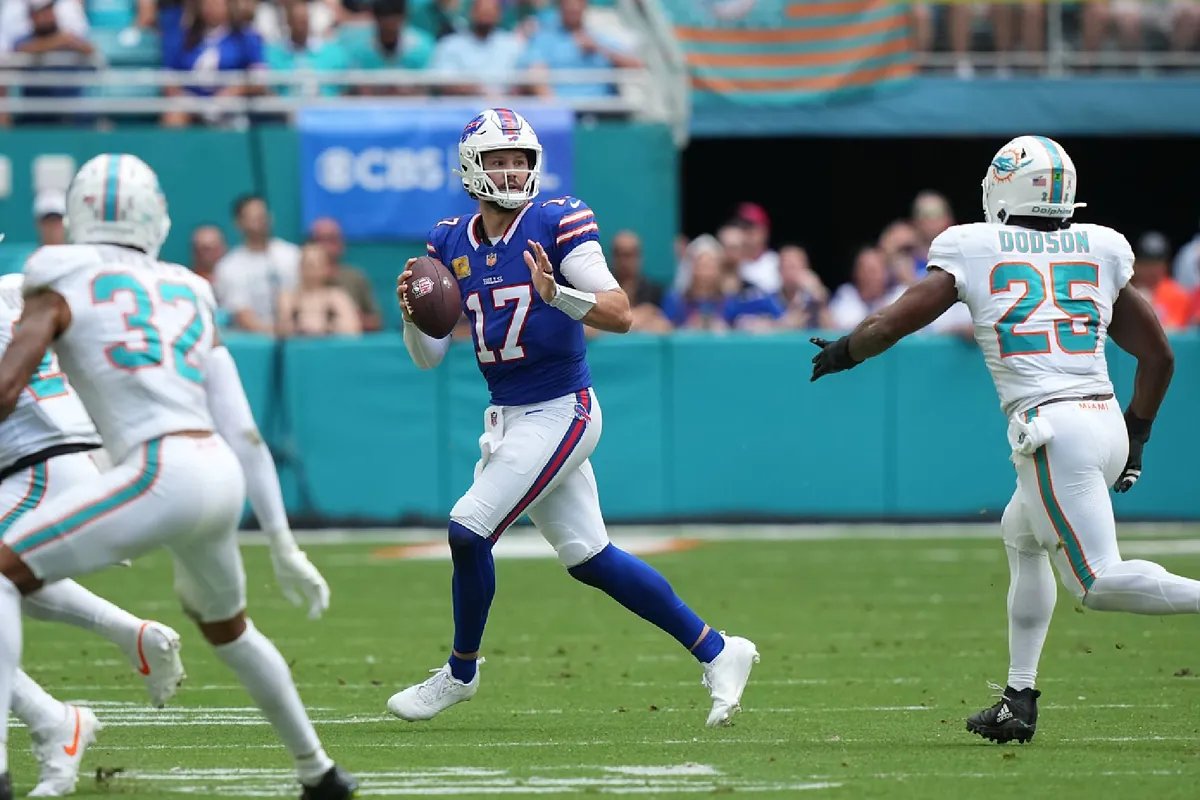
The air inside Highmark Stadium, usually a cauldron of electric energy and unwavering belief, felt strangely heavy, almost suffocating, as the final whistle shrieked its mournful tune. It wasn’t just the chill of a late autumn evening in Orchard Park; it was the icy grip of profound disappointment, a visceral, gut-wrenching feeling that permeated every corner of the stadium. You could practically taste the collective disbelief. The Buffalo Bills, a team often heralded as a Super Bowl contender, had just suffered an absolutely embarrassing loss to the Dolphins, a performance so riddled with unforced errors and missed opportunities that it left fans speechless. But it wasn’t just the faithful in the stands feeling the sting. Down on the field, quarterback Josh Allen, the very heart and soul of this franchise, was a picture of raw, barely contained fury. His usually stoic demeanor had cracked, revealing a tempest brewing beneath the surface. It was evident to anyone watching closely that this wasn’t just about losing a game; it was about the way they lost it, the fundamental breakdowns, the lack of execution that seemed to plague them at every critical juncture. This wasn’t the kind of frustration that dissipates with a good night’s sleep; this was the kind that festers, creating palpable tension in the locker room, a dangerous undercurrent threatening to destabilize their entire season.
I remember watching the replays, and the camera lingered on Allen for a moment too long after that final, dismal play. His helmet was off, his face flushed, and you could almost hear the words he wasn’t saying. It was a moment of profound vulnerability, yet also one of undeniable anger. He wasn’t just upset; he was incandescent, seething. This wasn’t a quiet simmer; this was a boil over, and everyone who understands the dynamics of an NFL team knows that when your franchise quarterback reaches that point, especially after an embarrassing Bills loss, something fundamental has gone awry. The ripple effect, believe me, is immediate and far-reaching. It’s not just about the scoreboard anymore; it’s about trust, accountability, and the very fabric of team cohesion. And from what we’re hearing, the aftershocks of that game are still vibrating through the Bills organization, suggesting that this particular Dolphins defeat has opened up some significant cracks.
That kind of on-field outburst, even if it’s more expressive body language than shouted words, often signals deeper issues, doesn’t it? It suggests a breaking point, a moment where the weight of expectations, combined with perceived underperformance from those around him, became too much for Josh Allen to bear silently. And honestly, who can blame him? He carries so much of the team’s burden, often willing them to victory with sheer force of will and incredible individual plays. When that effort isn’t matched, or when seemingly simple mistakes undermine monumental efforts, the frustration isn’t just natural; it’s almost inevitable. We’ve seen this before in sports, where a leader’s boiling point becomes a public spectacle, and it always begs the question: what exactly happened behind closed doors, or in this case, on the field and in the immediate aftermath, to push things to this extreme?
The Aftermath: A Storm Brews in Buffalo
The immediate post-game scene was tense, to say the least. Reporters, sensing the unusual atmosphere, pressed Josh Allen for answers. His words, though measured, carried an unmistakable edge. “We didn’t execute,” he stated, his jaw clenched. “Too many penalties, too many mistakes. We beat ourselves out there.” He didn’t point fingers directly, but the implication was clear: a lack of disciplined play and fundamental errors from the team had cost them dearly. This wasn’t the usual post-game platitude; it was a deeply felt critique, delivered with the raw emotion of someone who had poured everything into the game only to see it squandered. One anonymous staffer, who wished to remain unnamed given the sensitivity of the situation, told me, “You could feel it. The air was thick. Josh usually keeps it together, but this time, he was on another level of upset. It wasn’t just a loss; it felt like a betrayal of what they’re capable of.”
Imagine the walk back to the locker room. The deafening silence, punctuated only by the scuff of cleats on concrete, the occasional sigh, or the rustle of equipment. It’s a walk that feels miles long after an embarrassing defeat. And then, once inside, the closed-door discussions. These are the moments that truly test a team’s mettle. Is it a unified front, a shared understanding of what went wrong, and a commitment to fix it? Or is it quiet resentment, defensive postures, and internal blame? From the reports filtering out, it seems the latter is a significant concern. The locker room tension is not merely speculative; it’s a tangible force that coaches and veteran leaders are now undoubtedly scrambling to address. This isn’t just about a bad game; it’s about the erosion of confidence and the potential fracturing of team spirit when a leader’s patience runs out.
Unpacking the Embarrassing Bills Loss
Let’s talk about the game itself, shall we? It was, in many ways, a microcosm of everything that can go wrong for a highly-touted team. The Bills offense, usually a juggernaut, sputtered at critical moments, failing to convert in the red zone and leaving countless points on the field. Defensive breakdowns led to easy scores for the Dolphins, and the penalty count was simply astonishing. False starts, holding calls, unnecessary roughness – it felt like a highlight reel of what not to do. You have to wonder, were they mentally checked out? Was there a lack of focus? Whatever it was, it wasn’t the Bills team we’ve come to expect. This wasn’t a case of being outplayed by a superior opponent; it felt more like self-sabotage, an uncharacteristic unraveling that left everyone scratching their heads. This particular Dolphins defeat wasn’t just a notch in the loss column; it was a glaring red flag.
I spoke with a former NFL player, now an analyst, who commented, “When a team plays that sloppy, it’s rarely just about physical mistakes. It often points to a breakdown in communication, or even worse, a lack of trust. Quarterbacks, especially elite ones like Josh Allen, depend on their teammates to be where they’re supposed to be, to execute their assignments. When that doesn’t happen consistently, it breeds frustration, and that frustration can quickly morph into resentment. It’s a delicate ecosystem.” The embarrassing Bills loss wasn’t just a single performance; it was a symptom of deeper issues that need urgent attention before they completely derail their championship aspirations. The sheer volume of mental errors suggests a team that might be losing its grip, or at least, one that isn’t fully synchronized.

Rising Tension: Cracks in the Foundation?
The transition from individual frustration to collective locker room tension is a slippery slope. When Josh Allen is furious with teammates, it’s not just about one player being mad. It sends a powerful message. It highlights a perceived disparity in effort or commitment, and that can be a dangerous thing for team chemistry. While some teammates might be galvanized by their leader’s passion, others might feel unfairly targeted or defensive. “It’s a fine line,” another source close to the team confided. “You want your quarterback to be a leader, to hold guys accountable. But if it comes across as too much, or if guys feel like they’re being thrown under the bus, it can backfire. It can create divisions.”
Historically, the Bills have been a tightly-knit group, a hallmark of their recent success. Their brotherhood, their camaraderie, has often been cited as a key factor in their ability to overcome adversity. But what happens when that bond is strained by repeated failures and public displays of frustration? This is the critical juncture the team finds itself in. The tension rises in the locker room not just because of a single loss, but because of the implications of that loss and the leader’s reaction to it. It forces everyone to look inward, to question their own contributions, and perhaps, to question the contributions of others. This kind of internal strife, if not handled deftly, can metastasize and destroy a season from within, far more effectively than any opponent ever could.
The Weight on Allen’s Shoulders
Let’s be honest, being a franchise quarterback in the NFL isn’t just a job; it’s a monumental burden. You’re the face of the organization, the leader on the field, and often, the scapegoat when things go wrong. Josh Allen, with his incredible talent and competitive drive, feels this weight perhaps more acutely than most. He’s been the catalyst for the Bills’ resurgence, consistently making breathtaking plays that defy logic. So, when the team around him falters, especially in critical situations, his frustration is not only justified but perhaps even a necessary expression of his immense passion. He holds himself to an incredibly high standard, and he expects the same from his teammates. When that expectation isn’t met, particularly in an embarrassing Bills loss, the disappointment must be crushing.
Imagine being the guy who has to carry the team, week in and week out. The one who has to pull rabbits out of hats, extend plays, and throw perfect spirals under pressure, only to see a drive stall due to a preventable penalty or a dropped pass. It’s enough to make anyone want to scream. Allen’s on-field outbursts, while jarring to some, are a testament to his competitive fire. He isn’t just playing for a paycheck; he’s playing for the city of Buffalo, for a Super Bowl, and for his legacy. The Dolphins defeat was more than just a defeat; it was a stark reminder that even the most talented quarterback can’t do it all alone, and that reliance on collective execution is paramount. His fury is a plea for his teammates to rise to the occasion, to meet him at his level of commitment.
Coaching Staff’s Dilemma
Head Coach Sean McDermott and his coaching staff now face a delicate, yet crucial, challenge. How do you address the palpable locker room tension without alienating players or undermining Josh Allen’s leadership? It’s a tightrope walk. They need to validate Allen’s frustration while also reassuring the rest of the team and reinforcing a message of unity and collective accountability. This isn’t a situation for finger-pointing; it’s a moment for introspection and strategic intervention. One approach might be to hold individual meetings, addressing specific concerns, and then a larger, team-wide meeting to reaffirm shared goals and expectations. The message must be clear: this team wins and loses together, and everyone needs to step up.
A former NFL coach, speaking on background, explained the complexity: “When your star quarterback blows up, you can’t ignore it. You have to address it head-on. But you also can’t let it fester into a ‘us vs. them’ mentality. McDermott needs to be the unifying force, to remind everyone that they’re on the same side, and that Allen’s passion, though intense, comes from a place of wanting to win. He’ll be emphasizing the ‘we’ in ‘team’ and calling for renewed commitment to fundamentals and discipline. It’s a leadership test for the entire staff.” The stakes are incredibly high, as the handling of this situation could define the rest of the Bills’ season after this embarrassing Bills loss.
Fan Reactions and Media Scrutiny
Buffalo is a football town through and through. The fans are passionate, loyal, and incredibly invested in their team. So, naturally, the reaction to the embarrassing Bills loss to the Dolphins, and especially to Josh Allen’s fury, has been intense. Social media lit up immediately, with a mix of frustration, concern, and calls for accountability. Talk radio lines were jammed with callers debating what went wrong, who was to blame, and what this meant for the team’s Super Bowl hopes. “I mean, I love Josh, but you could tell he was just fed up,” one fan posted online. Another commented, “It’s tough to see your guy so upset, but honestly, I get it. We looked flat out there.”
The national media, of course, has picked up on the story, amplifying the narrative of rising locker room tension. Headlines are speculating about the team’s internal dynamics, questioning their mental fortitude, and wondering if this is the beginning of the end for their championship window. Every dropped pass, every penalty, every missed assignment from that game is being replayed and analyzed, all through the lens of Allen’s visible frustration. This external pressure only adds to the internal challenges, creating a potent cocktail of scrutiny and doubt that the team must navigate. It’s a reminder that in the NFL, every single play, every single game, and especially every single public display of emotion, is magnified a thousandfold.
Looking Ahead: Can the Bills Rebound?
The question now isn’t just about winning the next game; it’s about repairing the fissures that have appeared within the team. Can the Bills use this embarrassing Dolphins defeat as a catalyst for change, a moment to refocus and rededicate themselves to the fundamental principles of disciplined, cohesive football? Or will the tension in the locker room continue to simmer, eventually boiling over and derailing their season? The path forward requires honest conversations, a renewed commitment to individual and collective accountability, and a willingness from every player to set aside ego for the greater good of the team.
Ultimately, the onus is on the leadership – not just Coach McDermott, but veteran players like Von Miller, Micah Hyde, and, of course, Josh Allen himself – to steer the ship through these choppy waters. This isn’t just about X’s and O’s anymore; it’s about psychology, trust, and the intangible bonds that define a true championship contender. If they can emerge from this period of turmoil stronger and more unified, then perhaps this embarrassing Bills loss could be a crucial turning point. If not, if the frustration and tension linger, then this season, which started with such high hopes, could quickly descend into a nightmare. The next few weeks will tell us everything we need to know about the true character and resilience of the Buffalo Bills.
Frequently Asked Questions
| What was the main cause of Josh Allen’s frustration? | Josh Allen’s frustration stemmed primarily from the team’s embarrassing loss to the Dolphins, characterized by a significant number of unforced errors, penalties, and a perceived lack of execution and discipline from his teammates. This accumulation of fundamental mistakes, especially in crucial moments, led to his visible and intense anger. |
| How can a leader’s frustration potentially benefit a team? | While uncomfortable, a leader’s visible frustration can serve as a powerful wake-up call, signaling that the current performance level is unacceptable. It can galvanize some teammates to intensify their effort, hold themselves more accountable, and communicate more effectively, ultimately leading to a renewed focus and improved play if channeled correctly. |
| What steps might the Bills take to address locker room tension? | The Bills’ coaching staff and veteran leaders will likely address the tension through a combination of individual meetings, a frank team-wide discussion, and a renewed emphasis on fundamentals and discipline. The goal will be to foster open communication, reinforce shared goals, and ensure all players feel heard while also accepting collective accountability for their performance. |
| What challenges do teams face when internal tensions arise? | Internal tensions can lead to a breakdown in communication, erosion of trust, and the development of “us vs. them” mentalities within the team. If not managed effectively, it can negatively impact team chemistry, on-field performance, and ultimately derail a season, making it harder to overcome adversity or execute under pressure. |
| How might this incident impact the Bills’ season outlook? | This incident could be a pivotal moment. It could either serve as a necessary shock to the system, prompting the team to regroup, address their issues, and emerge stronger and more cohesive. Alternatively, if the tension festers and remains unaddressed, it could lead to continued struggles, internal divisions, and potentially jeopardize their playoff and championship aspirations. |
Important Notice
This FAQ section addresses the most common inquiries regarding the topic.