The air hung heavy and humid over the test track, a thick blanket of late afternoon haze clinging to the asphalt. A hush had fallen, broken only by the distant chirping of cicadas, but then, a low, guttural growl shattered the stillness. It wasn’t the familiar howl of a modern V8, nor the finely tuned scream of a V10. No, this was something else entirely. It started as a deep, resonant thrum, a sound you felt in your chest more than heard with your ears, vibrating through the very ground beneath your feet. Then, as the throttle opened, it climbed, a raw, mechanical symphony rising in pitch and intensity, an unmistakable, almost primal shriek that sent shivers down my spine. That, my friends, was the sound of a truly extraordinary machine, a testament to audacious engineering: a new air-cooled flat-eight engine, currently under wraps at a company whose name, for now, must remain whispered. It’s a project that flies in the face of conventional wisdom, a defiant roar against the tide of electrification, and honestly, it sounds absolutely, unequivocally amazing. This isn’t just about horsepower figures or lap times; it’s about the soul of driving, about a visceral connection that many believed was lost to the annals of automotive history.
The Audacious Revival: Why a Flat-Eight Now?
In an era dominated by electric vehicles and ever-tightening emissions regulations, the mere whisper of a company developing a new air-cooled flat-eight engine feels like a glorious anachronism, a defiant two-finger salute to the future. Yet, here we are. Why would any modern automotive firm embark on such a seemingly quixotic quest? The answer, as I’ve come to understand, lies in a blend of profound nostalgia, a deep understanding of niche market desires, and an unshakeable belief in the enduring appeal of mechanical artistry.
Think about it. The purest driving experiences often come from cars where you feel truly connected to the machine. Air-cooled engines, particularly the flat-sixes of yesteryear from brands like Porsche, offered that raw, unfiltered feedback. There was no water jacket to dampen the mechanical song, no complex plumbing to add weight and complexity. It was just metal, air, and combustion, creating a symphony unlike anything else. This new endeavor, according to sources close to the project, aims to capture that magic and elevate it. “We saw a gap,” explained a senior engineer, who asked to remain anonymous, during a hushed conversation over coffee. “A gap for those who genuinely miss the character, the personality, that only an air-cooled engine can deliver. It’s not about volume; it’s about intensity, about an experience.”
The company, let’s call them ‘Arion Automotive’ for now, is clearly targeting a clientele that values uniqueness, heritage, and an almost artisanal approach to engineering. They’re not chasing mass production; they’re crafting a statement. This isn’t just an engine; it’s a philosophy, a love letter to internal combustion.
Engineering Genius: Inside the Air-Cooled Flat-Eight
Developing any new engine is a monumental task, but taking on an air-cooled flat-eight engine in the 21st century introduces a whole new layer of complexity. The ‘flat’ configuration, also known as a boxer engine, means the cylinders are horizontally opposed, pushing outward from a central crankshaft. This design inherently leads to a lower center of gravity, which is fantastic for handling and vehicle dynamics – think race cars. The ‘eight’ cylinders mean more power, more torque, and a potentially smoother power delivery than a flat-six, yet still retaining the compact dimensions relative to a V8 or V12.
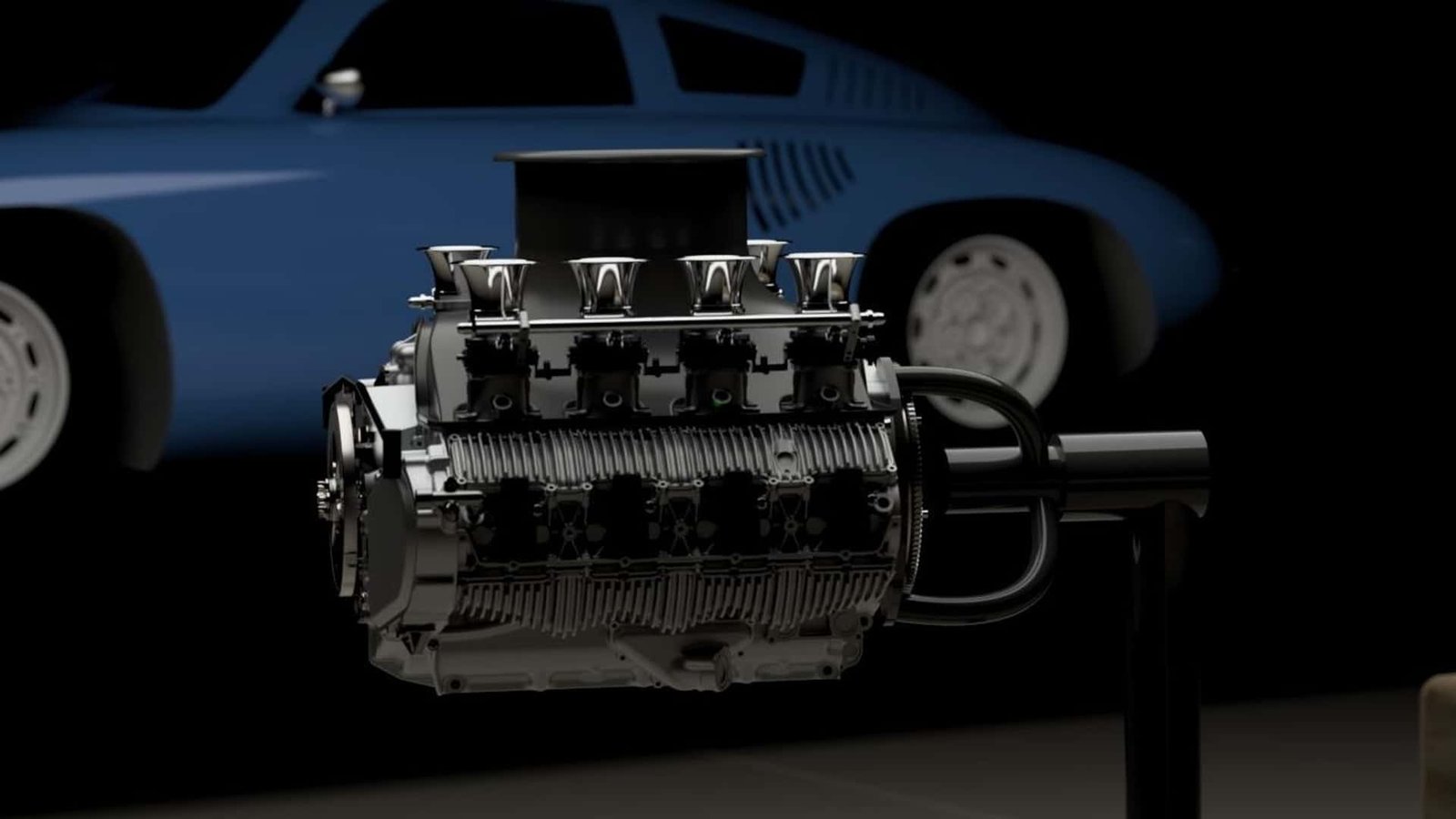
The true marvel, however, lies in the “air-cooled” aspect. Modern engines, even high-performance ones, rely almost exclusively on liquid cooling systems. Why? Because water (or coolant) is incredibly efficient at dissipating heat, allowing for tighter tolerances, higher compression ratios, and better control over engine temperatures. Air-cooling, by contrast, is a far more brutish affair. It relies on fins, airflow, and the sheer volume of air passing over the engine to whisk heat away. This typically means engines run hotter, which can impact durability and performance, and it presents significant challenges for controlling emissions.
Arion Automotive’s approach has been nothing short of brilliant. They’ve leveraged cutting-edge materials science, utilizing lightweight alloys with superior thermal conductivity for the cylinder heads and barrels. Computational Fluid Dynamics (CFD) has played a crucial role, simulating airflow over every fin and crevice to optimize cooling efficiency. “We’re talking about fin designs that look like works of art, but are actually engineered down to the micron for maximum surface area and heat exchange,” revealed a junior designer, clearly buzzing with enthusiasm. “It’s about making every single cubic centimeter of air count.” They’ve also implemented sophisticated electronic engine management systems that can adapt to varying ambient temperatures and driving conditions, something unthinkable in classic air-cooled units. This allows for precise fuel delivery and ignition timing, optimizing combustion for both power and efficiency, while also keeping emissions in check. It’s truly a dance between old-world charm and twenty-first-century wizardry.
The Symphony of Power: Why This Engine Sounds So Good
If there’s one aspect that defines this project, it’s the sound. And what a sound it is. You see, a liquid-cooled engine, by its very nature, has a water jacket surrounding its cylinders. This layer of fluid acts as an acoustic damper, muffling the intricate mechanical noises of combustion, valve trains, and piston slap. An air-cooled engine, however, has no such buffer. Every mechanical nuance, every subtle click, whir, and growl, becomes part of the audible experience.
The firing order of a flat-eight is another key contributor. While specific details remain under wraps, the inherent balance and rhythm of a horizontally opposed eight-cylinder configuration, combined with the raw, undamped mechanical clatter, creates a unique timbre. It’s a blend of industrial precision and untamed aggression. “It’s not just loud,” explained Marcus Thorne, an independent automotive sound engineer who was granted a rare preview. “It’s layered. You hear the combustion, yes, but you also hear the intake sucking air, the valvetrain doing its dance, the exhaust gases pulsing. It’s a richer, more textural sound than almost anything else on the road today.” He paused, a look of almost spiritual reverence on his face. “It’s alive. You can feel its heartbeat.”
Imagine driving through a winding canyon road, the windows down, the sun setting, and this distinctive roar echoing off the rock faces. It’s a sound that evokes memories of classic endurance racers, of rally legends thundering through forests, of a time when cars were less insulated, less refined, and more direct. Modern engines, even powerful V8s with active exhausts, often sound manufactured, amplified, almost artificial. This air-cooled flat-eight cuts through that, offering an authentic, organic, and deeply satisfying acoustic signature. It’s an engine that encourages you to drive with purpose, to explore the upper reaches of its rev range, just to hear that crescendo.

The Road Ahead: Challenges and Aspirations
Of course, the path to bringing such an engine to market is fraught with challenges. The biggest hurdles are undoubtedly regulatory. Meeting ever-stricter emissions standards, especially in regions like Europe and California, with an air-cooled engine is an Herculean task. Arion Automotive is investing heavily in advanced catalytic converters, precise fuel injection, and sophisticated engine mapping to minimize harmful outputs. Noise regulations, too, are a significant concern. While enthusiasts adore the raw sound, local authorities might not appreciate it echoing through residential areas. This means intelligent exhaust systems that can be tamed for urban environments but unleash their full voice on the open road.
Then there’s the question of packaging and integration. A flat-eight, while compact in height, is wide. This dictates certain vehicle architectures. Early rumors suggest the engine is destined for a bespoke, limited-production sports car – a true halo product that will define Arion Automotive’s brand identity. “This isn’t about volume,” reiterated Sarah Jenkins, a marketing executive involved in the project. “It’s about showcasing what’s possible when passion drives engineering. We’re building a car for the connoisseur, for someone who cherishes the art of driving.”
The cost of development, manufacturing, and the inevitable bespoke nature of the vehicle it powers will undoubtedly place it in the upper echelons of the automotive market. This is a dream machine for a very specific kind of driver, a testament to the fact that even in an increasingly homogenized world, there will always be a place for the extraordinary.
Beyond the Engine: Impact on the Automotive World
What impact could a project like this have on the wider automotive industry? While it’s unlikely to spark a mass return to air-cooled engines, Arion Automotive’s bold move sends a powerful message. It reminds us that performance isn’t just about zero-to-sixty times or top speeds; it’s also about engagement, character, and the emotional connection between driver and machine. In a world rushing towards silent, electric propulsion, this new air-cooled flat-eight engine is a vibrant reminder of the magic of mechanical engineering.
It could inspire other boutique manufacturers to explore alternative, character-rich powertrains, perhaps pushing the boundaries of what’s considered feasible within the confines of modern regulations. It underscores the enduring market for analog driving experiences, for those who crave the tactile and auditory feedback that so many modern cars filter out. For me, personally, hearing that engine for the first time felt like a breath of fresh, petrol-scented air. It was a moment of pure automotive joy, a glimpse into a future where passion still has a place at the engineering table, despite all the technological advancements pulling us in other directions.
This project is more than just an engineering feat; it’s a cultural statement. It’s a declaration that the internal combustion engine, in its most evocative and artistic forms, isn’t quite ready for the history books just yet. It’s a beacon for enthusiasts, proving that the soulful, mechanical symphony we cherish can still be composed, even in the most challenging of times.
The sun finally dipped below the horizon that evening, casting long shadows across the track. The engine had been shut down, the roar replaced by the ticking and cooling of hot metal. But the sound, that incredible, amazing sound, lingered in the air, a phantom melody promising a thrilling future. Arion Automotive isn’t just building an engine; they’re crafting an experience, a legacy, and a future for those who believe that the heart of a truly great car beats with mechanical passion. And honestly, I can’t wait to hear it again.
Frequently Asked Questions
| What makes this new air-cooled flat-eight engine so significant? | This engine represents a bold fusion of classic automotive passion and modern engineering, delivering a unique sound and driving experience that stands out in today’s increasingly electrified market. Its air-cooled design is a nod to heritage, while its performance and acoustic qualities are designed for contemporary enthusiasts. |
| What are the primary benefits of an air-cooled flat-eight design? | The primary benefits include a lower center of gravity due to its flat configuration, which aids in handling; a distinctive, unadulterated mechanical sound; and reduced complexity compared to liquid-cooled systems (no radiator, water pump, or coolant). It also offers a direct, visceral connection for the driver. |
| How is the company overcoming the challenges of modern air-cooling? | The company is tackling modern air-cooling challenges through advanced material science, innovative fin designs for superior heat dissipation, and sophisticated computational fluid dynamics (CFD) to optimize airflow. They are also integrating modern engine management systems to precisely control combustion and reduce emissions. |
| What are the biggest hurdles in developing such an engine today? | Key hurdles include meeting stringent global emissions regulations (Euro 7, EPA), managing noise levels effectively without losing the characteristic sound, ensuring competitive fuel efficiency, and overcoming thermal management issues inherent to air-cooling in high-performance applications. Production costs and market demand for such a niche product are also considerations. |
| What is the potential impact of this engine on the automotive industry’s future? | While unlikely to become mainstream, this engine could inspire a renewed appreciation for mechanical purity and diverse engineering solutions in a rapidly evolving automotive landscape. It demonstrates that passion projects pushing traditional boundaries still have a place, catering to a discerning segment of enthusiasts and potentially influencing design and sound philosophies even in electric vehicle development. |
Important Notice
This FAQ section addresses the most common inquiries regarding the topic.