The hum of anticipation in the air was almost palpable, thick like the morning fog rolling over the Detroit River. For years, the Grand Cherokee name has conjured images of robust V6s and thunderous V8s, engines that defined American SUV power. We all just accepted it as the natural order, didn’t we? That deep, guttural rumble was part of the Jeep identity, a feeling as much as a sound. So, imagine the collective gasp, the subtle ripple of surprise that turned into excited chatter, when news broke about the 2026 Jeep Grand Cherokee. It’s not just another refresh; it’s a seismic shift under the hood, a bold statement from Stellantis that has the entire automotive world leaning in. They’re introducing an impressive new turbo-four engine, and trust me, this isn’t your grandma’s four-cylinder.
When I first heard the whispers, I was skeptical. A turbo-four in a Grand Cherokee? Could it truly deliver the grunt and capability that Jeep loyalists, myself included, have come to expect? My mind immediately went to the powerful yet surprisingly efficient 4xe models, which already use a turbocharged four-cylinder as part of their hybrid setup. But this, this is different. This signals a broader commitment, a move away from the traditional big-displacement engines that have been the bedrock of the Grand Cherokee’s performance for decades. It’s a testament to how far engine technology has come, pushing boundaries we once thought were immutable. It’s a brave new world for the iconic SUV, promising a thrilling blend of power, efficiency, and modern sophistication.
This isn’t just about saving a few bucks at the pump; it’s about future-proofing an icon, adapting to ever-tightening emissions regulations while still delivering that quintessential Jeep experience. The conversation around the coffee machine at the dealership has shifted from “How many cylinders?” to “How much torque can that turbo-four produce?” And the answers are, frankly, astounding. This is a moment, folks, a real pivot in the automotive landscape, especially for a brand so steeped in tradition. Jeep is making a definitive statement: they can evolve, innovate, and still be undeniably Jeep.
The Big Reveal: A New Era for Grand Cherokee Power
For generations, the Jeep Grand Cherokee was synonymous with its robust V6 and V8 engine options. The 3.6-liter Pentastar V6 was the reliable workhorse, while the mighty 5.7-liter HEMI V8 delivered that unmistakable surge of power. But times, as they say, are a-changin’. The automotive industry is in a full-throttle race towards greater efficiency and reduced emissions, and even the most beloved gas-guzzlers must adapt. The decision to introduce a dedicated turbo-four engine for the 2026 model year isn’t just a nod to these trends; it’s a full-blown embrace.
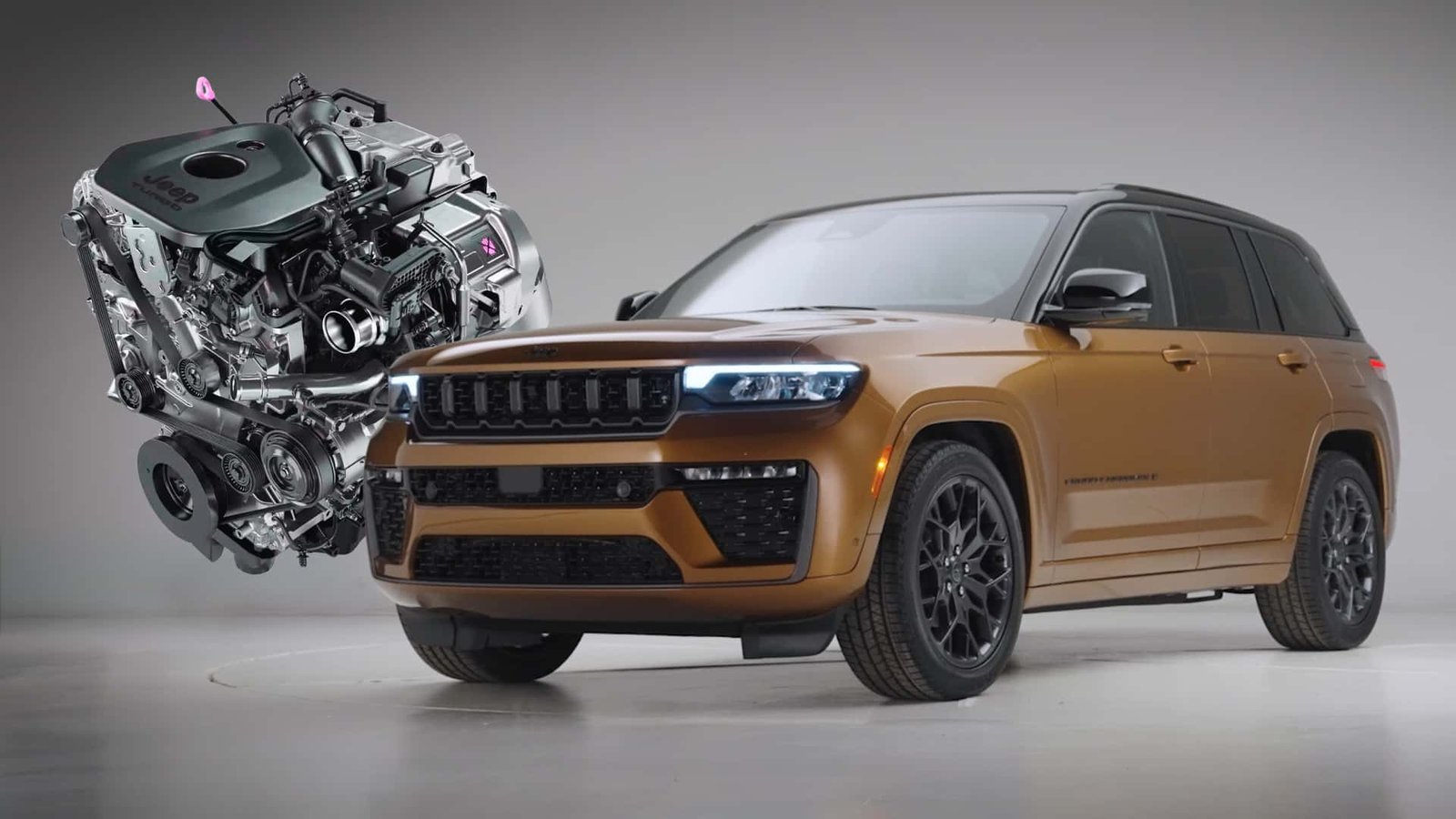
“This isn’t just about downsizing; it’s about optimizing,” remarked a Stellantis powertrain engineer, who asked to remain anonymous, during a recent industry briefing. “We’re not just swapping out cylinders; we’re deploying a highly advanced, intelligent power unit designed from the ground up to meet modern demands while upholding the Grand Cherokee’s legacy of capability.” This strategic shift directly relates to the Stellantis Global Medium Engine (GME) family, specifically the well-regarded Hurricane engine series. You’ve likely seen versions of these powerful, efficient units in other Stellantis products, proving their mettle and versatility. It’s a smart move, leveraging existing, proven technology to redefine what a Grand Cherokee can be. Think of it as evolution, not revolution, but with revolutionary results.
Under the Hood: Deconstructing the Turbo-Four
So, what exactly are we talking about when we say “impressive new turbo-four”? The engine in question is expected to be a variant of the Stellantis 2.0-liter turbocharged inline-four, an engine family already praised for its power density and efficiency. This isn’t some underpowered economy car engine shoehorned into an SUV. Oh no. We’re talking about a unit designed with performance in mind.
Key features will undoubtedly include:
- Direct Fuel Injection: Precisely atomizes fuel directly into the combustion chamber for optimal efficiency and power.
- Twin-Scroll Turbocharger: Minimizes turbo lag, providing instantaneous torque delivery across a wide RPM range. This is crucial for that immediate feeling of power, especially in an SUV.
- Engine Stop/Start (ESS) System: Shuts off the engine at idle to save fuel and reduce emissions.
- Variable Valve Timing: Optimizes valve operation for improved performance and fuel economy.
While official power figures are still under wraps, industry insiders are speculating outputs that will rival, if not surpass, the outgoing 3.6-liter V6. We’re likely looking at something in the ballpark of 270-300 horsepower and an even more impressive 295-310 lb-ft of torque. That’s a significant amount of twist, available much lower in the RPM band than a naturally aspirated V6. “The immediate torque delivery of a modern turbo-four is just phenomenal,” noted veteran automotive journalist, Eleanor Vance. “It feels more muscular off the line than a naturally aspirated engine with higher peak horsepower.” This means quicker acceleration and more confident passing maneuvers, even when towing.
Performance Meets Efficiency: The Promise
The real magic of this new 2026 Jeep Grand Cherokee turbo-four lies in its dual promise: delivering robust performance without sacrificing fuel economy. For years, buyers had to choose: power or efficiency. With advanced turbocharging and direct injection, that compromise is quickly becoming a relic of the past. Imagine a Grand Cherokee that can tackle rugged trails with ease, cruise comfortably on the highway, and still offer significantly improved miles per gallon. That’s the dream, right?

Early projections hint at city/highway combined fuel economy numbers that could comfortably push past the mid-20s, a notable improvement over the current V6’s average. For many drivers, particularly those who use their Grand Cherokee as a daily driver, this is a huge selling point. “I’ve always loved the Grand Cherokee, but honestly, the gas mileage was a concern,” admitted longtime Jeep owner Mark Jensen from Arizona. “If they can give me that Jeep capability with better mileage, that would make it perfect. A real game-changer for my wallet and for those long road trips out west.”
Beyond just fuel savings, there are environmental benefits. Smaller, more efficient engines generally produce fewer emissions. This aligns with Jeep’s broader sustainability goals and their commitment to expanding their 4xe electrified lineup. It’s a stepping stone, a proof of concept, that high-performance doesn’t necessarily mean high-carbon.
Driving Dynamics: More Than Just Numbers
An engine isn’t just about its horsepower and torque figures; it’s about how those numbers translate to the actual driving experience. One of the subtle but significant benefits of a lighter, more compact turbo-four engine mounted in the front of a vehicle like the Grand Cherokee is improved weight distribution. Less mass over the front axle can lead to a more balanced feel, enhancing handling and responsiveness. You might not notice it explicitly, but the vehicle will likely feel more agile, more eager to turn in, and generally more composed on winding roads.
The turbo-four engine will almost certainly be paired with Stellantis’s proven 8-speed automatic transmission. This gearbox is a marvel of engineering, providing smooth, imperceptible shifts and always keeping the engine in its optimal power band. It’s adept at both spirited driving and economical cruising, ensuring that the new engine’s power is always delivered efficiently and effectively. Picture yourself merging onto a busy highway; the quick downshifts and immediate boost from the turbo-four will have you confidently accelerating into traffic. Or, imagine a brisk autumn morning drive, the leaves crunching under the tires, the engine responding crisply to every input. It’s going to be a refined, yet spirited experience.
Market Impact and Competition
The introduction of the turbo-four engine in the 2026 Jeep Grand Cherokee isn’t happening in a vacuum. The entire SUV segment is trending towards smaller displacement, forced-induction engines, often paired with electrification. Competitors like the Ford Explorer, Toyota Highlander, and Honda Pilot already offer highly efficient V6s or even turbo-fours themselves, some with hybrid variants. This move positions the Grand Cherokee squarely in line with modern expectations, perhaps even setting a new benchmark for what a premium off-road-capable SUV can achieve.

This engine could significantly broaden the Grand Cherokee’s appeal. While traditionalists might initially balk, the promise of lower running costs, comparable performance, and reduced environmental impact will undoubtedly attract a new generation of buyers. The current 4xe Grand Cherokee, which already utilizes a powerful 2.0-liter turbo-four as part of its hybrid system, has been incredibly successful, proving that buyers are ready for a different kind of Jeep power. This new dedicated gas-only turbo-four will likely build on that success, offering a compelling alternative to the V6 that satisfies the efficiency-minded while still delivering on performance. “Jeep is smart to offer this,” commented industry analyst, Sarah Chen. “They’re diversifying their portfolio, attracting new customers who might have previously overlooked the Grand Cherokee due to fuel economy concerns, without alienating their core off-road enthusiasts.”
Here’s a simplified comparison of what we might expect from the new turbo-four against previous offerings:
| Engine Type | Approx. Horsepower | Approx. Torque (lb-ft) | Est. Combined MPG |
|---|---|---|---|
| New 2.0L Turbo-Four (2026) | 270-300 hp | 295-310 lb-ft | 25-27 MPG |
| 3.6L Pentastar V6 (Current) | 293 hp | 260 lb-ft | 22-23 MPG |
| 2.0L Turbo-Four 4xe (Current) | 375 hp (combined) | 470 lb-ft (combined) | 56 MPGe (electric + gas) |
*Estimates based on industry speculation and current engine performance; official figures pending.
The table clearly illustrates the potential leap in torque for the new turbo-four compared to the V6, which is crucial for the feeling of immediate power and for towing. And the MPG figures, while not reaching the hybrid 4xe’s electrified levels, represent a significant improvement for a purely gas-powered SUV of this size and capability.
The Future of Jeep: Hybrid and Beyond
This strategic move with the 2026 Jeep Grand Cherokee’s turbo-four engine isn’t an isolated incident; it’s a critical piece of Jeep’s larger electrification and sustainability puzzle. The success of the Grand Cherokee 4xe has already shown that buyers are ready for a hybrid Jeep that doesn’t compromise on capability. The new turbo-four engine could serve as a foundational building block for future hybrid and plug-in hybrid variants, potentially even more advanced than the current 4xe. Imagine a 4xe system utilizing an even more optimized version of this new turbo-four, pushing efficiency and power to new heights.
Jeep has openly committed to offering an electrified option across its entire lineup, aiming for a more sustainable future while maintaining its rugged, adventurous spirit. This new engine is a clear demonstration that they are investing heavily in advanced internal combustion engines that can bridge the gap between traditional powertrains and a fully electric future. It shows that Stellantis is not just waiting for the electric revolution; they are actively evolving their core products to meet the demands of today and tomorrow. For me, this is exciting. It means we get to keep the legendary capability of a Grand Cherokee, but with a conscience, and a lighter touch on the environment. It truly feels like a win-win.
A New Chapter for an American Icon
Stepping back and taking a broader view, it’s clear that the 2026 Jeep Grand Cherokee with its impressive new turbo-four engine isn’t just another model year update. It represents a significant evolution for one of America’s most beloved SUVs. It’s a bold declaration from Jeep that they are ready to innovate, ready to challenge perceptions, and ready to meet the demands of a rapidly changing automotive landscape, all while staying true to the core values of adventure and capability that define the brand.
I remember when the thought of a four-cylinder in a full-size SUV would have been met with laughter, maybe even derision. But here we are, on the cusp of a new era, where advanced engineering allows us to have our cake and eat it too: robust performance, superior fuel efficiency, and a lighter environmental footprint. This isn’t just good news for Jeep; it’s great news for consumers who want a capable, luxurious, and now, more responsible SUV. The 2026 Grand Cherokee is poised to redefine expectations, proving that true power can come in a more efficient, sophisticated package. Get ready for a Grand Cherokee experience that’s both familiar and exhilaratingly new.
Frequently Asked Questions
| What is the main highlight of the 2026 Jeep Grand Cherokee? | The primary highlight is the introduction of an impressive new turbo-four engine option, marking a significant shift from the traditional V6 and V8 powertrains, aiming for enhanced efficiency without sacrificing performance. |
| What are the key benefits of the new turbo-four engine? | Key benefits include significantly improved fuel efficiency, lower emissions, and comparable or even superior torque delivery compared to the outgoing V6, leading to better acceleration and towing capability. It also contributes to better weight distribution for improved handling. |
| How does this new engine fit into Jeep’s broader strategy? | This engine aligns with Jeep’s broader strategy to modernize its lineup, meet stricter global emissions standards, and expand its commitment to electrification. It serves as a bridge, demonstrating that powerful, efficient internal combustion engines are vital for their future, potentially also forming the basis for new hybrid variants. |
| What challenges might Jeep face with this engine change? | Jeep might face initial skepticism from traditionalists who associate the Grand Cherokee with larger displacement engines. The challenge will be to effectively communicate the benefits of the turbo-four in terms of performance and efficiency, proving it lives up to the Grand Cherokee’s reputation for capability. |
| What does the future hold for the Grand Cherokee’s powertrain options? | The future likely involves a continued focus on efficient powertrains. While a V8 option might eventually be phased out, the turbo-four will likely become a core offering, alongside the popular 4xe plug-in hybrid, and potentially evolve into even more advanced hybrid or fully electric variants as Jeep moves towards its long-term electrification goals. |
Important Notice
This FAQ section addresses the most common inquiries regarding the topic.