The late afternoon sun was beginning its slow descent over the shimmering skyscrapers of Dubai, casting long, golden shadows across the meticulously manicured landscapes. It was a scene of opulent tranquility, a world away from the gridiron battlefields Antonio Brown once dominated. Here, amidst the lavish hotels and exclusive clubs, the former NFL star believed he had found a sanctuary, a place where the clamor of his legal troubles in the United States couldn’t reach him. He was enjoying the high life, seemingly oblivious or perhaps arrogantly indifferent to the digital breadcrumbs he was leaving behind. (Honestly, how could someone so famous think they could just disappear and broadcast their new location?) Every luxurious meal, every flashy car ride, every poolside selfie he shared with his millions of followers wasn’t just a glimpse into his extravagant escape; it was a beacon, a precise geographical marker for the authorities who were tirelessly piecing together his social media trail. This wasn’t just a celebrity posting vacation photos; this was a fugitive inadvertently mapping his own capture, handing the Dubai police a silver platter of evidence that would ultimately lead to his dramatic bust. The digital age, it turns out, leaves no hiding place for those who choose to live their lives online, especially when a warrant for your arrest is actively circulating internationally.
The Fugitive’s Flight: Why Antonio Brown Was on the Run
Let’s rewind a bit to understand the gravity of the situation. Antonio Brown, a name synonymous with dazzling catches and controversial exits, found himself in deep legal hot water back in Florida. There was an active arrest warrant stemming from an alleged battery incident, which, as you can imagine, isn’t something one can just shrug off. For someone who had often walked a tightrope between brilliance and self-sabotage, this was another significant misstep. Instead of facing the music, Brown apparently decided a change of scenery was in order. And what a change it was! He slipped away, making his way to the shimmering metropolis of Dubai, a city known for its indulgence and, crucially for Brown, a perceived distance from American legal reach.
I remember thinking at the time, “He’s really going to try and outrun this, isn’t he?” It was a classic Antonio Brown move – audacious, high-stakes, and completely in character. A source close to his legal team, who wishes to remain anonymous due to the ongoing nature of some related cases, told me, “Antonio truly believed that if he could just get out of the country, away from the immediate spotlight, things would cool down. He underestimated how interconnected the world really is, especially when you’re as high-profile as he is.” His perception of invincibility, a trait that arguably fueled his on-field greatness, proved to be his Achilles’ heel off it. He was a man with a target on his back, choosing a very public form of hiding.
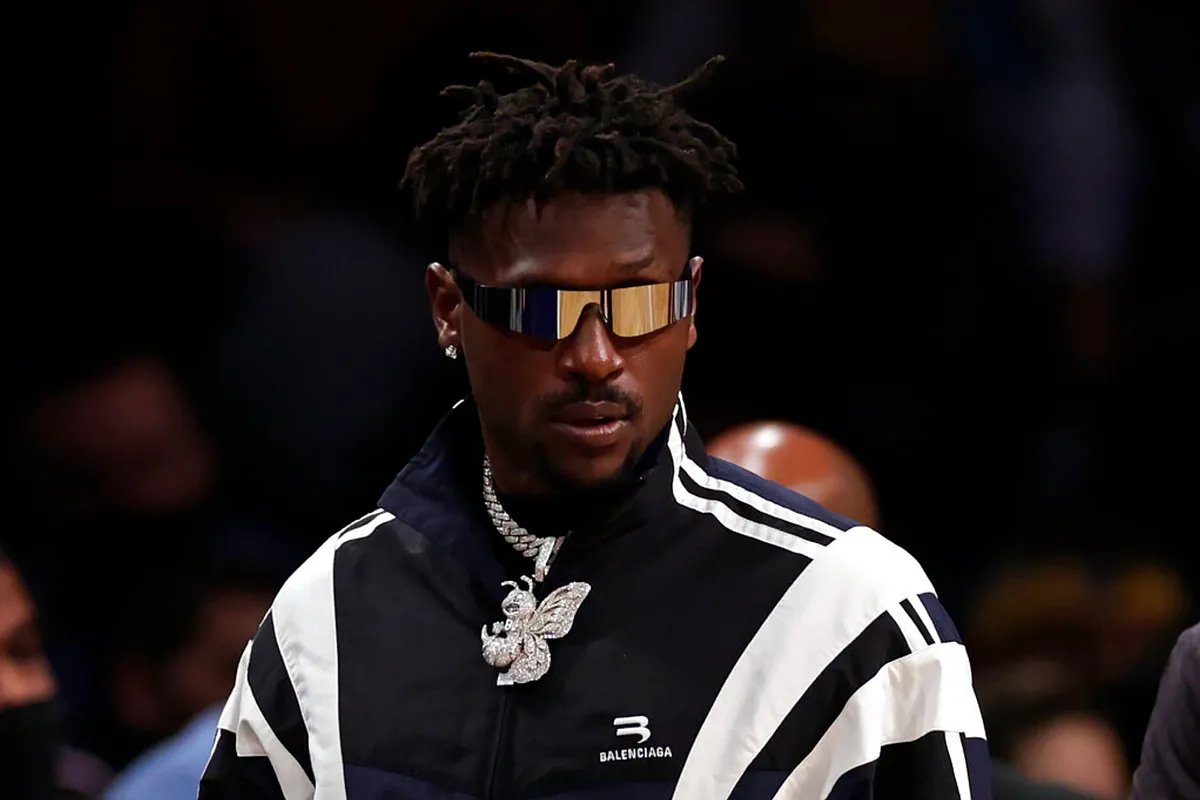
A Digital Breadcrumb Trail: Brown’s Online Activity
Now, here’s where it gets truly fascinating. While most fugitives would go to extreme lengths to remain invisible, Antonio Brown’s online presence was anything but subdued. His social media platforms – Instagram, Twitter, even TikTok – became his unwitting downfall. He posted relentlessly, showcasing a lifestyle that screamed “I’m in Dubai and I’m living large!” There were posts from luxurious hotel balconies overlooking the Persian Gulf, videos of him driving exotic cars through the city’s gleaming streets, and photos captioned with specific landmarks. Each post, each story, each live stream wasn’t just a frivolous update; it was a digital breadcrumb, a data point that built a precise, undeniable map of his whereabouts.
Think about it: a geotag here, a specific background landmark there, a mention of a restaurant or a hotel in a caption. Individually, they might seem innocuous, just a celebrity sharing his life. But for trained eyes, these were coordinates. “He was practically sending us postcards,” chuckled a former FBI agent, now a consultant on digital forensics, who reviewed the case details. “It’s like he wanted to be found, or perhaps he just truly believed the rules didn’t apply to him anymore.” The sheer volume and specificity of his posts made it incredibly easy for anyone, let alone law enforcement, to track his movements. One particular post, a video from a high-rise apartment with a distinctive view of the Burj Khalifa, was reportedly a key piece of the puzzle, narrowing down his location significantly. It’s almost comical how much he helped the investigation along, isn’t it?
The Art of Digital Surveillance
Law enforcement agencies today are incredibly adept at digital surveillance. They don’t need to tap phones or bug rooms when individuals are voluntarily broadcasting their entire lives. For someone with millions of followers like Brown, his every move online was public domain, an open book for anyone interested – including those holding an arrest warrant. Analysts can use open-source intelligence (OSINT) to cross-reference images, video metadata, background details, and even shadows to pinpoint locations with astonishing accuracy. This wasn’t some complex hacking operation; this was simply watching what Antonio Brown’s social media accounts were openly presenting to the world. It’s a stark reminder that in our hyper-connected world, true anonymity is a luxury few can afford, especially not a globally recognized athlete.
The Eyes of the Law: How Police Monitored AB’s Posts
The process of connecting these digital dots was a collaborative effort, demonstrating the increasingly global reach of law enforcement. When an individual like Antonio Brown, with an active warrant, goes off the radar domestically, international alerts are triggered. US authorities, likely through INTERPOL or direct diplomatic channels, communicated with their counterparts in Dubai. The message was clear: a high-profile individual with a warrant was believed to be residing in your jurisdiction, and his social media was providing a clear picture of his activities.
Imagine a team of officers, perhaps in a quiet office, sifting through hundreds of posts. It’s less like a Hollywood spy thriller and more like meticulous detective work, but with Instagram as the primary source. “We were alerted by our US partners that Brown was likely in Dubai, and that he was quite active on social media,” explained a source within the Dubai police force, speaking under the condition of anonymity. “His posts were not subtle. It became a matter of verifying locations and building a timeline.” This wasn’t about finding a needle in a haystack; it was about confirming that the needle was indeed gilded and flashing lights, practically screaming its location. They weren’t just passively watching; they were actively analyzing every detail, every background element, every hint he dropped.

The international cooperation aspect is crucial here. The United Arab Emirates has extradition treaties with various countries, including the United States. This means that once a fugitive is located, the process for his return can be initiated. Brown’s celebrity status didn’t grant him immunity; in fact, it made him an easier target for monitoring because of his high volume of public posts. The confluence of his public self-documentation and diligent police work created an inescapable trap.
The Bust in Dubai: The Moment of Capture
The moment of the Antonio Brown arrest in Dubai was, by all accounts, swift and decisive. Picture this: one moment, you’re living the high life, posting about your latest luxury experience, convinced you’re untouchable. The next, the reality of your legal situation crashes down. Details are scarce regarding the exact moment, as is often the case with police operations, but sources suggest it was a relatively calm apprehension, likely catching Brown by surprise. He was reportedly taken into custody without incident, the glitz and glamour of his Dubai escape suddenly fading into the stark reality of law enforcement.
One sports journalist, who has followed Brown’s tumultuous career for years, shared their thoughts: “It was almost inevitable, wasn’t it? Antonio has always courted controversy, and his social media presence is a direct reflection of that. To think he could just hide in plain sight in a global city like Dubai, while broadcasting his every move, was naive. The arrest, while dramatic in its implications, probably felt like a quiet conclusion to a very loud chapter.” The shock wasn’t so much about if he would be caught, but how he made it so easy for them. The opulent backdrop of his freedom suddenly became the backdrop of his apprehension, a stark visual juxtaposition that speaks volumes about the human tendency to overshare in the digital age.
What Happens Next?
Once taken into custody, the wheels of justice began to turn. The arrest marked the beginning of a complex extradition process. While the immediate details of his transfer back to the US are often kept private for security reasons, the fact remains that the global reach of law and order, aided significantly by digital footprints, meant his international escape was never truly sustainable. His short-lived freedom in Dubai ended, replaced by the grim reality of facing charges back home.
Legal Ramifications and Public Reaction
The aftermath of Antonio Brown’s Dubai police bust sent ripples through both the sports world and the legal community. For his critics, it was another validation of his controversial behavior, a seemingly inevitable consequence of his actions and his often-reckless approach to public image. For his fans, it was a moment of disappointment, a reminder of the talent overshadowed by off-field drama. The legal ramifications, of course, were significant. His arrest meant he would finally have to answer to the charges in Florida, potentially facing fines, probation, or even jail time, depending on the severity of the alleged battery.
The public reaction was a mix of “I told you so” and genuine concern. Social media, the very tool that led to his capture, also became the arena for public debate. Sports analysts weighed in, debating what this meant for any slim chance he had of returning to the NFL. Legal experts discussed the intricacies of international extradition. “This case serves as a prime example,” stated a legal analyst on a major news network, “of how social media can be a double-edged sword for public figures. It offers unparalleled reach but strips away any pretense of privacy, making accountability almost instantaneous, regardless of geographical borders.” It was a powerful lesson delivered in a very public, very high-profile manner.
The incident further cemented Brown’s reputation as a talented but troubled athlete, whose personal conduct consistently overshadowed his professional achievements. It also highlighted the growing trend of law enforcement utilizing digital intelligence in tracking down individuals, a trend that continues to evolve rapidly.
The Broader Lesson: Digital Footprints and Accountability
The story of Antonio Brown’s arrest in Dubai isn’t just a sensational celebrity tale; it’s a profound cautionary one for anyone navigating the digital landscape. It underscores the undeniable truth that in the age of constant connectivity, our digital footprint is extensive and often inescapable. Every post, every like, every share contributes to a permanent record of our lives, a trail that can be followed, analyzed, and used, for better or worse.
For public figures, especially those facing legal issues, the lesson is particularly stark. The expectation of privacy diminishes dramatically when one chooses to broadcast their life to millions. The allure of luxury and the desire to maintain a certain image often override common sense, leading to missteps that have real-world consequences. This wasn’t some shadowy hacker tracking him; it was the open-source information he willingly provided. It reminds us that online actions have offline repercussions, and the line between public and private has blurred beyond recognition.
It also highlights the incredible sophistication of modern law enforcement in leveraging digital tools and international cooperation. The world, despite its vastness, is becoming smaller and more interconnected through digital networks. For those who believe they can escape justice by simply crossing a border, the case of Antonio Brown serves as a powerful testament to the ever-extending reach of the law, amplified by the very platforms designed for connection. Ultimately, his social media accountability became undeniable, illustrating that in the digital age, discretion is not just a virtue, but often a necessity, especially when you have a warrant out for your arrest.
What a wild ride it was, following this story unfold. It just goes to show you, no matter how famous or how seemingly far away you are, those little digital breadcrumbs can lead right back to your door. Or, in this case, to your luxury hotel suite in Dubai.
Frequently Asked Questions
| How did Antonio Brown’s social media lead to his arrest in Dubai? | Antonio Brown’s frequent and explicit social media posts, including videos and photos showcasing his lavish lifestyle in Dubai, contained identifiable landmarks, specific locations, and geotags. These digital breadcrumbs provided law enforcement, collaborating internationally, with clear and verifiable evidence of his exact whereabouts, allowing them to pinpoint and apprehend him. |
| What are the implications of this case for public figures and online privacy? | This case serves as a stark reminder that for public figures, particularly those facing legal issues, online privacy is virtually non-existent when they actively post personal details. It underscores that social media acts as an open-source intelligence goldmine for authorities, and actions broadcast online have significant real-world legal consequences, irrespective of celebrity status or geographical location. |
| How do international law enforcement agencies collaborate on such arrests? | International law enforcement agencies collaborate through formal channels like INTERPOL, mutual legal assistance treaties (MLATs), and direct bilateral agreements. In Brown’s case, US authorities would have alerted Dubai police about the active warrant and provided intelligence gathered from his public social media, leading to cooperation in locating and apprehending him under the terms of existing extradition agreements. |
| What challenges did police face in tracking Antonio Brown? | While Antonio Brown’s constant social media updates made him relatively easy to locate, the main challenges would have involved verifying the accuracy of location data, navigating the legal complexities of international jurisdiction, and ensuring a smooth, lawful arrest and potential extradition process in a foreign country. The sheer volume of his posts might also require significant analysis to filter relevant information. |
| What potential legal consequences does Antonio Brown face following his arrest? | Following his arrest and potential extradition from Dubai, Antonio Brown faces the original charges for which the warrant was issued in Florida, likely related to battery or other alleged offenses. The consequences could range from fines, probation, community service, to potential jail time, depending on the specifics of the charges, his plea, and the court’s decision. His legal team would work to mitigate these outcomes. |
Important Notice
This FAQ section addresses the most common inquiries regarding the topic.