Trump Says Iran Supreme Leader Mojtaba Khamenei Is Alive Despite Serious Injuries


President Trump has stated he believes Iran Supreme Leader Mojtaba Khamenei is still alive despite suffering severe injuries, directly contradicting mounting speculation that the Iranian leader may have died. The president’s remarks came during an Aug. 26 interview with conservative radio host Glenn Beck, where he addressed a recent Atlantic report that Tehran is “abuzz” with talk of Khamenei’s death and cited unnamed sources who speculated that he eventually died of his injuries sustained during the initial U.S. and Israel strikes that killed his father.
- Trump’s Statement: “I don’t think he’s dead. He was very seriously wounded. The left side of his body, the arm, the leg, the whole thing”
- Six Months Unseen: Mojtaba Khamenei has not made a single public appearance since taking power in March
- Father’s Wake Absence: Khamenei was the official host of his father’s wake but did not attend
- Iranian Propaganda: Undated archival footage released by Fars News Agency claims to show the Supreme Leader
- US Strategy: “Operation Economic Outcast” sanctions targeting Iran’s remaining revenue streams
- Nuclear Negotiations: Peace deal collapsed in June amid tensions over the Strait of Hormuz
“I don’t think he’s dead,” Trump told Beck, responding to The Atlantic report that cited unnamed sources inside and close to the Iranian government who speculated that Khamenei eventually died of his injuries. “He was very seriously wounded. The left side of his body, the arm, the leg, the whole thing. He was very seriously wounded but I don’t think he’s dead.”
Trump further noted that Iranian negotiators continue to reference getting Khamenei’s approval on matters, suggesting that if he is dead, “they’re putting on a pretty good show.” “They talk about going back to talk to him all the time to get a final blessing on things,” Trump added.
The uncertainty surrounding Khamenei’s condition stems from his complete absence from public view since Iran’s Assembly of Experts, a group of 88 clerics, selected the mid-ranking cleric with influence in the country’s security forces and business networks to succeed his father Ayatollah Ali Khamenei on March 8. The elder Khamenei was killed in a joint U.S.-Israeli strike in February that set off the ongoing war and decimated much of Iran’s senior leadership.
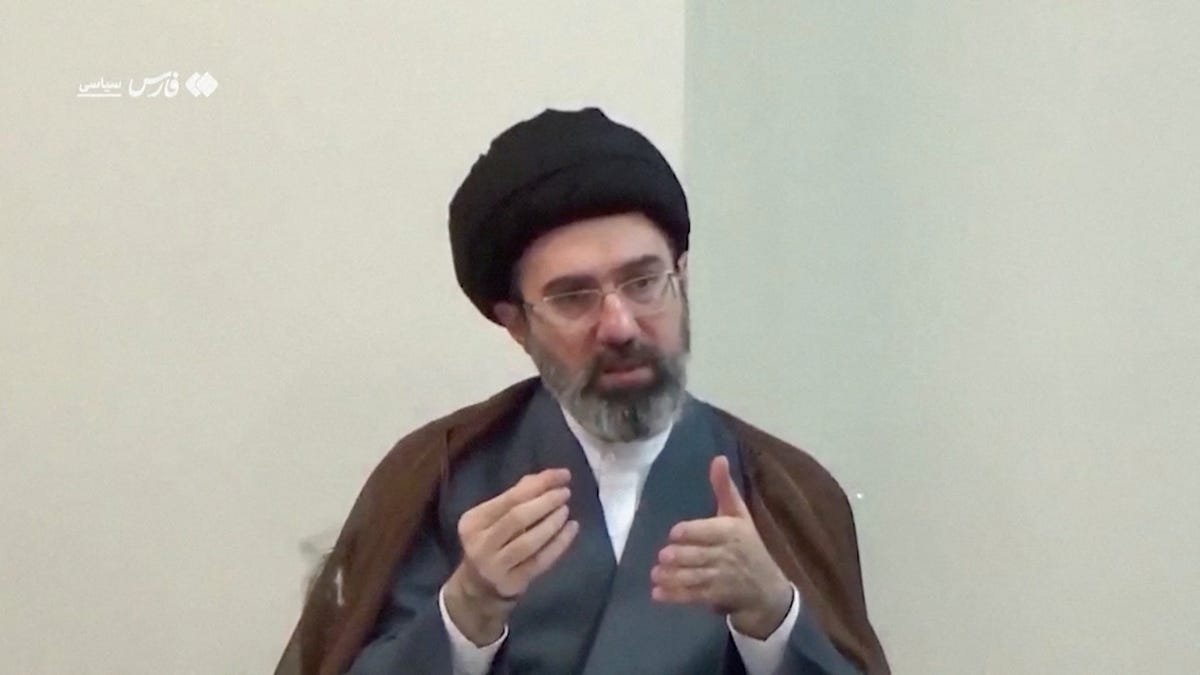
Mojtaba Khamenei, 56, has not been seen, heard, or photographed even once since assuming the Supreme Leader role, fueling intense speculation about his health and whereabouts. He was notably absent from his father’s wake, an event for which he was the official host, though his three brothers, Masoud, Meysam, and Mostafa Khamenei, were present and seen mourning.
The lack of public appearances has created a leadership vacuum at a critical moment. According to The Atlantic, Tehran is “abuzz” with talk of Khamenei’s death, with two government sources telling IranWire that word had spread among the “highest level of the regime” that Khamenei was doing very poorly and could die at any moment. A staffer at a government institution told The Atlantic, “I believe Mojtaba has either passed away or is brain-dead,” citing the drop-off in even indirect communication. As speculation mounts, public opinion on the conflict has shifted dramatically, with war approval ratings reaching new lows amid the ongoing uncertainty.
Iranian officials have attempted to counter the speculation. Abdolreza Davari, a former adviser to the interior ministry, insists the leader is “in full health” and will soon be revealed to the public. Iran’s Fars News Agency recently released undated archival footage showing Mojtaba Khamenei presiding over a religious academic study session, though the footage’s age has not been independently verified.
President Masoud Pezeshkian has acknowledged the communication challenges, telling Iranian media he spent seven hours with Khamenei discussing the war and economy, while also noting that “it is very difficult to communicate with him at the moment.” Earlier reports suggested Khamenei had been secretly flown to Moscow for medical treatment, though those claims were not independently established and Moscow has since indicated he is in Iran.
Trump’s history of provocative statements about Iran’s leadership adds another layer to the ongoing speculation. During a 2015 campaign event, Trump claimed that then-Supreme Leader Ayatollah Ali Khamenei was gay — a baseless assertion that drew widespread criticism. While Trump did not repeat that claim regarding Mojtaba Khamenei, his past remarks reflect his willingness to make inflammatory statements about Iranian leadership, a factor that some analysts consider when weighing the credibility of his current assessments.
The Injuries Trump Described
Trump’s description of Khamenei’s injuries is the most detailed official statement to date on the Supreme Leader’s condition. The president specifically referenced wounds to the “left side of his body, the arm, the leg, the whole thing.” This aligns with earlier reports that Khamenei was injured, and possibly disfigured, in the strikes that killed his father.
The injuries appear consistent with the initial U.S.-Israeli strikes on Feb. 28 that killed former Supreme Leader Ayatollah Ali Khamenei and much of Iran’s command structure, forcing the quick selection of Mojtaba as his successor. The strikes targeted senior leadership positions, with Mojtaba sustaining significant wounds while his father was killed.
Trump’s assessment directly contradicts what some Iranian officials have claimed. Mohammad Hossein Khoshvaght, a former official and relative of Mojtaba, told The Atlantic he was certain Khamenei is alive, calling the death rumors “part of a psychological war hoping to demoralize Iran’s officials and its people.” However, Khoshvaght also acknowledged that fewer than five people have met with Khamenei since he took power “due to security precautions.”
Why Mojtaba Khamenei Has Remained Hidden
Khamenei’s prolonged absence from public view since assuming the Supreme Leader role has become a major source of speculation about his actual condition and authority. Several factors help explain the unprecedented secrecy:
Security Concerns: Mojtaba would be a likely target for an Israeli or U.S. airstrike similar to the one that killed his father. Any direct communication from him could give Iran’s enemies clues about his whereabouts. According to reports, he has been staying in touch with senior officials through a slow network of intermediaries to reduce the risk of being targeted.
Severity of Injuries: Trump’s detailed description of Khamenei’s condition — wounds to the left side of his body, his arm, and his leg — suggests injuries severe enough to prevent public appearances. The extent of the damage may require extended medical treatment and rehabilitation.
Propaganda Strategy: Iranian officials may be deliberately maintaining ambiguity about Khamenei’s condition as a psychological warfare tactic. By keeping the Supreme Leader’s status unclear, Iran creates uncertainty for its adversaries while attempting to project stability at home.
Iranian Propaganda and Archival Footage
Iran’s state media apparatus has been deployed to counter the death speculation. Fars News Agency released undated archival footage showing Mojtaba Khamenei presiding over a religious academic study session, though the footage’s age has not been independently verified and Iranian media has not provided a specific date for the recording.
Mohammad Hossein Khoshvaght, a former official and relative of Mojtaba, told The Atlantic he was certain Khamenei is alive, calling the death rumors “part of a psychological war hoping to demoralize Iran’s officials and its people.” However, Khoshvaght also acknowledged that fewer than five people have met with Khamenei since he took power “due to security precautions.”
The Iranian government has also used President Pezeshkian as a conduit for reassurance. Pezeshkian told Iranian media he spent seven hours with Khamenei discussing the war and economy, while also noting that “it is very difficult to communicate with him at the moment.” The transparency of these claims remains difficult to verify given the regime’s tight control over information.
US Strategy: Sanctions and Military Pressure
Trump expressed frustration with Iran’s negotiators during his interview with Beck, saying “you make a deal with them… it’s not the most honorable group, I will tell you that.” After a June peace deal collapsed amid jockeying over the Strait of Hormuz, a vital waterway for oil shipments, the president has focused on applying economic pressure to Tehran.
Treasury Secretary Scott Bessent recently announced a plan for additional sanctions called “Operation Economic Outcast,” targeting Iran’s remaining revenue streams. According to the U.S. Department of the Treasury, the sanctions aim to further isolate the Iranian economy and pressure the regime amid the ongoing leadership crisis.
The June peace deal collapsed when Iranian forces attempted to disrupt shipping in the Strait of Hormuz, prompting a U.S. military response that reportedly destroyed 22 Iranian vessels. Trump claimed the strait is now open with commercial traffic resuming, indicating that US military operations have secured the vital waterway. The president has been increasing military pressure on Iran, with the US Navy maintaining a significant presence in the region.
Despite the collapse of the June peace deal, Trump and US officials have indicated they remain open to negotiations with Iran’s leadership, though the uncertainty surrounding Khamenei’s condition complicates any potential diplomatic engagement. The nuclear negotiations, which were a priority for the administration, have stalled amid the conflict.
What Happened to Ayatollah Ali Khamenei
The U.S. and Israel killed much of Iran’s senior leadership in the initial round of strikes, including former Supreme Leader Ayatollah Ali Khamenei, Mojtaba Khamenei’s father. The elder Khamenei, who had served as Supreme Leader since 1989, was a dominant figure in Iranian politics for decades.
His death created a power vacuum that was quickly filled by his son Mojtaba, who was selected by Iran’s Assembly of Experts on March 8. The mid-ranking cleric had significant influence in the country’s security forces and business networks, making him a viable successor despite his relatively low religious rank.
The elder Khamenei’s death marked a turning point in the Iran war, as the U.S. and Israel continued their military campaign to degrade Iran’s nuclear capabilities and military infrastructure. Mojtaba’s succession was seen as a consolidation of power within the Khamenei family, though his subsequent disappearance has created uncertainty about the regime’s stability.
Former Supreme Leader Ayatollah Ali Khamenei was buried in Mashhad, Iran, following a funeral that Mojtaba did not attend. The absence of the new Supreme Leader at his father’s funeral was noted by observers as a sign that something was amiss with his condition.
The Future of Iran’s Leadership
The uncertainty surrounding Mojtaba Khamenei’s condition raises significant questions about the future of Iran’s leadership. If Khamenei is incapacitated or deceased, Iran’s Assembly of Experts would need to select a new Supreme Leader, potentially triggering a power struggle among rival factions within the regime.
Iran’s leadership has faced unprecedented challenges since the initial U.S.-Israeli strikes, including the loss of much of its senior leadership, ongoing military pressure, and severe economic sanctions. The collapse of the June peace deal over the Strait of Hormuz has further complicated the situation, with Iran’s naval capabilities significantly degraded.
Trump and US officials have expressed willingness to resume negotiations, though the uncertainty surrounding Iran’s leadership makes diplomatic engagement challenging. The president’s frustration with Iranian negotiators was evident in his Beck interview, where he described them as “not the most honorable group.”
As the situation continues to develop, the world awaits confirmation of Mojtaba Khamenei’s condition. Whether he is alive but injured, as Trump believes, or has succumbed to his wounds, the future of Iran’s leadership remains uncertain. The coming days and weeks will be critical in determining whether Iran can maintain stability or faces a succession crisis that could reshape the region.