Qualcomm and MediaTek flagship chips have been fully detailed in new leaks, revealing the Snapdragon 8 Elite Gen 6 Pro (SM8975) and Dimensity 9600 Pro as the first mobile processors to surpass the 5GHz clock speed barrier. Both chipsets transition to TSMC’s 2nm N2P manufacturing process, ditching conventional cluster topologies in favor of refined 2 + 3 + 3 core configurations that promise unprecedented performance and efficiency for premium smartphones arriving in late 2026 and early 2027.
- 5GHz Barrier Broken: Snapdragon 8 Elite Gen 6 Pro hits 5.01GHz on its prime cores — the first time any mobile chip has crossed this threshold.
- 2nm Manufacturing: Both chips use TSMC’s advanced 2nm N2P process, delivering significant efficiency gains over 3nm.
- Core Configurations: Both adopt 2 + 3 + 3 layouts, moving away from traditional 1+3+4 or 1+5+2 clusters.
- AI on Silicon: Qualcomm integrates Matrix ALU blocks into GPU shaders; MediaTek dedicates NX tensor units for neural frame generation.
- Late to 2nm: Apple, Google, and Xiaomi have already unveiled 2nm SoCs, putting Qualcomm and MediaTek in catch-up mode.
According to technical details revealed by industry insider Digital Chat Station, the Snapdragon 8 Elite Gen 6 Pro (SM8975) and MediaTek Dimensity 9600 Pro are restructuring their architectures to balance peak performance with thermal management. The 2 + 3 + 3 configuration — two prime cores, three performance cores, and three efficiency cores — represents a significant shift from current 1 + 3 + 4 or 1 + 5 + 2 designs, prioritizing sustained performance over single-core burst speeds.
Surprisingly, Qualcomm and MediaTek are arriving late to the 2nm party. Apple, Google, and Xiaomi have already unveiled their own 2nm-based SoCs, giving them a first-mover advantage in the premium smartphone segment. However, both chipmakers are betting that their silicon-level AI capabilities and record-breaking clock speeds will help them regain momentum when devices launch later this year.
Industry analysts tracking the 2nm transition note that TSMC’s N2P process delivers approximately 15% better performance and 30% reduced power consumption compared to its 3nm predecessor. This efficiency gain is critical as both companies push mobile frequencies into uncharted territory. According to DigiTimes’ semiconductor coverage, TSMC has already secured commitments from both chipmakers for substantial wafer allocations through 2027. The industry publication also notes that AnandTech’s analysis of the leaked specs suggests the chips will power devices in the $1,000+ flagship tier, with Samsung, Xiaomi, and Vivo among the first OEMs to integrate them.
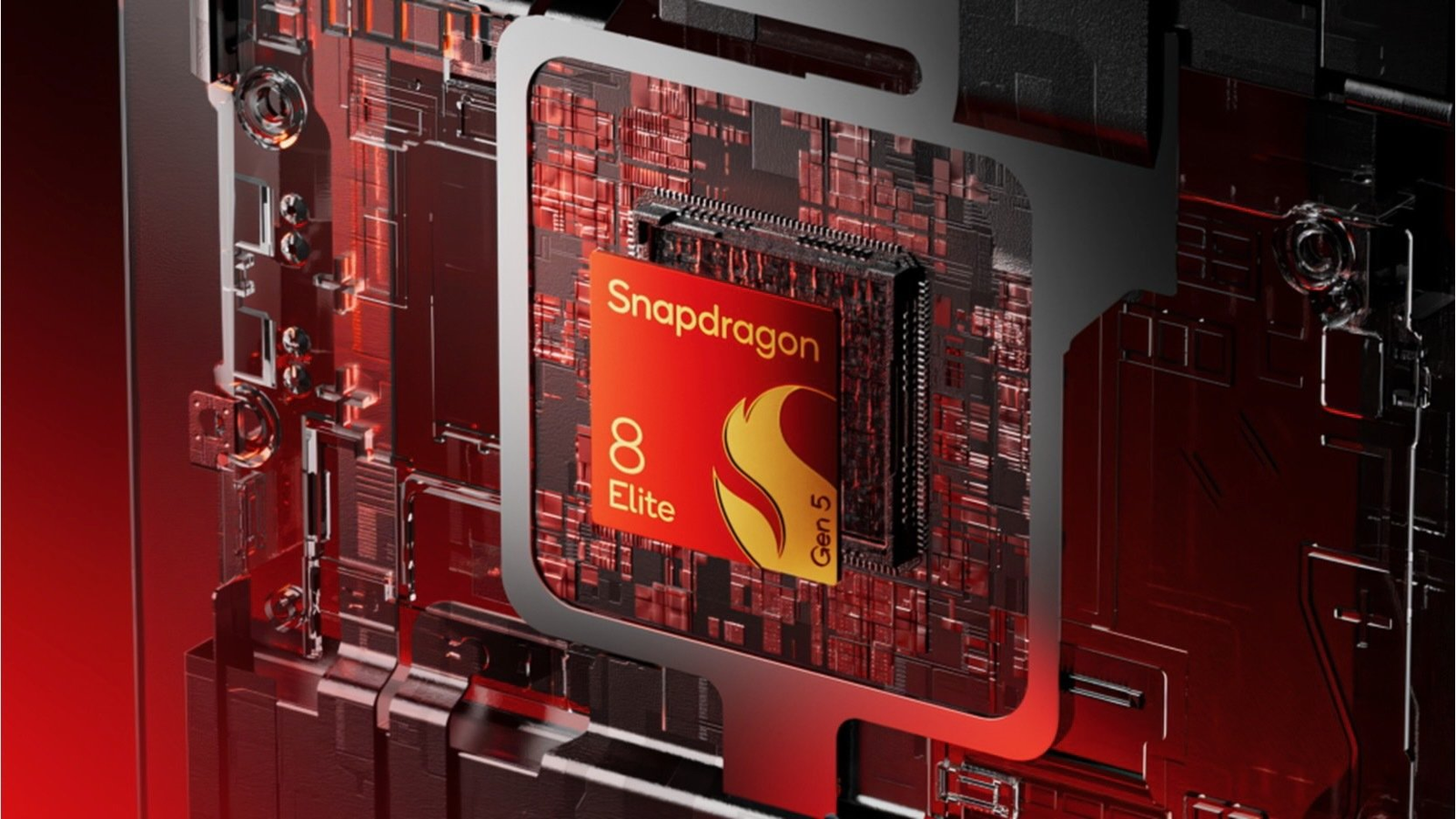
Qualcomm Snapdragon 8 Elite Gen 6 Pro: Breaking the 5GHz Barrier
Qualcomm is restructuring its flagship tier by introducing a dual-tier lineup featuring a standard Snapdragon 8 Elite Gen 6 and a higher-tier Pro (SM8975) variant. The Pro model adopts a 2 + 3 + 3 layout powered by custom 4th-generation Oryon cores, fabricated on TSMC’s 2nm N2P process. The two prime cores officially break the 5GHz mobile frequency ceiling by clocking in at 5.01GHz, backed by three performance cores at 4.03GHz and three efficiency cores at 3.74GHz.
For graphical workloads, the Pro variant steps up to the Adreno 850 GPU, featuring a 3-slice configuration with 18MB of dedicated graphics memory (GMEM) and an 8MB Last Level Cache (LLC). A primary highlight is the integration of dedicated Matrix ALU blocks within the shader processors, enabling hardware-level AI Frame Fusion to handle upscaling and neural frame generation directly on the silicon with minimal latency overhead.
The standard Snapdragon 8 Elite Gen 6, by contrast, will feature the Adreno 845 GPU and slightly lower clock speeds, positioning it for premium devices that don’t require the absolute bleeding edge. Qualcomm’s dual-tier strategy mirrors recent trends in the laptop and desktop CPU markets, giving OEMs flexibility in pricing and thermal design. The company has also confirmed that both variants will feature an integrated 5G modem with improved mmWave and sub-6GHz performance, though specific details remain under wraps until the official Snapdragon Summit.
MediaTek Dimensity 9600 Pro: The 2nm Challenger
MediaTek is matching Qualcomm’s node advance by deploying the Dimensity 9600 Pro on the same TSMC 2nm N2P platform. Rather than using fully custom in-house CPU designs, MediaTek continues its partnership with Arm, implementing a 2 + 3 + 3 cluster utilizing next-generation Arm C2-Ultra (“Canyon”) prime cores running at 4.55GHz alongside C2-Premium and C1-Pro architectures.
Dimensity 9600 Pro Key Specifications
- CPU: 2x Arm C2-Ultra at 4.55GHz + 3x Arm C2-Premium + 3x Arm C1-Pro
- GPU: Arm G2-Ultra NX MC12 with 8 traditional rendering cores + 8 dedicated NX tensor units
- Node: TSMC 2nm N2P
- AI Capabilities: Hardware-level frame generation and real-time super-resolution via neural silicon
- NPU: Upgraded MediaTek APU with enhanced generative AI throughput
Graphics and visual AI processing are handled by the Arm G2-Ultra NX MC12 GPU. The GPU is split into two distinct clusters: 8 traditional rendering cores paired with 8 dedicated NX tensor acceleration units. This dedicated neural silicon powers hardware-level frame generation and real-time super-resolution for high-framerate mobile gaming and on-device generative models without overburdening the primary NPU. MediaTek’s approach represents a fundamental shift in how mobile graphics are handled, potentially delivering console-equivalent frame rates on battery-constrained devices.
In benchmarking scenarios, the Dimensity 9600 Pro is expected to trade blows with the Snapdragon 8 Elite Gen 6 Pro. While the Snapdragon holds the clock speed advantage, MediaTek’s dedicated neural hardware could deliver superior performance in AI-heavy workloads and gaming frame-generation scenarios. The actual performance delta will likely come down to thermal management and how aggressively OEMs tune these 2nm flagship chips in their respective devices.
Snapdragon vs Dimensity: Head-to-Head Comparison
For readers comparing these flagship chips side-by-side, here’s a detailed breakdown of how the two platforms stack up across key metrics:
| Specification | Snapdragon 8 Elite Gen 6 Pro | MediaTek Dimensity 9600 Pro |
|---|---|---|
| Process Node | TSMC 2nm N2P | TSMC 2nm N2P |
| CPU Architecture | Custom 4th-gen Oryon (2+3+3) | Arm C2-Ultra/C2-Premium/C1-Pro (2+3+3) |
| Prime Core Clock Speed | 5.01 GHz | 4.55 GHz |
| GPU | Adreno 850 (3-slice, 18MB GMEM) | Arm G2-Ultra NX MC12 (8+8 cores) |
| AI Hardware | Matrix ALU in shader processors | 8x dedicated NX tensor acceleration units |
| AI Frame Generation | AI Frame Fusion (hardware-level) | Neural Graphics (hardware-level) |
| Expected Announcement | September 22 (Snapdragon Summit) | Early September 2026 |
| First Devices | Samsung Galaxy S27 Ultra, Xiaomi 18 | Vivo X500 series, OEM flagships |
The comparison reveals a fascinating divergence in strategy. Qualcomm is pushing raw clock speeds to unprecedented levels, while MediaTek is betting on hybrid neural hardware to deliver differentiated performance. For consumers, the choice between the two will likely come down to what matters most: raw multi-core throughput or AI-accelerated gaming and generative features.
Why Qualcomm and MediaTek Are Late to the 2nm Party
Apple, Google, and Xiaomi have already unveiled 2nm-based SoCs, giving them a significant first-mover advantage in the premium smartphone segment. Apple’s A20 series (expected September 2026), Google’s Tensor G5, and Xiaomi’s Surge chips have already been announced or leaked extensively, putting Qualcomm and MediaTek in an unusual catch-up position.
There are several reasons for this delay. Qualcomm’s custom Oryon core development requires longer validation cycles compared to off-the-shelf Arm designs, and the 5GHz frequency target pushed their engineering teams to the limit. MediaTek, meanwhile, has been aggressively securing its position in the premium tier after years of dominating the mid-range and budget segments, but the transition to Arm’s latest C2 architectures required significant firmware and driver optimization.
Industry observers also note that the 2nm transition itself has been challenging. TSMC’s N2P node, while delivering impressive gains, has seen lower-than-expected yields in early production runs, forcing some chipmakers to adjust their timelines. However, both Qualcomm and MediaTek are now confident in their supply chains and are preparing for a massive product push in the coming months.
This late entry isn’t necessarily a disadvantage. The additional development time has allowed both companies to refine their AI hardware and thermal management solutions, potentially delivering more polished products than first-movers who rushed to market. As the smartphone industry enters its most competitive phase in years, the real winners will be consumers who benefit from the rapid innovation cycle.
What This Means for Smartphone Buyers
For consumers, the arrival of 2nm flagship chips signals a major upgrade cycle. Devices powered by the Snapdragon 8 Elite Gen 6 Pro and Dimensity 9600 Pro will deliver significantly better battery life — up to 30% reduction in power consumption — while offering performance levels previously reserved for desktop computers.
The dedicated AI hardware in both chips will enable new experiences: real-time AI-powered gaming frame generation, on-device image and video enhancements, and faster local execution of generative AI models. Features like AI Frame Fusion and Neural Graphics mean that even mid-tier devices could deliver console-quality gaming experiences, while flagship phones will push boundaries previously thought impossible for mobile form factors.
Pricing is expected to rise for flagship devices, however. The transition to 2nm manufacturing carries higher wafer costs, and both chipmakers will pass some of that expense to OEMs. Consumers should expect flagship phones to start around $1,100-$1,300, with ultra-premium variants crossing the $2,000 threshold. The silver lining? The performance leap is substantial enough that these devices will remain competitive for years, potentially extending upgrade cycles and delivering better long-term value.
If you’re in the market for a new phone, the best strategy is to wait for devices launching in late 2026 and early 2027. The combination of 2nm processors, improved cameras, and next-generation displays will make this one of the most meaningful upgrade cycles in recent memory.
Frequently Asked Questions
Which chipset is faster, Snapdragon 8 Elite Gen 6 Pro or Dimensity 9600 Pro?
Based on leaked specs, the Snapdragon 8 Elite Gen 6 Pro has a higher peak clock speed (5.01GHz vs 4.55GHz), potentially giving it an advantage in single-core tasks. However, MediaTek’s dedicated neural hardware may outperform in AI-heavy workloads and gaming frame generation. Real-world performance will depend on device cooling and OEM software optimization.
What phones will have the Snapdragon 8 Elite Gen 6 Pro?
Expected devices include the Samsung Galaxy S27 Ultra, Xiaomi 18 flagship, Vivo X500 Pro, and other premium Android devices launching in late 2026 and early 2027. Several gaming-focused smartphones may also adopt the Pro variant for its higher clock speeds.
When will Snapdragon 8 Elite Gen 6 phones release?
Qualcomm is expected to announce the Snapdragon 8 Elite Gen 6 series at its Snapdragon Summit on September 22, 2026. First devices featuring the chipset are expected to launch in late 2026, with a broader rollout in early 2027.
Is 2nm chip technology better than 3nm?
Yes. TSMC’s 2nm N2P process delivers approximately 15% better performance and up to 30% reduced power consumption compared to 3nm. This translates to faster phones with better battery life and improved thermal management.
What is AI Frame Fusion on the new Qualcomm chip?
AI Frame Fusion is Qualcomm’s hardware-level frame generation technology integrated into the Adreno 850 GPU’s shader processors. It uses dedicated Matrix ALU blocks to upscale and generate neural frames directly on the silicon, enabling higher frame rates in games without draining battery life or overheating the device.