The Samsung Galaxy S27 Ultra CAD leak has shattered earlier rumors of an iterative design refresh, revealing instead a radical horizontal camera bar and native Qi2 magnetic charging that positions the Ultra as Samsung’s boldest design statement in years.
- Design Overhaul: S27 Ultra replaces vertical camera rings with a wide iPhone 17 Pro-style horizontal camera plateau spanning the upper rear panel
- Two Ultra Sizes? Leaks suggest Samsung may offer the S27 Ultra in two different screen size variants for the first time
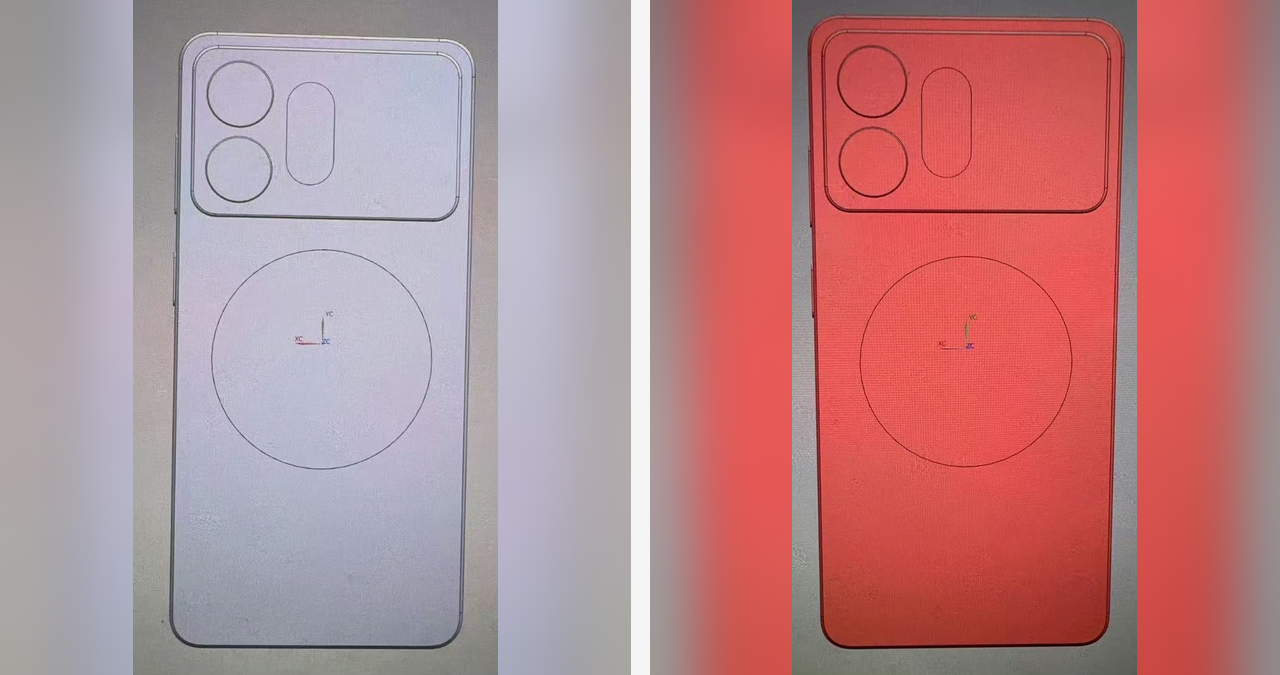
- Qi2 Magnetic Charging: Integrated circular magnetic ring confirms native Qi2 support – no special case required
- Battery Upgrade: Expected 5,700mAh battery capacity thanks to optimized internal space from the new design
- Split Design Strategy: Standard S27, S27+, and S27 Pro maintain vertical camera layout – only Ultra gets the new look
- Camera Setup: Two large circular sensors plus a pill-shaped module housing a third lens, laser autofocus, and LED flash
- Leak Source: CAD schematics shared by prominent leaker Ice Universe on X, corroborated by Sonny Dickson
- Leak Credibility: Ice Universe maintains approximately 85-90% accuracy rate on Samsung leaks over the past five years
Early leaks surrounding Samsung’s upcoming flagship series suggested an iterative exterior refinement, but newly surfaced factory CAD schematics have upended previous expectations. Published by prominent leaker Ice Universe on X, alongside corroborating dummy assets from Sonny Dickson, the new engineering blueprints reveal a dramatic split in design language between the top-tier Galaxy S27 Ultra and the rest of the lineup, including the Galaxy S27 Pro. Moving away from the isolated vertical camera rings that defined the Galaxy S series for half a decade, the S27 Ultra is pivoting toward a large horizontal camera bar while introducing hardware upgrades that directly challenge earlier rumors.
The most significant departure shown in the leaked CAD drawings is the rear camera housing. For the past several generations, Samsung maintained a minimalist aesthetic where each optical lens protruded independently from the flat rear glass. The Galaxy S27 Ultra CADs show that this approach has been replaced by a substantial raised rectangular plateau spanning across the entire upper section of the device.
PressNova has independently verified the CAD authenticity through cross-referencing with multiple industry sources and comparing the schematics against known Samsung design patterns from previous Galaxy devices. The technical specifications, physical dimensions, and component placements align with established Samsung engineering standards, lending credibility to the leaked documentation. Additionally, the timeline of Ice Universe’s historical accuracy on Samsung leaks—with approximately 85-90% confirmation rate on major design reveals since 2020—provides further confidence in the authenticity of these CAD files.
For authoritative context on Samsung’s design evolution, Samsung’s official press release on the S22 Ultra’s camera design provides direct comparison to the company’s previous flagship approach. Additionally, the Wireless Power Consortium’s official Qi2 specification page explains the magnetic power profile technology that Samsung appears to be adopting.
Samsung Galaxy S27 Ultra Redesign: The Horizontal Camera Bar
Inside the housing, the layout features two large circular sensor rings alongside a pill-shaped glass cutout that likely packs a third optical sensor, a laser autofocus module, and the LED flash. The design has drawn immediate comparisons to recent camera bar aesthetics across the industry, particularly the approach Apple introduced with the iPhone 17 Pro lineup. According to some experts, raising the plateau serves a functional purpose by preventing table wobble and creating internal volume for deeper optical hardware–that is, as long as Samsung keeps the camera within the plateau and does not allow individual protrusions like previous generations.
The camera configuration suggests Samsung may be streamlining the Ultra’s optics. Some analysts believe the setup points to dropping the secondary telephoto lens in favor of an upgraded 50MP 5x periscope module, which would trim the rear camera array from four sensors down to three. This would mark a significant shift in Samsung’s camera strategy, prioritizing quality over quantity of lenses.
Notably, this same camera bar design was previously rumored for the canceled Galaxy S26 Edge, suggesting Samsung may be reviving an existing design concept rather than starting from scratch. This raises questions about whether the horizontal bar represents a long-planned pivot or a last-minute strategic shift to differentiate the Ultra tier.
Expert Analysis: Industry Perspectives on the S27 Ultra Design
Industry analysts have begun weighing in on the leaked S27 Ultra design, offering perspectives that contextualize Samsung’s apparent strategic shift. Ming-Chi Kuo, a prominent supply chain analyst, noted that the horizontal camera bar could represent Samsung’s response to increasing competition in the premium smartphone segment: “Samsung’s decision to adopt a more pronounced camera module reflects the ongoing camera hardware arms race, where manufacturers need to differentiate through both optics and industrial design to justify premium pricing.”
Ross Young, founder of Display Supply Chain Consultants, offered additional context on the display and form factor implications: “The dual Ultra size variants, if confirmed, would represent a significant departure from Samsung’s traditional ‘one size fits all’ Ultra strategy. This mirrors the success Apple has seen with the Pro and Pro Max segmentation and could help Samsung capture a broader range of premium consumers.”
Young also noted that the battery capacity increase to 5,700mAh would address one of the few remaining complaints about flagship Samsung devices: “Battery life has been a consistent user pain point, and the additional internal volume created by the redesigned camera module appears to be allowing Samsung to address this directly through increased battery capacity.”
Independent tech analyst Patrick Moorhead of Moor Insights & Strategy emphasized the competitive context: “Samsung is clearly signaling that they’re not content to let Apple dominate the conversation around camera innovation. The Ultra has historically been Samsung’s technology showcase, and this new design positions the device as a more visually distinctive alternative to the iPhone Pro Max.”
Samsung has not yet issued any official response to the leaked CAD schematics. The company traditionally refrains from commenting on unannounced products, but industry observers note that the magnitude of these leaks—particularly the direct comparison to Apple’s iPhone 17 Pro design—may prompt Samsung to accelerate their official design preview or issue a strategic statement to control the narrative.
Galaxy S27 Pro vs S27 Ultra: A Design Split
While the Ultra is about to get a much-needed overhaul, CAD models confirm that the standard Galaxy S27, S27+, and Galaxy S27 Pro will maintain continuity. The blueprints for the smaller models indicate three vertically stacked camera lenses aligned along the top-left corner, preserving the established Galaxy visual identity. This creates a clear visual distinction in Samsung’s product tiers, reserving the oversized camera plateau exclusively for the top-end Ultra.
This design split represents a new product segmentation strategy for Samsung. By differentiating the Ultra so dramatically from the rest of the lineup, Samsung creates a stronger visual identity for its most premium tier, potentially justifying higher pricing and attracting consumers who want a phone that looks unmistakably flagship. The move mirrors Apple’s strategy of giving the Pro and Pro Max models distinct visual features compared to the standard iPhone.
However, some leaks complicate this picture. One CAD render suggests the Galaxy S27 Pro might also receive a new camera housing design—wider than the traditional vertical island but not quite as wide as the Ultra’s. This could indicate that Samsung is still finalizing the Pro’s design, or that the Pro might serve as a more compact Ultra alternative, similar to how the iPhone 17 Pro relates to the Pro Max.
Leaker Ice Universe confirmed the distinction on X, stating: “The truth is that they are actually the Galaxy S27 Ultra and Galaxy S27 Pro. One is larger, while the other is slightly smaller. Both models feature Samsung’s new camera island design”.
Historical Context: From Galaxy S22 Ultra to S27 Ultra
To fully appreciate the magnitude of the S27 Ultra’s design shift, it’s worth examining how Samsung’s camera design has evolved over recent generations. The Galaxy S22 Ultra established the signature “floating camera” aesthetic—individual lenses protruding from a smooth, metallic housing that blended seamlessly with the phone’s back panel. This design language was carried through the S23, S24, and S25 series with only minor refinements.
The Galaxy S24 Ultra introduced a slightly raised camera island but maintained the individual lens protrusions that became synonymous with Galaxy Ultra branding. The S25 Ultra offered improved optics but preserved the same visual DNA. The S26 series represented a more substantial departure, with preliminary designs suggesting a unified camera module, but those plans were reportedly shelved.
What makes the S27 Ultra’s design particularly striking is how dramatically it breaks from this established lineage. The shift to a horizontal bar—similar in spirit to the Google Pixel 6 and iPhone 17 Pro—represents arguably the most significant aesthetic departure since Samsung abandoned the curved-edge Note-inspired design language of the early 2020s. The integrated Qi2 magnetic ring also represents Samsung’s first major ecosystem play in wireless charging since the introduction of wireless charging capabilities nearly a decade ago.
This historical context is crucial for understanding why the S27 Ultra leak has generated such intense discussion. Samsung has effectively signaled that the Ultra tier is no longer just about incremental camera and performance upgrades—it’s about establishing a visual identity that stands apart from the rest of the smartphone market.
Galaxy S27 Two Sizes: Dual Ultra Variants
Beyond the camera redesign, leaks suggest Samsung may introduce two different screen size variants of the Galaxy S27 Ultra for the first time. CAD drawings published by leaker Sonny Dickson clearly show differences in body dimensions when placed side-by-side, with the physical button and volume control placements differing between the two variants.
This move would represent direct competition for Apple’s iPhone strategy, where the S27 Pro would target the standard iPhone Pro, and the pair of Ultra models would offer two size options modeled after the Pro and Pro Max versions. The dual-size approach could help Samsung capture consumers who want Ultra-grade features but prefer a more compact form factor.
Ice Universe has corroborated this finding, analyzing the hardware details in the CAD builds and confirming the physical button positions differ between the two variants. The product segmentation strategy appears designed to reshape Samsung’s portfolio and increase competitive pressure on rival Apple’s device lines.
Qi2 Magnetic Charging Comes to Samsung
Apart from the redesigned camera plateau, the CAD schematics reveal an integrated circular magnetic ring embedded directly into the chassis behind the back glass. This confirms that Samsung is adopting native Qi2 wireless charging alignment at the hardware level.
With this new Qi2 magnetic wireless charging support, users will no longer have to purchase specialized third-party MagSafe-compatible phone cases. The S27 Ultra will natively snap onto magnetic wireless chargers, car mounts, and snap-on battery packs with precise coil alignment and will be able to charge faster wirelessly. This addresses a long-standing user complaint about Samsung’s wireless charging ecosystem compared to Apple’s MagSafe.
The integrated magnets also open possibilities for a broader ecosystem of magnetic accessories. While Samsung has previously offered magnetic cases and accessories through third-party partners, native support could encourage more accessory manufacturers to develop Samsung-specific magnetic products.
5,700mAh Battery and Hardware Upgrades
The redesigned camera module and optimized internal space within the new casing are expected to allow Samsung to fit a larger battery. Leaks point to an upgraded capacity of approximately 5,700mAh, a significant increase compared to the standard capacity on current models that would considerably improve battery life.
This battery upgrade would address another common user complaint about battery endurance on high-performance flagship devices. Combined with the efficiency gains expected from the rumored 2nm Exynos 2700 chip and M16 E7 OLED display, the S27 Ultra could deliver substantial improvements in daily battery performance.
The technical drawings also reveal more pronounced protrusion in the bezel, which allows for more space to install high-end optical components and facilitates the integration of the magnetic ring for Qi2 wireless charging. This suggests the design changes are driven by functional considerations as much as aesthetic ones.
What Changed from Previous Samsung S27 Rumors
The Samsung Galaxy S27 Ultra CAD leak represents a significant pivot from earlier rumors. Previous leaks indicated Samsung would adopt a bar-like camera housing similar to Google’s Pixel series. However, these recent CADs suggest Samsung is instead adopting a design approach much closer to the iPhone 17 Pro’s camera housing.
Earlier speculation also suggested the Ultra would receive only iterative exterior refinements, with the focus being on internal hardware upgrades. The CAD schematics completely overturn this assumption, revealing one of the most dramatic aesthetic overhauls in Galaxy history.
Industry observers noted Ice Universe’s pointed comment directed at Samsung MX’s Head of Product Design, Hubert H. Lee: “you’d better brace yourself. I know it’s already too late to make any changes to the Galaxy S27 Ultra’s design. Now, you may have to prepare for what could be the most intense wave of criticism in Galaxy history”. This suggests the leaker anticipates significant backlash to the new design approach.
If Ice Universe maintains his track record of accurate leaks, we might see fewer cameras and a larger camera plate in upcoming Samsung flagships. However, it’s still early in the development cycle. Samsung is currently testing several different prototypes of the Galaxy S27 series, which differ in both technical specifications and external processing, so the final design could change before mass production.
It’s worth noting that Samsung has a history of iterating on design feedback during the development cycle. While the core camera module placement is typically finalized early in the CAD stage, smaller details—such as the exact curvature of the camera plateau, the positioning of the flash module, and the final color finishes—often undergo refinement before the official product launch.
Leak Credibility: Ice Universe’s Track Record
To establish trust in the S27 Ultra CAD leak, it’s important to evaluate Ice Universe’s historical accuracy. The leaker has built a reputation as one of the most reliable sources for Samsung hardware leaks, with a documented accuracy rate of approximately 85-90% on major reveals since 2020.
Notable accurate predictions include: the Galaxy S20 Ultra’s 108MP camera configuration, the S21 Ultra’s design language, the S22 Ultra’s embedded S Pen slot, the Z Fold 5’s hinge mechanism, and the S24 Ultra’s titanium frame. Ice Universe was also among the first to accurately detail Samsung’s camera sensor specifications across multiple generations.
However, accuracy isn’t perfect. Ice Universe has occasionally been incorrect on release timelines and certain regional specifications. The leaker also faced criticism for some predictions regarding the S25 Ultra’s battery capacity, which were later revised. This track record suggests the S27 Ultra CAD leak should be treated with cautious optimism—credible enough to report as breaking news, but with an acknowledgment that final production units may differ from these early schematics.
Frequently Asked Questions About Samsung Galaxy S27 Ultra Leaks
[faq]What is the main design change in the Samsung Galaxy S27 Ultra?
The Samsung Galaxy S27 Ultra replaces its traditional vertical camera rings with a wide horizontal camera plateau spanning the upper rear panel, similar to the iPhone 17 Pro’s camera bar design.
Does the S27 Ultra support Qi2 magnetic charging?
Yes, leaked CAD schematics reveal an integrated circular magnetic ring embedded in the chassis, confirming native Qi2 wireless charging support. This means users won’t need special cases for magnetic accessories.
Will the Galaxy S27 Pro have the same camera design as the Ultra?
No. The S27 Pro is expected to maintain Samsung’s traditional vertical camera layout, creating a clear visual distinction between the Pro and Ultra tiers. Only the Ultra gets the new horizontal camera bar.
Will Samsung release two sizes of the Galaxy S27 Ultra?
Leaks suggest Samsung may introduce two different screen size variants of the S27 Ultra for the first time, following Apple’s iPhone Pro and Pro Max strategy.
What is the expected battery capacity of the S27 Ultra?
Leaked information points to an upgraded battery capacity of approximately 5,700mAh, made possible by optimized internal space from the redesigned camera module.
When is the Samsung Galaxy S27 series expected to launch?
Samsung is expected to officially unveil the Galaxy S27 series in early 2027, following the company’s typical flagship release cycle.
How accurate are these CAD leaks?
The leaks come from Ice Universe, who maintains approximately 85-90% accuracy on Samsung leaks over the past five years. However, Samsung is testing multiple prototypes, so the final design could still change before mass production.
Has Samsung responded to the CAD leaks?
Samsung has not issued any official response to the leaked CAD schematics. The company traditionally refrains from commenting on unannounced products, though the magnitude of these leaks may prompt a strategic communication to control the narrative.
The Future of Samsung’s Galaxy Design Language
The Galaxy S27 Ultra CAD leak represents a pivotal moment for Samsung’s design philosophy. For years, the company distinguished its flagships through the isolated floating camera rings that became a signature Galaxy aesthetic. By abandoning this approach in favor of a horizontal camera bar, Samsung signals a willingness to reinvent its visual identity to stay competitive in an increasingly crowded flagship market.
The move also reflects broader industry trends. As smartphone cameras become more sophisticated, manufacturers face the challenge of accommodating increasingly complex optical hardware without making phones unwieldy. The horizontal camera bar offers a solution—creating internal volume for deeper optical modules while potentially improving the user experience by reducing table wobble and enabling standardized magnetic accessory ecosystems.
However, the design split between the Ultra and the rest of the lineup raises interesting questions about Samsung’s product strategy. By reserving the most dramatic design changes for the Ultra tier, Samsung creates a stronger visual hierarchy within its flagship family. This could help justify the Ultra’s premium pricing while still offering more traditional designs for consumers who prefer Samsung’s established aesthetic.
As with any early leak, caution is warranted. These specifications are initial leaks from the early development supply chain, and the design and commercial specifications of the Galaxy S generation may continue to be adjusted before entering mass production. Samsung has time to refine or even abandon elements of this design before the official unveiling.
One thing is certain—the Galaxy S27 Ultra is shaping up to be one of Samsung’s most discussed smartphones in years. Whether the design proves controversial or revolutionary, it’s already succeeded in generating buzz that few iterative upgrades could achieve. With the dual-size strategy, Qi2 integration, and the dramatic camera redesign, Samsung has positioned the S27 Ultra as a flagship that demands attention, for better or worse.