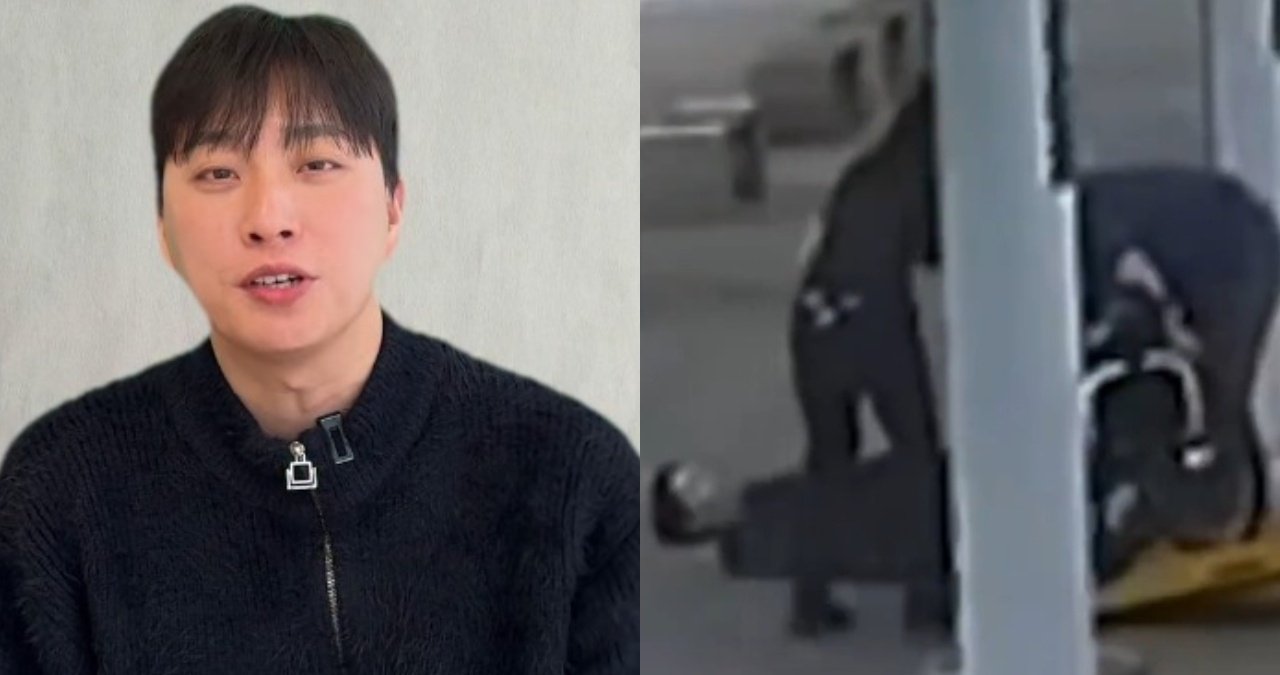
Park We faces a fierce backlash after sharing KTX accident CCTV footage on his YouTube channel, sparking widespread netizen anger over what many view as an excessive response to a public service worker’s unintentional mistake. The YouTuber and husband of former SECRET member Song Ji-eun released the security camera recording showing his wheelchair wheel catching on a a social service worker’s foot while descending a ramp at a KTX station on August 14, causing him to fall forward. Although Park We was able to break his fall with his arms and avoid serious injury, the decision to publicize the footage—especially after the worker had already apologized at the scene—has ignited a firestorm of criticism that shows no signs of abating.
- What Happened: Park We’s wheelchair wheel caught on a social service worker’s foot while descending a KTX ramp, causing him to fall forward
- The Video: Park We shared the CCTV footage on his YouTube channel ‘WERACLE,’ later deleting it amid backlash
- The Worker: The social service worker had already apologized at the scene; the accident was unintentional
- The Apology: Park We issued a statement admitting he was “short-sighted” and failed to consider the worker’s position
- Subscriber Loss: Park We’s YouTube channel dropped from over 1 million to approximately 991K subscribers
- Wife Targeted: Song Ji-eun has received malicious comments urging her to “manage” her husband
- Key Criticism: Netizens question whether sharing the footage was appropriate when the worker had already apologized
The controversy began when Park We, a disability rights activist who uses a wheelchair, posted the CCTV footage on his popular YouTube channel ‘WERACLE’ on August 21. In the video, the social service worker can be seen attempting to assist Park We down a boarding ramp when his wheelchair wheel catches on the worker’s foot, causing him to tumble forward. Park We later explained that he was frightened by the incident and frustrated that the worker had placed a foot on the ramp, adding that while the worker had apologized politely, he remained angry. The YouTuber stated his intention was not to blame the worker but to highlight safety issues faced by wheelchair users and prevent similar accidents from occurring.
However, public sentiment quickly turned against Park We as viewers pointed out that the social service worker was clearly trying to help and had already apologized at the scene. Critics argued that posting the footage on a channel with over one million subscribers was an excessive response that could encourage harassment of the individual involved. The backlash intensified as netizens questioned why Park We needed to publicly share footage of an unintentional mistake made by a young person serving in an alternative military role.
KTX official website outlines passenger safety protocols for travelers with disabilities, though the company has yet to issue a formal statement on this specific incident. Meanwhile, Korail, which operates KTX services, maintains accessibility guidelines for station staff assisting passengers with mobility needs.
The Incident: What Happened on August 14 at KTX?
The accident occurred on August 14 while Park We was traveling by KTX train to give a lecture. As he was being assisted down a boarding ramp in his wheelchair, the wheel caught on the foot of a social service worker who was helping to secure the ramp. Park We fell forward but managed to extend his arms to brace himself against the ground, preventing his head from striking the platform.
Park We described the moment as terrifying, telling viewers that he gradually lost sensation below his collarbone following a previous spinal injury and would not have known if he had suffered a fracture. He acknowledged that the worker had not acted intentionally and had offered a polite apology at the scene. However, he admitted that he was angry about the worker’s foot being placed on the ramp in the first place, stating he believed proper safety protocols should have prevented the incident.
According to Park We, station employees later informed him that similar incidents had occurred before because manual wheelchairs are relatively lightweight. He argued that more comprehensive training for staff assisting wheelchair users could prevent such accidents and protect both passengers and workers from harm.
The CCTV Footage: Why Did Park We Share It?
The decision to share CCTV footage of the incident has become the central point of contention in this controversy. Park We obtained the security camera recording and uploaded it to his WERACLE channel, where it quickly garnered millions of views before being taken down. In his initial explanation, Park We stated that the purpose of sharing the footage was to raise awareness about safety issues affecting wheelchair users and to advocate for systemic improvements in how transportation services accommodate passengers with disabilities.
However, netizens have questioned both the ethics and legality of publicly releasing CCTV footage that clearly shows a social service worker in a compromising situation. In South Korea, the Personal Information Protection Act strictly regulates the collection, use, and disclosure of personal information, including video recordings of identifiable individuals captured by surveillance cameras. While Park We maintains that his intentions were educational, legal experts suggest that sharing footage without blurring the worker’s face could potentially violate privacy regulations.
Critics have also raised concerns about the power dynamic at play. The social service worker is a young person fulfilling mandatory military alternative service, a position with limited legal protections and significant vulnerability to public scrutiny. By posting the video to a platform with more than a million subscribers, Park We arguably exposed this individual to widespread attention and potential harassment, regardless of his stated intentions.
Park We’s Apology: Full Statement and Analysis
Following the intensifying criticism, Park We issued a formal apology through his YouTube channel. In his statement, he acknowledged that his actions had been shortsighted and failed to consider the position of the worker who had simply been trying to help. He specifically noted that he had “only viewed the mistake that occurred in the process of trying to help me better in a negative way” and admitted that his “method of communicating this was inadequate.”
Park We further expressed remorse to “everyone who made an effort to help me at the scene,” extending his apology beyond the worker to include other station staff who had rendered assistance. He reiterated that the footage was produced “not with the intention of criticizing or holding a specific individual responsible, but to prevent safety accidents involving wheelchair users and create a safer environment for their use.”
Despite the conciliatory tone of his apology, many netizens remained unconvinced. Critics pointed out that Park We only issued the apology after facing significant backlash, suggesting that his remorse might be performative rather than genuine. Others noted that while he acknowledged his error in judgment, he did not explicitly address the ethical questions surrounding the release of CCTV footage without consent. This latest controversy adds to the growing list of public figures facing intense scrutiny, reminiscent of the backlash seen when the Biden family Christmas photo sparked unexpected backlash, highlighting how quickly public sentiment can turn against prominent individuals.
In a table comparing Park We’s statements, the contradictions become more apparent:
| Statement Aspect | Initial Video Context | Formal Apology |
|---|---|---|
| Purpose | Highlight safety failures; prevent similar accidents | Apologize for negative framing; acknowledge short-sightedness |
| Worker’s Role | Frustration expressed; anger about foot placement | Failed to consider worker’s position; acknowledges they did their best |
| Responsibility | Focused on system failures | Acceptance of inadequate communication method |
| Victim | Self positioned as injured party | Worker and staff acknowledged as deserving consideration |
Netizen Backlash: Why The Apology Didn’t Stop The Criticism
Despite Park We’s apology, the online criticism has continued unabated. Netizen reactions can be categorized into several key themes:
- Exploitation of Disability: Many commenters accused Park We of using his disability status to justify questionable behavior, suggesting that his wheelchair use should not shield him from legitimate criticism about his actions.
- Power Imbalance: Critics highlighted the power differential between a famous YouTuber with over a million subscribers and a young social service worker in a vulnerable position. The decision to expose this individual to public scrutiny was widely condemned as an abuse of influence.
- Privacy Violation: Questions about whether Park We had the right to share CCTV footage without the worker’s consent have dominated discussions across various online platforms.
- Monetization Concerns: Some netizens pointed out that the video was likely monetized, suggesting that Park We may have profited from sharing the incident.
- Insincerity of Apology: Many viewed the apology as insincere, arguing that Park We was merely responding to public pressure rather than genuinely understanding why his actions were problematic.
Online forums and social media platforms have been flooded with discussions dissecting every aspect of the controversy, with the hashtag relating to Park We’s actions trending across multiple platforms.
The Public Service Worker’s Role: Apology and Aftermath
The social service worker at the center of this controversy has remained largely silent throughout the unfolding drama. According to reports, the worker apologized immediately after the incident on August 14, demonstrating what witnesses described as genuine remorse for their unintentional mistake. Park We himself acknowledged that the worker “politely apologized” at the scene.
However, the worker’s subsequent experience has been less clear. Following the release of the CCTV footage, there were concerns about whether the worker would face disciplinary action from their service organization or KTX management. While Korail has not officially commented on the worker’s status, employment law experts note that public service workers have limited protections and may be subject to reassignment or other administrative measures based on public complaints.
Privacy advocates have also expressed concern about the worker’s well-being, noting that being publicly identified in connection with a viral controversy can lead to mental health difficulties and long-term reputational damage. The fact that the worker was simply fulfilling their service obligations in good faith has made the situation particularly sympathetic to many observers.
Disability rights organizations have been cautious in their response, with some expressing understanding of Park We’s concerns about safety while simultaneously criticizing his methods. The balance between advocating for systemic improvements and protecting individual workers who make honest mistakes has become a central tension in the broader conversation about this controversy.
Song Ji-eun Dragged In: Why Is His Wife Being Targeted?
Perhaps the most troubling aspect of the backlash has been the targeting of Park We’s wife, former SECRET member Song Ji-eun. Netizens have flooded her social media accounts with comments demanding that she “manage” her husband, with some going as far as suggesting that she should publicly distance herself from the controversy.
Song Ji-eun, who married Park We in October 2024, has no involvement in her husband’s YouTube content or his decision to share the CCTV footage. However, as a public figure in her own right with a significant fanbase from her years as a K-pop idol, she has become an unfortunate collateral victim of the controversy. Many fans have expressed concern about her wellbeing, with some calling for protective measures against malicious comments.
The situation has reignited discussions about the gendered nature of public harassment in South Korea, where female celebrities are frequently targeted for the actions of their male partners or family members. The phenomenon of demanding that wives “control” their husbands reflects deeper societal issues around gender roles and public scrutiny of women in the entertainment industry.
Song Ji-eun’s career has continued, with her maintaining her own social media presence and professional activities. However, the emotional toll of being subjected to public criticism through no fault of her own has raised concerns among fans and mental health advocates alike.
Legal and Ethical Questions Surrounding the CCTV Release
The decision to share CCTV footage has raised complex legal and ethical questions that extend beyond the immediate controversy. Under South Korea’s Personal Information Protection Act (PIPA), the collection, use, and disclosure of personal information including video recordings that identify individuals are strictly regulated. Generally, CCTV footage can only be used for the specific purposes for which it was originally recorded, such as security monitoring. Using such footage for public posting without consent potentially violates privacy laws.
Park We has not publicly disclosed how he obtained the CCTV footage. Whether he requested it through official channels, was given access by KTX staff, or acquired it through other means remains unclear. Legal experts note that regardless of how he obtained it, publicly posting footage that clearly identifies an individual—especially without blurring their face—raises significant legal concerns.
Ethically, the situation is even more complex. While Park We has a genuine concern about safety protocols for wheelchair users, his chosen method of advocacy has been widely criticized as disproportionate. Disability advocates have debated whether public shaming is an effective strategy for systems change, with many arguing that more constructive approaches would have been more appropriate.
The precedent set by this incident may have implications for how both public figures and ordinary citizens handle similar situations in the future. If sharing CCTV footage without consent becomes normalized, privacy protections could be undermined, potentially leading to increased harassment of vulnerable individuals.
Disability Community Reaction: Safety vs. Exploitation
Within South Korea’s disability community, reactions to the controversy have been mixed. Some disability rights activists have expressed understanding of Park We’s concerns about safety, noting that wheelchair users frequently encounter inadequate accessibility measures and poorly trained staff across transportation networks. From this perspective, Park We was trying to highlight a genuine systemic issue that deserves attention.
However, other voices within the disability community have criticized Park We’s approach, arguing that using a social service worker’s unintentional mistake to make a broader point was counterproductive and potentially harmful to the overall advocacy effort. They suggest that more effective approaches would have involved formal complaints, discussions with KTX management, and coordinated advocacy campaigns rather than public shaming of an individual.
The controversy has also sparked important conversations about the representation of disability in media. Some disability advocates have expressed concern that the scandal may reinforce negative stereotypes about disabled people being overly sensitive or difficult to accommodate. Others have noted that the debate about Park We’s methods has overshadowed the legitimate safety concerns that were at the heart of his original grievance.
Looking internationally, similar controversies have occurred in other countries where disabled individuals have documented accessibility failures on social media. However, experts note that cultural context matters significantly, with South Korean attitudes toward public shaming and online accountability differing from those in many Western societies.
What’s Next? Potential Consequences for Park We and KTX
As the controversy continues to unfold, several potential outcomes are worth considering:
Timeline of Events
- August 14: KTX accident occurs; social service worker apologizes at scene
- August 21: Park We posts CCTV footage on WERACLE YouTube channel
- August 22: Video goes viral; netizen backlash intensifies
- August 23: Park We issues formal apology; makes video private
- August 24-25: Subscriber count drops below 1 million; Song Ji-eun becomes target
- Ongoing: Public debate continues; KTX and Korail face pressure to respond
Park We’s Previous Controversies
Park We has maintained a relatively positive public image throughout his career as a YouTuber and disability advocate. He has been praised for raising awareness about life with spinal injuries and for his engagement with fans. However, this incident has exposed tensions in how disability advocacy intersects with public behavior, potentially damaging his reputation and credibility.
Official KTX Statement on Passenger Safety
KTX and its parent company Korail have not issued a formal statement addressing this specific incident, though they maintain comprehensive safety guidelines for staff assisting passengers with mobility needs. The company may face pressure to respond to safety concerns raised by Park We while also addressing the worker’s situation. Potential responses could include staff retraining, revised protocols, or public statements reaffirming their commitment to accessibility.
For Park We personally, the consequences extend beyond his YouTube subscriber count. His reputation as a disability advocate has been called into question, and the long-term impact on his career remains uncertain. He may also face legal consequences if privacy concerns are pursued. Additionally, the strain of public criticism may affect his personal life and relationship with his wife, who has been subjected to significant harassment.
The controversy ultimately serves as a cautionary tale about the complexities of online activism and the responsibilities that come with having a large public platform. While the concerns about accessibility for wheelchair users in South Korea are legitimate and deserve attention, the methods used to raise these concerns have become the story themselves, arguably overshadowing the original safety message.
Frequently Asked Questions
What exactly happened between Park We and the KTX public service worker?
On August 14, Park We’s wheelchair wheel caught on the foot of a social service worker who was helping him down a boarding ramp at a KTX station. Park We fell forward but was able to break his fall with his arms. The worker had already apologized at the scene for the unintentional mistake.
Why are netizens angry at Park We over the KTX video?
Netizens are angry because Park We shared CCTV footage of the incident on his YouTube channel despite the worker already apologizing. Critics argue that publicly exposing a young social service worker was an excessive response and may have been done for views and monetization rather than genuine advocacy.
What did Park We say in his apology?
Park We apologized, stating he “failed to consider the position of the worker who did his best to help” and “only viewed the mistake in a negative way.” He admitted his communication method was “inadequate” and “short-sighted” and apologized to everyone who helped at the scene.
Why is Song Ji-eun being targeted by netizens?
Song Ji-eun, Park We’s wife and former SECRET member, is being targeted by malicious comments demanding she “manage” her husband. This reflects a troubling pattern in Korean entertainment where female celebrities are held responsible for their male partners’ actions.
Was the CCTV footage legally obtained and shared?
How Park We obtained the CCTV footage has not been disclosed. Under South Korea’s Personal Information Protection Act, publicly sharing footage that identifies individuals without consent raises significant privacy concerns and may be illegal.
Did the public service worker face any punishment?
KTX and Korail have not officially commented on the worker’s status. The worker had already apologized at the scene for the unintentional mistake, and there have been no public reports of disciplinary action being taken against them.
Has KTX changed its safety procedures for wheelchair users after this incident?
KTX has not issued a formal statement regarding changes to safety procedures following this incident. However, the controversy may prompt review of existing protocols and additional staff training for assisting passengers with mobility needs.