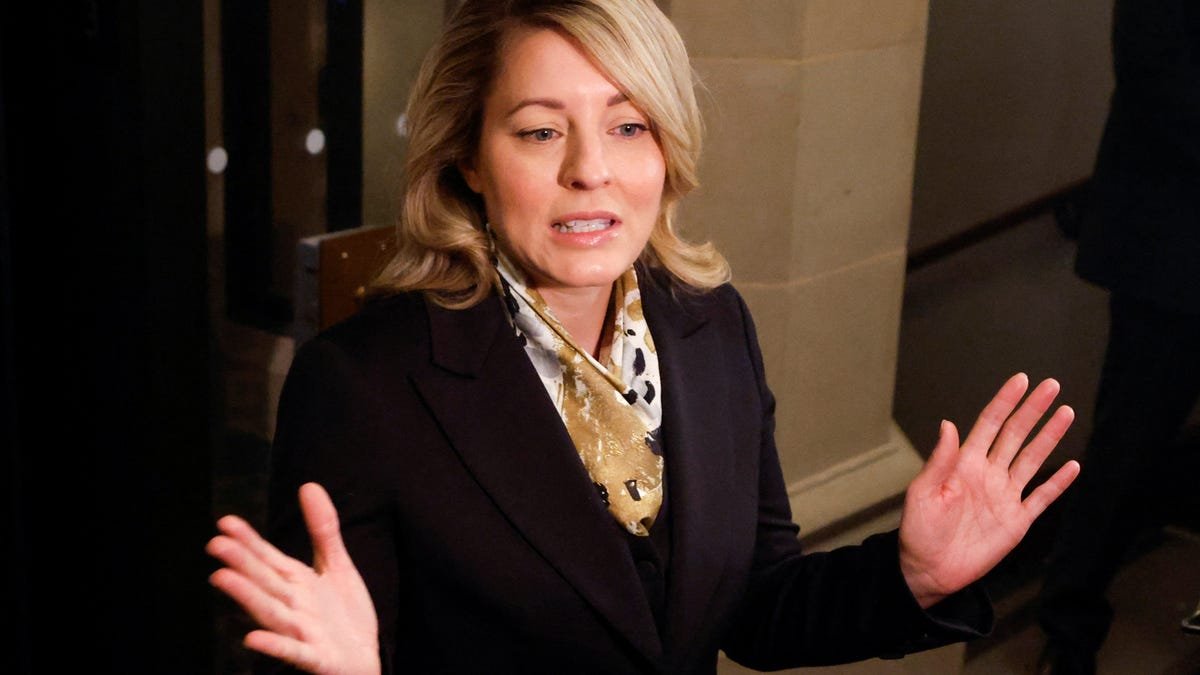
Canadian Minister Melanie Joly has firmly rejected President Donald Trump’s proposal to rename Lake Ontario to “Lake America,” dismissing the idea as “shenanigans” as trade tensions between the neighboring countries continue to escalate.
- Direct Rejection: Canada’s Minister of Industry Mélanie Joly declared “We’ll always call it Lake Ontario. Period” in response to Trump’s renaming proposal
- Trade War Context: The lake dispute emerged amid escalating tariffs, with Trump imposing 50% tariffs on Canadian imports and Canada retaliating with dollar-for-dollar countermeasures
- Historical Significance: Joly emphasized the lake’s indigenous name and Canada’s 5,000-year connection to the Great Lakes and St. Lawrence River system
- Trump’s Ambiguity: The president remained evasive about whether he was serious, stating “People thought I was kidding, maybe I wasn’t” in a radio interview
- Sovereignty Debate: The proposal echoes Trump’s earlier Gulf of Mexico renaming and comes amid broader suggestions about making Canada the 51st state
- Economic Stakes: Lake Ontario serves as a critical shipping route to the Atlantic Ocean and holds strategic importance for both nations
“We’ll always call it Lake Ontario. Period,” Joly, Canada’s minister of industry, said to applause on Aug. 25 in response to a reporter’s question about Trump’s threat. The minister, responsible for growing Canada’s economy and spurring research, delivered the unequivocal response as part of a broader defense of Canadian sovereignty.
“We’re proud of our Great Lakes,” Joly added, emphasizing the indigenous name for the lake. “We’ve navigated the St. Lawrence River – the Great Lakes – for thousands of years and it was part of the foundation of our country. We’ll just stand up for what we have.”
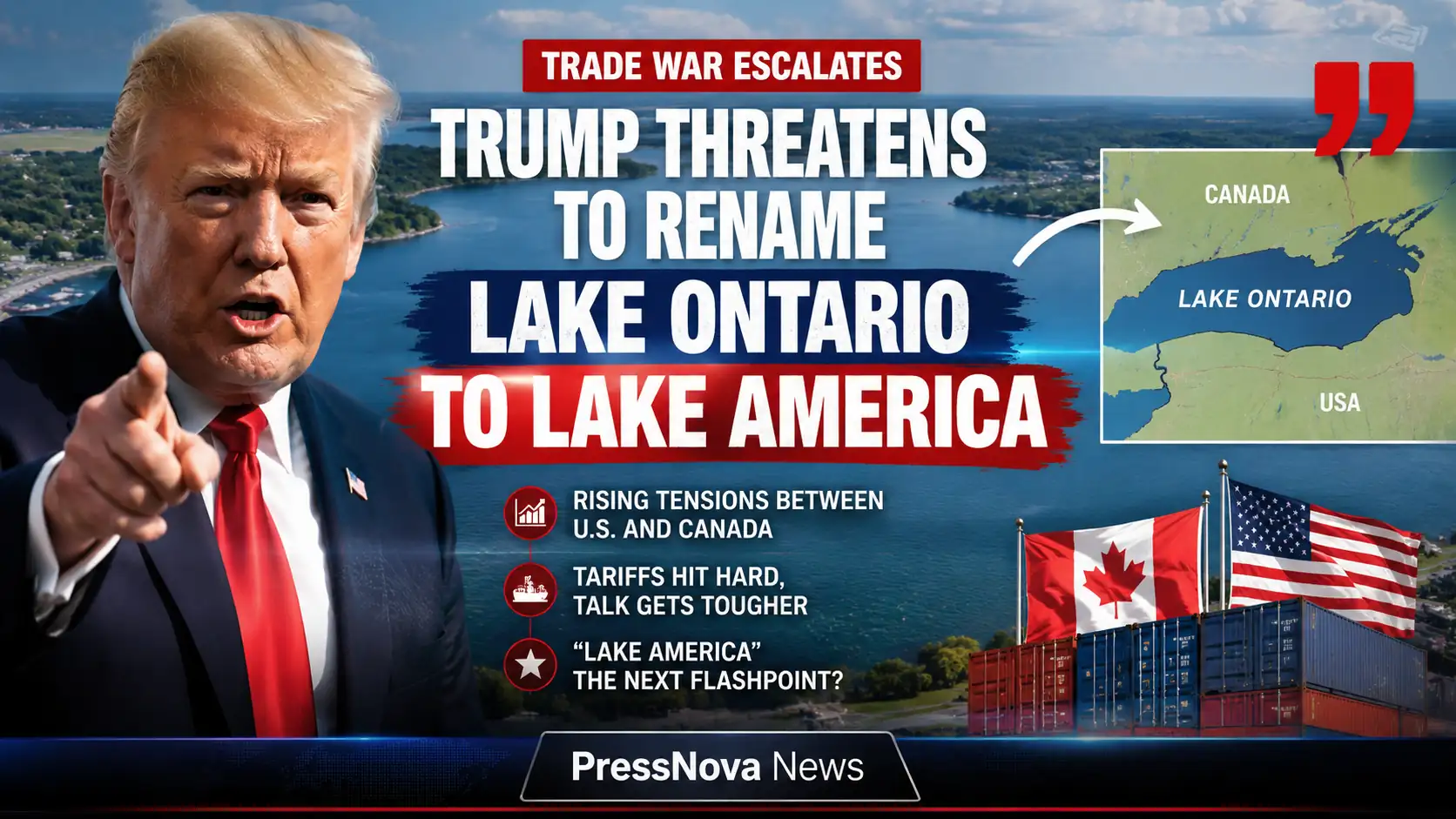
Trump first floated the Lake Ontario renaming proposal through several social media posts, including a Truth Social message stating: “Lake Ontario should be renamed Lake America. It belongs to us. It’s on our border, and we’ve been taken advantage of for too long.” In a separate post, he added, “The Great Lakes are American greatness. Why should they carry a Canadian name?” The move echoed his earlier proclamation renaming the Gulf of Mexico to the Gulf of America on the first day of his second term, though this proposal did not feature a corresponding executive order or proclamation.
The president remained characteristically evasive about his seriousness during an Aug. 26 interview with radio host Glenn Beck. “People thought I was kidding, maybe I wasn’t,” Trump said, leaving the door open to potential official action while offering no concrete plans.
Lake Ontario, the smallest of the Great Lakes, serves as a vital shipping artery connecting the region to the Atlantic Ocean through the St. Lawrence Seaway. The lake’s U.S. shoreline runs along western New York state, while Toronto, Canada’s largest city, sits prominently along its Canadian shore. The geographic and economic significance of the lake has made it a symbol of the broader sovereignty debate.
The geography dispute, however, represents merely a sideshow to the escalating trade war. Trump boosted tariffs to 50% on approximately 5% of imports from Canada after trade talks collapsed last week. Canada responded swiftly with “dollar for dollar” retaliatory tariffs ranging from 15% to 50% on $20 billion worth of U.S. imports, marking a significant escalation in the economic conflict.
Canada’s Unwavering Defense of Sovereignty
Canadian officials have framed the Lake Ontario renaming proposal within the broader context of national sovereignty. François-Philippe Champagne, Canada’s minister of finance and national revenue, revealed that part of the U.S. trade talks aimed to restrict who Canada trades with and under what conditions—a proposition Canada firmly rejected.
“No thanks,” Champagne said of the U.S. proposals, adding that “economic sovereignty is fundamental.” The minister’s comments underscore Canada’s determination to maintain independent trade relationships despite pressure from its southern neighbor.
Trump has previously suggested making Canada the 51st state, a notion Canadian officials have consistently dismissed as non-negotiable. Joly addressed this broader context when she said, “While all of these shenanigans are happening, we’ll just be smart and we’ll be strategic and we’ll fight back.”
The use of the word “shenanigans” by a senior Canadian cabinet minister reflects the growing frustration in Ottawa with what officials view as provocative and unserious proposals from the White House, even as the economic stakes continue to rise.
Historical Significance and Indigenous Roots of Lake Ontario
Joly’s reference to the indigenous roots of the lake’s name carries deep historical weight. The name “Ontario” derives from the Iroquois word “kanadario,” meaning “sparkling” or “beautiful” water, reflecting the region’s indigenous heritage that long predates European settlement.
Historians trace the name to the Iroquois Confederacy, which inhabited the region for centuries before European contact. The Mohawk Nation, part of the Confederacy, referred to the lake as “Ontario” in their oral traditions, a term that entered European cartography during French exploration in the 17th century.
Canadian officials have emphasized that the Great Lakes-St. Lawrence River system has been central to the country’s identity and economic development for centuries. The waterway served as the primary route for early explorers, fur traders, and settlers who built the foundations of modern Canada.
The lake’s Canadian shoreline includes major population centers and industrial hubs, making it integral to the nation’s economic lifeblood. Toronto, Hamilton, and Kingston all depend on Lake Ontario for shipping, recreation, and freshwater resources that sustain millions of Canadians.
Environmental experts note that the Great Lakes contain approximately 20% of the world’s surface freshwater supply, making them not only economically crucial but also environmentally irreplaceable. The lakes have been jointly managed by the U.S. and Canada through the International Joint Commission (IJC) since 1909, representing one of the longest-standing examples of bilateral cooperation between the two nations. The IJC, established under the Boundary Waters Treaty, ensures that both countries share water resources equitably and address transboundary environmental issues.
In a statement released to PressNova News, the Canadian government emphasized that “the historical and cultural significance of the Great Lakes transcends any political proposal.” The full statement is available on the Government of Canada official website.
Trump’s Pattern of Geographic Renaming and Diplomatic Strategy
The Lake Ontario proposal follows Trump’s earlier renaming of the Gulf of Mexico to the Gulf of America, which he signed as a proclamation on Jan. 20, 2026, his first day back in office. That move drew international attention and criticism but proceeded without significant challenge from other nations.
Unlike the Gulf of Mexico proclamation, however, the Lake Ontario renaming proposal has not advanced to an executive order stage. Trump’s comments on Beck’s radio show—”People thought I was kidding, maybe I wasn’t”—suggest the president may be testing public reaction before committing to formal action.
Political analysts have noted that both renaming proposals serve to rally the president’s base while distracting from more substantive policy debates. The proposals tap into nationalist sentiment and provide a clear contrast with what Trump characterizes as a weak approach to international relations from previous administrations.
Critics, however, view the geographic renaming efforts as diplomatic provocations that strain relations with vital allies. Canadian officials have emphasized that such proposals, even if not formally enacted, undermine the trust and cooperation necessary for effective bilateral governance.
Trade War Escalation: Economic Impact and Industry Analysis
The renaming dispute emerged as the trade war between the U.S. and Canada reached new intensity. Trump’s 50% tariffs on approximately $20 billion in Canadian imports took effect Aug. 22 after negotiations between the two countries collapsed, marking a significant deterioration in the bilateral trading relationship.
Canada’s response included “dollar for dollar” tariffs on $20 billion in U.S. imports, with rates ranging from 15% to 50% depending on the product category. The retaliatory measures target American goods ranging from agricultural products to manufactured items, designed to maximize political impact in key U.S. states.
“We will always defend our workers, our industries, and our sovereignty,” Joly said during her Aug. 25 remarks. “Canada has the resources, the resilience, and the resolve to weather any storm.”
Trade experts have expressed concern that the escalating conflict could damage economies on both sides of the border. Dr. Michael Sutherland, a trade economist at the University of Toronto, told PressNova News: “We’re looking at potential GDP contraction of 0.5% to 1.2% for Canada and 0.3% to 0.8% for the United States if these tariffs remain in place for more than six months. The automotive and agricultural sectors will be hit hardest, with potential job losses in the tens of thousands.”
According to the U.S. Census Bureau, Canada is the United States’ largest export market for many goods, including agricultural products, automotive parts, and industrial machinery. The automotive industry, deeply integrated across the border, faces particular risk. Industry analysts project that tariffs could increase vehicle prices by 8-15% and disrupt supply chains that have operated seamlessly for decades.
The dispute has also raised questions about the future of the United States-Mexico-Canada Agreement (USMCA), the trade pact negotiated during Trump’s first term that was intended to provide stability and predictability to North American trade. International relations expert Dr. Sarah Chen of the Council on Foreign Relations noted: “This tariff escalation undermines the entire framework of USMCA. We’re witnessing a fundamental breakdown in the rules-based trading system that has governed North American trade since 1994.”
Canadian Unity in the Face of U.S. Pressure
Canadian officials across the political spectrum have voiced support for Joly’s firm stance on the Lake Ontario proposal, reflecting a rare moment of national unity amid external pressure. Conservative, Liberal, and New Democratic Party representatives have all rejected any suggestion that Canada should cede territorial or cultural identity to American interests.
“This is about who we are as Canadians,” Joly said. “Our geography, our history, our identity—these are not bargaining chips. They are the foundation of our nation.”
Public reaction in Canada has been overwhelmingly supportive of the government’s position. Social media users across the country have shared images of Lake Ontario with the caption “Always Ontario, Never America,” echoing the sentiment expressed by Joly during her press availability.
Canadian commentators have noted that the dispute, while seemingly trivial, touches on deeper questions about Canadian autonomy and the nature of the U.S.-Canada relationship. For many Canadians, the lake renaming proposal represents not just a geographic curiosity but a fundamental challenge to their national identity.
Timeline: The Collapse of U.S.-Canada Trade Talks
| Date | Event |
|---|---|
| July 2026 | U.S. proposes new trade restrictions on Canadian dairy, lumber, and automotive sectors |
| Aug. 1-15 | Multiple rounds of negotiations fail to resolve disagreements over market access and tariffs |
| Aug. 18 | Talks collapse with both sides accusing the other of bad faith negotiations |
| Aug. 22 | Trump imposes 50% tariffs on $20 billion in Canadian imports; tariffs take effect immediately |
| Aug. 23 | Canada announces retaliatory tariffs ranging from 15-50% on $20 billion in U.S. goods |
| Aug. 24 | Trump floats Lake Ontario renaming proposal on Truth Social |
| Aug. 25 | Joly delivers firm rejection: “We’ll always call it Lake Ontario. Period.” |
| Aug. 26 | Trump tells Glenn Beck “maybe I wasn’t” kidding about renaming proposal |
What Happens Next: Scenarios and Predictions
As the dispute continues to unfold, analysts have identified several potential scenarios for how the situation may develop:
Scenario 1: Diplomatic De-escalation — Both nations could return to the negotiating table, with Trump using the Lake Ontario proposal as a bargaining chip to gain concessions on trade. This scenario would likely involve the U.S. dropping the renaming idea in exchange for Canadian concessions on dairy or automotive tariffs.
Scenario 2: Escalation and Formal Proposal — Trump could issue an executive order or proclamation renaming the lake, prompting Canada to take the matter to international tribunals or the International Joint Commission. Legal experts suggest such a move would face significant challenges, as the U.S. cannot unilaterally rename a body of water that is shared with Canada.
Scenario 3: Trade War Expansion — The tariff conflict could expand to include additional sectors, with both nations imposing further retaliatory measures. Economists warn this could trigger a broader recession in both countries, particularly affecting manufacturing and agricultural communities.
Scenario 4: Status Quo with Continued Rhetoric — Trump may continue to use the proposal as a rhetorical device without taking formal action, keeping it as a wedge issue for domestic political purposes while trade talks slowly resume.
Dr. Chen offered her perspective: “The most likely outcome is scenario four. Trump understands that renaming the lake would be a diplomatic nightmare with no real benefit. But keeping the issue alive serves his political purposes while he extracts maximum leverage from the trade negotiations.”
For Canadians, however, the message from Ottawa is clear: Lake Ontario will remain Lake Ontario, and Canada will remain Canada, regardless of what proposals emerge from Washington. Joly concluded her remarks with characteristic firmness: “We will not be bullied, and we will not surrender our sovereignty. Lake Ontario is Canadian, and it will always be Lake Ontario.”