The Supreme Court ruled that states challenged President Donald Trump’s mail ballot executive order prematurely, delivering a procedural victory to the administration while leaving the most consequential voting rules blocked nationwide.
- Procedural Ruling: The Supreme Court agreed with the Trump administration that states filed their challenge too early, before the executive order was fully implemented.
- USPS Provisions Still Blocked: The Postal Service components of Trump’s order remain frozen nationwide through a separate lawsuit brought by voting rights groups.
- States Can Renew Challenge: The ruling explicitly allows the 23 states plus D.C. that sued to refile their challenge once the administration begins enforcing the rules.
- Liberal Dissent: Justice Ketanji Brown Jackson warned the decision creates a “Kafkaesque nightmare” for plaintiffs, questioning when exactly election-related claims can be brought.
- Purcell Principle at Play: The ruling reflects judicial reluctance to change election rules close to an election, potentially influencing future lower court decisions.
- Midterm Stakes: With control of Congress on the line, voting rights groups warn the order could disenfranchise millions through restrictive ballot requirements.
The unsigned opinion, issued Aug. 24, determined that the states’ lawsuit was filed prematurely because the administration had not yet finalized implementation rules for the executive order signed in March. This decision lifts a lower court ruling that had blocked certain provisions from taking effect in nearly half the states that brought the challenge.
However, the most significant component of Trump’s order—granting the U.S. Postal Service authority to establish uniform standards for mail-in ballots—remains on hold nationwide through a separate lower court ruling in a case brought by voting rights organizations. This critical distinction means the Supreme Court’s decision does not unfreeze the Postal Service provisions.
California Attorney General Rob Bonta, who led the states’ challenge, emphasized the limited scope of the ruling. “Today, the U.S. Supreme Court opened the door for the Trump Administration to try to make it harder for Americans to vote. But today’s decision was not a ruling on the merits, and this fight is far from over,” Bonta said.
Supreme Court Rules Challenge to Trump Mail Ballot Order Was Premature: What the Court Said
In its decision, the Supreme Court made clear that its ruling does not address the underlying legality of Trump’s executive order. “This decision does not mean that any measure taken by the Government to implement the Order will necessarily be lawful,” the majority wrote. “On that score, time will tell.”
The court also explicitly noted that the states can renew their challenge once the administration begins enforcing the new rules. The decision does not prevent states from returning to court after implementation, ensuring the legal battle over mail-in voting procedures will continue.
The court’s three liberal justices dissented. Justice Ketanji Brown Jackson issued a sharp rebuke, writing that the decision “lets another shoe drop in the Kafkaesque nightmare that our precedents have been steadily creating for certain plaintiffs who seek to bring election-related challenges.”
“To be sure, the Court has not foreclosed States from challenging this blatantly unconstitutional Order,” Jackson continued. “But it declines to explain when, exactly, is the right time to bring a meritorious election-rule claim challenging unconstitutional interference with electoral processes.”
The ruling reflects the judiciary’s traditional reluctance to intervene in election administration close to voting dates. Under the Purcell principle, federal courts generally avoid changing election rules shortly before an election to prevent voter confusion and administrative chaos. With the midterms approximately 10 weeks away, this doctrine could influence how lower courts handle future challenges.
What Trump’s Executive Order Requires for Mail-In Voting
The executive order Trump signed in March directs federal agencies to compile lists of confirmed U.S. citizens eligible to vote in each state and requires states to provide voter verification data to the Postal Service. The order aims to establish uniform standards for mail-in ballots and increase federal oversight of the voting process.
Specifically, the order would require the Postal Service to oversee mail-in voting by implementing “uniform standards” for ballot preparation and envelope design. States would be required to provide lists of verified voters to the Postal Service, enabling the agency to verify ballot eligibility before delivery.
The Justice Department has described these requirements as “modest” and within the Postal Service’s traditional authority to set mailing standards. “States do not have to use the U.S. mail to conduct their elections,” the Postal Service noted, but for states that do, the agency “can take steps to improve operational efficiency and support the faithful execution of federal law.”
Voting rights groups have characterized the order differently, arguing it represents an attempt to “weaponize” the Postal Service to force states to violate voters’ privacy by accessing sensitive personal information in voter files. States challenging the order have warned that implementing the changes before the midterms could result in millions of voters being denied the right to vote due to “high risk for errors and the limited window for correcting mistakes.”
Two Legal Fronts: The States’ Challenge vs. The Voting Rights Case
Understanding the Supreme Court’s ruling requires distinguishing between two separate legal challenges to Trump’s executive order:
The States’ Challenge: In June, U.S. District Judge Indira Talwani ruled that parts of the order were unconstitutional and blocked them from being enforced in the 23 states plus the District of Columbia that sued. The administration appealed, arguing the states filed prematurely. The 1st U.S. Circuit Court of Appeals disagreed, leading the administration to seek Supreme Court intervention. The Supreme Court ultimately sided with the administration, ruling the challenge was premature.
The Voting Rights Case: While the states’ appeal was pending, Judge Talwani blocked the Postal Service from implementing Trump’s directive in any state in response to a separate lawsuit brought by voting rights groups. This nationwide block remains in effect and was not affected by the Supreme Court’s ruling on the states’ case.
A dozen Republican-led states filed a separate brief supporting the administration and asking the Supreme Court to restore the full executive order. The Supreme Court’s ruling, however, did not address the Postal Service provisions, leaving them frozen nationwide.
The Postal Service finalized its implementation proposal while the Supreme Court was considering the states’ appeal, potentially expediting future enforcement if the nationwide block is lifted. This finalization could strengthen the administration’s argument in future legal proceedings that the order is now sufficiently implemented for challenges to proceed.
Why Timing Matters: The Purcell Principle Explained
The Supreme Court’s decision reflects a broader judicial doctrine known as the Purcell principle, which discourages federal courts from altering election rules close to an election. Named after the 2006 case Purcell v. Gonzalez, the principle recognizes that late changes to voting procedures can create confusion, administrative burdens, and disenfranchisement.
With the midterm elections approaching in November, the Purcell principle carries particular weight. The 1st Circuit Court of Appeals acknowledged this concern in July, ruling that Trump’s executive order “would sow confusion and threaten disenfranchisement of many eligible voters” if allowed to take effect for the November elections.
The appeals court also noted that states are already straining to prepare on a tight calendar for potential changes. The Supreme Court’s decision to lift the partial block on procedural grounds rather than substantive merits may signal that lower courts should exercise restraint in intervening in election administration at this late stage.
However, the nationwide block on the Postal Service provisions remains in place, suggesting that courts continue to view those components as particularly disruptive. The distinction between the two cases highlights how different legal challenges to the same executive order can produce different outcomes based on timing and the specific provisions at issue.
What Happens Next in the Courts
The Supreme Court’s ruling sets in motion several potential legal developments:
States Can Refile: The 23 states plus D.C. that challenged the order can now renew their lawsuit once the administration begins enforcing the rules. This could happen relatively quickly now that the Postal Service has finalized its implementation proposal.
USPS Block Remains: The nationwide block on the Postal Service provisions remains in effect through Judge Talwani’s order in the voting rights case. That case will continue independently of the states’ challenge.
Expedited Briefing: Judge Talwani has ordered expedited briefing in the voting rights case, suggesting the Postal Service provisions will be litigated on an accelerated timeline given the approaching midterms.
Potential Administrative Action: With the Postal Service finalizing its implementation rules, the administration may move quickly to begin enforcing the order, triggering renewed legal challenges from states and voting rights groups.
Legislative Efforts Continue: Trump has also proposed legislation requiring voters to provide identification at polling places and proof of citizenship when registering, but that bill has stalled in Congress. Another executive order requiring citizenship documentation for voter registration has been blocked by federal judges.
What This Means for Voters and the Midterm Elections
For voters, the immediate impact of the Supreme Court’s ruling is limited. The nationwide block on the Postal Service provisions remains in effect, meaning the most significant changes to mail-in voting procedures have not taken effect. The partial block that was lifted applied only to the 23 states that sued, but those provisions were less consequential than the Postal Service rules.
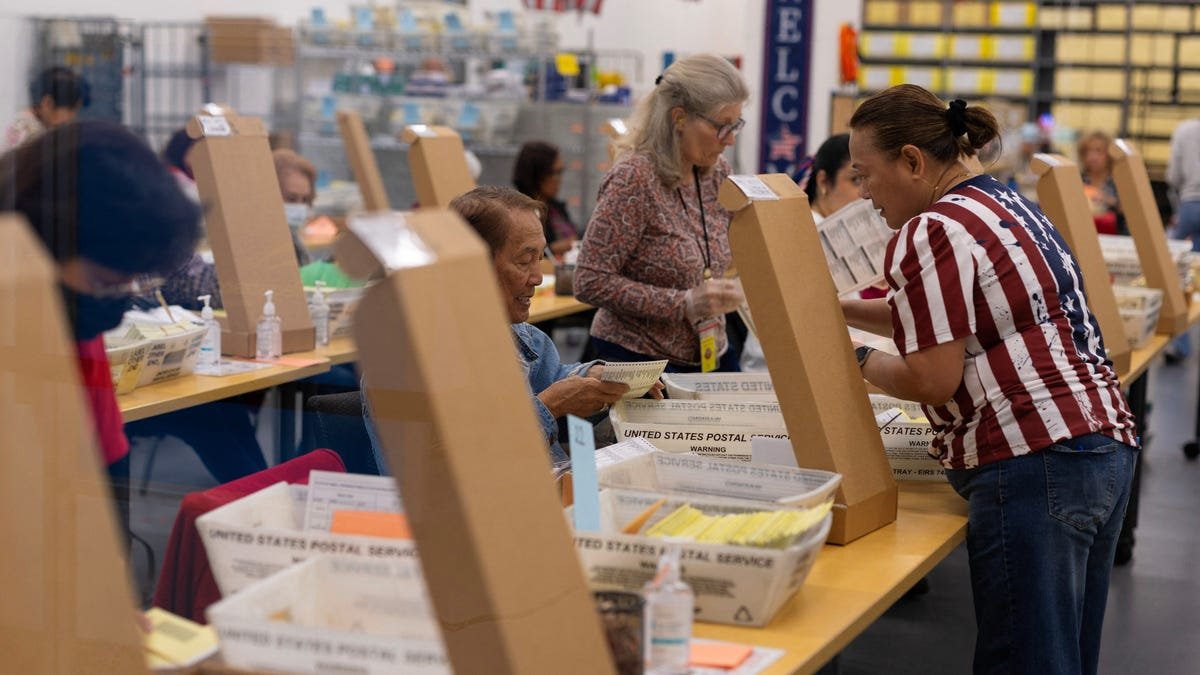
However, the ruling creates uncertainty about what rules will govern mail-in voting in November. Nearly 30% of voters cast ballots by mail in the 2024 elections, according to MIT Election Data & Science Lab, making mail-in voting a critical component of electoral participation. Democrats are more likely than Republicans to vote by mail, adding political dimension to the legal battle.
Voting rights groups warn that implementing the order before the midterms could create “chaos and uncertainty,” potentially disenfranchising millions of voters. States have expressed concern about the administrative burden of complying with new federal requirements on a tight timeline.
Key factors to watch as the midterms approach:
- Whether the nationwide USPS block is lifted or upheld in the expedited briefing before Judge Talwani
- Whether states renew their challenge and how quickly courts respond
- Whether the Purcell principle influences lower court decisions on any remaining challenges
- Whether the Postal Service begins implementing its finalized rules despite the legal uncertainty
For now, voters should check with their state and local election officials for the most current information on mail-in voting procedures. The legal landscape could change rapidly as courts consider expedited challenges to the executive order.
Frequently Asked Questions
Is the Supreme Court’s ruling a final decision on the legality of Trump’s mail ballot order?
No. The Supreme Court ruled only on procedural grounds—that the states challenged the order too early. The court explicitly stated that its decision “does not mean that any measure taken by the Government to implement the Order will necessarily be lawful.” The underlying legality of the executive order remains unresolved and will be litigated in lower courts.
Does this ruling affect my ability to vote by mail in the midterms?
For most voters, there is no immediate change. The Postal Service provisions of Trump’s order remain blocked nationwide through a separate lawsuit. The partial block that was lifted applied only to specific provisions in 23 states and D.C., but those provisions were less consequential than the USPS rules. Voters should check with their local election officials for current voting procedures.
What is the Purcell principle and why is it important?
The Purcell principle is a judicial doctrine that discourages federal courts from changing election rules close to an election. It recognizes that late changes can create voter confusion, administrative problems, and potential disenfranchisement. With the midterms approaching, this principle could influence how lower courts handle remaining challenges to Trump’s executive order.
When will we know the final rules for mail-in voting?
It remains uncertain. The Postal Service has finalized its implementation proposal, but the nationwide block remains in effect. Judge Talwani has ordered expedited briefing in the voting rights case, suggesting a ruling could come relatively quickly. States may also renew their challenge now that the Supreme Court has ruled, creating additional legal proceedings.
Can states still challenge Trump’s executive order?
Yes. The Supreme Court explicitly noted that its ruling does not prevent states from renewing their challenge once the administration begins putting new rules in place. With the Postal Service finalizing its proposal, states could refile their lawsuit relatively soon.
What are the political stakes of this ruling?
The midterm elections will determine control of Congress, and mail-in voting has become a politically charged issue. Democrats are more likely to vote by mail than Republicans, according to MIT Election Data & Science Lab. The outcome of the legal battle over mail-in voting rules could affect which party controls the House and Senate.