TikTok lab-grown diamond auctions have transformed the way millions of users shop for gemstones, turning what was once an intimidating trip to a jeweler into a rapid-fire livestream experience where loose stones sell in as little as 10 seconds.
- Livestream Auctions: Royale Diamonds leads the trend with high-energy, gamified auctions where bids fly in 10-30 second countdowns
- Price Range: Most lab-grown diamonds sell for $100-$500, with smaller stones going for under $100
- Hidden Costs: Setting a loose stone in gold jewelry can cost 2-3x the diamond price—one buyer paid $500 for a stone and $1,100 for setting
- Collector Craze: Frequent buyers report accumulating 30-50 stones in a single month, describing the habit as “addictive”
- Final Sale Warning: TikTok livestream auction purchases are generally final sale, with limited recourse beyond damaged or misdescribed items
- Market Context: TikTok Shop hit $50.3 billion in global sales in H1 2026, up 92% year-over-year
Royale Diamonds, the company behind most of these streams, has turned diamond auctions into entertainment. Auctioneers hold stones beneath bright studio lights, flash IGI grading reports, and start countdowns that last only seconds. Bids appear instantly on screen while hosts urge viewers to keep tapping. When the clock hits zero, a winner is announced, and the next diamond appears before anyone has time to reconsider.
Users are getting hooked. TikTok creator Ryan Roth accidentally won his first lab-grown diamond for $700, then bought another for $94 while scrolling in an Uber. He soon had 10 more stones on the way. “I don’t know what to do with them or about it, but it’s addicting,” Roth said. His justification: “I have adult money and free will.”
Collectors are comparing their hauls online. One frequent bidder told Rolling Stone she accumulated around 50 diamonds and other gemstones in one month, comparing herself to “Thanos gathering Infinity Stones.” Another woman told The Guardian she has purchased more than 30 diamonds since June, calling the livestreams her nightly viewing ritual. The spectacle has even become family entertainment—one 21-year-old said her family sometimes projects the streams onto a larger screen to watch together.
Why Lab-Grown Diamonds Are So Affordable
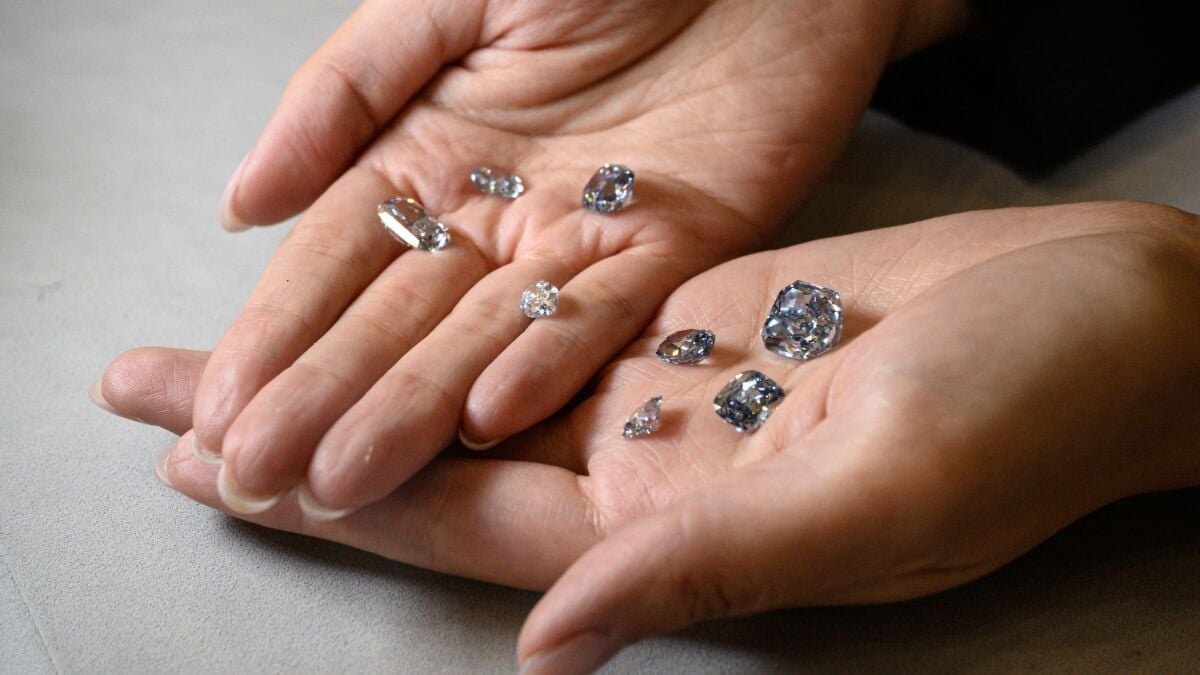
Lab-grown diamonds have the same chemical and physical properties as mined stones but cost dramatically less. Manufacturing has scaled significantly, pushing wholesale prices into freefall. According to industry analyst Edahn Golan, wholesale lab-grown diamond prices fell another 14% year-over-year in Q1 2026 and are now down 96% since 2018. A three-carat VVS D color round recently sold at wholesale for just $126 per carat.
That affordability has fundamentally changed what buying a diamond means. Instead of reserving them for engagements or anniversaries, TikTok users are collecting colorful stones, planning custom jewelry, or simply amassing piles of gems. The typical auction price hovers between $100 and $500, with smaller stones available for under $100.
Industry experts note the price gap between lab-grown and natural diamonds has widened to as much as 90% in some markets. A one-carat lab-grown diamond that would cost $800-$1,500 compares to $5,000-$7,000 for a natural equivalent of similar quality. At larger sizes, the disparity grows even more pronounced—a three-carat lab-grown stone around $1,000 compares to a natural diamond that could exceed $65,000.
To put this pricing disparity into perspective, consider the following comparison of lab-grown versus natural diamond prices across common carat weights and qualities:
| Carat Weight | Quality (Color/Clarity) | Lab-Grown Price (Retail) | Natural Diamond Price (Retail) | Savings |
|---|---|---|---|---|
| 1 carat | G/VS2 | $800-$1,500 | $5,000-$7,000 | Up to 85% |
| 2 carats | H/VS1 | $1,500-$3,000 | $15,000-$25,000 | Up to 90% |
| 3 carats | D/VVS2 | $1,000-$2,500 | $50,000-$65,000+ | Up to 96% |
| 4 carats | I/VS2 | $2,000-$4,000 | $80,000-$120,000+ | Up to 97% |
Source: Industry pricing data aggregated from wholesale and retail reports (2026). Actual prices vary by seller, cut quality, and market conditions.
The Hidden Cost: Setting Your Stone
The loose stone itself may be the cheapest part of the purchase. One buyer reportedly spent about $500 on a 3.78-carat lab-grown diamond from TikTok, then paid an additional $1,100 to set it in a 14-karat gold ring. Rising gold prices have made setting costs unpredictable, sometimes exceeding the diamond’s price multiple times over.
Sellers typically ship loose stones only, leaving buyers to find jewelers who will set their TikTok-purchased diamonds. Some auctioneers will connect buyers with partner jewelers, but the final cost of a finished piece of jewelry often comes as a surprise to first-time buyers.
Is It a Bargain or a Gamble?
The gamified format raises concerns about turning high-value purchases into entertainment, particularly for younger consumers who may lack financial discipline. Roth acknowledged the gambling-like feeling: “This isn’t actual gambling, as much as it does feel like it, because you’re getting something in return. You’re not just throwing money to the house.”
Retailers are capturing significant markups despite falling wholesale prices. Golan’s data shows retailers maintain more than 80% markups above wholesale, a figure that has barely moved between 2025 and 2026. That means the $200 stone you won on auction might have cost the seller just a fraction of that price.
What the Grading Report Doesn’t Tell You
Every stone from Royale Diamonds comes with an International Gemological Institute (IGI) grading report. Before bidding, buyers should verify the report with IGI directly through their official verification portal and check measurements, carat weight, cut, color, clarity, and treatments.
However, a grading report can’t fully convey how a stone will look in person. Bright livestream lighting can conceal imperfections, and a stone’s sparkle—how it performs in real-world light—isn’t captured by any certificate. Experts recommend buyers understand that lab-grown diamonds have virtually no resale value. “There is no resale value for lab-grown diamonds,” one industry expert told JCK, adding that the value only exists for the mounting itself.
How to Verify Your TikTok Diamond Purchase
Due diligence is essential when buying a diamond through a fast-paced livestream auction. Follow these steps to protect your purchase:
- Verify the grading report: Go to IGI’s official verification portal and enter your report number. Confirm all details match the seller’s description.
- Inspect the stone immediately: When your diamond arrives, examine it under natural and different lighting conditions—not just the bright lights used in livestreams.
- Weigh and measure: Use a precision scale and calipers to verify the stone matches the report’s stated carat weight and dimensions.
- Document everything: Take photos and video of the unboxing process in case you need to file a dispute.
- Consider an independent appraisal: For higher-value stones, pay a certified gemologist for a second opinion.
FTC Regulations and Consumer Protections
The Federal Trade Commission (FTC) requires sellers to clearly disclose when a diamond was created in a laboratory rather than mined. This requirement applies to livestream auctions just as it does to traditional retail. Additionally, TikTok’s Commerce Policy mandates that jewelry sellers provide authenticity documentation and prohibits the sale of fraudulent or misrepresented products.
Despite these protections, the fast-paced format makes it challenging to properly evaluate stones before bidding. The FTC has previously taken action against deceptive diamond marketing, and consumers who encounter violations can file a complaint with the FTC if they believe they were misled.
Return Policy and Buyer Protections
TikTok states that livestream auction purchases are generally final sale. Buyers may have recourse only if a stone arrives damaged, missing, or not as described. Buyer’s remorse—deciding you don’t want the diamond after all—is not typically grounds for a return.
Consumers should carefully review TikTok Shop’s policies before bidding and understand that the platform’s dispute resolution process may not favor impulsive purchases. If a seller misrepresents a stone, buyers should document the discrepancy and contact TikTok Support immediately.
The Bigger Picture: TikTok Shop’s Shopping Revolution
The diamond craze is part of TikTok Shop’s massive expansion. Customers spent an estimated $50.3 billion globally through TikTok Shop during the first half of 2026—a 92% increase from the same period in 2025. U.S. shoppers accounted for $11.8 billion of that total.
A relatively small group of enthusiastic customers is fueling that growth. Shoppers who made at least 20 TikTok Shop purchases during Q2 accounted for only 5% of buyers but generated around 30% of spending. Consumers over 35 were the platform’s fastest-growing age group.
By July 2026, TikTok Shop represented approximately 2% of U.S. online retail spending, surpassing the individual online businesses of Target, Costco, and Home Depot, according to Consumer Edge data.
The diamond auctions make it easy to understand why. TikTok hasn’t invented livestream shopping, impulse buying, or fast-talking auctioneers—it has simply squeezed all three into a personalized feed where entertainment and checkout happen on the same screen. You don’t need to open TikTok looking for a diamond. You only need to pause long enough to watch one sparkle.
The Future of Livestream Jewelry Retail
As lab-grown diamond prices continue to fall—with some analysts predicting wholesale prices could drop another 50% by 2027—the TikTok auction model may become the new normal for accessible luxury. Traditional jewelers are taking notice, with several established retailers quietly exploring their own livestream formats to compete with the viral success of Royale Diamonds.
However, the regulatory landscape is likely to evolve as well. Consumer protection agencies are increasingly scrutinizing the gamified shopping experience, particularly its resemblance to gambling mechanics. Lawmakers in the U.S. and Europe have begun examining whether livestream auctions require additional disclosure requirements or cooling-off periods, especially for high-value items like gemstones.
For now, TikTok’s diamond auctions remain a cultural phenomenon that reflects broader shifts in how younger generations discover, evaluate, and purchase luxury goods. Whether this trend has staying power or fades as regulatory and consumer fatigue sets in remains to be seen—but its impact on the jewelry industry is already undeniable.
Frequently Asked Questions
Are lab-grown diamonds real diamonds?
Yes. Lab-grown diamonds have the same chemical composition, physical properties, and optical characteristics as natural diamonds. They are graded on the same 4Cs (cut, color, clarity, carat weight) by laboratories like IGI and GIA. The only difference is origin—they are created in laboratories rather than mined from the earth.
What is the catch with cheap diamonds on TikTok?
The main catches are: (1) lab-grown diamonds have virtually no resale value, (2) setting the stone in gold jewelry can cost 2-3 times the stone’s price, (3) livestream lighting can conceal imperfections not captured in grading reports, and (4) purchases are generally final sale with limited return options.
Can you return a diamond bought on TikTok Shop?
TikTok livestream auction purchases are generally final sale. Buyers may have recourse only if the stone arrives damaged, missing, or not as described. Buyer’s remorse—deciding you don’t want the diamond after all—is not typically grounds for a return.
How do I verify my diamond’s grading report?
Check the report number with the issuing laboratory (usually IGI) on their official verification portal. Verify the diamond’s measurements, carat weight, cut grade, color grade, clarity grade, and any treatments. Cross-check the report details against the stone when it arrives to ensure they match.
Is it cheaper to buy a loose diamond and set it yourself?
The loose stone itself may be cheaper on TikTok auctions, but setting it can cost significantly more than the stone. A stone purchased for $100-$500 might cost $1,100 or more to set in a gold ring. Rising gold prices make the final cost unpredictable.
Does the FTC regulate TikTok diamond auctions?
Yes. The FTC requires clear disclosure when diamonds are lab-grown rather than mined. Sellers must provide accurate descriptions and cannot misrepresent a diamond’s origin, quality, or value. Consumers can report violations to the FTC.