President Donald Trump suggested his threat to rename Lake Ontario to Lake America isn’t necessarily a joke as he digs in further in a widening trade war with Canada, marking the latest escalation in cross-border tensions that have rattled diplomatic and economic relations between the two allies.
- Direct Quote: Trump told Glenn Beck “People thought I was kidding, maybe I wasn’t” about renaming Lake Ontario
- Canadian Counter-Proposal: Toronto Mayor Brad Bradford joked about renaming Lake Erie to “Lake Ontario”
- Ontario Premier Response: Doug Ford told Trump to “kiss my ass” and threatened electricity surcharge
- Indigenous Context: “Ontarí’io” means “lake of shining waters” in the Iroquois language—name dates to the 1660s
- Official Response: Canadian Industry Minister Mélanie Joly: “We’ll always call it Lake Ontario. Period.”
- U.S. Reaction: Rep. Debbie Dingell (D-MI) joked about renaming it “Lake Natalie” after her mother
- Economic Impact: Michigan and New York face $40B+ in potential export losses from tariff escalation
- Legal Process: U.S. Board on Geographic Names requires formal review, but international recognition remains unlikely
Trump on Aug. 26 compared his proposed renaming of one of the five Great Lakes to his prior action to rename the Gulf of Mexico the Gulf of America, which he formalized via signed proclamation on his first day of his second term.
“You saw the Lake Ontario thing. People thought I was kidding, maybe I wasn’t,” Trump said with a slight chuckle during an interview on conservative commentator Glenn Beck’s radio show. “Because the last one you saw was the Gulf of Mexico is Gulf of America. Now, we have a gulf and we have a lake. It’s very simple.”
Trump made the remarks as he defended his sweeping 50% tariffs slapped on many goods from Canada after trade negotiations between the two countries fell apart last week. Canadian Prime Minister Mark Carney countered by hitting U.S. exports with tariffs ranging from 15% to 50%. Trump has threatened to also double tariffs on automobiles and auto parts from Canada from 25% to 50%.
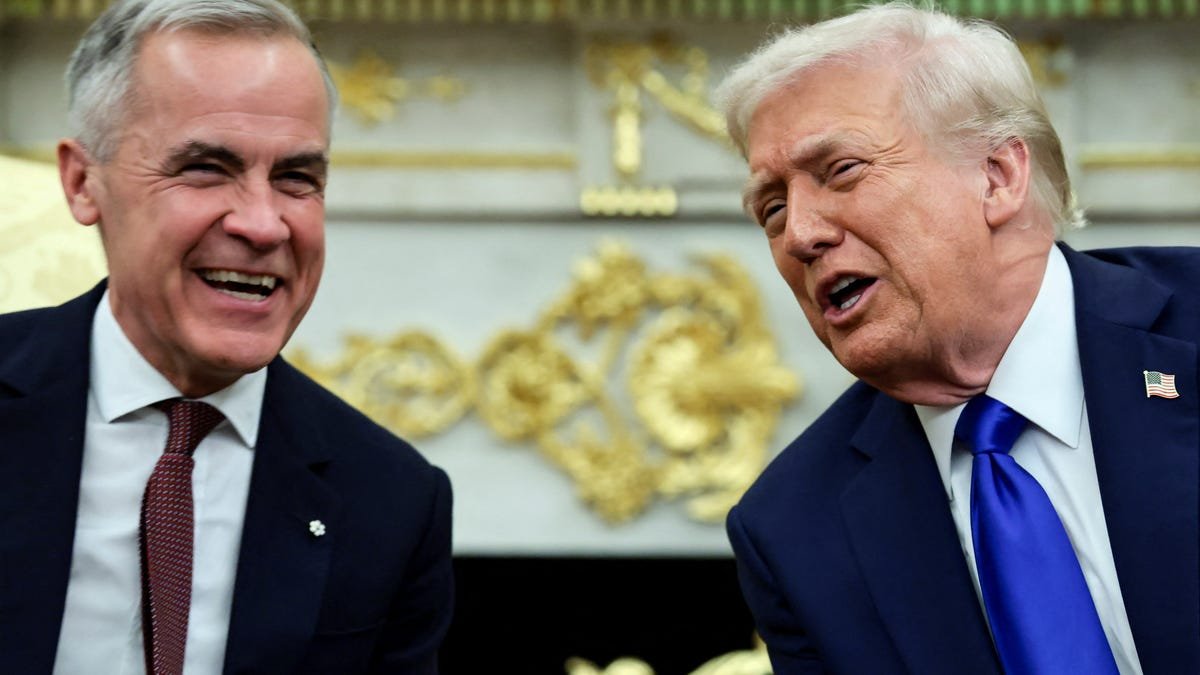
“They charge tariffs, they take advantage of us as though they were a state, and they’re not a state,” Trump said. “And they’ve taken our car industry, and they’ve taken our agriculture industry. You know, the farmers can’t sell anything in there because the tariffs are so enormous. And yet they want to sell with us without any tariffs.”
Trump said Canada doesn’t “have anything that we have to have,” adding, “It’s time to teach Canada you can’t do this anymore.” For official tariff documentation and executive orders, visit the Office of the United States Trade Representative website and the White House official portal for the latest policy updates.
The Diplomatic Breakdown: A Timeline of Escalation
The current crisis did not emerge overnight. Relations between the United States and Canada have been deteriorating steadily since Trump’s return to office, with trade disputes serving as the primary flashpoint. The timeline of key events reveals a pattern of escalating rhetoric and retaliatory measures that have pushed the two allies to the brink:
- January 2025: Trump signs executive order renaming Gulf of Mexico to Gulf of America on his first day in office
- March 2025: Trump imposes 25% tariffs on steel and aluminum imports from Canada
- April 2025: Canada retaliates with counter-tariffs on U.S. cheese, wine, and bourbon
- June 2025: Both nations enter formal trade negotiations to de-escalate tensions
- August 2025: Negotiations collapse; Carney walks away from the table
- August 25, 2026: Trump posts on Truth Social about giving “serious consideration” to renaming Lake Ontario
- August 26, 2026: Trump doubles down on Glenn Beck’s show; tariffs rise to 50%
- August 26, 2026: Carney announces retaliatory tariffs ranging from 15% to 50%
This progression has fundamentally altered the nature of U.S.-Canada relations, transitioning from what was once described as the world’s most successful bilateral partnership into an increasingly hostile standoff.
Canadian Counter-Proposals and Political Pushback
Canadian officials and politicians have responded to Trump’s renaming threat with a mix of defiance, humor, and escalating rhetoric of their own. Toronto Mayor Brad Bradford offered a tongue-in-cheek counter-proposal that quickly went viral on social media.
“If President Trump wants to rename Lake Ontario, maybe we should rename Lake Erie to Lake Ontario,” Bradford joked during a press conference. “Then he’d have to explain to Americans why their map says Lake Ontario is on the other side of the border. Let’s see how he likes that.”
Ontario Premier Doug Ford, known for his blunt style, delivered an even more forceful response. When asked about Trump’s proposal during a provincial cabinet meeting, Ford did not mince words.
“He can rename it whatever he wants. We’ll still call it Lake Ontario. And frankly, he can kiss my ass,” Ford told reporters, adding that Ontario was prepared to levy a surcharge on electricity exports to the United States if the trade war continued to escalate.
“We supply power to millions of Americans in New York, Michigan, and Minnesota,” Ford warned. “If they want to play games with our sovereignty, we can play games with their lights.”
The electricity threat carries significant weight—Ontario exports approximately $5 billion worth of electricity to the U.S. annually, powering homes and businesses across several northern states.
The Indigenous Perspective: The True Meaning of ‘Ontarí’io’
Amid the political posturing, indigenous leaders have reminded both nations that the lake’s name predates European settlement and carries deep cultural significance. The name “Ontario” derives from the Iroquois word “Ontarí’io,” which translates to “lake of shining waters” or “beautiful lake.”
Chief Sydney Hill of the Mohawk Council of Akwesasne emphasized that indigenous communities along the Great Lakes have called the lake by its traditional name for centuries before any European explorers arrived.
“The name belongs to the Haudenosaunee people,” Chief Hill stated. “It has spiritual and cultural meaning. No president can erase that history. This is not a political football to be tossed around in trade disputes.”
The Haudenosaunee Confederacy, also known as the Iroquois League, has inhabited the Great Lakes region for over a millennium. The name first appeared on European maps in the 1660s, adopted by French explorers who recorded the indigenous pronunciation.
Indigenous leaders have called for both the U.S. and Canadian governments to respect the cultural heritage of the region and focus on substantive issues rather than symbolic gestures that serve only to inflame tensions.
U.S. Political Reactions and Congressional Responses
Trump’s renaming proposal has drawn reactions from across the American political spectrum, with lawmakers expressing skepticism, amusement, and concern about the broader implications for U.S.-Canada relations.
Rep. Debbie Dingell (D-MI), who represents a district bordering Canada and heavily reliant on cross-border trade, responded with characteristic wit. “You know, I’m thinking maybe we should just rename it ‘Lake Natalie’ after my mother,” Dingell joked during a local radio interview. “If we’re going to play games with names, let’s at least honor someone who actually deserves it.”
Republican lawmakers have been more circumspect, with several declining to comment directly on the proposal while emphasizing the importance of the U.S.-Canada trade relationship. Sen. J.D. Vance (R-OH) suggested the renaming threat could be a negotiating tactic rather than a serious policy objective.
“The president knows how to negotiate. Sometimes you have to say things that get attention,” Vance told reporters. “The real issue here is trade fairness, not what we call a lake.”
However, some Republican strategists privately expressed concern that the rhetoric could alienate a key ally and complicate other diplomatic objectives, including efforts to coordinate on China policy and NATO defense commitments.
French-Language Context and Quebec’s Position
The dispute has taken on additional complexity given Canada’s linguistic duality, with Quebec’s French-speaking majority viewing the renaming threat through a cultural and historical lens. While Lake Ontario primarily borders Ontario and New York state, the broader Great Lakes region has deep French-Canadian connections dating back to the 17th century.
Quebec Premier François Legault issued a statement emphasizing that the province would stand with Ontario in opposing any unilateral renaming of shared waterways.
“The Great Lakes are part of our heritage. They were named by the French and the indigenous peoples long before the United States even existed,” Legault said in French. “Cette histoire ne s’efface pas avec un simple décret.”
The French-language media in Quebec has extensively covered the story, framing it as yet another example of American disregard for Canadian sovereignty and cultural identity. Le Devoir’s editorial board condemned the proposal as “absurd and insulting,” while La Presse ran a feature on the lake’s original French name, “Lac Ontario,” which has remained unchanged since Samuel de Champlain’s expeditions.
Political analysts note that the linguistic dimension adds an additional layer of resistance to Trump’s proposal, as any renaming would be seen not only as an attack on Canadian sovereignty but also as an erasure of French-Canadian cultural heritage in the region.
Economic Impact: Tariff Fallout on U.S. States
The escalating trade war has potentially devastating economic consequences for several U.S. states that rely heavily on trade with Canada. Michigan, New York, and Ohio are particularly vulnerable given their geographic proximity and integrated supply chains.
Michigan exported more than $29 billion in goods to Canada in 2025, primarily in the automotive and manufacturing sectors. The state’s auto industry operates on a highly integrated North American supply chain, with parts crossing the border multiple times during production. New York exported approximately $15 billion, with major industries including machinery, electronics, and agricultural products facing significant exposure.
Industry analysts estimate that the current tariff escalation could cost Michigan alone upwards of $8 billion in lost exports, with ripple effects throughout the supply chain. Automotive manufacturers have already begun warning of potential production slowdowns and price increases for consumers.
“This is not just a political dispute. This is about real jobs and real families on both sides of the border,” said Dr. Alan Reynolds, an economist at the University of Michigan’s Ford School of Public Policy. “When you disrupt supply chains that have been integrated for decades, you don’t just hurt Canada. You hurt American workers and American consumers as well.”
The agricultural sector is also facing significant challenges. U.S. dairy farmers, already struggling with oversupply, face Canadian retaliatory tariffs of up to 50% on cheese and butter exports. Grain producers in the Midwest have seen Canadian orders plummet as buyers seek alternative sources to avoid duties.
Legal Authority and International Precedent
Beyond the Gulf of Mexico precedent, there are other historical examples of unilateral geographical renaming by U.S. presidents, though none involving a body of water shared with another sovereign nation. The legal framework and international implications present significant obstacles.
U.S. Board on Geographic Names Review Process
The U.S. Board on Geographic Names (BGN), established in 1890, is the federal body responsible for standardizing geographic names across the United States. The board operates under the Department of the Interior and includes representatives from multiple federal agencies.
For a unilateral presidential renaming to be implemented, the BGN would need to process the change through its formal review procedures. This typically involves consultation with relevant state and local authorities, review of historical usage, and consideration of public comment. In the case of international bodies of water, the process becomes significantly more complicated.
Under Department of the Interior policies, the BGN generally defers to international naming conventions when bodies of water are shared with other countries. The board has no authority over Canadian territorial waters, meaning only the U.S. portion of Lake Ontario—which constitutes approximately half the lake—would fall under its jurisdiction.
Even within U.S. waters, the board’s regulations require “compelling justification” for name changes, particularly when a name has been in use for more than a century. Lake Ontario’s name has been in continuous use since the 1660s, establishing an extensive historical record that the board would be obligated to consider.
International Law and Recognition
In international law, the principle of pacta sunt servanda—agreements must be kept—applies to territorial naming conventions established through treaties and diplomatic practice. The United States and Canada have numerous bilateral agreements referencing the Great Lakes, all of which identify Lake Ontario by its established name.
International organizations including the United Nations, the International Hydrographic Organization, and the International Maritime Organization maintain standardized geographic databases. The U.S. would likely find its unilateral renaming unrecognized in these international registries, as occurred with the Gulf of America designation.
Canada’s official rejection of any name change would create a diplomatic impasse, with the two nations referring to the same body of water by different names—an unprecedented situation for a border lake of this significance.
International Reactions Beyond Canada
The international community has watched the U.S.-Canada trade dispute with growing concern, with many nations viewing it as a troubling departure from established norms of diplomatic and economic conduct. Several countries have issued statements or signals regarding the escalating tensions.
The United Kingdom, Canada’s former colonial power and current close ally, expressed “deep concern” about the deterioration of relations between its two closest partners. A Foreign Office spokesperson emphasized the importance of maintaining stable trade relations and respecting international norms.
“The United Kingdom values its relationships with both the United States and Canada and hopes that both nations can resolve their differences through diplomatic channels,” the spokesperson stated.
Mexico, which faced its own renaming dispute with the Gulf of Mexico, has been particularly vocal. President Claudia Sheinbaum expressed solidarity with Canada, noting that both nations have faced unilateral actions from the Trump administration.
“We have had the Gulf of Mexico renamed without our consultation,” Sheinbaum said. “Now we see a similar approach to the Great Lakes. The international community must stand together to protect the principle of mutual respect between sovereign nations.”
European Union officials have also weighed in, with trade commissioner Valdis Dombrovskis warning that the U.S.-Canada dispute could have global economic implications. The EU has been monitoring the situation closely, with some officials expressing concern that the approach could be applied to other trade relationships.
In a more unusual response, the Russian Foreign Ministry issued a statement mocking the dispute as an example of American “absurdity” and “hypocrisy” in its approach to international relations. The statement, which was widely interpreted as opportunism rather than genuine concern, highlighted how the dispute has provided geopolitical ammunition to actors hostile to the United States.
Public Reaction from Border Communities
In the communities along the U.S.-Canada border, the dispute has resonated with residents who have long viewed their cross-border connections as a point of pride and mutual benefit. Residents of towns like Niagara Falls, Buffalo, and Watertown, New York, have expressed bewilderment at the escalating rhetoric.
“I grew up looking at Lake Ontario from both sides,” said Michael Torres, a Buffalo resident who frequently travels to Ontario for work. “The idea that we’re supposed to pretend it has a different name is just ridiculous. This isn’t about names—it’s about politics, and it’s costing people their livelihoods.”
Canadian residents have expressed similar frustration. “Americans are our neighbors, our friends, our family,” said Sarah Mitchell, a Toronto-based small business owner who exports goods to the U.S. “I don’t want to see this relationship destroyed over political posturing. We all lose when we fight like this.”
Local business leaders have called for both governments to de-escalate and return to negotiations. The Buffalo-Niagara Partnership, a regional economic development organization, issued a statement urging both sides to “set aside political games and focus on protecting the economic interests of families and businesses on both sides of the border.”
Looking Ahead: What This Means for US-Canada Relations
The renaming dispute and the broader trade war represent a fundamental shift in U.S.-Canada relations that may take years, if not decades, to repair. The two nations have shared what was often described as the world’s most successful bilateral relationship, built on decades of cooperation in trade, defense, and diplomacy.
Political analysts suggest that the current trajectory could have lasting consequences regardless of how the specific trade dispute is resolved. The erosion of trust between the two governments, combined with growing nationalist sentiment on both sides, may make it difficult to return to the cooperative framework that characterized the relationship for much of the post-war period.
However, there are reasons for cautious optimism. The economic interdependence between the two nations remains profound, with more than $1.5 trillion in annual bilateral trade at stake. Both governments have powerful incentives to find a resolution, and behind-the-scenes diplomatic efforts continue even as public rhetoric escalates.
Ultimately, the renaming dispute may be remembered as a symptom rather than a cause of the broader deterioration in relations—a symbolic flashpoint in a deeper geopolitical realignment that has seen the United States adopt a more confrontational approach to its traditional allies.
What remains clear is that the outcome of this crisis will set important precedents for how the United States engages with its closest partners, and whether the international order that has governed global commerce since World War II can withstand the pressures of an increasingly transactional approach to diplomacy.
Frequently Asked Questions About the Lake Ontario Renaming Proposal
Can President Trump unilaterally rename Lake Ontario?
No, President Trump cannot unilaterally rename Lake Ontario without undergoing a formal review process through the U.S. Board on Geographic Names. The board must consider historical usage, consult with relevant authorities, and evaluate the justification for any name change. Even if the board approves the change, international recognition remains unlikely as Canada controls roughly half of the lake’s waters and has firmly rejected the proposal.
Has any president renamed a body of water shared with another country before?
No. The Gulf of Mexico renaming was unprecedented, but the Gulf is largely considered U.S. territorial waters. Lake Ontario is a shared international border lake, making unilateral renaming even more legally and diplomatically complex. No U.S. president has successfully renamed a shared international body of water without the consent of the other nation.
What happens if the U.S. Board on Geographic Names approves the change?
If approved, all federal agencies and U.S. government documents would be required to use the new name. However, international recognition would be virtually impossible without Canadian and United Nations acceptance. Private citizens, media outlets, and foreign governments would not be obligated to comply, and the name would likely remain unrecognized in international databases.
What is the indigenous significance of the name “Lake Ontario”?
The name comes from the Iroquois word “Ontarí’io,” which means “lake of shining waters” or “beautiful lake.” Indigenous communities in the Great Lakes region have used this name for over a millennium, and its cultural significance extends far beyond political disputes.
How has Canada officially responded to the proposal?
Canada has responded with a unified message of rejection across all levels of government. Industry Minister Mélanie Joly stated definitively: “We’ll always call it Lake Ontario. Period.” Premier Doug Ford offered a more blunt response, telling Trump to “kiss my ass” and threatening electricity surcharges. Quebec Premier Legault emphasized the province’s commitment to protecting the lake’s historical and linguistic heritage.
What are the economic implications of the trade war for U.S. states?
States with heavy trade exposure to Canada face significant economic risks. Michigan, which exported $29 billion to Canada in 2025, could lose billions in exports and see widespread supply chain disruptions. New York, Ohio, and other border states similarly face exposure ranging from automotive manufacturing to agriculture. Economists estimate the total economic impact could exceed $40 billion in lost exports across affected states.
Could the U.S. actually enforce the name change on Canadian territory?
No. The U.S. has no legal authority over Canadian territorial waters. At best, the U.S. could only mandate the use of the new name in U.S. government documents and on federal maps. Canadian maps, Canadian law, and Canadian government communications would all continue to refer to the lake as Lake Ontario.
Why is this happening now in the context of the trade war?
Political analysts suggest the renaming threat is being used as symbolic leverage in a broader trade dispute. By proposing a provocative action, Trump may be seeking to signal his willingness to escalate beyond traditional trade measures. However, the proposal has also been interpreted as a serious policy position given Trump’s stated interest in reinforcing American sovereignty and challenging international norms.