California Governor Gavin Newsom’s wildfire proposal aims to limit how much utility companies pay when their equipment sparks devastating fires, a move that could affect household electricity bills and home insurance premiums across the state. With just days remaining in the legislative session ending August 31, lawmakers are pushing back against several key elements of the governor’s plan that they say would shift financial burdens onto consumers and fire survivors.
- Legislative Deadline: California lawmakers have until August 31 to pass or reject Newsom’s wildfire reform package
- What’s Rejected: Assembly and Senate oppose limiting survivor compensation, curbing insurance company reimbursements, and restricting local government recovery
- Your Bills at Risk: The plan could impact electricity rates and home insurance costs depending on how liability is assigned
- Wildfire Fund Depletion: The $18 billion fund is expected to run out due to Eaton Fire claims against Southern California Edison
- Key Support: California Professional Firefighters union backs the plan after modifications
- Subrogation Fight: Lawmakers reject eliminating insurance companies’ right to recover costs from utilities
At the center of the debate is a fundamental question California has grappled with for years: when a power company sparks a catastrophic wildfire, who ultimately shoulders the cost? Newsom argues the current system is “untenable” and leaves victims waiting years for compensation while financial institutions secure quick payouts. But opponents, including wildfire survivors, local governments, and insurance companies, contend the proposal is a corporate “bailout” that protects utilities at the expense of Californians.
The timing adds urgency to the negotiations. Newsom, who took office just days before the 2018 Camp Fire sent PG&E into bankruptcy, is pushing for reforms before his final legislative session ends and he potentially launches a 2028 presidential run. The wildfire fund created in 2019 is expected to be depleted soon as Southern California Edison faces claims from the Eaton Fire, which investigators linked to one of the company’s transmission towers.
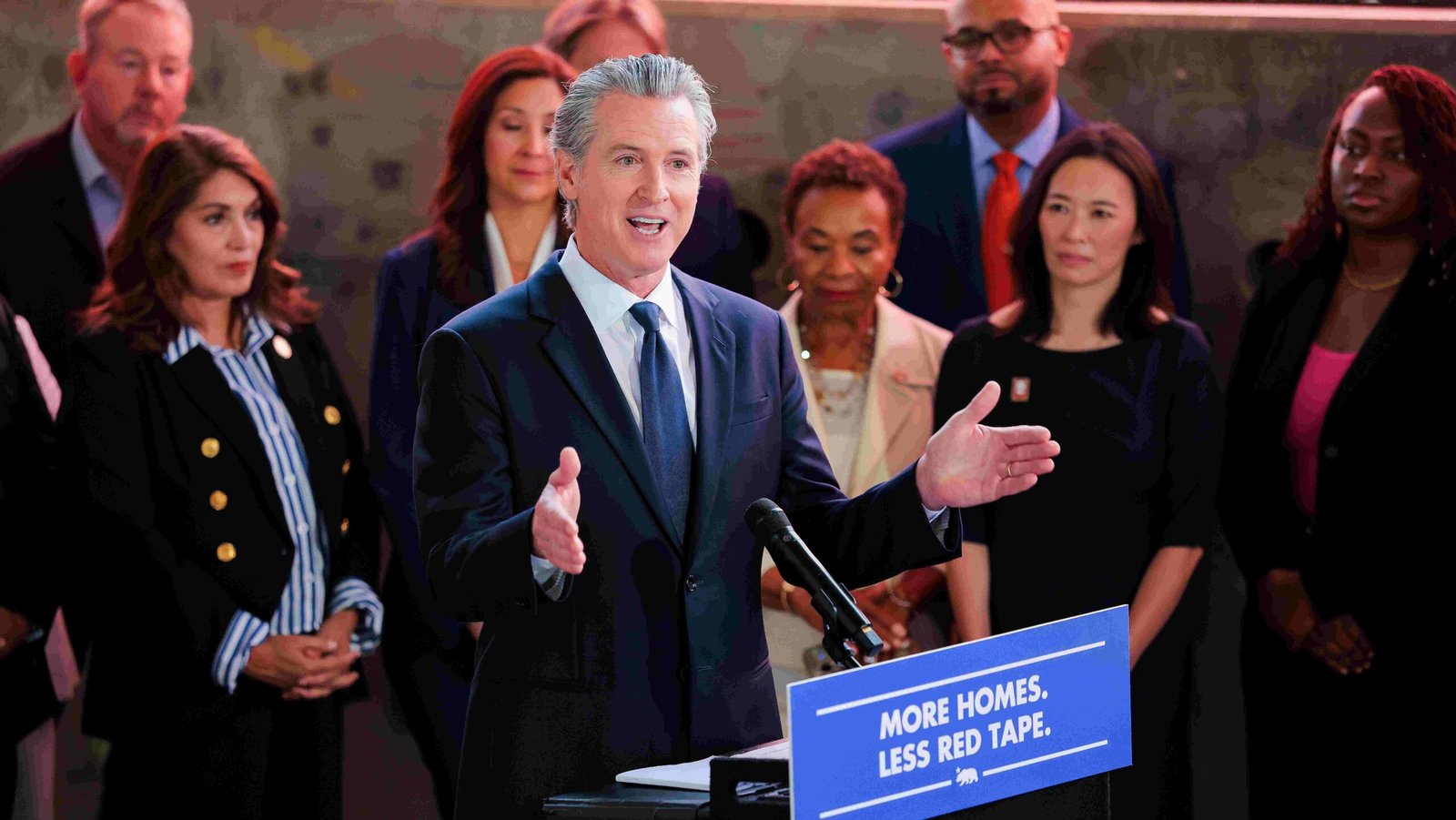
What’s in Newsom’s Wildfire Proposal and Why Lawmakers Are Pushing Back
The governor’s proposal, which has not yet been released in full legislative text, includes several controversial measures that have drawn opposition from both legislative chambers. Assembly and Senate lawmakers have rejected key components including limits on survivors’ compensation for pain and suffering, curbs on insurance company reimbursements, and restrictions on how much local governments can recover for destroyed infrastructure.
Newsom’s stated goals include ensuring fire victims receive payments faster, preventing another utility bankruptcy, and stabilizing electricity rates that are already among the highest in the nation. The governor acknowledged the proposal is a starting point for negotiation, saying at a recent press conference, “I’m not going to walk away and hand a real mess to the next governor”.
However, critics argue the eleventh-hour negotiations — with no public text and the legislative deadline approaching — undermine transparency. Former Democratic Assemblyman Chris Holden, who helped create California’s current wildfire liability system in 2019, told KCRA 3: “We really shouldn’t be here. What is untenable is that the utilities continue to find themselves starting fires and burning down communities, they need to be held accountable for them”.
The California Professional Firefighters union announced support for the plan after the governor modified provisions that would have severely limited local government recovery. In a letter to Newsom, the union wrote, “The stability of the state’s utilities, insurance plans, and recovery funds must all be balanced with ensuring that wildfire victims and impacted communities are able to recover and rebuild”.
How the Proposal Could Impact Your Electricity Bills
Utility rates are a primary driver of Newsom’s reform push. The state’s electricity costs have climbed as utilities pass wildfire prevention and recovery expenses to customers. Under current law, utilities must pay damages for fires ignited by their equipment, even without a finding of negligence, and can recover some costs through rate increases.
Newsom’s proposal would cap the amount utilities must pay from the state’s $18 billion wildfire fund at $6 billion per wildfire. Currently, utilities can draw unlimited amounts from the fund, which is expected to be drained by Eaton Fire claims. Under the governor’s plan, costs exceeding $6 billion would be covered through securitization bonds — meaning utilities would borrow money and add charges to customer bills to service the debt. If a utility is found liable, it would be required to issue credits to customers, though the details remain unclear.
Consumer advocates warn this structure could shift even more costs onto ratepayers while limiting utility accountability. Meanwhile, Senate Democrats have proposed an alternative that would allow insurance companies to continue suing utilities to recoup losses, limit utility companies’ return on investment for wildfire maintenance, and push the California Public Utilities Commission to cap future rate increases at the rate of inflation.
Some lawmakers fear that eliminating subrogation — the right of insurance companies to recover claims costs from utilities — could create a “massive new strain on the insurance system” that leads to higher premiums. “I fear we will create a massive new strain on the insurance system that could break basic questions of affordability for Californians,” Sen. Ben Allen, a candidate for insurance commissioner, told CalMatters.
Why Insurance Companies and Fire Survivors Are Fighting the Plan
Two powerful constituencies have emerged as vocal opponents of Newsom’s proposal: insurance companies and wildfire survivors. Insurance firms argue that eliminating their right to sue utilities for reimbursement — a legal principle known as subrogation — would force them to absorb more costs and raise premiums accordingly.
“Being responsible for your actions is something that parents tell children. Hopefully the Legislature will tell this to the utilities,” said Rex Frazier, president of the Personal Insurance Federation of California. The insurance industry has warned that the proposal could worsen California’s already challenging home insurance market, where the FAIR Plan — the insurer of last resort — recently proposed an average rate hike of 35.8%.
Wildfire survivors, represented by groups like Every Wildfire Survivor Network, have traveled to Sacramento to protest the proposal. Joy Chen, the group’s executive director, called the plan a “multi-billion dollar transfer of wealth from California families to utility executives and their Wall Street shareholders”. Survivors fear that limiting compensation for pain and suffering and restricting attorney fees would leave future victims undercompensated compared to wealthy institutions.
Adding to survivor distrust is a publicity campaign by a group called Wildfire Victims First, which has run ads calling for reform. The group is funded in part by PG&E and Southern California Edison — the same utilities that would benefit from Newsom’s proposal. Meanwhile, Sen. Sasha Renee Perez, a Democrat who represents Altadena, accused utility executives of acting like “terrorists” after reports that PG&E and Edison told Wall Street analysts they would take unspecified actions to protect shareholders if lawmakers do not pass liability reforms.
The Legislative Countdown: What Happens If a Deal Isn’t Reached
The clock is ticking. California’s legislative session ends August 31, and state law requires a 72-hour public review period for proposed legislation, meaning lawmakers must put a negotiated plan into writing by August 28 at the latest. As of August 26, no bill text has been made public, with negotiations continuing behind closed doors.
If lawmakers and the governor cannot reach an agreement, the issue would be punted to the next governor, leaving unresolved the question of utility liability and the depleted wildfire fund. Newsom has signaled he may call a special session if necessary, but the political calculus is complicated by his final months in office and potential presidential ambitions.
However, lawmakers from both chambers have shown they are willing to resist the governor’s pressure. The Senate has introduced a counterproposal that rejects eliminating subrogation and includes stronger oversight of utility profits and rate increases. Legislative leaders have indicated they are doing “due diligence to vet these ideas” and taking input from stakeholders.
The outcome remains uncertain, but the consequences are clear: California families could see changes to their electricity bills and insurance costs depending on who ultimately bears the financial burden of the state’s escalating wildfire crisis. As the standoff continues, the debate reflects a broader national struggle over how to balance climate-related risks, corporate accountability, and consumer protection in an era of intensifying natural disasters.