Modern Warfare 4 faces a growing backlash as players identify multiple in-game assets they believe were created using generative AI, intensifying scrutiny during the ongoing multiplayer beta. The Call of Duty: Modern Warfare 4 Early Access beta has given players unprecedented access to the game’s environmental artwork, and sharp-eyed community members have quickly flagged posters, advertisements, and decorative elements that exhibit tell-tale signs of AI generation. Activision’s existing disclosure that generative AI tools were used in development has only amplified player vigilance, transforming what might have been minor background details into a full-blown controversy.
- Controversy Trigger: Players spot suspected AI-generated artwork in Modern Warfare 4 multiplayer beta maps
- Community Response: Critics demand human-created art for a premium franchise; others defend or question the evidence
- Examples Highlighted: Environmental posters, gacha machines, and illustrated characters with unusual geometry and inconsistencies
- Activision’s Position: Company confirmed AI use in disclosure but hasn’t specified which assets were AI-generated
- Previous Incidents: Removed promotional artwork ahead of Gamescom featured strange weapon rendering and a Battlefield 3 pose
- Industry Context: Debate reflects growing tension over AI integration in AAA game development and artistic integrity
- Battle Pass Value: Premium cosmetic pricing faces scrutiny if AI-generated content becomes normalized in paid offerings
Players have quickly organized around specific examples of suspected AI art circulating through the Modern Warfare 4 beta. Twitter user DANNYonPC brought significant attention to environmental artwork featuring illustrated characters with unusual geometry, distorted features, and inconsistent rendering details that align with common AI generation artifacts. Additional posts across Twitter and Reddit have highlighted gacha machines displaying similarly problematic artwork, along with posters and advertisements embedded throughout the game’s South Korean-inspired multiplayer maps. Activision has not officially confirmed which assets, if any, were AI-generated, leaving players to piece together evidence based on visual tells and the developer’s existing disclosure language.
This isn’t the first time a Call of Duty title has faced AI-related scrutiny. Activision previously faced similar criticism regarding AI-generated calling cards and cosmetic artwork in recent series entries, creating a pattern that has made players especially sensitive to the issue. Infinity Ward has provided no detailed breakdown of how generative AI tools were applied in Modern Warfare 4‘s development, a transparency gap that has fueled speculation and independent investigation from the community. The studio’s emphasis on authenticity and environmental storytelling throughout the game’s South Korean settings adds another layer of irony to the controversy, as players question whether AI-generated assets undermine the detailed world-building the franchise has historically prioritized. This growing Activision AI art controversy echoes similar accusations that have plagued recent franchise entries, with players becoming increasingly vigilant about detecting automated generation in visual assets.
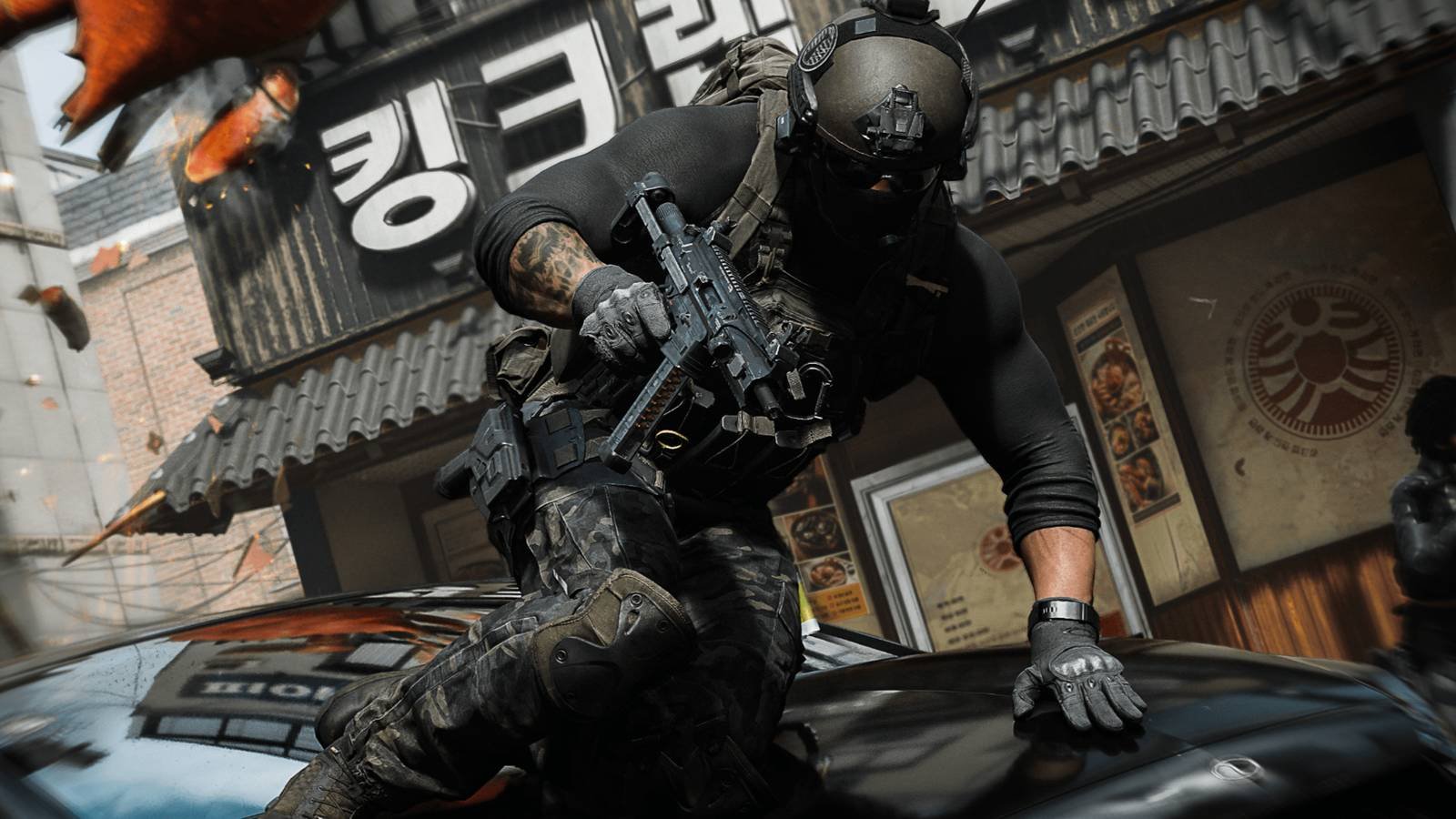
According to Activision’s official privacy and disclosure policies, the company has acknowledged using generative AI tools in game development, though specific implementation details remain unclear. The Modern Warfare 4 Steam page includes the standard disclosure that AI-assisted tools were used to create some in-game content, a practice that has become increasingly common across the gaming industry. However, the discrepancy between that general acknowledgment and the specific, player-identified assets has created a credibility gap that continues to widen as more potential examples surface during the beta period.
What Exactly Is the Controversy?
At its core, the Modern Warfare 4 AI art controversy centers on player expectations and the value proposition of a premium gaming experience. Call of Duty is one of the most profitable entertainment franchises in history, generating billions in annual revenue across game sales, Battle Pass purchases, and cosmetic microtransactions. Critics argue that a franchise of this scale has both the resources and the responsibility to employ human artists for all visual assets, even minor environmental details that shape map identity and immersion.
Generative AI tools produce artwork by analyzing vast datasets of existing images and generating new content based on learned patterns. The technology has advanced rapidly, but experienced observers can often identify AI-generated imagery through specific artifacts: inconsistent lighting, distorted anatomy, unusual texture blending, and nonsensical small details like misplaced buttons or impossible geometry. Community members have compiled extensive documentation of these tells in Modern Warfare 4‘s beta artwork, though the subjective nature of detection means not all flagged examples are universally accepted as AI-generated.
The controversy extends beyond artistic quality to broader concerns about labor displacement and industry practices. Gaming artists have expressed anxiety about AI tools potentially reducing employment opportunities in concept art, environmental design, and promotional illustration. Activision and other major publishers have faced internal tensions over AI adoption, with some studios implementing AI policies while others resist or remain ambiguous about their usage.
The Specific Art Pieces Called Out by Players
Several specific Modern Warfare 4 beta assets have become focal points in the AI art debate. Environmental posters scattered throughout multiplayer maps feature illustrated characters that players describe as having “uncanny valley” qualities, with facial features that appear subtly distorted and proportions that don’t quite align with human anatomy. One particularly scrutinized asset shows a character whose hand appears to have incorrectly rendered fingers, a common AI generation artifact that human artists rarely produce at professional quality levels.
Gacha machine artwork has also drawn significant attention, with displayed items showing inconsistent detail levels and unusual color palettes that community members find suspicious. Background advertisements integrated into map environments have been similarly flagged, with text elements that appear distorted or nonsensical when examined closely. The shared quality across these diverse assets suggests a consistent AI generation pipeline rather than isolated incidents, though Infinity Ward’s continued silence means this remains speculative.
An earlier incident involving promotional artwork ahead of Gamescom adds context to the current controversy. The Call of Duty social media account briefly posted an image featuring an oddly rendered weapon and a character pose remarkably similar to the iconic Battlefield 3 box art. The image was swiftly removed, with representatives explaining it was a temporary render from an internal marketing guide published by mistake. While marketing and actual game assets are distinct categories, the incident signaled internal processes that may not rigorously screen for AI generation or quality issues.
Activision’s Generative AI Disclosure Explained
Activision has taken a relatively transparent position on AI usage compared to many industry peers. The company’s Steam disclosure explicitly states that generative AI tools assisted in creating some game assets, language that has been included across recent Call of Duty releases. This upfront acknowledgment has made the Modern Warfare 4 situation different from AI controversies in other games where developers were caught using AI without prior disclosure.
The disclosure itself, however, is deliberately vague. It doesn’t specify which assets or categories of assets involved AI generation, leaving players to identify examples on their own. This ambiguity has become a source of tension, as players interpret the disclosure as both a warning and a potential shield against criticism. Activision also hasn’t clarified whether AI-generated assets undergo human review before implementation or whether they’re used directly in final builds.
Beyond Steam’s requirements, Activision has made limited public commentary on AI integration. The company has framed AI tools as efficiency enhancements rather than artistic replacements, though this position doesn’t fully address concerns about quality, consistency, or labor impact. Other major publishers including Electronic Arts, Ubisoft, and Take-Two Interactive have similarly adopted ambiguous AI policies, creating an industry-wide gray area that this controversy has highlighted.
Visual Breakdown: AI Detection Guide with Annotated Examples
The Modern Warfare 4 community has developed a comprehensive set of criteria for identifying potential AI generation in game assets, drawing from established detection methods used across the gaming industry. These visual tell-tale signs have been systematically documented and shared across social platforms, creating what effectively functions as a community-driven AI detection framework.
Common AI Artifacts Identified in MW4
1. Unusual Geometry and Distorted Proportions: Several flagged posters feature characters with limbs that bend at impossible angles, fingers that merge or duplicate, and facial features that don’t align symmetrically. In one widely shared example, a character’s hand appears to have six fingers, while another shows a face with eyes positioned at different heights. These geometric inconsistencies occur because AI models predict pixel arrangements without understanding human anatomy or physical constraints.
2. Inconsistent Texture Blending: Multiple environmental assets show textures that blend unnaturally at material boundaries. A flagged advertisement features a character whose clothing seems to merge with the background, lacking the clear separation that human artists typically maintain between foreground subjects and environmental elements. The texture artifacts appear most prominently where different surface materials should theoretically intersect, with AI models failing to properly distinguish between skin, fabric, and metallic surfaces.
3. Nonsensical Text and Symbol Rendering: Perhaps the most damning evidence comes from in-game advertisements and posters containing text that appears as word-like shapes but contains no actual meaning. One flagged poster displays what appears to be Korean characters upon casual inspection, but closer examination reveals the symbols are entirely nonsensical, resembling genuine writing only at a superficial level. Human graphic designers would virtually never produce text that lacks actual meaning, making this artifact a particularly strong indicator of AI generation.
4. Lighting Inconsistencies: Several environmental assets exhibit lighting that doesn’t match their surroundings. Shadows appear to fall in contradictory directions, highlights don’t correspond to any visible light source, and ambient occlusion effects are either missing or misapplied. These lighting errors occur because AI models struggle to understand three-dimensional space and the physical behavior of light, often producing results that look plausible at a glance but fail under scrutiny.
5. Color Palette Clashes: Multiple flagged assets feature color combinations that professional artists would typically avoid, with hues that clash or appear slightly “off” in ways that suggest algorithmic rather than intentional choices. The color artifacts are most noticeable in skin tones, which sometimes appear with unusual undertones that don’t correspond to natural human complexion or stylized artistic choices.
Side-by-Side Comparison: Suspected AI Art vs. Human-Created Art
Community members have created comparison charts juxtaposing suspected AI-generated Modern Warfare 4 assets against human-created artwork from previous Call of Duty titles. These comparisons highlight the qualitative difference between assets where every detail serves intentional artistic purpose versus AI-generated content where details appear arbitrary or nonsensical. The contrast has proven particularly effective in communicating the issue to players who might otherwise dismiss the controversy as technical nitpicking.
In human-created game art, every element typically serves multiple purposes: establishing atmosphere, reinforcing character or location identity, and providing visual cues for gameplay. The Modern Warfare 4 flagged assets appear to lack this intentionality, with elements that don’t contribute to the overall artistic vision and sometimes actively contradict it. The difference between assets created with human artistic intention versus algorithmically generated content becomes immediately apparent when examined side-by-side.
This visual evidence has been shared extensively across Reddit and Twitter, with some threads accumulating thousands of reactions and sparking detailed discussion about the broader implications for game development quality standards. The comparison approach has proven particularly effective in converting skeptical players who initially dismissed the controversy as overblown community outrage.
Player Reactions and Community Investigation
Social media platforms have become the primary battlefield for the Modern Warfare 4 AI art debate, with player opinions running the gamut from outrage to indifference. Twitter has seen active discussion with the hashtags related to the controversy, while Reddit’s dedicated Call of Duty communities have hosted extensive debate threads with detailed visual analysis. The sheer volume of discussion reflects how central the AI issue has become to player experience, even during the beta period when core gameplay should theoretically be the focus.
What Reddit and Twitter Are Saying
Reddit users have contributed some of the most detailed visual analysis, creating comparison images that highlight suspect details in Modern Warfare 4 assets. One widely circulated thread compiled examples from multiple maps, arguing that the accumulated evidence suggests systemic AI usage rather than isolated incidents. Comment sections reveal a community genuinely torn between enjoying the core gameplay and feeling betrayed by what they perceive as cost-cutting in visual presentation.
Twitter reaction has been more immediate and often more passionate, with creators like DANNYonPC driving significant attention to specific assets. The platform’s short-form format has made it particularly effective for sharing image comparisons and quick analysis, though the depth of discussion is generally shallower than on Reddit. Some content creators have criticized the supposed AI art as “lazy” and “unacceptable for a franchise this profitable,” while others have questioned whether the identified examples are definitively AI-generated or simply lower-quality human art. The growing Call of Duty backlash has drawn comparisons to previous community uprisings, though this controversy centers specifically on artistic integrity rather than gameplay mechanics.
Prominent gaming commentators have weighed in with varying perspectives. Some emphasize the importance of artistic labor and the value of human creativity, while others argue that AI-generated background assets are a practical way to allocate resources toward core gameplay development. This division mirrors broader debates within the gaming community about what players should reasonably expect from premium titles.
Fan Art vs. AI Art: The Debate Explodes
The controversy has ignited broader discussions about art, creativity, and the role of technology in game development. Some players defend AI-generated art as a tool that democratizes creativity and allows small studios to compete with larger competitors, while others argue that it represents a cheapening of artistic labor that will ultimately degrade creative quality across the industry. The Modern Warfare 4 situation is particularly contentious because it involves a major studio with enormous resources, making cost-cutting justifications harder to accept.
Comparisons have been made between AI-generated game art and other industry practices like outsourcing asset creation to lower-cost studios. Critics argue that human artists should be compensated for their work regardless of location or studio size, while defenders counter that AI tools are simply another form of efficiency enhancement that allows studios to produce more content more quickly. The debate touches on fundamental questions about the value of human creativity and how technology should support rather than replace skilled labor.
Community-driven initiatives have emerged to document and archive the Modern Warfare 4 AI art controversy, creating resources that will likely persist beyond the beta period. Some players are monitoring future updates to see whether the questionable artwork remains in the final build or is replaced before launch. Others are using the controversy as a teaching moment, explaining how to identify AI-generated art and why it matters for the future of the gaming industry.
The Monetization Angle: Battle Pass Value Under Scrutiny
The AI art controversy has significant implications for Modern Warfare 4‘s monetization model, particularly the premium Battle Pass system that generates substantial recurring revenue. The Call of Duty franchise has heavily monetized cosmetic content, with players paying premium prices for character skins, weapon blueprints, and other visual customization options. The potential use of AI-generated assets in these paid offerings raises fundamental questions about the value proposition of premium content.
If players pay real money for cosmetic items that were generated using AI tools rather than crafted by human artists, the perceived value of those purchases could diminish significantly. The Modern Warfare 4 Battle Pass typically costs around $10 per season, with players completing challenges to unlock premium cosmetics. The discovery that some environmental artwork in the game appears AI-generated has led players to question whether premium cosmetic items might also rely on similar tools, effectively reducing the perceived value of their purchases.
Activision’s disclosure that generative AI was used in development provides some transparency, but it doesn’t specify which categories of assets involved AI generation. If cosmetic items that players purchase directly are created with AI assistance, the pricing model could come under intense scrutiny. Previous Call of Duty titles have faced criticism over monetization practices, and the AI art controversy adds a new dimension to these ongoing concerns about value and fairness in premium content pricing.
Industry observers note that the controversy could affect player spending patterns, particularly if the community continues to identify AI-generated assets in paid content. Some players have already indicated they’ll delay Battle Pass purchases until the extent of AI usage becomes clearer, potentially impacting Activision’s revenue projections for the game’s launch period. The financial implications extend beyond player trust to actual spending behavior, making this a business concern as well as a creative one.
Activision and Infinity Ward’s Silence
Neither Activision nor Infinity Ward has provided specific responses to the Modern Warfare 4 AI art controversy beyond the general disclosure already in place. This silence has been interpreted in multiple ways: some see it as an acknowledgment that the identified assets are indeed AI-generated and that the studio doesn’t want to confirm publicly, while others view it as procedural caution to avoid setting legal or PR precedents that could complicate future AI usage. The absence of detailed communication has amplified community speculation and allowed the controversy to persist longer than it might have with proactive transparency.
History of AI Controversies in Call of Duty
The Modern Warfare 4 backlash is part of a pattern within the Call of Duty franchise that has developed over multiple releases. Earlier titles in the series faced similar criticism regarding AI-generated calling cards and cosmetic artwork, though those controversies were generally less extensive and less widely discussed. Each iteration has seen increased player sensitivity to potential AI generation, creating an environment where disclosure itself becomes a controversy trigger.
A timeline of Activision AI controversies shows escalating attention to the issue as public awareness of generative AI has grown. Early incidents generated relatively limited discussion among dedicated fans, while more recent examples have crossed over into mainstream gaming discourse. The Modern Warfare 4 beta controversy represents the most substantial backlash to date, potentially influencing how other developers approach AI disclosure and integration going forward.
Internal tensions within Activision regarding AI usage have been reported, though not officially confirmed. The company’s long-term strategy for AI integration remains unclear, caught between efficiency benefits and reputational risks. The Modern Warfare 4 situation may force a more formalized policy that could serve as a model for other industry players.
The Broader Industry Context
The Modern Warfare 4 AI art controversy reflects wider tensions throughout the gaming industry as generative AI tools become more powerful and more accessible. Major studios are increasingly implementing AI assistance in their development pipelines, creating new opportunities and new risks simultaneously. The gaming industry’s reliance on visual art makes it particularly vulnerable to AI disruption, with concept art, environmental design, and promotional illustration all potentially impacted. This moment echoes historical debates about automation in creative fields, where Modern Warfare 4 AI concerns intersect with broader questions about technological displacement and artistic authenticity.
Which Other Studios Use AI?
Several major game developers have confirmed AI usage in their development processes, though their approaches vary significantly. Riot Games has developed internal AI tools for game design and testing while maintaining clear policies on AI-generated art in player-facing content. Blizzard Entertainment has explored AI for concept art and environment generation but has maintained strict human review for final assets. Ubisoft has implemented AI tools for quality assurance and bug testing, while Electronic Arts has framed AI as an efficiency tool that doesn’t replace human artists.
The contrast between these approaches and Modern Warfare 4‘s situation is instructive. Studios that maintain clear boundaries and human review processes have generally avoided comparable controversies, even when their AI usage is known. The transparency issue is as important as the AI usage itself: players accept AI assistance when it’s disclosed and limited to appropriate applications, but resist when they feel deceived or when AI seems to replace human artistry.
China-based developers have generally been more open about AI usage, partly due to different regulatory environments and cultural attitudes toward technology adoption. European studios have shown a more cautious approach, with some resisting AI integration on ethical grounds. The divergence among major players suggests that industry-wide standards haven’t yet emerged, leaving players to evaluate each studio’s approach individually.
Regulatory Developments and Legal Implications
Regulatory bodies in various jurisdictions are increasingly focusing on AI in creative industries, with implications for game developers. The European Union’s AI Act includes provisions related to transparency and disclosure for AI-generated content, while U.S. agencies have begun investigating AI’s impact on creative labor. These regulatory developments could force greater transparency from game studios about their AI usage, potentially making disclosures more specific and meaningful than current general statements.
Legal considerations also loom large, particularly around copyright and ownership. Generative AI models are trained on existing artwork, raising questions about whether AI-generated content infringes on original creators’ rights. Several high-profile lawsuits have been filed against AI companies by artists who argue that their work was used without permission. Game developers who use AI tools may face legal exposure if the tools were trained on copyrighted material without appropriate licensing.
Public perception of AI in gaming appears to be shifting toward greater skepticism, particularly when the technology appears in premium products. The Entertainment Software Rating Board (ESRB) has noted that AI-generated content raises new questions about appropriate content labeling and disclosure, though no specific guidelines have been established. The eventual regulatory landscape will likely influence how studios approach AI integration going forward.
What Happens Next? Possible Scenarios
The Modern Warfare 4 AI art controversy could develop in several directions, depending on how Activision, Infinity Ward, and the community respond over the coming weeks. The beta period provides the studio with an opportunity to make adjustments before the full launch, potentially replacing questionable assets with human-created artwork. Alternatively, the studio could maintain its current position, betting that core gameplay quality will outweigh concerns about background assets that most players may not examine closely.
Could the Art Be Patched or Replaced?
Replacing the suspect assets before launch is technically feasible, but would require significant development resources at a time when final polish is typically the priority. Call of Duty titles have historically received substantial post-launch content updates, so replacing artwork in a patch after release is possible. Community pressure could influence the decision, particularly if the controversy persists or expands as the beta continues and more players join.
The cost and timeline of replacement would depend on the volume of assets involved. If the suspect artwork is limited to a few posters and advertisements, replacement would be relatively inexpensive and could be accomplished by human artists in a matter of weeks. If the AI generation was more extensive, replacement could be more resource-intensive, potentially delaying other development priorities. The studio’s willingness to commit resources to replacement would signal its commitment to visual quality and community concerns.
Players who are less concerned about the AI art argue that core gameplay performance should take priority over visual details in background elements. They note that Modern Warfare 4‘s multiplayer mechanics, gunplay, and map design are likely receiving more development attention than environmental art. This perspective suggests that the controversy may fade as launch approaches and players focus on gameplay rather than art inspection.
Impact on Sales, Player Trust, and Battle Pass Revenue
The potential impact on Modern Warfare 4‘s commercial performance is difficult to predict. Some players may be swayed by the controversy, choosing to delay purchase or avoid the game entirely. Others will be more concerned with core gameplay quality and may not even notice the disputed artwork during normal play. Marketing and review coverage will likely reference the controversy, keeping it in public awareness even as the game approaches launch.
Player trust in Infinity Ward and Activision could be affected longer-term, particularly if players feel that the studio prioritized efficiency over artistic quality. The disclosure of AI usage on Steam preempted some criticism, but the specific examples that have surfaced suggest that the studio may not have adequately reviewed the AI-generated assets before inclusion. Trust in future Call of Duty titles could be influenced by how the studio handles this situation and whether visible improvements appear in future releases.
The Battle Pass monetization model faces particular scrutiny, as players who purchase premium cosmetic content expect human-crafted artwork that reflects the franchise’s established quality standards. If players suspect that paid cosmetic items incorporate AI-generated assets, the perceived value of Battle Pass purchases could decline significantly, potentially affecting Activision’s recurring revenue projections. The company may need to address these concerns directly to maintain consumer confidence in its premium content offerings.
Historical precedent suggests that gameplay controversies rarely have lasting commercial impact on major franchises. Call of Duty titles have weathered numerous controversies over monetization, content quality, and development decisions without significant long-term sales declines. However, the AI art issue intersects with broader cultural concerns about technology displacing human creativity, potentially making it more significant than previous controversies.
Expert Take: Game Developers React
Professional game developers have weighed in on the Modern Warfare 4 AI art controversy with perspectives that reflect their experience and expertise. Many emphasize the importance of human artistry in creating compelling games, arguing that AI tools should support rather than replace creative professionals. Some developers have expressed concern that AI art could degrade visual quality over time as studios rely increasingly on automated generation rather than human expertise.
Developers from smaller studios have offered a more nuanced perspective, noting that AI tools can help smaller teams compete with larger competitors who have more resources for art production. They argue that AI can democratize game development, allowing creators with limited budgets to produce professional-quality visual content. However, they acknowledge that major studios like Infinity Ward lack this justification and should maintain high visual standards regardless of AI assistance.
Art directors within the industry have been particularly vocal, emphasizing that AI-generated art often lacks the intentionality and creative vision that human artists bring to game development. They note that truly compelling visual design emerges from artistic choices that reflect human understanding of composition, emotion, and visual storytelling. The Modern Warfare 4 controversy has reinforced these arguments, providing concrete examples of AI-generated art falling short of professional standards.
Some developers have called for industry-wide standards on AI disclosure and usage, arguing that players deserve to know what they’re seeing and that artists deserve protection from displacement. The Modern Warfare 4 situation could accelerate these discussions, potentially leading to new policies or practices that reshape how the industry approaches AI integration.
Conclusion: What This Means for the Future of Game Development
The Modern Warfare 4 AI art controversy represents a watershed moment in the ongoing debate about AI integration in creative industries. The backlash reflects deep-seated player expectations about artistic quality and the value of human creativity in premium entertainment products. While AI tools offer undeniable efficiency benefits, their application must be balanced against quality standards and ethical considerations that the gaming industry is only beginning to address systematically.
Activision and Infinity Ward’s handling of this controversy will likely set precedents for how major studios approach AI disclosure and integration going forward. A transparent, responsive approach that acknowledges player concerns and maintains quality standards could build trust and establish industry best practices. Conversely, a dismissive or evasive response could erode player confidence and invite regulatory scrutiny that would affect the entire industry.
The controversy also highlights the growing importance of artistic integrity in an era of increasing automation. As AI tools become more sophisticated, the distinction between human-crafted and AI-generated content will become increasingly blurred, making transparency and quality control more important than ever. Players who invest in premium gaming experiences deserve to understand what they’re paying for, and studios have a responsibility to maintain the artistic standards that define their franchises.
Ultimately, the Modern Warfare 4 AI art controversy serves as a warning and an opportunity. It warns studios that cost-cutting through automation carries reputational risks that can outweigh efficiency gains. It also provides an opportunity to develop more thoughtful AI policies that maintain quality while leveraging technology’s benefits. How the industry responds will shape the future of game development for years to come.
Frequently Asked Questions
[faq]Why are Call of Duty players upset about AI art?
Players are upset because they believe a premium franchise like Call of Duty should employ human artists for all visual assets rather than cutting costs with generative AI. They’re also concerned about declining artistic quality, labor displacement, and whether AI-generated artwork degrades the immersive experience they expect from the series. The potential impact on Battle Pass value has also raised concerns about whether paid cosmetic content retains its perceived worth.
Did Activision confirm using AI for Modern Warfare 4 artwork?
Yes, Activision disclosed on Steam that generative AI tools were used to create some in-game assets. However, the disclosure doesn’t specify which assets or how extensively AI was used, leaving players to identify potential examples on their own during the beta.
What specific AI-generated art has been found in MW4?
Players have flagged environmental posters, gacha machine artwork, and in-game advertisements featuring unusual geometry, distorted character rendering, inconsistent lighting, and nonsensical text. Specific examples have been circulated widely on Twitter and Reddit, though Activision hasn’t confirmed which assets are AI-generated.
How can you tell if game art was made with AI?
Common signs include unusual geometry where shapes don’t follow expected conventions, inconsistent details like incorrectly rendered fingers or nonsensical text, bizarre lighting that doesn’t match the environment, texture blending issues, and color palette inconsistencies. These artifacts occur because AI models don’t truly understand what they’re creating and predict pixel patterns based on training data rather than intentional artistic design.
Has Infinity Ward responded to the backlash?
Infinity Ward has not provided a specific response to the AI art controversy. The studio hasn’t confirmed which assets were AI-generated or addressed player concerns directly. This silence has allowed speculation to persist as the beta continues.
Is using AI art in video games legal?
The legality of AI-generated game art is still developing. AI tools are trained on existing artwork, which raises copyright concerns if the training data wasn’t properly licensed. Several lawsuits have been filed against AI companies by artists. Game developers using AI tools may face legal exposure depending on the tools’ training data and how the generated content is used.
What other studios use generative AI for game development?
Several major studios use AI in development, including Riot Games, Blizzard Entertainment, Ubisoft, and Electronic Arts. Their approaches vary significantly, with some maintaining strict boundaries and human review while others are more permissive. The contrast between these studios’ practices and Infinity Ward’s suspected approach highlights the industry’s lack of consistent standards.
Will Modern Warfare 4 patch out the AI-generated art?
It’s possible but uncertain. Replacing the suspect assets before or after launch would require development resources but is technically feasible. The studio’s decision will likely depend on how much community pressure continues and whether the controversy affects pre-orders or early reviews.
How does this affect Modern Warfare 4’s launch?
The full impact remains unclear. While some players may delay purchases or avoid the game entirely, others may not notice or care about the disputed artwork. Marketing and review coverage will likely keep the controversy in public awareness, potentially influencing early adoption and player sentiment during the critical launch window.