The air was thick with anticipation, a palpable hum buzzing through the global gaming community. For months, whispers and tantalizing leaks had painted a picture of something truly revolutionary brewing behind Redmond’s closed doors. Then, yesterday morning, with the first rays of dawn painting the sky a soft rose, Microsoft finally pulled back a significant corner of the curtain, offering an unprecedented look at their highly-anticipated next-generation Xbox console, codenamed Project Helix. My coffee almost went cold as the news flashed across my screen, a collective gasp echoing online. This wasn’t just a routine update; this was a deep dive into the very architecture that promises to redefine next-gen gaming as we know it. We’ve all been wondering, haven’t we, what kind of raw power would be packed into this beast, and what innovations would truly set it apart from anything we’ve experienced before? Well, Microsoft certainly didn’t hold back, detailing a vision that goes far beyond mere graphical upgrades. They emphasized a holistic approach, focusing intensely on player experience, seamless integration across devices, and an astonishing leap in raw performance that frankly, left many of us speechless. It truly feels like we’re on the cusp of something extraordinary, a new era for the Xbox platform, and I, for one, am buzzing with excitement to see how these ambitious plans unfold, reshaping our expectations for console gaming.
The Heart of the Beast: Unpacking Project Helix’s Hardware
When you talk about a console, you’re really talking about the silicon beating at its core, aren’t you? Microsoft’s presentation, delivered from a surprisingly casual-looking studio that nonetheless pulsed with serious tech energy, focused heavily on the raw specifications of Project Helix. They’ve clearly gone all-in on a custom-designed AMD chip, a true powerhouse that marries a Zen 5 CPU with an RDNA 4 GPU architecture. This isn’t just an incremental upgrade; it’s a monumental leap forward. We’re talking about processing power that promises to deliver unprecedented graphical fidelity and complex world simulations. Imagine games where every leaf rustles independently, every puddle reflects the environment with startling accuracy.

The memory configuration is equally impressive, featuring a rumored 24GB of GDDR6 RAM, optimized for both bandwidth and latency. This is crucial for handling those massive, detailed game worlds without a hitch. But perhaps the most talked-about component is the custom NVMe SSD, an evolution of their already impressive Velocity Architecture. “We’re not just reducing load times; we’re fundamentally eliminating them as a barrier to immersion,” explained Sarah Bond, President of Xbox, her voice resonating with genuine excitement during the reveal. This isn’t just about faster loading screens; it’s about game worlds that stream seamlessly, allowing for designs previously thought impossible. The implications for open-world games and dynamic storytelling are simply staggering. My mind immediately went to those moments where a loading screen rips you out of the experience; with Helix, those might just be a relic of the past.
Next-Gen Graphical Prowess: Ray Tracing and AI Upscaling
The buzz around Project Helix wouldn’t be complete without mentioning its advanced graphical capabilities. Microsoft confirmed full hardware-accelerated ray tracing, but not just the basic kind. They’re talking about a second-generation implementation that delivers hyper-realistic lighting, shadows, and reflections with minimal performance cost. This means truly cinematic visuals, creating environments that feel incredibly lifelike. Imagine walking through a bustling cybernetic city, every neon sign reflecting off wet pavement, every ray of sunlight filtering through distant skyscrapers with stunning accuracy.

Adding to this visual feast is Microsoft’s proprietary AI upscaling technology. This isn’t just a simple stretch; it’s an intelligent system designed to render games at a lower resolution and then use machine learning to reconstruct the image to a much higher fidelity, often 4K or even 8K, without the typical performance hit. “This is about giving developers more headroom, more creative freedom, without sacrificing visual quality or frame rates,” stated Phil Spencer, CEO of Microsoft Gaming, looking out at the virtual audience with a knowing smile. It’s like having an invisible artist constantly refining the image in real-time. This combination of advanced ray tracing and AI upscaling means that games on Project Helix will not only look phenomenal but will also run buttery smooth. It’s a game-changer, no pun intended.
Redefining Immersion: Performance Targets and Visual Fidelity
The raw hardware specs are one thing, but what does it all mean for the actual gameplay experience? Microsoft laid out some ambitious performance targets for Project Helix, and frankly, they’re enough to make any gamer’s heart pound a little faster. The console is engineered to target consistent 4K resolution at 120 frames per second (fps) across a wide range of titles, with capabilities to push towards 8K for certain experiences or at lower frame rates. Think about that for a moment: stunning clarity combined with incredible fluidity. It makes you almost giddy, doesn’t it? Games will not only look sharper but feel incredibly responsive, blurring the line between virtual and reality.
Loading times, as I mentioned, are a huge focus. The new Velocity Architecture, paired with the custom SSD, aims to make waiting for games to load a distant memory. During the presentation, they showed a demo where switching between different massive game areas was instantaneous, akin to simply turning your head. “We believe the player should spend their time playing, not waiting,” a spokesperson emphasized, and honestly, that’s a philosophy I can get behind. This kind of seamlessness will allow game designers to create more fluid narratives and interconnected worlds, fostering an even deeper sense of immersion.
Beyond Visuals: Audio Advancements and Haptic Feedback
Immersion isn’t just about what you see; it’s profoundly about what you hear and feel. Project Helix is set to revolutionize audio with dedicated hardware for spatial sound, creating incredibly detailed and directional soundscapes. Imagine hearing the distinct rustle of leaves behind you, or the distant cry of an enemy, giving you a tangible sense of presence within the game world. This isn’t just surround sound; it’s a three-dimensional audio experience that can genuinely enhance gameplay and narrative.
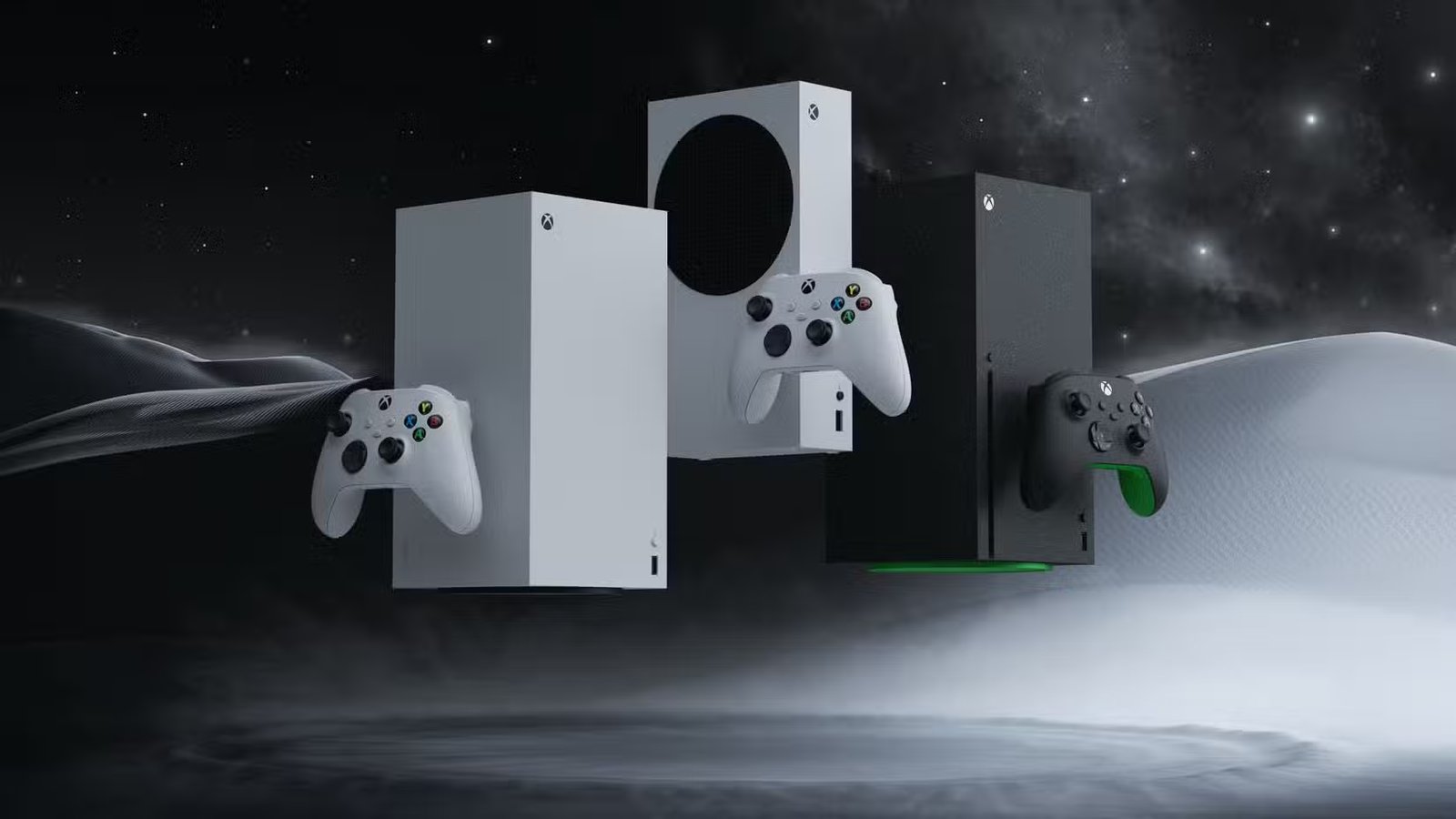
And then there’s the controller. While details were sparse on its aesthetic, Microsoft hinted at a significantly redesigned controller with advanced haptic feedback and adaptive triggers. These aren’t just simple rumbles anymore; we’re talking about nuanced sensations that can simulate the tension of a bowstring, the grit of a gravel path, or the impact of a shotgun blast with incredible precision. A developer, speaking anonymously, whispered, “It feels like the game is breathing in your hands. It’s truly transformative.” This haptic revolution, coupled with the spatial audio, promises to engage all your senses, pulling you deeper into the game world than ever before. It’s a holistic approach to immersion, leaving no stone unturned.
The Ecosystem Evolution: Game Pass and Cloud Integration
Beyond the raw hardware, Microsoft’s long-term strategy with Project Helix is clearly about strengthening its ecosystem, particularly through Xbox Game Pass and cloud gaming. The console is designed to be the ultimate hub for Game Pass, offering seamless access to a vast library of games, day one launches, and exclusive content. “Game Pass isn’t just a subscription service; it’s the core of our gaming identity,” emphasized Lena Petersen, a Senior Product Manager at Xbox, during a follow-up Q&A. This means that users can expect an even more integrated and intuitive experience when navigating the Game Pass library, with enhanced discovery features and personalized recommendations.

Cloud gaming is also getting a massive boost. While Project Helix is a dedicated local machine, it’s also built with robust cloud integration, allowing for instant-on gameplay, seamless transitions between console and cloud devices (like your phone or PC), and even potential for cloud-enhanced graphics or processing for certain titles. Think about starting a game on your console, then picking it up instantly on your tablet during your commute, exactly where you left off. It’s a vision of gaming without boundaries. And of course, backward compatibility remains a cornerstone, ensuring that your existing library of Xbox One, Xbox 360, and even original Xbox titles will run better than ever on Project Helix, often with improved frame rates and resolutions. It’s a testament to their commitment to their players’ investments.
Developer Dreams and Challenges: Crafting for Helix
For game developers, a new console generation represents both immense opportunity and daunting challenges. Microsoft seems keenly aware of this, highlighting a suite of developer tools and SDKs designed to make creating for Project Helix as streamlined as possible. The common architecture with PC gaming, along with robust API support, should theoretically ease porting and optimization. “The power under the hood is phenomenal, but it’s the accessibility of that power that truly excites us,” commented Emily Chen, lead engineer at a major AAA studio, who had early access to the development kit. “We can envision experiences now that were pure fantasy just a few years ago.”
The emphasis on AI upscaling and the Velocity Architecture means developers can focus on crafting incredibly rich worlds and intricate gameplay mechanics, knowing that the console will handle the heavy lifting of rendering and asset streaming efficiently. This creative freedom is invaluable. However, with great power comes great complexity. Smaller independent studios might find the sheer scale of optimizing for such advanced hardware a hurdle. The expectation for stunning visuals and seamless performance will be high, potentially raising development costs and timelines.

Microsoft’s commitment to supporting developers with resources and documentation will be crucial. “We’re building a platform, yes, but more importantly, we’re building a community and providing the tools for incredible stories to be told,” Spencer reiterated, acknowledging the symbiotic relationship between hardware and software. It’s a delicate dance, balancing cutting-edge technology with practical development realities. But if they succeed, Project Helix could become a canvas for truly groundbreaking interactive entertainment.
The Road Ahead: Release Window, Pricing, and Market Impact
While Microsoft provided a wealth of technical details, the exact release date and pricing for Project Helix remain somewhat under wraps, though whispers suggest a holiday 2026 launch. This timeframe would put it roughly three years after the initial rumors began swirling, giving developers ample time to truly leverage the new hardware. Pricing is, as always, the million-dollar question. Given the advanced technology packed into this console, it’s reasonable to expect a premium price point, likely exceeding previous generations. Analysts predict a launch price in the realm of $599-$699, which, while steep, might be justified by the sheer leap in performance.
The competition, primarily from Sony’s PlayStation and Nintendo’s next platform (whatever it may be), will be fierce. Microsoft’s strategy appears to be a dual approach: offering a technologically superior console experience while simultaneously reinforcing the value proposition of Xbox Game Pass and its cloud capabilities. “This isn’t just about selling a box; it’s about selling an experience, a comprehensive gaming journey,” remarked industry veteran Michael Pachter, from Wedbush Securities, during a recent interview. He added, “If they can nail the launch titles and continue to expand Game Pass, Helix could redefine market expectations.”
The excitement radiating from the community is palpable. Social media is abuzz with speculation, fan art, and wish lists for launch titles. The feeling is one of genuine anticipation, a belief that Project Helix isn’t just another console, but a carefully crafted vision for the future of interactive entertainment. It’s a bold statement from Microsoft, a promise of innovation and immersion that could very well reshape the entire gaming landscape for years to come. The future looks bright, and I, for one, can’t wait to grab a controller and jump in.
Frequently Asked Questions
| What is “Project Helix”? | “Project Helix” is the codename for Microsoft’s highly anticipated next-generation Xbox console, which aims to deliver a significant leap in gaming performance, visual fidelity, and player immersion compared to previous generations. |
| What are the key hardware innovations in Project Helix? | Project Helix features a custom AMD chip combining Zen 5 CPU and RDNA 4 GPU architectures, 24GB of GDDR6 RAM, and an advanced NVMe SSD with an evolved Velocity Architecture. It also boasts second-generation hardware-accelerated ray tracing and proprietary AI upscaling technology. |
| How will Project Helix enhance the gaming experience? | It aims for consistent 4K 120fps gameplay, with potential for 8K, and virtually eliminates loading times. Immersion is further enhanced by dedicated spatial audio hardware and a redesigned controller with advanced haptic feedback and adaptive triggers. |
| What role does Xbox Game Pass play in Project Helix’s strategy? | Xbox Game Pass is positioned as the core of Project Helix’s gaming identity, offering seamless access to a vast game library and exclusive content. The console is built for robust cloud integration, allowing for fluid transitions between local and cloud gaming experiences. |
| When is Project Helix expected to be released and what might be its price? | While official details are still under wraps, industry speculation suggests a holiday 2026 release window. Given the advanced technology, analysts predict a premium price point, possibly in the $599-$699 range. |
Important Notice
This FAQ section addresses the most common inquiries regarding the topic.