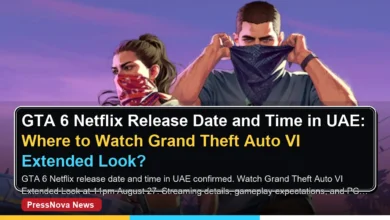
GTA 6 Cyberleak update delivers another wave of unofficial gameplay footage just days before Rockstar Games officially unveils Grand Theft Auto VI gameplay on Netflix, with four new clips surfacing over the weekend and into Monday morning from the anonymous leaker known as Cyberleak.
- New Clips Count: Four new GTA 6 gameplay clips released since Friday, showing diverse gameplay scenarios across Vice City
- Supercar Footage: Protagonist Jason drives a high-end sports car then engages in an armed robbery sequence
- Strip Club Scene: Jason explores an in-game strip club with a snippet of a related cutscene
- Gas Station Chaos: A stolen truck filled with gasoline crashes and explodes; additional cutscene footage shown
- Nudist Colony: Jason attacks NPCs at a nudist hangout spot—the poll winner on Cyberleak’s website
- Voting Mechanism: Users vote for clips by spending cryptocurrency on Cyberleak’s platform
- Legitimacy Confirmed: Take-Two Interactive subpoenas reference stolen material, confirming leaks are authentic
- Netflix Reveal: Official GTA 6 gameplay premieres on Netflix within the week, making the leak timing significant
Cyberleak, the anonymous figure who has risen to prominence in recent weeks by releasing a steady stream of GTA VI gameplay clips, continued their campaign with fresh footage posted over the weekend and into Monday morning. The leaked clips, while not directly linked in this report, have been widely circulated across social media platforms.
According to community analysis, the leaker appears to have access to an older build of Grand Theft Auto VI—a version that likely predates Rockstar’s final optimization work. This suggests the footage, while authentic, may not represent the polished experience Rockstar will showcase during the upcoming Netflix gameplay reveal. Industry observers have noted that the ongoing GTA 6 leaks have been met with skepticism by some former Rockstar developers, who caution against reading too much into early build footage.
Take-Two Interactive, Rockstar’s parent company, has filed subpoenas specifically referencing stolen material related to GTA 6, effectively confirming the legitimacy of Cyberleak’s ongoing leak campaign. The legal action indicates that the clips circulating are not fabricated but are genuine assets from the game’s development. The Cyberleak GTA 6 campaign has now become one of the most significant unauthorized releases in gaming history, with implications for both Rockstar’s marketing strategy and the broader gaming community.

Cyberleak’s Weekend Blitz: A Complete Catalog of New GTA 6 Clips
Four distinct clips have emerged since last Friday, each offering a different glimpse into the world of Vice City and its gameplay mechanics. Here is a detailed breakdown of every video that has surfaced:
Clip 1: Supercar Showdown and Armed Robbery
The first clip features protagonist Jason behind the wheel of a high-end sports car, navigating Vice City’s streets before transitioning into an armed robbery sequence. The footage showcases the game’s vehicle handling physics and the seamless transition from driving to on-foot combat, a hallmark of the Grand Theft Auto franchise.
What stands out is the improved vehicle damage modeling and the density of traffic and pedestrian AI in the Vice City environment. The clip also reveals more detailed interior vehicle views, suggesting Rockstar has enhanced the first-person driving experience significantly compared to GTA V.
Clip 2: Inside Vice City’s Strip Club Scene
The second clip shows Jason wandering through an in-game strip club, offering players their first look at one of Vice City’s adult entertainment venues. The attention to interior detail is notable, with neon lighting, animated NPCs, and a fully modeled club environment. This footage aligns closely with the GTA 6 Netflix reveal that previously surfaced, showing similar club mechanics and interior design elements.
A snippet of a related cutscene is also shown, hinting at narrative connections tied to this location. This aligns with Rockstar’s tradition of using such venues for story missions and character interactions, reminiscent of similar locations in previous GTA titles.
Clip 3: Gas Station Chaos and Truck Explosion
The third clip depicts Jason causing chaos at a gas station, stealing a truck with its bed filled with gasoline. The vehicle then crashes and explodes in a spectacular fireball, showcasing GTA 6’s upgraded physics and environmental destruction systems.
Additional cutscene footage is shown alongside the gameplay, suggesting this sequence may be part of a larger mission or heist setup. The explosion effects and fire propagation appear more dynamic than previous titles, indicating significant improvements to the game’s physics engine.
Clip 4: The Nudist Colony – The Poll Winner
The nudist colony clip emerged as the winner of Cyberleak’s latest community poll, where users can vote on which content they want to see next by spending cryptocurrency. This clip shows Jason wandering through a nudist hangout spot before attacking NPCs in the area.
This location appears to be a unique Vice City landmark, potentially serving as either a side activity location or a mission hub. The clip has generated significant discussion among fans, as it showcases the game’s humor and the variety of environments Rockstar is creating for GTA 6.
How Cyberleak’s Crypto-Voting System Works
Cyberleak has implemented a cryptocurrency-based voting mechanism on their website, allowing users to determine which clips are released next. According to reports, users spend cryptocurrency to cast votes, with the most popular option determining the next footage to be leaked.
This model effectively monetizes the leak campaign while creating a direct feedback loop between the leaker and the community. The nudist colony clip, which won the latest poll, demonstrates that users are particularly interested in exploring Vice City’s more unconventional locations and activities.
At the time of publication, it remains unclear exactly how much of the game Cyberleak has access to or how they obtained the footage. However, the subpoenas filed by Take-Two Interactive indicate that the material is legitimate and sourced from Rockstar Games’ internal builds.
What These Clips Reveal About GTA 6 Gameplay
While these clips offer tantalizing glimpses of Grand Theft Auto VI, it’s important to contextualize what they actually reveal about the final game:
| Feature | What the Clips Show | GTA V Comparison |
|---|---|---|
| Vehicle Physics | Enhanced damage modeling, detailed interiors | More realistic collision and deformation |
| Environment Detail | Dense NPC traffic, neon lighting, weather effects | Higher fidelity urban environments |
| Cutscene Integration | Seamless transitions, improved facial animations | More cinematic presentation |
| Destruction Physics | Explosive chain reactions, fire propagation | More reactive environmental systems |
In all likelihood, the leaker has access to an older build of the game that does not reflect the final optimizations and polish Rockstar will deliver. The clips should be viewed as early development footage rather than a representation of the finished product.
The Netflix Connection: Why the Leak Timing Matters
The timing of these leaks is particularly significant given Rockstar Games’ upcoming official GTA 6 gameplay reveal on Netflix. With less than a week until the premiere, the unauthorized footage has generated substantial hype and speculation within the gaming community.
For official information about Grand Theft Auto VI and Rockstar Games’ announcements, visit the Rockstar Games official GTA VI page.
For updates on the Netflix gameplay reveal schedule and streaming details, check the Netflix Tudum official announcements.
Community mapping projects have been actively piecing together Vice City’s layout, and many of the locations shown in Cyberleak’s clips align with community projections. This correlation lends additional credibility to the leaked footage and suggests that the broader GTA 6 community has already developed a relatively accurate picture of the game’s geography.
As the official reveal approaches, the gaming community faces a unique situation: unprecedented access to unauthorized footage just days before Rockstar’s planned unveiling. While Cyberleak’s campaign has provided fans with an early look at GTA 6, the full scope and polish of the game will only be revealed when Rockstar takes center stage on Netflix later this week.