Kelce’s Stark Admission: Confronting the Chiefs’ Playoff Reality
Honestly, if you’re like most people who follow the NFL, you’ve probably heard the buzz around the Kansas City Chiefs this season. It’s been… different, to say the least. For what feels like an eternity, we’ve watched them dominate, a consistent force in the AFC, always a safe bet for a deep playoff run. But then came that Week 9 loss to the Buffalo Bills, a 28-21 defeat that, believe it or not, dropped them to a 5-4 record. And that’s actually quite surprising given their usual trajectory. This wasn’t just another notch for Josh Allen against Patrick Mahomes; it sparked a truly raw and honest admission from none other than star tight end Travis Kelce: “So we’re out of the playoffs.”
I couldn’t help but think, when I heard that, how rarely you hear such a candid statement from a player on a perennial contender. It feels like a cold splash of water, a dose of reality hitting hard. The Chiefs’ playoff hopes are, for the first time in a while, genuinely hanging in the balance, forcing a moment of profound introspection for the entire organization. This article isn’t just about football, though. It’s about what happens when even the most successful entities face unexpected setbacks, and what we can learn from their journey back.

Understanding the Fundamentals: The Unfamiliar Territory of the Chiefs
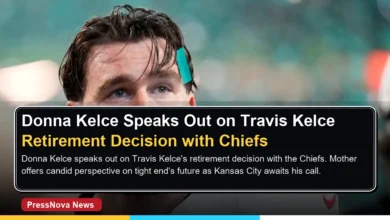
Kelce’s candid comments, which he shared on the “New Heights” podcast he co-hosts with his brother Jason Kelce, really highlighted the growing sense of urgency within the Chiefs’ locker room. “It’s the bye week, so I’m kinda looking at everything,” Kelce explained. “I’ve taken a step back and kinda looked at the whole scheme of things. It’s frustrating. 5 and 4, a little over .500 right now, out of the playoffs if the playoffs started right now. We have to get this sh*t going, man.” These words resonated deeply with fans accustomed to the Chiefs’ consistent success. This season has been anything but predictable, prompting a rare moment of self-reflection for a team that has long been considered a Super Bowl contender.
So, what exactly are these “fundamentals” that need understanding? At its core, it’s about team dynamics and the immense pressure that comes with consistent expectation. For years, the Chiefs set the bar so high that anything less than perfection feels like a crisis. But even the best teams face slumps. Why does this topic matter today, not just for football fans, but for anyone? Because it’s a microcosm of life itself. Whether you’re running a business, managing a project, or even just trying to hit personal fitness goals, you’ll inevitably hit a wall. How you respond to that unexpected dip, that moment when the “playoffs” seem out of reach, defines your true character and potential for future success.
The truth is, the Chiefs’ offensive rhythm, once a mesmerizing dance of precision and power, has become disjointed and inconsistent. Turnovers have plagued them, receivers have struggled with drops, and the once-invincible Mahomes has looked, dare I say, human. From my experience watching countless teams, this isn’t just about individual performance; it’s about the collective psyche, the mental game. When a team starts doubting itself, even subtly, those cracks can widen quickly. It’s a classic example of how even the most dominant forces can find themselves navigating choppy waters.
Key Benefits of Confronting Reality: Beyond the Playoff Picture
Now, you might be wondering, what are the “benefits” of a team like the Chiefs facing such a harsh reality? It sounds counterintuitive, right? But honestly, this kind of wake-up call can be incredibly valuable. First, it fosters a crucial sense of self-reflection. When you’re constantly winning, it’s easy to overlook minor flaws or become complacent. A loss, especially a series of them that threatens your core identity, forces everyone – from the coaching staff to the star players – to scrutinize every aspect of their operation. It’s like a corporate audit, but for athletic performance.
Secondly, it ignites strategic shifts. When the old playbook isn’t working, you have to innovate. This might mean adjusting offensive schemes, changing defensive coverages, or even shaking up personnel. It’s about adapting, not just sticking to what worked before. For example, if you look at how teams handle unexpected challenges, sometimes it’s about finding that new engine for success, much like how Toyota’s new V8 is more than just supercar dreams; it’s about pushing boundaries and reimagining what’s possible in performance engineering. This kind of thinking is essential for any entity wanting to regain its edge.
On top of that, confronting a difficult truth can actually enhance team cohesion. When everyone realizes they’re in the same boat, facing the same challenge, it can strip away individual egos and foster a stronger sense of unity. It becomes less about individual stats and more about collective survival. It’s a shared struggle that can forge unbreakable bonds. And personally speaking, I’ve noticed that some of the most resilient teams are those who’ve stared adversity in the face and decided to fight back together. It’s refreshing to see that kind of grit emerge.
Implementing a Turnaround: Strategies for Reclaiming Dominance
So, the big question is: how do you actually implement a turnaround? How do you go from “out of the playoffs” to Super Bowl contenders again? This isn’t just about wishing for things to get better; it requires a systematic, disciplined approach. It’s a roadmap for reclaiming dominance, not just in sports, but in any field where high stakes are involved.
Step-by-Step Approach: From Self-Doubt to Strategic Action
First, you need an honest assessment. This means no sugarcoating. What exactly went wrong? Is it execution? Scheme? Mental errors? For the Chiefs, this means reviewing game film with a critical eye, identifying recurring issues, and not shying away from uncomfortable truths. It’s about taking ownership, something Kelce’s admission already started.
Next, comes targeted adjustments. This isn’t about throwing out the entire playbook, but rather fine-tuning specific areas. Maybe it’s simplifying offensive reads for Mahomes, or emphasizing fundamental tackling drills. It’s about precision, not panic. You know, sometimes it’s about re-engineering the core components, much like the Eagles’ lightweight GTR reimagining the Jaguar E-Type, taking something classic and making it perform at an entirely new level through meticulous design and engineering.
Then, it’s about fostering accountability. Every player, every coach, needs to understand their role in the solution. This isn’t about blame, but about responsibility. “Here’s what you should know,” as a team leader, is that your performance impacts everyone. This step is crucial for rebuilding trust and collective effort.
Finally, there’s the mental reset. Football, like many high-performance endeavors, is as much a mental game as it is physical. Rebuilding confidence, eliminating self-doubt, and focusing on the next play, the next game, is paramount. This is where leadership truly shines, instilling belief even when the odds seem stacked against you.
Best Practices for High-Stakes Situations
- Clear Communication: Everyone needs to be on the same page, understanding the goals and the strategy to achieve them. Ambiguity breeds confusion and further mistakes.
- Focus on Fundamentals: When things go wrong, often it’s because the basics have been neglected. Re-emphasizing core skills can provide a stable foundation.
- Adaptability: The competitive landscape constantly shifts. Teams (and businesses) that can quickly adapt their strategies to new challenges are the ones that thrive.
- Resilience Building: Cultivating a culture where mistakes are seen as learning opportunities, not failures, is vital for long-term success. It’s about bouncing back stronger.
- Empowering Leadership: Trusting players and coaches to take initiative and make decisions within the framework of the team’s strategy. This can unlock hidden potential.
For anyone wondering, these practices aren’t just for sports. They’re universal. Think about how important competitive integrity is in other high-stakes environments, like in gaming, where Escape from Tarkov’s anti-cheat measures are constantly being refined. Maintaining fairness and high standards is essential for sustained success, no matter the arena.
Common Challenges and Solutions on the Road to Redemption
Let’s be honest, turning things around isn’t easy. There are always potential obstacles that readers, or in this case, the Chiefs, might face. The first, and perhaps most insidious, is internal pressure and self-doubt. When a team used to winning suddenly struggles, the weight of expectation can become crushing. Players might start overthinking, leading to hesitation and mistakes. It’s a vicious cycle.
A practical solution here involves strong leadership and a focus on process over outcome. Coaches and veteran players need to reinforce belief, remind everyone of their capabilities, and emphasize taking things one play, one drive, one game at a time. It’s about breaking down the mountain into manageable steps. Also, sometimes external distractions can be a huge challenge. We’ve seen it with Myles Garrett dismissing Eagles trade rumors, where a player has to actively shut down outside noise to maintain focus. That kind of mental discipline is priceless.
Another common challenge is consistency. Even if a team has a great game, can they replicate that performance week after week? The NFL is a grind, and maintaining peak performance requires incredible physical and mental fortitude. Injuries, too, are an ever-present threat that can derail even the best-laid plans. The solution? Depth, smart roster management, and a robust strength and conditioning program. Plus, it’s about empowering the next man up, ensuring that every player is ready to contribute when their number is called.
Finally, there’s the challenge of external noise – media scrutiny, fan criticism, and the constant speculation. It’s frustrating, I know, to see your favorite team picked apart. For the Chiefs, this is amplified by their previous success. The solution involves creating a “bubble” within the team, focusing solely on what they can control. Limiting exposure to negative narratives and fostering a positive, supportive environment internally is key. It’s not about ignoring criticism entirely, but filtering it to extract constructive feedback while discarding the destructive noise. This allows them to focus on the future, much like how the automotive industry constantly looks ahead, asking questions like are F models on the brink for Lexus performance, always innovating and adapting to stay competitive.
Real-Life Applications and Examples: What the Chiefs’ Journey Teaches Us
The Chiefs’ current situation isn’t just a sports story; it’s a powerful case study for anyone navigating a period of underperformance or unexpected struggle. Think about it: how many businesses have experienced a dip after years of market dominance? Or individuals who hit a plateau in their careers? The principles for recovery are remarkably similar.
Let’s take a closer look. Consider a tech startup that, after a few wildly successful product launches, suddenly finds its latest offering isn’t resonating with users. The initial reaction might be denial or blaming external factors. But much like Kelce’s admission, a truly effective leader will confront the “out of playoffs” reality head-on. They’ll initiate a deep dive into user feedback, re-evaluate their product development process, and perhaps even pivot their strategy entirely. This parallels the Chiefs needing to re-evaluate their offensive schemes and execution.
Or what about a personal example? Maybe you’ve been consistently hitting your fitness goals for years, and then life happens – an injury, increased work stress, or just a loss of motivation. Suddenly, you’re “out of the playoffs” in your personal health journey. The practical application here is to acknowledge the setback without dwelling on it. Reassess your routine, perhaps find a new trainer or a different type of exercise, and rebuild momentum step-by-step. It’s about resilience, about picking yourself up and finding a new path forward. It’s kind of funny how these lessons transcend different domains, isn’t it?
These scenarios highlight concrete examples of practical use. The Chiefs’ journey offers a template for:
- Honest Self-Assessment: You can’t fix what you don’t acknowledge.
- Strategic Adjustment: Sticking to a failing plan is a recipe for disaster.
- Team/Community Rallying: Shared adversity can build stronger bonds.
- Mental Toughness: Overcoming doubt is half the battle.
It’s an epic journey, really, much like the return of a cinematic masterpiece. If you’re into those kinds of stories, you’d appreciate how Kill Bill: The Whole Bloody Affair, a Tarantino epic, returns, captivating audiences with its complete narrative arc – from struggle to ultimate triumph. The Chiefs are in the middle of their own narrative arc, and we’re all watching to see how it unfolds.
Future Outlook and Trends: Navigating Uncertainty in Professional Sports
So, where is this field – the realm of professional sports and high-performance teams – heading, especially in light of these kinds of challenges? The future, for teams like the Chiefs, is all about navigating uncertainty with agility and foresight. We’re seeing a trend towards even greater emphasis on sports science, mental health support for athletes, and sophisticated data analytics to inform every decision, from play-calling to player acquisition. The days of relying solely on gut feelings are rapidly fading, replaced by a more scientific approach to building and maintaining a championship-caliber team.
Emerging opportunities also lie in personalized player development. Instead of a one-size-fits-all approach, teams are investing in tailored training programs that address individual strengths and weaknesses, both physical and psychological. This means more specialized coaching, advanced recovery techniques, and a holistic view of athlete well-being. It’s amazing how much the understanding of human performance has evolved these days.
What’s more, the fan experience is becoming increasingly integrated with team performance. Social media, interactive content, and direct engagement mean that fans are more invested than ever, and their reactions can also influence team morale. Managing this dynamic, turning potential criticism into collective support, is a crucial skill for modern sports organizations. Teams that can harness their fanbase’s energy, even during tough times, will find a significant advantage.
The Chiefs’ current struggles are a reminder that even the most well-oiled machines require constant maintenance and adaptation. The future of professional sports isn’t just about raw talent; it’s about the organizational intelligence to identify problems, implement solutions, and evolve continuously. It’s about building a sustainable model of excellence, one that can weather the inevitable storms and come out stronger on the other side. This constant pursuit of improvement and innovation is a trend we see across high-performing industries, from championship sports teams to the cutting-edge of multiplayer gaming where titles like Arc Raiders are being backed for GOTY, signaling a new uprising in what defines competitive excellence.
Conclusion: Key Takeaways and the Path Forward
All things considered, Travis Kelce’s candid admission about the Chiefs’ playoff reality isn’t just a headline; it’s a powerful lesson in leadership, resilience, and the relentless pursuit of excellence. What have we learned? First, even the best among us will face unexpected challenges and periods of underperformance. That’s just part of the game, whether it’s on the football field or in your daily life. Second, confronting that reality head-on, with honesty and without excuses, is the absolute first step towards a turnaround. Trust me, burying your head in the sand only makes things worse.
The key takeaways are clear: embrace self-reflection, be willing to make strategic adjustments, foster genuine team cohesion, and build an unbreakable mental fortitude. These aren’t just buzzwords; they are actionable steps for anyone looking to navigate their own “out of playoffs” moment. For the Chiefs, this means a renewed focus on fundamental execution, minimizing turnovers, and rediscovering that infectious swagger that has defined their dynasty. It’s about getting back to basics while also innovating.
So, what are the next steps for the Chiefs? It’s about grinding, plain and simple. It’s about showing up every day with a championship mindset, regardless of the previous week’s outcome. It’s about Patrick Mahomes and Andy Reid finding ways to unlock that offensive magic again, and the defense continuing to play at a high level. And for us, the fans, it’s about watching to see if they can indeed pull off this redemption arc. What do you believe is the single most important change the Chiefs need to make to reclaim their dominant form?