The air in the Australian Senate chamber hung thick with anticipation. It was a typical sitting day, the kind where policy debates drone on, and politicians engage in carefully choreographed sparring. But something was different. A ripple of unease spread through the room as Senator Pauline Hanson, leader of the One Nation party, entered. She wasn’t just entering; she was making an entrance. She was wearing a burqa, a full-body Islamic garment that covers the face. The murmurs grew to a buzz, then to outright gasps. It was a visual that instantly ignited a firestorm of controversy, a moment forever etched in the annals of Australian political history. (I remember watching it live, utterly stunned. Was this really happening?)
The reason for her sartorial statement? To highlight what she perceived as a security risk posed by the wearing of burqas in public places. Her argument was simple, albeit provocative: if someone could conceal their identity, they could potentially pose a threat. However, the move was immediately condemned by many as a deeply insensitive and Islamophobic stunt, designed to incite hatred and division. It wasn’t just the act itself, but the theatricality of it all, the deliberate intention to shock and provoke. This wasn’t a quiet, reasoned debate; it was a carefully staged spectacle. The incident sparked immediate outrage, both within the Parliament and across the wider community. It was, without a doubt, a political gambit of the highest order, and its repercussions continue to be felt to this day. The questions that arose were stark: Was this a legitimate expression of concern about national security, or a calculated act of Islamophobia? Was it a genuine attempt to engage in debate, or a cynical ploy to grab headlines and stir up racial tensions?
The immediate reaction was swift and fierce. Senators from across the political spectrum condemned Hanson’s actions. Attorney-General George Brandis delivered a particularly stinging rebuke, stating that it was offensive to mock the religious garments of others. He emphasized that the vast majority of Muslim Australians were law-abiding citizens and that her stunt risked alienating them. (His words were powerful, you could feel the tension in the room). Outside Parliament, community leaders expressed their disgust and disappointment. Many felt that Hanson’s actions had set back efforts to build bridges between different cultural and religious groups. The incident became a flashpoint in the ongoing debate about cultural sensitivity, religious freedom, and the role of Islamophobia in Australian politics. This one moment transformed what was already a tense situation into something far more volatile, with long-lasting implications for the social fabric of the country.
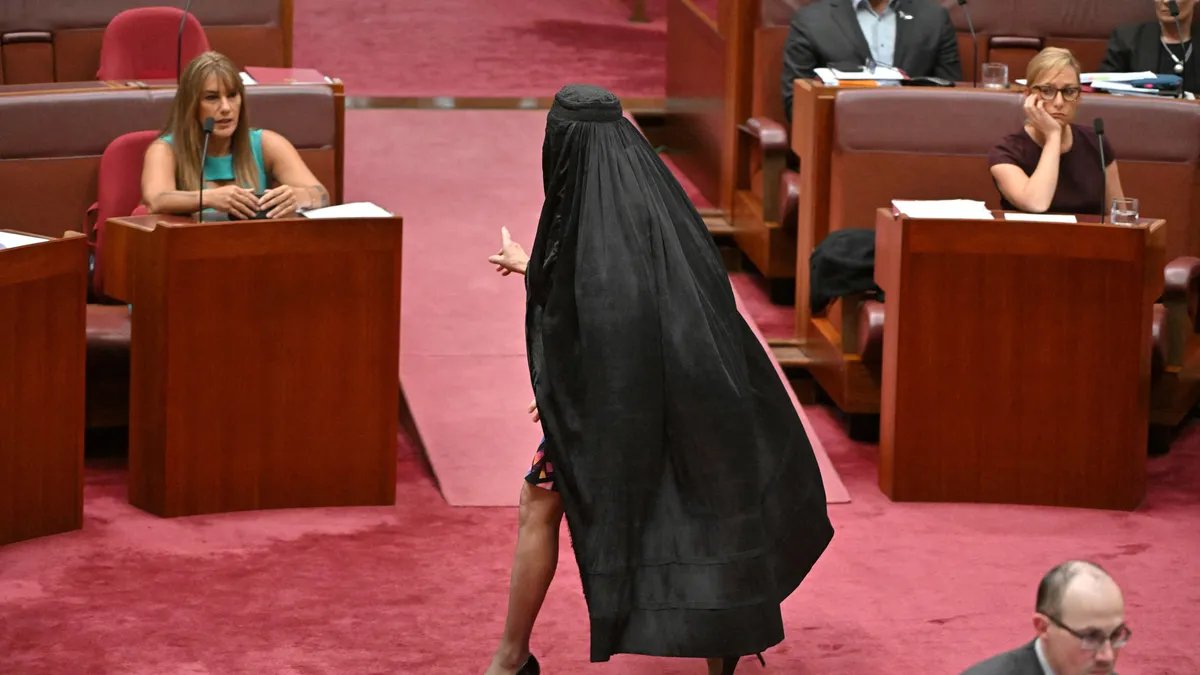
It was a sweltering August day in Canberra. The sun beat down mercilessly on the Parliament House, reflecting off the building’s white facade. Inside, the air conditioning struggled to keep pace with the rising temperature – both literally and figuratively. The atmosphere was electric, charged with anger, disbelief, and a sense of profound unease. “I was shocked,” said one parliamentary staffer, who asked to remain anonymous. “It felt like a deliberate attempt to inflame tensions and disrespect a whole community.” Another observer described the scene as “a circus,” lamenting the degradation of political discourse. And it wasn’t just those within the parliamentary precinct who were affected. The news quickly spread like wildfire across social media, igniting a furious debate.
The Justification: Security Concerns or Islamophobia?
Hanson defended her actions by claiming that they were motivated by genuine concerns about national security. She argued that the burqa could be used to conceal weapons or explosives, making it difficult to identify potential threats. She stated that she wanted to demonstrate the potential dangers of allowing people to cover their faces in public places. “If a person wearing a burqa commits a crime, how can they be identified?” she asked. This argument, however, was widely criticized as being based on fear-mongering and lacking factual basis. Critics pointed out that there was no evidence to suggest that the burqa had ever been used to facilitate a terrorist attack in Australia. Moreover, they argued that existing security measures, such as airport security checks and police powers of search and seizure, were sufficient to address any potential risks.
The debate quickly shifted from security concerns to the issue of Islamophobia. Many accused Hanson of deliberately targeting the Muslim community and perpetuating harmful stereotypes. They argued that her stunt was designed to demonize Muslims and create a climate of fear and suspicion. “This is nothing more than blatant Islamophobia,” said one Muslim community leader. “It’s a disgrace that a member of Parliament would resort to such divisive and hateful tactics.” The incident also raised questions about the role of political leaders in promoting social cohesion and combating prejudice. Should politicians be held to a higher standard of conduct? Do they have a responsibility to avoid language and actions that could incite hatred or discrimination? These are questions that continue to be debated in Australia and around the world.

The Broader Context: One Nation and Anti-Immigration Sentiment
To understand the significance of Hanson’s burqa stunt, it’s important to consider the broader context of One Nation’s political platform and the rise of anti-immigration sentiment in Australia. One Nation has a long history of controversial statements and policies, particularly regarding immigration and multiculturalism. The party has consistently advocated for stricter immigration controls and a more assimilationist approach to cultural integration. Hanson herself has made numerous statements that have been criticized as racist and xenophobic. This history of controversial rhetoric provides a backdrop against which her burqa stunt must be viewed. It wasn’t an isolated incident, but rather part of a pattern of behavior that has consistently sought to exploit anxieties about immigration and cultural change.
The rise of anti-immigration sentiment in Australia is a complex phenomenon with a variety of contributing factors. Economic anxieties, concerns about national identity, and the perceived threat of terrorism have all played a role. While it’s important to acknowledge these legitimate concerns, it’s also crucial to recognize the dangers of scapegoating and prejudice. Anti-immigration sentiment can easily morph into outright racism and discrimination, leading to the marginalization and exclusion of minority groups. This is why it’s so important for political leaders to exercise caution and responsibility in their rhetoric, avoiding language that could inflame tensions or promote hatred.
The Aftermath: Political Fallout and Social Impact
The immediate political fallout from Hanson’s burqa stunt was significant. She was widely condemned by her fellow senators, and there were calls for her to be sanctioned. However, ultimately, no formal action was taken against her. The incident did, however, further damage her reputation and alienate many potential voters. It also highlighted the deep divisions within Australian society on issues of race, religion, and immigration.
The social impact of the stunt was even more profound. It created a climate of fear and anxiety for many Muslim Australians, who felt targeted and vilified. It also emboldened those who hold anti-Muslim views, leading to an increase in hate speech and discriminatory behavior. The incident served as a stark reminder of the challenges that Australia faces in building a truly inclusive and multicultural society. It also underscored the importance of promoting understanding, tolerance, and respect for diversity.
Long-Term Implications: The Ongoing Debate About Religious Freedom
The debate about the burqa and other forms of religious dress continues to be a contentious issue in Australia and around the world. On one hand, there is the right to religious freedom, which is enshrined in international law and many national constitutions. This right includes the freedom to practice one’s religion without interference from the state, including the freedom to wear religious clothing. On the other hand, there are concerns about security, public safety, and the integration of minority groups. Some argue that the burqa poses a security risk because it conceals the wearer’s identity. Others argue that it is a symbol of oppression and that it hinders the integration of Muslim women into Western society.
These are complex and deeply sensitive issues, and there are no easy answers. It is crucial to approach these debates with respect for all perspectives and a commitment to finding solutions that balance the competing rights and interests involved. It is also important to avoid generalizations and stereotypes, and to recognize the diversity of views within the Muslim community. The vast majority of Muslim women who choose to wear the burqa do so out of personal conviction and religious piety. It is not for others to judge their choices or to impose their own values upon them.
The Importance of Dialogue and Understanding
Ultimately, the Pauline Hanson burqa incident serves as a cautionary tale about the dangers of prejudice, intolerance, and the exploitation of fear for political gain. It highlights the importance of promoting dialogue, understanding, and respect for diversity in a multicultural society. It also underscores the responsibility of political leaders to exercise caution and restraint in their rhetoric, avoiding language and actions that could incite hatred or discrimination.
Building a truly inclusive and harmonious society requires ongoing effort and commitment from all members of the community. It requires us to challenge our own biases and assumptions, to listen to the experiences of others, and to work together to create a society where everyone feels valued, respected, and safe. It’s a continuous process, not a destination. And incidents like this remind us of how much work still needs to be done.
The sun has long since set in Canberra. The Parliament House stands illuminated against the night sky, a symbol of democracy and the rule of law. But the shadows of the day’s events linger, a reminder of the challenges that lie ahead.
Frequently Asked Questions
| Why did Pauline Hanson wear a burqa in the Australian Parliament? | Pauline Hanson stated she wore the burqa to highlight what she believed were security concerns associated with wearing full-face coverings in public places. She argued it could potentially allow individuals to conceal weapons or avoid identification. |
| What were the benefits and consequences of Pauline Hanson’s action? | There were no real benefits. The consequences included widespread condemnation for being insensitive and Islamophobic, damaging community relations, and sparking debate about the balance between security and religious freedom. |
| How was Pauline Hanson’s stunt implemented in Parliament? | Pauline Hanson simply entered the Senate chamber wearing a burqa during a normal sitting day. She removed the burqa after a period, presumably to make her point about security concerns. |
| What were the main challenges and criticisms faced by Pauline Hanson regarding this event? | The main challenges included facing accusations of Islamophobia and insensitivity toward the Muslim community. Criticisms centered on the idea that her stunt was a divisive political act rather than a legitimate expression of security concerns. |
| What are the future implications for discussions about religious freedom and security in Australia? | The incident continues to influence debates on religious freedom, cultural sensitivity, and security measures in Australia. It highlighted the need for respectful dialogue and balanced policy-making that respects both individual rights and community safety. |
Important Notice
This FAQ section addresses the most common inquiries regarding the topic.