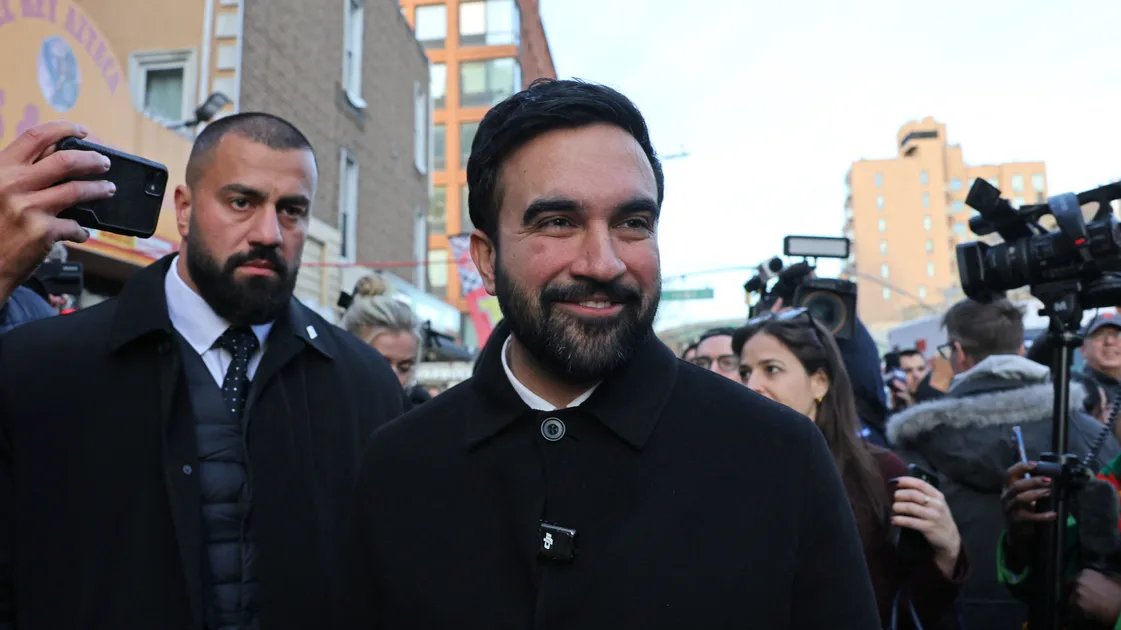
The crisp autumn air bit at exposed skin as Zohran Mamdani, New York Assemblymember for District 36, stepped onto the picket line outside a Starbucks in Astoria, Queens. The scene was a mix of determined resolve and quiet frustration. Workers, bundled in jackets and scarves, chanted slogans, their voices hoarse but unwavering. Cars honked in support, a cacophony that momentarily drowned out the rhythmic drumming on a makeshift bucket. Mamdani, a vocal advocate for labor rights and a self-described Democratic Socialist, wasn’t just there for a photo op. He was there to stand shoulder-to-shoulder with the baristas, the shift supervisors, the people who make the coffee that fuels our city. He came to support the workers who are fighting for better working conditions, fair wages, and the right to unionize. He came to slam Starbucks. I saw a tired-looking barista give him a grateful nod. (She’d been out there since 6 AM, I overheard).
The smell of burnt coffee still lingered in the air, a cruel reminder of what they were missing out on inside. Starbucks, a global behemoth known for its pumpkin spice lattes and ubiquitous presence, has been facing increasing pressure from its employees to recognize their unions. The fight for unionization has been hard-fought, with workers alleging union-busting tactics and intimidation from corporate management. The energy on the picket line was palpable, a mix of anger and hope. Mamdani’s presence seemed to amplify that hope, signaling that their struggle was being seen and heard by those in power. He wasn’t just offering words of encouragement; he was promising to leverage his position to hold corporations like Starbucks accountable for their treatment of workers. He held a sign that read, “Solidarity with Starbucks Workers!” in bold, hand-painted letters. It was a simple gesture, but it spoke volumes.
This wasn’t the first time Mamdani had thrown his weight behind a labor dispute. He has a consistent track record of supporting workers’ rights and advocating for policies that benefit working-class New Yorkers. He’s a staunch critic of corporate greed and income inequality, frequently using his platform to call out companies that exploit their employees. And this time, Starbucks was in the crosshairs. He spoke passionately about the need to protect the rights of workers to organize and bargain collectively, emphasizing that a strong labor movement is essential for a just and equitable society. His words resonated with the striking workers, many of whom are struggling to make ends meet on low wages and unpredictable schedules. I thought to myself, “Finally, someone is willing to stand up to these big corporations.”
The Assemblymember’s Stance
Mamdani’s decision to join the picket line wasn’t merely symbolic. It was a strategic move, designed to draw attention to the ongoing labor dispute and put pressure on Starbucks to negotiate in good faith with its workers. He used the opportunity to amplify the workers’ voices, sharing their stories and highlighting the challenges they face. He also didn’t shy away from directly criticizing Starbucks’ corporate practices.
“Starbucks claims to be a progressive company, but their actions speak louder than words,” Mamdani stated in a press conference held near the picket line. “They’re actively suppressing the rights of their employees to organize and bargain collectively. This is unacceptable, and we will not stand for it.” He further added, “These workers are fighting for a livable wage and decent benefits. They deserve our support.”
His comments were particularly pointed given Starbucks’ public image as a socially responsible company. Mamdani argued that the company’s anti-union tactics were a betrayal of its stated values and a blatant attempt to protect its bottom line at the expense of its employees. He called on Starbucks to immediately cease its union-busting efforts and recognize the workers’ right to form a union without fear of retaliation.
The Workers’ Perspective
The striking Starbucks workers were visibly buoyed by Mamdani’s presence. They saw it as a sign that their struggle was gaining momentum and that their voices were finally being heard.
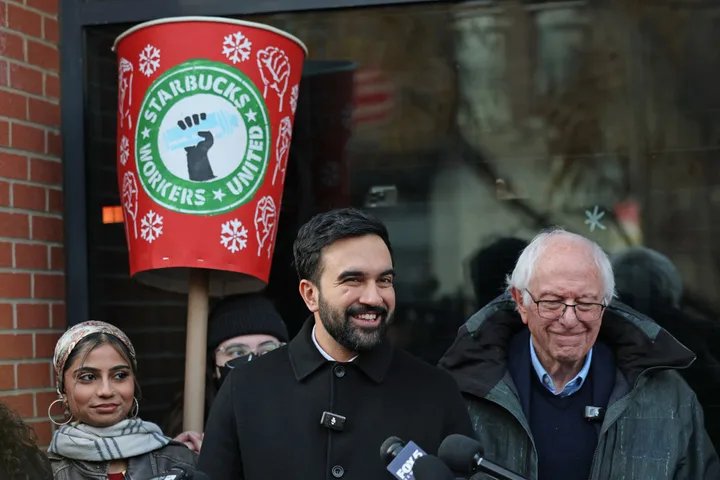
“It means a lot to us that Assemblymember Mamdani is here,” said Maria Rodriguez, a shift supervisor at the Astoria Starbucks. “We’ve been fighting for months to get Starbucks to recognize our union, and it’s been a really tough battle. His support gives us hope that we can finally win.” (Maria looked genuinely relieved).
Another worker, who wished to remain anonymous for fear of reprisal, added, “Starbucks has been trying everything they can to stop us from unionizing. They’ve been holding mandatory meetings where they spread misinformation about unions, and they’ve even fired some of our colleagues who were actively involved in the union campaign. It’s been really scary, but we’re not going to back down.”
The workers are demanding better wages, more predictable schedules, improved benefits, and a voice in decisions that affect their jobs. They believe that a union is the best way to achieve these goals and ensure that Starbucks treats its employees with respect.
The Fight for $20
One of the central demands of the striking workers is a minimum wage of $20 per hour. They argue that the current minimum wage is not enough to cover the rising cost of living in New York City, and that Starbucks can afford to pay its employees a living wage.
“We’re not asking for much,” said Rodriguez. “We just want to be able to afford rent, food, and other basic necessities. Starbucks makes billions of dollars in profit every year. They can afford to pay us a living wage.”
Mamdani echoed this sentiment, arguing that a $20 minimum wage is not only fair but also economically sound. “When workers have more money in their pockets, they spend it in their communities, which boosts the local economy,” he said. “Investing in workers is not just the right thing to do; it’s also the smart thing to do.”
The Broader Context: Unionization Efforts Across the Country
The struggle for unionization at Starbucks is not unique to the Astoria location. Workers at Starbucks stores across the country have been organizing and demanding union recognition. The movement has gained significant momentum in recent months, with dozens of stores successfully unionizing.
Starbucks has faced criticism for its response to these unionization efforts. The National Labor Relations Board (NLRB) has filed numerous complaints against the company, alleging that it has engaged in unfair labor practices, including firing union organizers and closing stores that have voted to unionize.
Mamdani has been a vocal supporter of the national Starbucks unionization movement, and he has called on the NLRB to hold Starbucks accountable for its alleged violations of labor law.
Potential Political Ramifications
Mamdani’s outspoken support for the Starbucks workers could have significant political ramifications. He has positioned himself as a champion of the working class, and his stance on this issue could resonate with voters in his district and beyond.
His actions could also put pressure on other elected officials to take a stand on the issue of labor rights and corporate accountability. As public awareness of the Starbucks labor dispute grows, more politicians may feel compelled to weigh in and support the workers.
However, Mamdani’s stance could also alienate some voters, particularly those who are more sympathetic to corporations and business interests. He has already faced criticism from some quarters for his outspoken views and his willingness to challenge powerful corporations.
Starbucks’ Response
As of the time of this writing, Starbucks has not issued a formal response to Mamdani’s criticism or his presence on the picket line. The company has maintained that it respects its employees’ right to organize but that it believes a direct relationship with its employees is the best way to address their concerns.
Starbucks has also denied allegations of union-busting, claiming that it is simply trying to ensure that its employees are fully informed about the pros and cons of unionization before making a decision.
However, critics argue that Starbucks’ actions speak louder than words and that its efforts to discourage unionization are a clear attempt to suppress the rights of its employees.
The Future of the Labor Dispute
The future of the labor dispute at the Astoria Starbucks, and at Starbucks stores across the country, remains uncertain. The workers have shown remarkable resilience and determination in the face of what they describe as intimidation and union-busting tactics.
The involvement of elected officials like Mamdani could help to shift the balance of power in favor of the workers and put pressure on Starbucks to negotiate in good faith. However, the company has deep pockets and a history of resisting unionization efforts.
Ultimately, the outcome of this dispute will depend on the continued resolve of the workers, the support of the community, and the willingness of elected officials and regulatory agencies to hold Starbucks accountable. It’s a tense situation; you can feel the weight of the future hanging in the air.
Conclusion
Zohran Mamdani’s decision to join the Starbucks workers on the picket line underscores the growing tension between corporate power and worker rights in America. His actions are a clear signal that some politicians are willing to stand up to powerful corporations and support the demands of working-class people. Whether his efforts will ultimately be successful remains to be seen, but his presence on the picket line has undoubtedly given the Starbucks workers a much-needed boost of morale and a renewed sense of hope. The fight for fair wages, decent benefits, and the right to unionize is far from over, and Mamdani’s involvement suggests that this battle will continue to play out on picket lines, in the halls of government, and in the court of public opinion. I, for one, will be watching closely.
Frequently Asked Questions
| Why did Zohran Mamdani join the Starbucks workers’ picket line? | Zohran Mamdani joined the picket line to show solidarity with the workers, advocate for their rights to unionize and bargain collectively, and criticize Starbucks’ alleged anti-union tactics. |
| What benefits do workers hope to gain from unionizing at Starbucks? | Workers are seeking better wages, more predictable schedules, improved benefits such as healthcare, and a greater voice in decisions that affect their jobs. |
| How are Starbucks workers implementing their unionization efforts? | Workers are organizing store-by-store, holding votes to unionize, and forming bargaining units to negotiate with Starbucks management for improved working conditions. |
| What challenges do Starbucks workers face in their unionization attempts? | Workers face challenges such as alleged union-busting tactics by Starbucks, including mandatory meetings, misinformation campaigns, and potential termination of union organizers. |
| What is the future outlook for unionization efforts at Starbucks locations? | The future is uncertain but depends on the workers’ continued resolve, community support, and potential intervention by regulatory agencies. Legal challenges and public pressure may influence the outcome. |
Important Notice
This FAQ section addresses the most common inquiries regarding the topic.