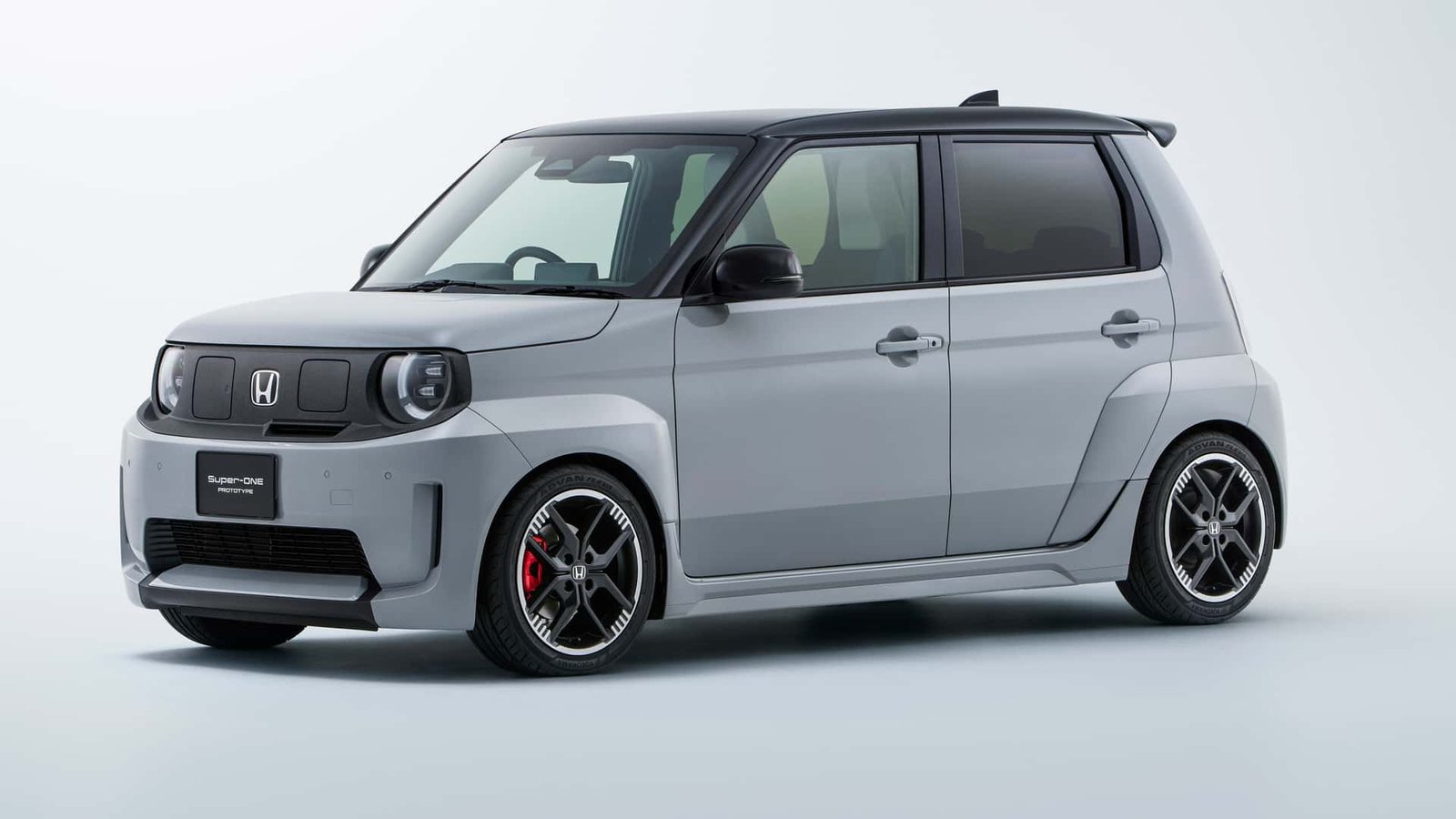
Imagine a crisp, autumn morning. You’re behind the wheel of a sleek, modern electric vehicle, silent as a whisper as it glides through the winding countryside. The acceleration is instant, the torque immense, yet… something feels missing. That visceral connection, the roar of an engine building through the RPMs, the satisfying thunk of a perfectly timed gear shift – it’s all gone, replaced by an almost unnerving quietness. For many enthusiasts, this is the paradox of the modern EV: incredible performance, but a diminished emotional experience. This very sentiment is what Honda, a company steeped in motorsport heritage and engineering prowess, has squarely addressed with its groundbreaking Honda Super-One EV. They’re not just building an electric car; they’re crafting an experience, one that dares to simulate gear shifts and even, remarkably, generate authentic engine noise. It’s a bold move, almost counter-intuitive to the very essence of electric motoring, yet it promises to bridge the gap between silent efficiency and the raw, exhilarating joy of driving that we’ve cherished for generations. (What a fascinating concept, right? It almost sounds like a contradiction.) This isn’t just about making noise; it’s about restoring the soul of driving to the electric age, offering an immersive technology that could fundamentally redefine our expectations of electric vehicles and their driving experience. The announcement initially raised eyebrows, some calling it a gimmick, others hailing it as genius. But as details emerge, it’s clear Honda is tapping into a deep-seated human desire for engagement, leveraging advanced software and haptic feedback to bring back the thrill without sacrificing the planet. This isn’t your grandma’s quiet EV; this is a roaring, shifting, engaging machine designed for pure driving pleasure.
The Rationale: Why Silence Isn’t Always Golden for Enthusiasts
For decades, the sound of an engine has been an intrinsic part of the driving experience. Think about it: the low rumble of a V8, the high-pitched wail of a V10, the distinctive purr of a finely tuned inline-four. These aren’t just incidental noises; they are integral to how we perceive speed, power, and connection with a machine. When electric vehicles first started gaining traction, their near-silent operation was lauded as a benefit, a sign of progress. Yet, a quiet dissatisfaction began to brew among those who loved to drive, not just to commute. “It’s fast, sure, but it feels… sterile,” remarked David Chen, a seasoned track day enthusiast and former Honda S2000 owner. “You lose that feedback loop, that audible cue that tells you when to shift, when you’re hitting peak power. It’s like watching a silent movie of a rock concert.”
This emotional void is precisely what Honda aims to fill with the Super-One EV. Their engineers, it seems, understood that power figures alone don’t tell the whole story. The company’s heritage is deeply intertwined with high-revving engines and engaging manual transmissions. It would almost be a betrayal of their brand identity to simply produce another silent, albeit powerful, electric car. “We realized that while efficiency is paramount, the joy of driving, the ‘fun factor,’ was at risk of being lost in the electric transition,” explains Kenji Tanaka, lead engineer on the Super-One EV project, during a recent press briefing. “Our goal wasn’t to deceive, but to enhance, to reconnect drivers with the sensations they cherish, using technology rather than fossil fuels.” It’s a bold declaration, indicating a deep understanding of the human element in automotive design.
How It Works: A Symphony of Sensors, Software, and Subtlety
So, how does Honda achieve this seemingly impossible feat? It’s a complex interplay of advanced software algorithms, haptic feedback systems, and a carefully orchestrated sound profile. The Super-One EV doesn’t actually have a multi-speed transmission; it’s still a single-speed direct drive, typical of most EVs, providing seamless acceleration. However, the simulation begins the moment you select “Drive.” A digital “gearbox” within the vehicle’s ECU constantly monitors speed, throttle input, motor load, and even simulated RPMs.
When the driver engages the paddle shifters on the steering wheel, or if the car is in a simulated automatic mode, the system does several things simultaneously:

- Sound Generation: A sophisticated sound synthesizer, drawing from a library of meticulously recorded Honda engine sounds (think Type R, NSX, even classic S2000), generates an appropriate “engine noise” that scales with simulated RPMs and load. This sound is projected into the cabin through strategically placed speakers, creating an enveloping auditory experience.
- Haptic Feedback: This is where the “shift” truly comes alive. The system can momentarily alter the motor’s torque delivery, creating a subtle, perceptible “jolt” or “lurch” that mimics the physical sensation of a gear change. It’s not a real mechanical shift, but your body perceives it as such. The paddle shifters themselves might also offer a different tactile response, a more satisfying click or resistance.
- Visual Cues: The digital instrument cluster displays a simulated gear position, complete with “redline” indicators, reinforcing the illusion.
“It’s about psychological immersion as much as physical simulation,” explained Dr. Emily Carter, a human-computer interaction specialist consulted by Honda. “The brain fills in the gaps, especially when multiple senses are engaged. The combination of sound, haptic feedback, and visual cues creates a powerful, convincing experience.” It’s a testament to how far sensory engineering has come, moving beyond mere infotainment to fundamentally alter driving perception.
Crafting the Perfect Roar: Beyond Simple Speakers
The engine noise isn’t just piped-in sound; it’s an active, adaptive acoustic environment. Honda has gone to great lengths to ensure the authenticity. Special transducers are integrated into the chassis and seats to transmit low-frequency vibrations, simulating the subtle rumble of an engine through the car’s structure. Imagine feeling the gentle thrum of a high-performance engine beneath you, even as the electric motor silently whirs. This multi-layered approach to sensory feedback is crucial. It’s not just what you hear, but what you feel, that completes the illusion. The system also dynamically adjusts volume and tone based on environmental factors, ensuring the sound remains engaging without becoming overbearing, like some aftermarket exhaust systems.
The Driving Experience: A Journey Back to the Future
So, what’s it actually like to drive a Honda Super-One EV with this technology? The consensus among those who’ve had early access is surprisingly positive. “I was skeptical, really skeptical,” admitted Jeremy Davies, a motoring journalist who recently test-drove a prototype in Japan. “I thought it would feel artificial, a bit gimmicky. But Honda nailed it. The moment I ‘shifted’ into second and felt that subtle pushback, heard the simulated engine note climb – it just clicked. It felt like driving a proper sports car again, but with instant EV torque on tap.” He described a winding coastal road, the Pacific breeze coming through the open window, the car’s virtual engine singing through the curves. “It wasn’t just noise; it was an orchestra of sensation.”
The system offers different profiles, too. Drivers can select from various simulated engine types – perhaps a high-revving four-cylinder, a throaty V6, or even a futuristic, entirely synthetic sound. This customization adds another layer of personalization, allowing drivers to tailor their experience. Imagine cruising silently through your neighborhood, then switching to “Track Mode” for a simulated VTEC scream on an open road. This flexibility highlights Honda’s commitment to driver choice, acknowledging that not everyone wants the same thing all the time.
| Feature | Traditional ICE Vehicle | Honda Super-One EV (Simulated) |
|---|---|---|
| Gear Shifting | Mechanical, physical gear changes via transmission. | Software-controlled, haptic feedback, torque modulation. |
| Engine Noise | Actual combustion noise from engine, exhaust system. | Synthesized sound via internal/external speakers, chassis transducers. |
| Sensory Feedback | Direct mechanical vibrations, auditory cues, pedal feel. | Haptic vibrations, dynamic sound profiles, visual cues, simulated pedal resistance. |
| Driver Engagement | High, especially with manual transmissions. | Significantly enhanced for an EV, aiming to match ICE engagement. |
The Debate: Purity vs. Nostalgia and the Future of EV Soundscapes
Of course, not everyone is convinced. The introduction of simulated gear shifts and engine noise has sparked a lively debate within the automotive community. Some purists argue that EVs should embrace their inherent quietness and unique characteristics, rather than trying to imitate gasoline cars. “If you want engine noise, buy a petrol car,” was a common sentiment heard on online forums. “Why artificially recreate something that’s fundamentally not there? It undermines the authenticity of electric propulsion.”
This perspective highlights a fundamental philosophical divide. Is the future of driving about shedding old habits entirely, or can it tastefully integrate elements of the past to enhance the present? My personal take? I believe there’s room for both. Not every EV needs to do this, but for performance-oriented models or brands with a strong sporting legacy, it makes perfect sense. It’s about offering choice and catering to different preferences. One anonymous Honda designer, speaking off the record, put it succinctly: “We’re not trying to fool anyone into thinking there’s a V8 under the hood. We’re trying to give them the emotional response that a V8 used to give, but with zero emissions.” This distinction is critical; it’s about sensation, not deception.
Honda’s Vision and the Broader Implications for Automotive Innovation
The Honda Super-One EV isn’t just a car; it’s a statement. It’s Honda’s declaration that the electric future doesn’t have to be devoid of passion. By tackling the perceived “blandness” of some EVs head-on, they are setting a precedent. Other manufacturers are already experimenting with various forms of “active sound” for EVs, but Honda’s holistic approach – combining sound, haptics, and visual cues to simulate gear changes – is arguably the most ambitious to date. This move could very well influence how other brands approach their high-performance electric vehicles. Could we see a future where bespoke “engine sound packages” become as common as interior trim options?
This innovation also opens up fascinating possibilities beyond just recreating existing sounds. Imagine entirely new soundscapes designed specifically for electric performance, sound profiles that convey acceleration and power in ways gasoline engines never could. The potential for truly unique and futuristic EV driving experience is immense. Honda, with its rich history of pushing boundaries in engineering and motorsport, is uniquely positioned to lead this charge, blending tradition with visionary forward-thinking. It reminds me of when early cars were designed to look like horse-drawn carriages; eventually, they found their own identity. Perhaps this is an intermediate step towards EVs developing their own, equally compelling, sensory language.
Conclusion: The Soul of the Machine Reimagined
The Honda Super-One EV, with its pioneering ability to simulate gear shifts and generate compelling engine noise, represents more than just a technological marvel. It’s a bridge between eras, a heartfelt nod to the automotive past, and an exciting leap into the electric future. For drivers who’ve felt a pang of nostalgia for the roar and rumble of a combustion engine, this vehicle offers a compelling reason to embrace electrification without sacrificing the very essence of what makes driving exhilarating. It’s about restoring engagement, bringing back the drama, and ultimately, reimagining the soul of the machine for a new generation. While some may remain unconvinced by simulated experiences, Honda has boldly dared to ask: why can’t an electric car thrill you with its “voice” and its “shifts”? And for many, the answer, experienced behind the wheel of the Super-One EV, will be a resounding, joyous “it can.” We are witnessing a pivotal moment where the pragmatic benefits of electric power are finally merging with the emotional connection we crave from our cars.
Frequently Asked Questions
| What is the Honda Super-One EV known for? | The Honda Super-One EV is gaining significant attention for its innovative feature set that simulates traditional internal combustion engine characteristics, specifically its ability to simulate gear shifts and generate authentic-sounding engine noise, enhancing the driving experience for enthusiasts. |
| What are the main benefits of simulated gear shifts and engine noise in an EV? | The primary benefits include a significantly enhanced driver engagement and emotional connection, restoring the visceral feedback (auditory and haptic) that many enthusiasts miss in traditional EVs. It makes the electric driving experience feel more dynamic and familiar, bridging the gap between silent efficiency and the joy of a sports car. |
| How does the Honda Super-One EV simulate gear shifts and engine noise? | The system uses advanced software algorithms to monitor driving parameters, combined with haptic feedback (momentary torque modulation to mimic a jolt) and a sophisticated sound synthesizer. This synthesizer projects realistic engine sounds through in-cabin speakers and uses chassis transducers to create vibrations, all synchronized with visual cues on the dashboard. |
| Are these simulated features customizable in the Super-One EV? | Yes, Honda offers different profiles for the simulated experience. Drivers can select various “engine types” for the sound generation (e.g., high-revving four-cylinder, V6) and potentially adjust the intensity of the haptic feedback, allowing for a personalized driving experience. |
| What is Honda’s vision behind implementing these “traditional” features in an EV? | Honda’s vision is to prove that electric vehicles don’t have to sacrifice the passion and emotional connection associated with driving. By integrating these simulated sensory feedback mechanisms, they aim to offer an EV that delivers both cutting-edge electric performance and the engaging, visceral driving experience cherished by enthusiasts, thereby redefining the future of electric mobility. |
Important Notice
This FAQ section addresses the most common inquiries regarding the topic.