The air was thick with anticipation, a palpable hum of excitement that vibrated through every gaming forum and convention hall. For months, whispers had swirled, fueled by hopeful speculation, that Valve Corporation was poised to disrupt the gaming world with its revolutionary Steam Machine. The dream? A powerful, living-room friendly PC gaming console, running SteamOS, available at an incredibly accessible price point – perhaps even subsidized, much like traditional consoles. Gamers, myself included, envisioned a future where high-end PC gaming wasn’t confined to a desk, nor did it require breaking the bank. We pictured sleek, compact boxes, ready to plug into our TVs, bringing thousands of Steam titles to our sofas. The promise of a truly open platform, free from the restrictive ecosystems of traditional consoles, was intoxicating. Then, like a sudden downpour on a sunny day, the news arrived, cutting through the optimism with the precision of a scalpel: Valve confirms the Steam Machine won’t have a subsidized price. The collective gasp from the gaming community was almost audible. It wasn’t just news; it was a reality check, forcing everyone to recalibrate their expectations for what Valve’s ambitious foray into hardware truly represented. What did this mean for the future of living-room PC gaming? And more importantly, what would it cost us, the eager players, to get our hands on one?
This revelation wasn’t merely a minor detail; it fundamentally reshaped the narrative around Valve’s hardware initiative. Many had genuinely believed that Valve, with its immense success in digital distribution through Steam, would follow a similar model to Microsoft or Sony, selling hardware at a loss to gain market share and then recouping profits through game sales. After all, that’s the playbook we’ve seen for decades in the console space. But Valve, it seems, has a different game plan entirely. This isn’t just about a price tag; it’s about philosophy, market positioning, and the long-term vision for how we interact with our games beyond the traditional desktop PC. It felt a bit like finding out your favorite band wasn’t going on tour after all, or that your dream car was going to cost double what you’d anticipated. A real gut punch for some, a pragmatic acceptance for others.

The Unveiling and Initial Assumptions
When Valve first introduced the concept of the Steam Machine and SteamOS, the gaming world buzzed with excitement. It was pitched as an open platform, a viable alternative to closed console ecosystems, and a way to bring the vast library of Steam games to the comfort of the living room couch. The promise was immense: PC flexibility, console convenience. Many speculated that to compete with the likes of PlayStation and Xbox, which traditionally sell their hardware at or below cost, Valve would inevitably subsidize its machines. This assumption wasn’t unfounded; it’s a common strategy in the console market, where profit margins on hardware are often slim or negative, offset by software sales and subscription services. “I honestly thought Valve would go for volume, you know?” remarked Sarah Chen, a long-time PC gamer and tech enthusiast from Seattle, reflecting on the initial announcement. “They have the cash flow from Steam, so a loss leader seemed like a no-brainer to get these things into homes. I was already picturing my friends coming over, grabbing a Steam Controller, and playing new releases on my big screen.”
The idea was that a subsidized price would allow the Steam Machine to penetrate the market quickly, appealing to a broader audience beyond just hardcore PC enthusiasts. It would make the leap from console gaming to PC gaming in the living room less daunting financially. Without that subsidy, the Steam Machine would have to stand on its own two feet, priced purely on its hardware components, which, as we all know, can get quite expensive when you’re talking about gaming-grade specifications.
Valve’s Business Philosophy: No Subsidies, Pure Value
The confirmation came from Gabe Newell himself, Valve’s enigmatic co-founder, during an interview at their Bellevue headquarters. The mood was typically low-key, yet the implications were anything but. Newell, known for his directness, explained that Valve’s strategy was fundamentally different from traditional console manufacturers. “We’re not in the business of selling hardware at a loss,” Newell stated, leaning back in his chair, a slight smile playing on his lips. “Our goal is to build an open platform that empowers both developers and consumers. The price of a Steam Machine will reflect the cost of its components and the innovation packed inside. It’s about offering value, not artificially lowering the barrier to entry through subsidies.” This wasn’t a casual aside; it was a deliberate statement of intent, echoing through the halls of the gaming industry like a clear bell.

This approach means that each Steam Machine, produced by various hardware partners, will be priced based on its internal specifications, much like any custom-built PC. From a philosophical standpoint, it aligns with Valve’s long-standing commitment to open platforms and user choice. They don’t want to lock you into a specific hardware ecosystem to then extract profits from software; they want to provide the software platform (SteamOS) and the storefront (Steam), allowing hardware manufacturers to compete on price and performance. It’s a very PC-centric way of thinking, applied to a console-like form factor. Think of it less as a PlayStation vs. Xbox scenario, and more like Apple vs. the myriad of Windows PC manufacturers.
The Real-World Implications for Gamers
So, what does this mean for us, the gamers? It means you won’t be seeing a £299 Steam Machine capable of running the latest AAA titles at 1080p and 60fps. Instead, prices will vary widely depending on the internal components. A budget-friendly Steam Machine might cost £400-£500, offering performance comparable to a mid-range PC. High-end models, boasting powerful CPUs and GPUs, could easily stretch into the £800-£1200 range, or even higher. This puts the Steam Machine in direct competition not with the PlayStation 5 or Xbox Series X on price, but with entry-level and mid-range gaming PCs.
“I was really looking forward to a console-killer that wouldn’t break the bank,” admitted Mark Davies, a student from Bristol who games casually. “Now, it feels like it’s just a small gaming PC. If I’m paying £600-£700, I might as well just build my own desktop or get a gaming laptop that’s more versatile.” This sentiment is echoed by many, as the value proposition shifts dramatically. The appeal of a console often lies in its straightforward, relatively low upfront cost, combined with ease of use. A non-subsidized Steam Machine retains the ease of use (mostly), but loses that crucial entry-level price advantage.
Hardware Partners and Diverse Offerings
This decision also places a significant burden – and opportunity – on Valve’s hardware partners. Companies like Alienware, Zotac, and Gigabyte are designing and manufacturing these Steam Machines. They now must innovate not only in form factor and cooling but also in striking the right balance between performance and price. They can’t rely on Valve to absorb part of the cost; every component choice will directly impact the final retail price.

One analyst, Dr. Evelyn Reed from TechInsights, offered a pragmatic view: “Valve’s decision isn’t necessarily a death knell. It simply means they’re not trying to be a direct console competitor in the traditional sense. They’re positioning the Steam Machine as a living-room PC. The market for gaming PCs is huge, and gamers are accustomed to varying price points. The real challenge for hardware partners will be to differentiate their offerings and justify their price tags through sleek designs, superior cooling, or unique features, rather than just raw power.” It’s a tough ask, navigating a competitive landscape where console giants have perfected the art of the subsidized price.
The Role of SteamOS and the Steam Controller
While the hardware pricing might be a point of contention, the overall Steam Machine ecosystem is still compelling. SteamOS, a Linux-based operating system, promises a streamlined, gaming-focused experience. It’s designed to boot directly into Big Picture Mode, making it feel very much like a console interface. The idea is to remove the complexities of a traditional Windows desktop, offering a clean, intuitive way to access your Steam library. However, the Linux base means not all Windows-native games will run directly, necessitating a compatibility layer or native ports – a factor that might deter some.
Then there’s the Steam Controller, another piece of Valve’s puzzle that aims to bridge the gap between keyboard/mouse precision and gamepad comfort. With its haptic trackpads and extensive customization options, it’s a truly innovative piece of hardware. It’s a learning curve, for sure, but once mastered, it promises a level of control that traditional gamepads just can’t offer, especially for genres like strategy games or first-person shooters. The pricing of the controller itself isn’t subsidized either, which adds another cost to the overall Steam Machine investment. This commitment to unique, unsubsidized hardware across the board shows a consistent philosophy from Valve.

Comparing to the Console and PC Markets
Without a subsidized price, the Steam Machine finds itself in a peculiar position, straddling two distinct markets.
- Traditional Consoles (PlayStation, Xbox, Nintendo Switch): These offer closed ecosystems, optimized hardware/software integration, and often launch with a subsidized price tag. Their appeal lies in simplicity, exclusive titles, and a consistent user experience. The Steam Machine, being more open and varied in hardware, can’t directly compete on entry-level pricing or console exclusives.
- Gaming PCs: This is where the Steam Machine finds its closest relatives. Gaming PCs offer unparalleled flexibility, upgradeability, and access to a vast library of games, often at better graphical fidelity and frame rates than consoles. The Steam Machine aims to bring the PC experience to the living room, but without the subsidy, its pricing will closely mirror that of pre-built gaming desktops. The key differentiator then becomes the form factor and the SteamOS interface.
“It’s a tough sell,” observed a local retailer, who preferred to remain anonymous, stocking both consoles and PC components. “Customers come in, they see a PS5 for £450, and then they see a Steam Machine for £600-£800. Even if the Steam Machine is technically more powerful, that initial price difference is a hurdle. They’ll ask, ‘Why pay more for something that looks like a console but costs like a PC?'” This perfectly encapsulates the challenge Valve and its partners face. They need to articulate the unique value proposition of the Steam Machine beyond just raw hardware specs.
The Long-Term Vision: An Open Gaming Future
Despite the initial disappointment over pricing, Valve’s vision for the Steam Machine and SteamOS remains ambitious. They aren’t just selling boxes; they’re pushing for an open, interoperable gaming platform. Imagine a future where your games aren’t locked to a specific console or storefront, where hardware choices are plentiful, and innovation isn’t dictated by a single manufacturer. That’s the ideal Valve is chasing.
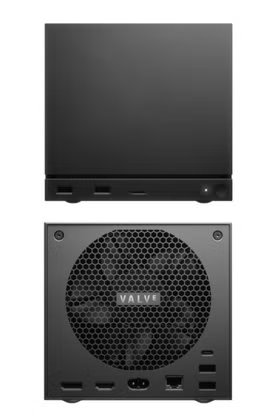
This lack of subsidy might, in the long run, even be seen as a strength. It means Valve isn’t beholden to aggressive sales targets for its hardware to recoup losses. Their primary business remains the Steam platform, and the Steam Machines are simply another avenue for consumers to access that platform. It allows for more experimentation and less pressure to conform to traditional console cycles. It also provides a stronger incentive for hardware manufacturers to truly innovate, rather than just building to a specific, subsidized price point. The ultimate success will depend on how well Valve and its partners can communicate this unique value proposition to the average gamer, who often just wants to plug in and play without complex considerations about subsidies or open platforms. It’s a bit like explaining why a finely crafted artisan coffee costs more than a mass-produced instant one – both get the job done, but the experience and underlying philosophy are entirely different.
The news that Valve confirms the Steam Machine won’t have a subsidized price certainly cooled some of the initial feverish excitement. It shifted the Steam Machine from a potential console killer to a more specialized product: a living-room gaming PC running an open OS. For hardcore PC gamers looking for a sleek, console-like alternative to their desktop, or those who value the open nature of SteamOS, the Steam Machine still holds considerable appeal. For the broader market, however, the higher price point without the cushion of a subsidy will undoubtedly make it a harder sell against more affordable, traditional consoles. Valve is playing a long game, one that prioritizes an open platform and hardware choice over aggressive market share via price slashing. Only time will tell if this bold strategy pays off, or if the dream of a widely adopted, affordable Steam Machine remains just that – a dream. It’s a fascinating experiment in the ever-evolving landscape of video games, and I, for one, will be watching closely to see how it unfolds.
Frequently Asked Questions
| What does “Valve Confirms The Steam Machine Won’t Have a Subsidized Price” mean for consumers? | This means that Valve and its hardware partners will price Steam Machines based on their component costs, rather than selling them at a loss to recoup profits through game sales (a common console industry practice). As a result, Steam Machines will likely have higher upfront prices, comparable to mid-to-high-end gaming PCs, rather than the lower, subsidized prices of traditional gaming consoles. |
| What are the benefits of Valve’s non-subsidized pricing strategy? | Valve’s strategy promotes an open platform where hardware manufacturers compete on innovation and quality, not just on price set by a subsidy. It offers consumers diverse choices in terms of performance and features, similar to the PC market. It also means Valve’s primary business remains the Steam platform, allowing for more long-term flexibility and experimentation in hardware development without pressure to recoup losses from hardware sales. |
| How does the Steam Machine pricing compare to traditional consoles like PlayStation or Xbox? | Traditional consoles often launch with subsidized prices, meaning their retail price is lower than the cost to manufacture, with the difference made up by game sales and subscription services. Steam Machines, without subsidies, will likely be more expensive than new consoles, placing them in a different market segment. They compete more directly with pre-built gaming PCs in terms of price and performance. |
| What challenges does this pricing decision present for Steam Machines? | The primary challenge is consumer perception and market entry. Many gamers expect console-like pricing for living-room gaming devices. Without a subsidy, Steam Machines face stiff competition from cheaper traditional consoles and even the option for users to build their own gaming PCs. Hardware partners must clearly differentiate their products and justify the higher price points through superior performance, unique features, or design. |
| What is Valve’s long-term vision for the Steam Machine and SteamOS? | Valve’s long-term vision is to establish an open, interoperable PC gaming ecosystem in the living room. By not subsidizing hardware, they aim to empower users with choice and avoid locking them into a closed platform. SteamOS and Steam Machines are intended to be versatile ways to access the Steam library, fostering innovation among hardware partners and providing a flexible alternative to traditional console gaming. |
Important Notice
This FAQ section addresses the most common inquiries regarding the topic.