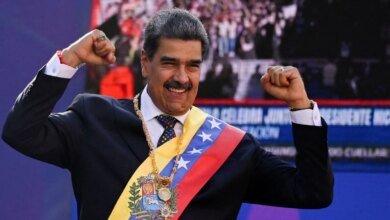
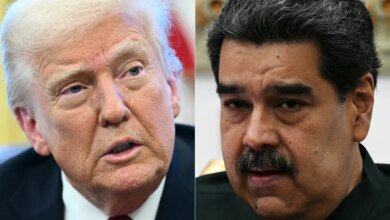
It was one of those statements that just hangs in the air, a bombshell dropped casually amidst a broader discussion, yet carrying the immense weight of international relations and the very future of an entire nation. Imagine the scene: a bustling press conference, the familiar podium gleaming under bright lights, cameras flashing relentlessly, and then, former President Donald Trump, with that characteristic confident air, declares that the United States would ‘temporarily run’ Venezuela. His primary stated goal? To salvage and rebuild its decimated oil industry. (A collective gasp, perhaps, from the seasoned reporters, quickly followed by frantic note-taking, the air thick with sudden tension.) My initial reaction, I confess, was a potent mix of disbelief and a profound sense of ‘here we go again.’ This isn’t just about abstract geopolitics or economic figures; it’s intrinsically about the daily lives of millions of Venezuelans, the uncertain future of a country so rich in natural resources yet so tragically poor in effective governance, and indeed, the very concept of national sovereignty itself. The notion of the US temporarily running Venezuela, specifically to resuscitate its collapsed oil sector, immediately sparks a myriad of urgent questions, deep-seated concerns, and, for some desperate citizens, even a fragile sliver of hope. It’s a proposal that forces us all to grapple with the ethical complexities of international intervention, the contentious issues surrounding resource control, and the profound potential for both unforeseen good and catastrophic disaster on an already turbulent global stage.
The Genesis of a Bold Claim: Trump’s Vision for Venezuela
Donald Trump has never been one to shy away from provocative statements, and his remarks regarding Venezuela certainly fit that mold. During a recent interview, he articulated a vision where the U.S. would step in, take charge, and orchestrate the revival of Venezuela’s once-mighty petroleum sector. “We’ll go in,” he reportedly said, “we’ll clean it up, we’ll fix it, and we’ll leave. And we’ll get paid back.” The implication is clear: a direct, hands-on American intervention to stabilize a nation that has been in economic and political freefall for years. It’s a striking proposition, suggesting a temporary stewardship over a sovereign nation’s most vital asset. For many, this sounds less like foreign aid and more like a modern-day protectorate, raising eyebrows across the political spectrum and in diplomatic circles worldwide. Is this a pragmatic solution to a humanitarian crisis, or a dangerous precedent for international relations?
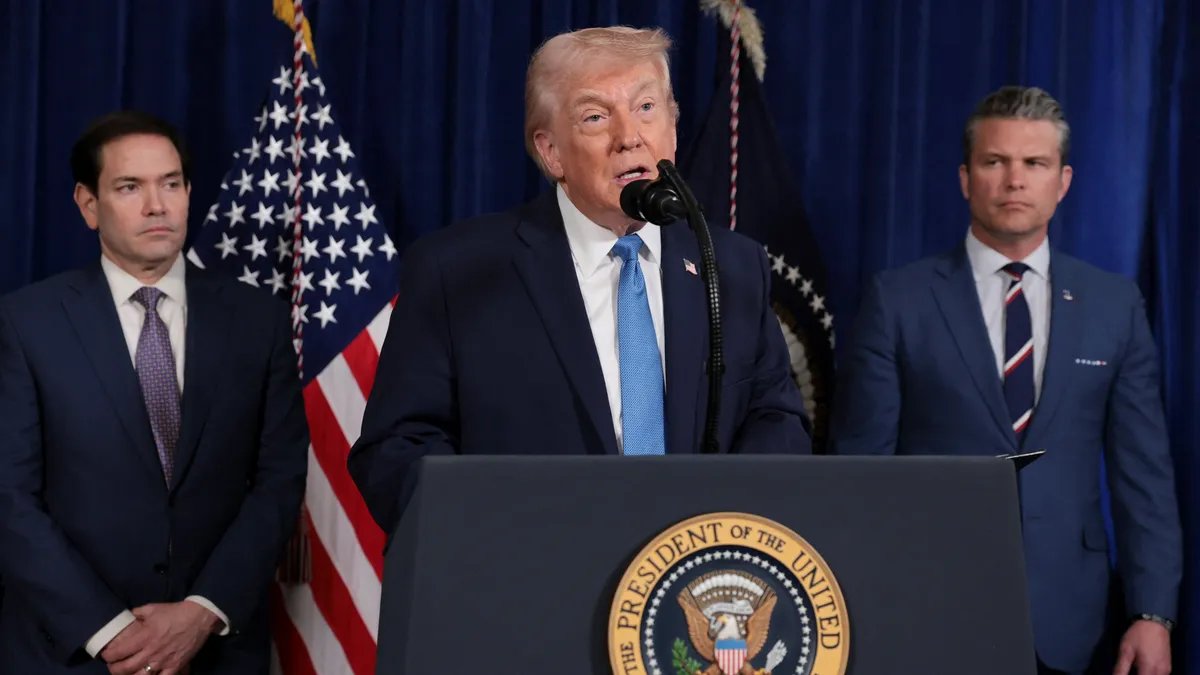
The former president’s comments come at a time when Venezuela remains deeply entrenched in a profound economic and humanitarian crisis. The country, which sits atop the world’s largest proven oil reserves, has seen its production plummet from over 3 million barrels per day in the late 1990s to barely 700,000 barrels per day today. That’s a staggering decline, rendering the once-wealthy nation almost unrecognizable. When you hear figures like that, it’s hard not to feel a pang of concern for the ordinary people living through it. Imagine going from a relatively stable, oil-rich economy to one where hyperinflation makes your currency worthless, and basic necessities are scarce. It’s a tragedy unfolding in plain sight, and Trump’s proposal, however controversial, aims to address the root cause of this decline: the mismanagement and decay of the Venezuelan oil industry.
Venezuela’s Oil: From Black Gold to Black Hole
To truly grasp the magnitude of Trump’s suggestion, we need to understand just how far Venezuela’s oil sector has fallen. Once a powerhouse, the state-owned oil company, PDVSA, was the engine of the Venezuelan economy. Under Hugo Chávez and later Nicolás Maduro, however, it became heavily politicized, mismanaged, and starved of necessary investment and expertise. “It’s not just a matter of turning on the taps again,” explained Dr. Elena Ramirez, a Caracas-based energy analyst I spoke with recently. “Years of neglect, corruption, and the exodus of skilled engineers have left the infrastructure in ruins. We’re talking about rusted pipelines, non-functional refineries, and dilapidated drilling equipment. It’s truly heartbreaking to witness.”
The sanctions imposed by the U.S. and other nations, aimed at pressuring the Maduro regime, have only exacerbated the problem, blocking access to international markets and vital components. This has created a vicious cycle: falling production leads to less revenue, which means less money for investment, leading to further production declines. The ripple effect on the Venezuelan population has been catastrophic. People are literally starving. Hospitals lack basic medicines. Millions have fled the country, creating one of the largest refugee crises in the Western Hemisphere. So, while the idea of a foreign power stepping in to rebuild might seem jarring, for many Venezuelans, any prospect of recovery, however remote or conditional, feels like a faint glimmer of hope.
The Human Cost of Decline
I remember seeing a photo last year, shared by a friend who had visited the Venezuelan border with Colombia. It showed families, exhausted and hungry, crossing on foot, carrying all their worldly possessions. The desperation was palpable. These aren’t just statistics; these are mothers, fathers, children, forced to abandon their homes because their country, despite its immense wealth, can no longer sustain them. The collapse of the oil industry isn’t merely an economic failure; it’s a humanitarian catastrophe on an epic scale. The average Venezuelan has lost a significant percentage of their body weight due to food scarcity. Basic services like electricity and water are intermittent at best. This is the bleak landscape into which any proposed US intervention would step, aiming to bring order to chaos.
A Complex History: US-Venezuela Relations
The relationship between the United States and Venezuela has been tumultuous for decades, characterized by periods of uneasy cooperation, but more often, by tension and open antagonism. From the early 2000s, Hugo Chávez positioned himself as a staunch opponent of “Yankee imperialism,” frequently clashing with Washington. This adversarial stance continued under his successor, Nicolás Maduro. The U.S., in turn, has often viewed the socialist governments in Caracas as threats to regional stability and its own energy interests.
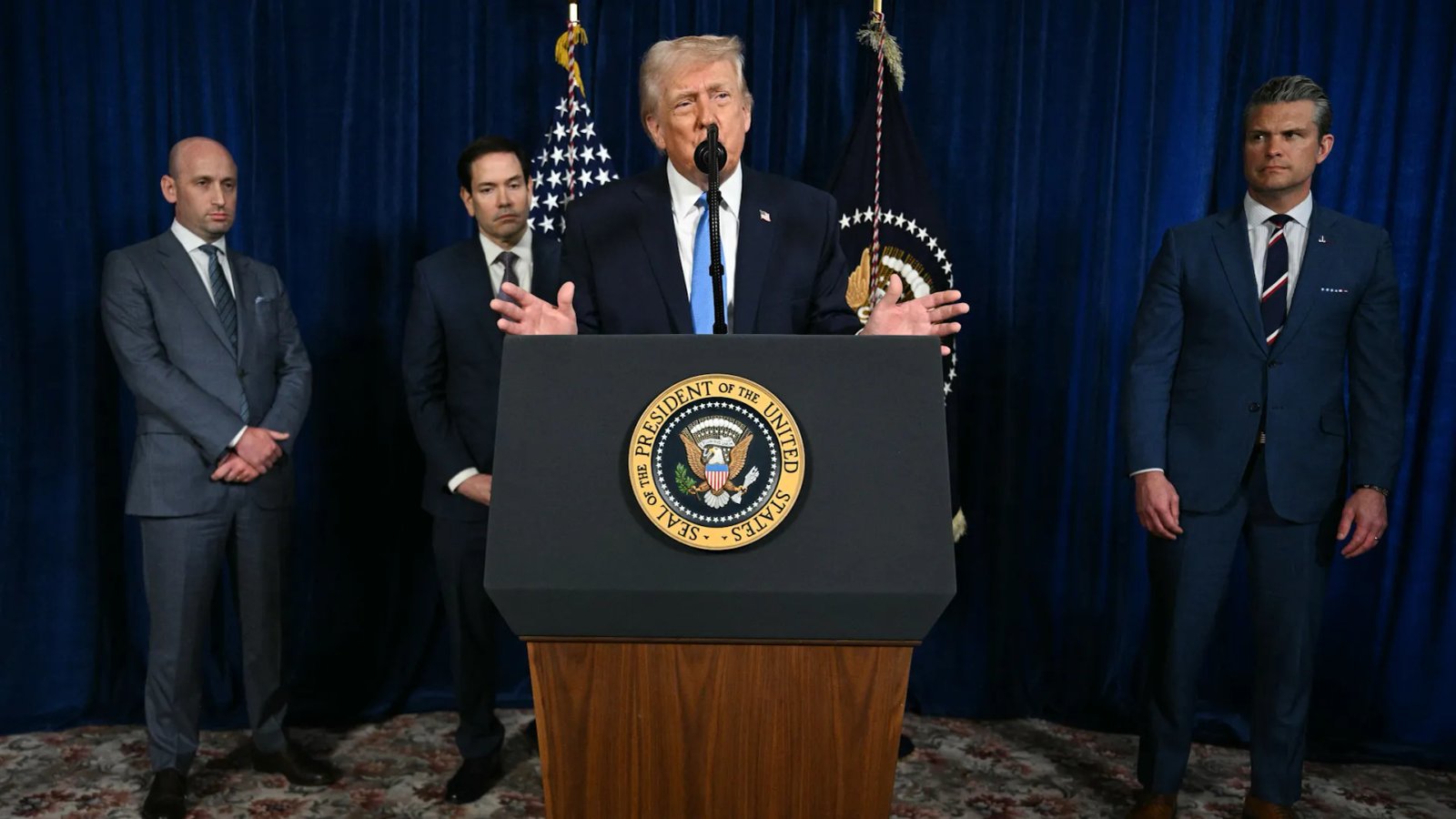
Sanctions have been a primary tool of U.S. policy, targeting individuals within the Maduro regime, PDVSA, and various sectors of the economy. The stated goal has always been to pressure the regime towards democratic reforms and to alleviate the suffering of the Venezuelan people. However, critics argue that these sanctions have often hurt ordinary citizens more than the regime, exacerbating the economic downturn. So, when Trump talks about “running” Venezuela, it’s not in a vacuum; it’s against a backdrop of deeply entrenched mistrust and a history of interventions, both overt and covert, that shape perceptions on both sides. “The legacy of American involvement in Latin America is a heavy one,” remarked Professor Carlos Gomez, a Latin American history expert. “Any talk of ‘running’ a country, even temporarily, immediately conjures images of past interventions and raises serious questions about sovereignty.”
The Logistical Nightmare: Rebuilding a Collapsed Industry
Let’s be brutally honest: the idea of the U.S. military or private contractors simply waltzing into Venezuela and magically fixing the oil industry is a fantasy. The task of oil industry rebuilding would be monumental, perhaps unprecedented in modern history. Consider these challenges:
- Physical Infrastructure: Decades of neglect mean pipelines are corroded, refineries are operating at a fraction of their capacity, and much of the drilling equipment is obsolete or broken. Replacing and repairing this would require billions of dollars and years of sustained effort.
- Human Capital: Many of Venezuela’s most skilled oil engineers and technicians have either left the country or retired. Rebuilding the workforce, training new personnel, and attracting back lost talent would be crucial.
- Security: Venezuela is not a stable country. Any large-scale operation would require extensive security measures to protect personnel and assets from criminal gangs, paramilitary groups, and potentially remnants of the existing regime or disgruntled factions.
- Political Will and Local Cooperation: Even if the U.S. were to gain a foothold, sustained success would require at least some degree of cooperation from local communities and a stable, albeit temporary, political framework.
It’s not like fixing a leaky faucet; it’s more akin to rebuilding an entire city after a devastating earthquake, only this earthquake was man-made and political. The scale of investment and sustained commitment would be staggering, far beyond what a “temporary” engagement usually implies. And who pays for all this? Trump mentioned getting “paid back,” but how quickly could a revenue stream be established from a crippled industry to cover the initial, massive outlay?
International Law and Sovereignty: A Geopolitical Minefield
Perhaps the biggest hurdle for any such plan is the issue of international law and national sovereignty. Under what legal pretext would the U.S. “run” Venezuela? Unilateral intervention without the consent of a recognized government (or a legitimate interim government) and without a clear mandate from international bodies like the UN Security Council is a direct violation of international law. This is where the proposal becomes extremely contentious.
“This isn’t an episode of ‘Extreme Makeover: Oilfield Edition’,” stated Dr. Anya Sharma, an international law professor. “A forced takeover, even with humanitarian intentions, sets a dangerous precedent. It opens the door for other powerful nations to justify interventions in resource-rich but unstable countries. The global implications would be severe.” Beyond the legal questions, there’s the geopolitical fallout. Countries like Russia and China have significant economic interests and political ties with the Maduro regime. They have consistently opposed U.S. sanctions and any talk of intervention. A direct U.S. takeover could escalate tensions dramatically, turning Venezuela into a proxy battleground and further destabilizing an already volatile region. The stakes are incredibly high, far beyond just oil barrels and refining capacity.
The “Temporary” Question: What Does it Really Mean?
Trump’s use of the word “temporarily” is crucial, yet incredibly vague. What defines “temporary” in this context? Six months? A year? Five years? Ten? Rebuilding an entire national industry from the ground up, especially one as complex as oil, takes time – often decades. Moreover, achieving political stability and democratic transition in a deeply fractured society is not a quick fix. “Temporary interventions often have a way of becoming prolonged engagements,” commented a former State Department official, who preferred to remain anonymous given the sensitivity of the topic. “Once you’re in, the costs of pulling out without achieving your objectives can become politically unacceptable. It’s a quagmire waiting to happen.” The U.S. experience in Iraq and Afghanistan serves as a stark reminder of how quickly “temporary” can morph into long-term commitment, with immense human and financial costs. The very notion of a clean, surgical intervention that swiftly rebuilds an industry and then gracefully exits seems overly optimistic, bordering on naive, given the historical context of similar ventures.
Voices on the Ground: Perspectives from Inside and Outside Venezuela
Speaking to Venezuelans, both inside the country and those in diaspora, reveals a complex tapestry of emotions. For many who have suffered under the Maduro regime, the idea of any external force alleviating their pain, even a controversial one, is tempting. “We have lost everything,” whispered Maria, a Venezuelan émigré living in Miami, her voice thick with emotion. “If someone can come in and fix things, truly fix them so my family can eat and live with dignity, then maybe… maybe it’s worth the risk. We just want our lives back.”
However, others are deeply wary. “This sounds like a return to colonial times,” asserted Roberto, a student activist still living in Caracas. “Venezuela’s resources belong to Venezuelans. We need help, yes, but not a takeover. We need support for our own democratic processes, not foreign management of our economy.” These diverse perspectives highlight the deeply personal and often conflicting desires of a population caught between a failed government and the uncertainties of international intervention. It’s not a simple case of good versus evil; it’s a desperate yearning for a better life clashing with fierce national pride and a fear of losing what little sovereignty remains.
Conclusion: Weighing the Immense Challenges Against Potential Gains
Donald Trump’s proposition to have the U.S. “temporarily run” Venezuela to rebuild its oil industry is a concept laden with both profound potential and equally profound peril. On one hand, it addresses a catastrophic humanitarian crisis and the decay of a vital global energy asset. If successful, it could stabilize a nation, restore its economic engine, and perhaps even pave the way for a more democratic future. The idea of tapping into Venezuela’s vast oil reserves again could also offer a significant boost to global energy markets.
On the other hand, the legal, logistical, and geopolitical hurdles are immense. The violation of national sovereignty, the risk of military entanglement, the potential for prolonged occupation, and the backlash from regional and global powers make such a venture a monumental gamble. The word “temporary” feels almost wishful when facing the scale of the task. Ultimately, any such plan would require a level of international consensus, local buy-in, and a clear, executable strategy that goes far beyond a casual statement in an interview. As observers, we are left to ponder whether the potential rewards, however enticing, truly outweigh the immense and unpredictable risks of such a bold, perhaps even audacious, intervention. It’s a debate that will undoubtedly continue to rage, shaping not only Venezuela’s future but also the very fabric of international relations for years to come.
Frequently Asked Questions
| What exactly did Trump propose regarding Venezuela? | Donald Trump stated that the U.S. might temporarily ‘run’ Venezuela to rebuild its oil industry, which has been in severe decline, aiming to stabilize the nation and its energy sector. He suggested the U.S. would get “paid back” for the effort. |
| What potential benefits could such an intervention offer? | Proponents suggest it could stabilize Venezuela’s economy, alleviate the severe humanitarian crisis, restore global oil supplies, and potentially pave the way for democratic transition and improved living standards for Venezuelans. |
| What are the main challenges in implementing such a plan? | Challenges include securing international approval, overcoming resistance from the current regime, dealing with a severely degraded oil infrastructure, managing the complex political landscape, and addressing concerns about national sovereignty and potential military involvement. The sheer scale of rebuilding is immense. |
| What are the significant geopolitical risks involved? | Geopolitical risks involve potential conflicts with external powers (like Russia or China) who have strong interests in Venezuela, accusations of neocolonialism, destabilization of regional security, and a potentially prolonged and costly occupation for the U.S., similar to past interventions. |
| How might this proposal impact Venezuela’s long-term future? | The long-term impact is highly uncertain. While it could lead to economic recovery and democratic reforms, it could also foster resentment, lead to prolonged instability if not carefully managed, or undermine Venezuela’s self-determination if not handled with extreme care and genuine international cooperation. |
Important Notice
This FAQ section addresses the most common inquiries regarding the topic.